Why Do I Suddenly Have Carpenter Ants? 6 Causes and Checks
You suddenly have carpenter ants because the weather warmed and an established colony started foraging, usually from a parent nest outdoors or a satellite nest in damp wood inside. The colony was almost certainly there before you noticed it: Illinois public health guidance says carpenter ants become active in March and April, and Nebraska Extension says a colony needs 6 to 10 years before it produces winged swarmers. What you see, and when, tells you which of six causes applies.
What you are seeing and what it usually means
| What you see | Most likely cause | The check that settles it |
|---|---|---|
| A few large black workers in the kitchen, April to June | Foragers from an outdoor parent colony | Watch after dark: a trail leading to a door, window or utility line points outside |
| Workers in late winter or very early spring | A satellite nest inside a heated part of the house | Look for coarse wood shavings below window frames, door casings and bathroom walls |
| Many winged ants at an inside window | A mature colony nesting in the structure | Check wings and waist; Penn State says numerous winged ants indoors probably came from an indoor nest |
| Ants on the roofline or upper storey only | A bridge from a tree, vine or wire | Branches touching the roof or siding |
| Ants near the fireplace or log basket | A colony carried in with firewood | Split a log from the stack and look for galleries |
| Ants after heavy rain or a plumbing leak | Moist wood that now suits nesting, or foragers seeking water | Probe trim and sills near the leak for soft, wet wood |
Compiled by The Pest Control Brief from Illinois Department of Public Health, Penn State Extension, Nebraska Extension NebGuide G1738 and Ohio State University Extension HYG-2063.
Cause 1: the season turned and the colony woke up
The most common reason is the calendar. The Illinois Department of Public Health fact sheet says carpenter ants become active in spring, March to April, and stay active through September to October, while most colonies go dormant in winter. A colony in a nearby stump or tree has usually been there all along; the first warm weeks simply put its foragers on your kitchen floor.
Our analysis of US iNaturalist records shows the same jump. Carpenter ant records run at an index of 37 in January, reach 99 in March and 137 in April, and peak at 161 to 165 in May and June, which is when most “suddenly” moments happen.
A single forager indoors does not prove an infestation. Nebraska Extension says plainly that ants inside may only mean the house is within foraging distance of a colony, and those workers forage several hundred feet from the nest. Penn State puts the parent colony in a tree, log or waste wood within 100 yards of the house. Our record analysis of why carpenter ants show up in daylight even though they forage mostly at night explains why you see them at breakfast rather than at midnight.
Cause 2: a satellite nest in damp wood indoors
Most colonies split. Nebraska Extension says growing and mature colonies have a main colony and one or more satellite colonies, that the main colony usually needs steady moisture and is often outdoors, and that satellite colonies are most common indoors. Satellites hold workers, larvae and pupae but never eggs, and the queen stays in the parent nest.
Moisture decides where they settle. Penn State says carpenter ants usually will not infest wood with a moisture content below 15 per cent, and Ohio State ties the parent nest to wood above 15 per cent, often caused by rain, leaks or condensation. The Illinois fact sheet lists the usual indoor sites: wood around leaking chimney flashing, skylights, bathtubs, windowsills, doorframes, porch supports and flat roofs, plus foam and fibreglass insulation.
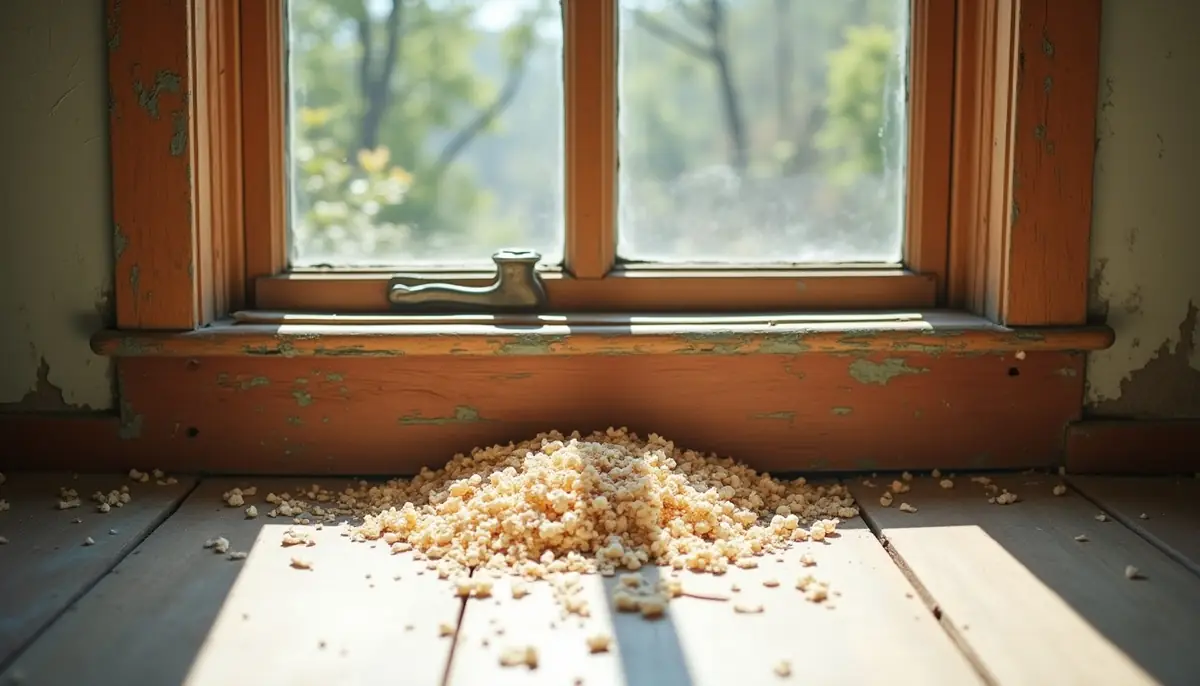
The giveaway is coarse, shredded wood mixed with ant body parts, which Ohio State likens to pencil sharpener shavings. Our guide to what carpenter ant frass looks like and how to tell it from termite droppings shows where it collects.
Ants that keep appearing through December and January point the same way: Ohio State says activity in winter continues only when a nest sits in a heated area of the building, which is the subject of our page on carpenter ants seen indoors in winter.

Cause 3: winged ants are emerging indoors
Winged carpenter ants are the most alarming sighting and the most informative. A colony only produces swarmers once it is mature, and the extension figures put that point at several years:
| Source | Colony age before swarmers | Colony size at that point | Swarm months |
|---|---|---|---|
| Ohio State HYG-2063 (black carpenter ant) | 3.5 to 4 years | About 2,000 to 4,000 | Usually March to July |
| Cornell NYS IPM | 3 to 5 years | Around 3,000 workers | Mating in late summer |
| Penn State Extension | Several years | 2,000 to 3,000 workers | Warm days in spring and early summer |
| Nebraska NebGuide G1738 | 6 to 10 years | More than 2,000 workers | Black carpenter ant mostly March to June |
Compiled by The Pest Control Brief from the four extension publications named in the table. The sources disagree on age by a factor of two; all agree that swarmers mean an established colony, not a new arrival.
Penn State says roughly 200 to 400 winged ants develop in a colony each summer, and that numerous winged ants at windows inside the house probably came from an indoor nest. One or two winged ants near an open door are weaker evidence. Spring swarmers are often termites instead, so check the waist and antennae against our side by side of termite swarmers and flying ants before deciding what you have.
Cause 4: a bridge from a tree, vine or wire
Ohio State says foragers travel over tree branches or vines touching the roof, electrical and telephone wires, fences next to the house and piles of firewood. Cornell’s NYS IPM fact sheet advises keeping landscape plants and branches 6 feet or more from the side of a building, because touching branches give access and also raise humidity against the wall. If the ants appear on an upper floor or along the roofline first, look up before you look down.
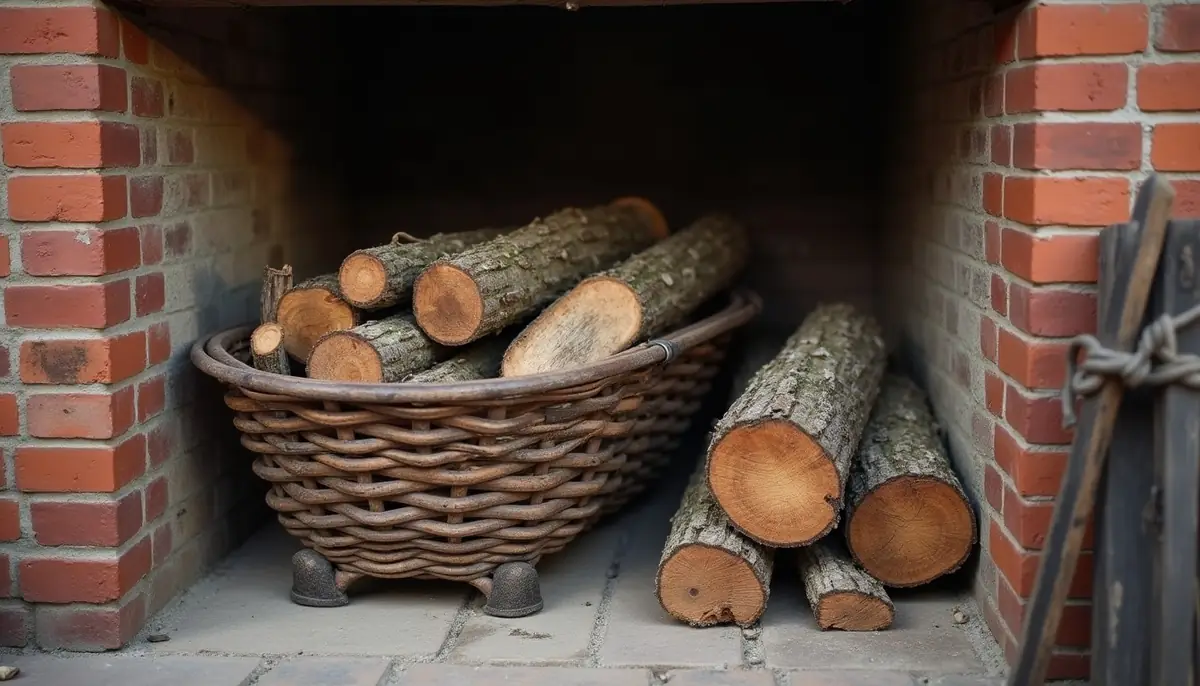
Cause 5: firewood carried indoors
A log basket can deliver a colony to the hearth. Nebraska Extension notes that stacks of firewood attract carpenter ants and that the longer wood sits undisturbed, the more likely it is to be infested. It advises storing only one heating season’s firewood, on a concrete pad above the soil and away from the house, and says spraying firewood with insecticide is not recommended.
Cause 6: rain, a leak or a thirsty spring colony
Water shows up twice in the extension guidance. First, leaks and condensation soften wood past the 15 per cent moisture line that Penn State and Ohio State describe. Second, Nebraska Extension says that in early spring workers from an indoor colony may start foraging before food is available outdoors, and these workers are drawn to water in kitchens and bathrooms. Ants around a sink or tub after a wet week fit that pattern, as our guide to ants that keep turning up in the bathroom explains for other species too.
How can you tell if you have carpenter ants in your house?
First confirm the ant. Ohio State says carpenter ants have an evenly rounded, arched thorax seen from the side and one node at the waist; field ants (Formica), the other common large black ant, have a distinct dip in the thorax and nest in soil mounds, not wood. Our identification guide to the ants that get into US homes covers the smaller species.
Then look for the three signs extension services list: frass piles below small openings, a dry rustling in walls that Ohio State compares to crinkling cellophane, and winged ants indoors. Any one of these, together with workers indoors in late winter, makes an indoor nest likely.
Can’t get rid of carpenter ants? The usual reason
The spray reached the foragers, not the colony. Nebraska Extension says spraying foraging workers with most insecticides is of limited value because the colony is largely unaffected, and the Illinois fact sheet says perimeter and attic applications usually provide little or no control. The queen stays in the parent nest, so killing the ants you can see leaves the source intact. Ohio State states that the queen must be killed to eliminate the colony.
The fix is to locate nests and treat them directly, then repair the moisture problem. Our night by night method for finding a carpenter ant nest by following foragers covers that step.
The full control plan, including dusts labelled for wall voids, is in our guide on how to get rid of carpenter ants. Sources differ on baits: Nebraska says they usually are not successful because the diet is so varied, while Ohio State says baits can provide control if placed on trails and used alone.
A licensed professional is the better call when you see swarmers indoors, find frass in more than one room, or cannot reach the nest without opening walls. Published estimates on our page on what ant and carpenter ant treatment costs put carpenter ant work at $250 to $500, rising toward $1,500 for established colonies in structural wood.
Frequently asked questions
Why am I all of a sudden seeing carpenter ants in my house?
Usually because spring warmth woke an existing colony. Illinois public health guidance says carpenter ants become active in March and April. The foragers come from a parent nest outdoors, often within 100 yards per Penn State, or from a satellite nest in damp wood indoors. Winged ants inside, or workers seen in winter, point to a nest in the house.
How do I permanently get rid of carpenter ants?
Find and treat the nests, then fix the moisture that attracted them. Ohio State says the queen must be killed to eliminate the colony, and Nebraska Extension says spraying foraging workers leaves the colony largely unaffected. Repair leaks, replace wet or rotted wood, trim branches back from the roof and store firewood away from the house.
What instantly kills carpenter ants?
A contact insecticide spray kills the ants it hits within moments, but that is not the same as solving the problem. Ohio State warns that fast knockdown chemicals on trails eliminate the ants on the trail but likely have no effect on the colony. Dusts labelled for wall voids, applied into the nest, are what Nebraska Extension describes for indoor colonies.
What do carpenter ants hate most?
Dry, sound wood. Penn State says carpenter ants usually will not infest wood below 15 per cent moisture content, and Nebraska lists moisture repair, trimmed branches and dry firewood storage as prevention. No extension source we read supports a scent such as peppermint or vinegar as a reliable carpenter ant repellent.
Do carpenter ants bite?
Yes, if handled. Ohio State says workers have strong jaws, bite readily when handled, and can inject formic acid into the wound, which makes the bite painful. They do not sting. Anyone with an unusual reaction should speak to a doctor.
Sources
- Illinois Department of Public Health, with University of Illinois Extension: Carpenter Ants, Prevention and Control (fact sheet).
- Penn State Extension: Carpenter Ants.
- Ogg C.L., Ogg B.P., Kamble S.T. and Bauer E., Carpenter Ant Management, Nebraska Extension NebGuide G1738, revised 2019.
- Jones S.C., Carpenter Ants, Ohio State University Extension fact sheet HYG-2063, 2017.
- New York State Integrated Pest Management Program, Cornell University: Don’t Let Carpenter Ants Renovate Your Home (Carpenter Ants fact sheet), 2013.
- NC State Extension and Clemson Cooperative Extension Home and Garden Information Center: Field Ants (Formica spp.).
- The Pest Control Brief analysis of iNaturalist research-grade records, pulled October 2026 (b19 to b30 files).