Can Rats Climb Walls? What Surfaces They Can and Cannot Scale
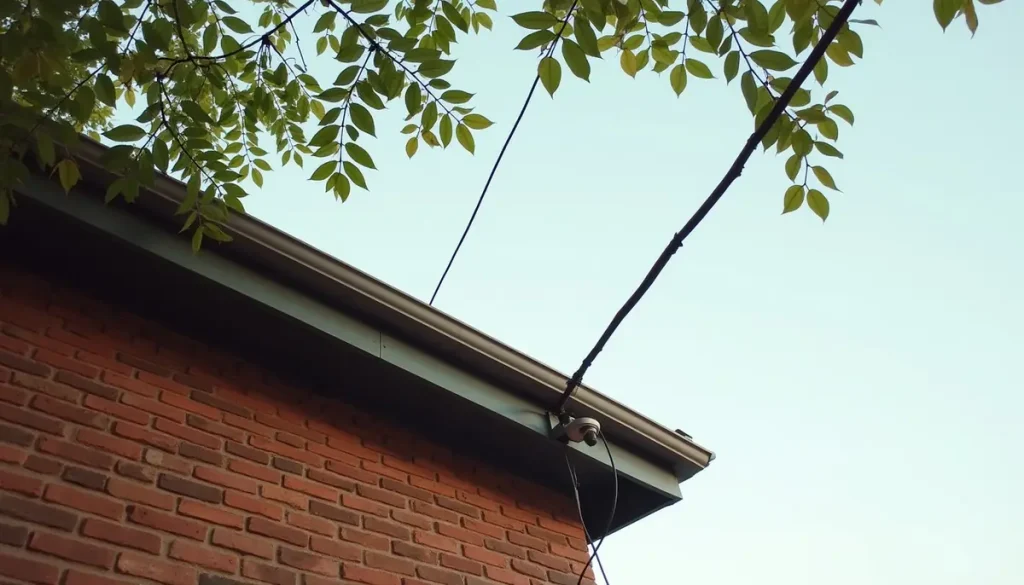
Yes, rats can climb walls: both US species scale almost any rough vertical surface, including brick, wood, concrete and weathered sheet metal, and roof rats do it routinely. What they cannot grip is a smooth, hard band, which is why extension guides stop climbing rats with sheet metal 12 to 18 inches wide. Rats also jump 36 inches straight up and 48 inches across, per University of Nebraska Extension, so a wall is rarely the only route in.
What a rat can and cannot climb
| Surface or route | Norway rat | Roof rat | Source |
|---|---|---|---|
| Rough exterior wall: brick, wood, concrete | Yes, when it needs to | Yes, routinely | UNL G1530; UF/IFAS ENY-224 |
| Weathered sheet metal | Yes | Yes | UNL G1530 |
| New, smooth sheet metal band 12 to 18 in wide | No | No | UNL G1530 and G2017 guard specifications |
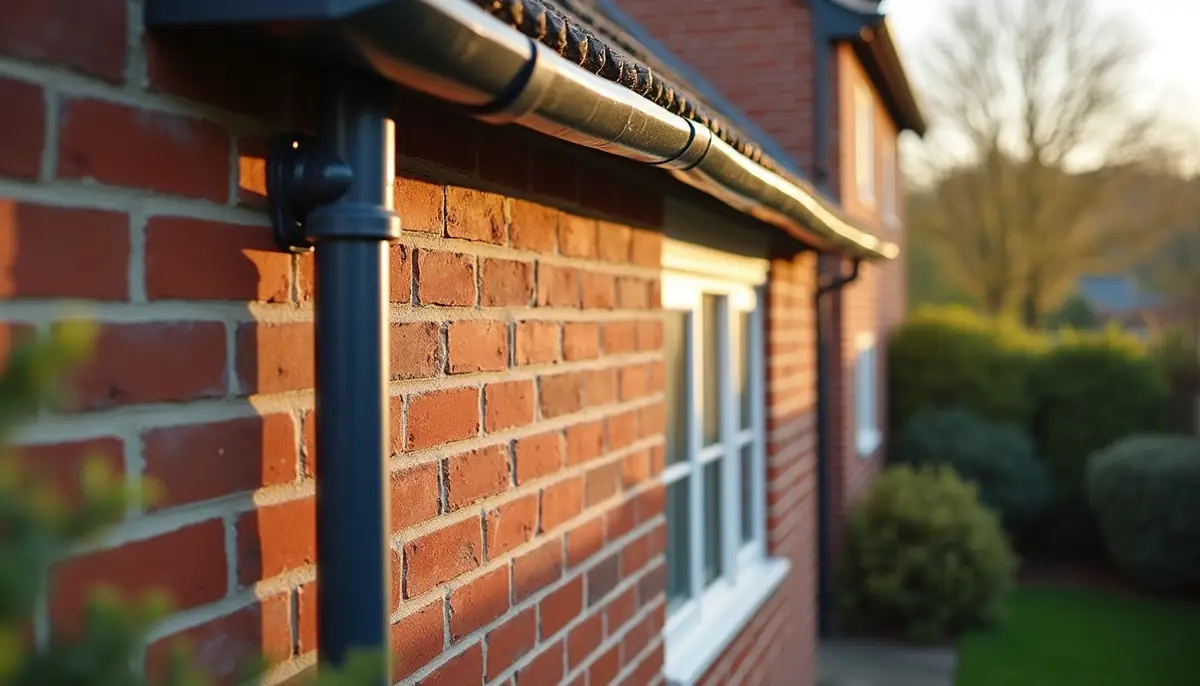
| Outside of a vertical pipe or conduit | Up to 3 in diameter; any size within 3 in of a wall | Same | UF/IFAS ENY-224 |
| Inside of a vertical pipe | 1.5 to 4 in diameter | 1.5 to 4 in diameter | UF/IFAS ENY-224; UNL G1530 |
| Horizontal pipe, wire or cable | Yes | Yes; often seen running along utility lines at night | UNL G2017; UC IPM 74106 |
| Trees, vines, shrubs | Yes | Yes; nests in trees and ivy | UNL G1530; UC IPM 74106 |
| Usual height indoors | Basements and ground floor | Attics, wall and ceiling voids, cabinets | UC IPM 74106 |
Table compiled by The Pest Control Brief from University of Nebraska Extension NebGuides G1530 (2009) and G2017, UF/IFAS ENY-224 (2013) and UC IPM Pest Notes: Rats 74106 (2025).
The difference between the two species is habit more than ability. UC IPM puts it simply: Norway rats are the more powerful swimmers, but roof rats are more agile and are better climbers. UF/IFAS adds that rats, “especially roof rats, will climb anything their claws will hold on to, including wires, pipes, and rough walls.” If you are not sure which you have, the side-by-side guide to telling roof rats from Norway rats starts with the tail.
How high and how far without climbing at all
Climbing is only half the story, because a rat gets onto many surfaces without touching the wall. University of Nebraska Extension lists a rat’s limits as a 36 inch vertical jump, a 48 inch horizontal jump, a reach of up to 13 inches along a vertical wall, and a drop of 50 feet without serious injury. UF/IFAS gives a slightly longer reach, 15 inches, and adds that rats can jump 8 feet from a tree to a house when the branch is 15 feet above the roof.
That last figure is why tree branches matter more than the wall itself. A roof rat that can run up a trunk and along a limb does not need to climb your siding. Mice are smaller jumpers, with Nebraska putting a house mouse’s vertical jump at 18 inches; our guide to what mice can climb, jump and squeeze through covers them separately.
Can rats climb walls inside a house?
Yes, but mostly inside the wall rather than up its painted face. Inside a building rats travel the same routes outdoors rats use: pipes, cables and framing. UC IPM says roof rats indoors favour attic spaces, walls, false ceilings and cabinets, and UF/IFAS notes that rafters may show the “swing marks” roof rats leave as they move along beams. Scratching at the top of a wall or overhead is usually one of those routes, and our page on what rat noises at night mean and where they come from helps place it.
Corners are the weak point of any interior wall. Nebraska Extension advises preventing climbing “particularly in corners” with aluminum sheet metal bands 12 to 18 inches wide, most likely because a corner lets a rat brace against two surfaces at once, much as it climbs a large pipe by bracing against the wall behind it.
Ceilings, upside down and beds
Nebraska’s guides record house mice hanging upside down from screen wire and wire mesh; none of the extension sources we read makes that claim for rats. A rat “on the ceiling” is almost always on a joist, pipe or cable in the void above. Beds are a different matter: anything within a 36 inch jump is reachable from the floor, and bedding that touches the floor is a ladder.
What surfaces can rats not climb?
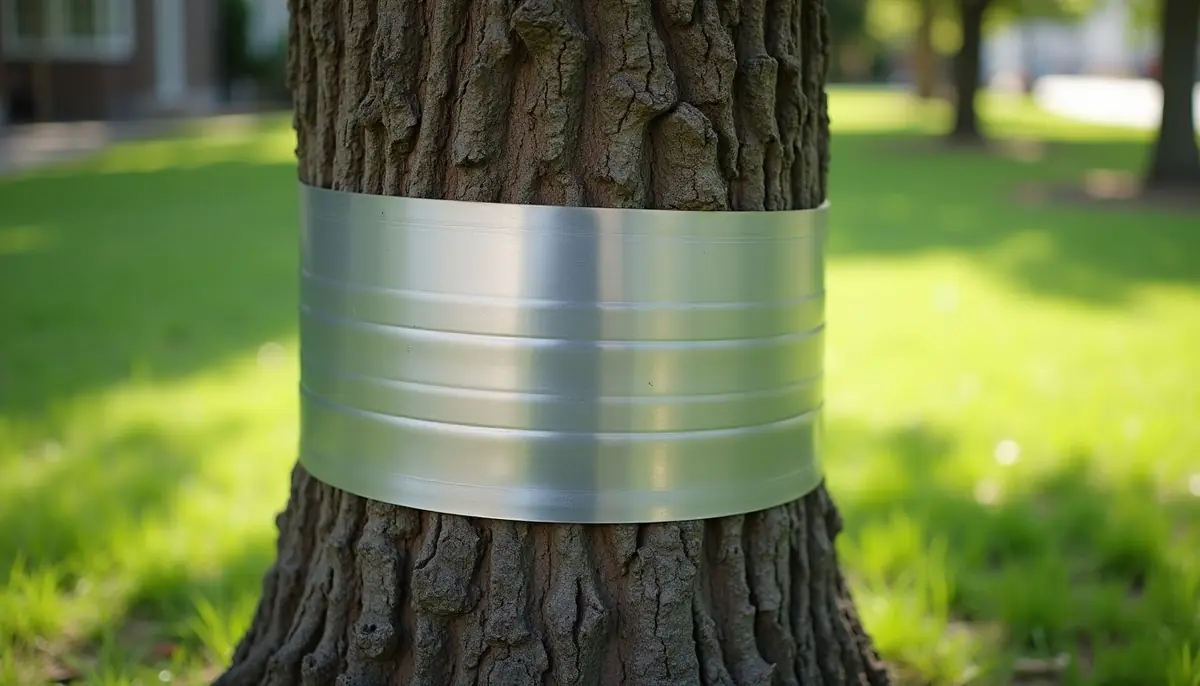
Smooth, hard and too wide to reach across: that is the formula the guard specifications use. Nebraska Extension describes rats climbing “almost any rough vertical surface” and names weathered sheet metal among them, so a smooth band stops working once it corrodes. The barrier every extension guide we read specifies is new aluminum or galvanized sheet metal; none of them tests glass or tile directly, so treat claims that a glazed wall alone stops rats as unproven, especially with a pipe, cable or plant beside it.
- Walls: sheet metal bands 12 to 18 inches wide, mounted at least 36 inches above the ground, per UNL G1530 and G2017.
- Trees and poles: metal collars at least 2 feet wide, placed 6 to 8 feet above the ground, with edges overlapped and joined by springs so the tree can grow (UNL G2017).
- Wires to the building: a flat guard at least 24 inches wide, or a circular guard extending 18 inches all around the line. Never approach electrical lines yourself; Nebraska says to have the utility company install guards there.
- Non-electrical lines: loose sleeves of 2 inch plastic pipe, 18 to 24 inches long, that spin when a rat tries to cross (UNL G2017).
- Pipes against a wall: a band only works if the pipe is not within 3 inches of the wall, or the rat simply braces and climbs.
Where climbing rats actually get in
For roof rats, the entry is usually at the roofline: gaps under eaves, unscreened attic and soffit vents, and where pipes and cables pass through the roof or upper wall. UF/IFAS says rats squeeze through cracks half an inch wide; the measured sizes are in our guide to how small a hole a rat can fit through.
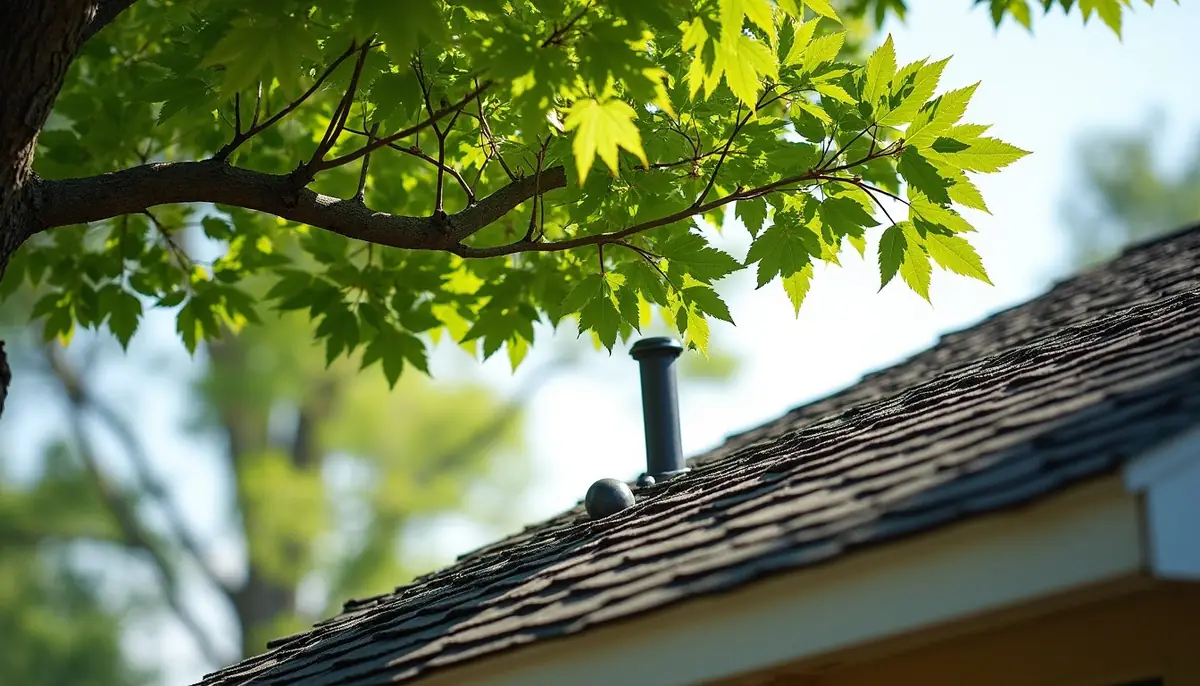
Cutting the route is the first fix. UC IPM’s own guidance gives two distances on the same page: prune tree limbs within 3 feet of a roof in its quick tips, and remove overhanging limbs within 6 feet of roofs in its sanitation section. Use 6 feet where you can, since the UF/IFAS jump figure shows a rat can cover 8 feet from a branch well above the roof. Thin ivy, star jasmine and honeysuckle on walls and fences, which UC IPM says are conducive to roof rat foraging and infestation.
Then seal with materials a rat cannot chew: 26 gauge or heavier sheet metal, 19 gauge hardware cloth with openings no more than a quarter inch, or mortar, per UF/IFAS. Our comparison of steel wool, copper mesh and what actually stops a rodent explains why foam alone fails.
Norway rats coming from below take a different path, sometimes through the drain, as described in how rats get up toilets and sewer pipes.
The complete sequence of trapping, sealing and cleaning is in the step-by-step plan for getting rid of rats.
Roof work at height, guards on utility lines and attic exclusion are reasonable jobs to hand to a licensed professional, particularly when activity continues after you have trimmed the trees.
Frequently asked questions
What surfaces can rats not climb?
Smooth, hard surfaces wider than their reach. Extension guides stop climbing rats with new sheet metal bands 12 to 18 inches wide mounted at least 36 inches up. Weathered sheet metal is on Nebraska Extension’s list of surfaces rats do climb, so guards lose effect as they corrode, and any pipe within 3 inches of the wall lets a rat bypass them.
What attracts rats to your house?
Food, water and shelter close to the building. UC IPM names pet food left outdoors, fallen fruit, garden debris and dense, low vegetation such as ivy, which roof rats also use as a climbing route. The full ranking of what attracts rats to a home and yard covers bird feeders, compost and water sources.
What is a rat’s biggest enemy?
Among natural predators, owls stand out: UF/IFAS says a pair of barn owls can be expected to kill several hundred rats in a year, and it names king snakes, black racers and rat snakes, the climbers that follow rodents up houses, as useful rodent predators. It also notes that predators can keep an area rat free but cannot remove an established infestation, and that pet cats and dogs are poor control.
What time of year is worst for rats?
In city complaint data, summer: our analysis of New York and Chicago 311 rat complaints found both cities peak in July and bottom out in December. Indoors is different: the Marin/Sonoma Mosquito and Vector Control District says rats are more likely to enter homes in winter for shelter, so late autumn is the time to seal entry points.
How high can rats climb walls?
No extension source gives a height limit for a rough wall; texture, not height, is what limits a climbing rat. Roof rats routinely reach attics and roofs. Without climbing, Nebraska Extension puts a rat’s vertical jump at 36 inches and its reach along a wall at up to 13 inches.
Sources
- University of Nebraska Extension, NebGuide G1530, Rodent-Proof Construction: Structural (revised January 2009).
- University of Nebraska Extension, NebGuide G2017, Rodent-Proof Construction: Drains and Feeding Equipment (S.M. Vantassel, S.E. Hygnstrom, D.M. Ferraro).
- UF/IFAS Extension, Rat and Mouse Control, ENY-224 (P.G. Koehler and W.H. Kern), revised October 2013.
- University of California Statewide IPM Program, Pest Notes: Rats, Publication 74106 (N.M. Quinn), updated June 2025.
- Marin/Sonoma Mosquito and Vector Control District, How do I know if rats have taken up residence in my home?
- The Pest Control Brief, analysis of New York City and Chicago 311 rodent complaints, 2026.