German vs American Cockroach: How to Tell Them Apart
A German cockroach is small (13 to 16 mm, about half an inch), tan, with two dark stripes behind the head, and breeds in kitchens; an American cockroach is two to three times longer (34 to 54 mm), reddish brown, with a pale yellow rim on that shield, and usually comes in from drains or outdoors. Size alone settles most sightings. The difference matters because the German cockroach is the one that builds an indoor infestation fast, while one American cockroach is often a lone visitor.
If you are holding a photo or a trapped insect, this table is the whole identification. The figures come from the university extension sources listed at the end.
Side by side: the ten differences that decide it
| German cockroach | American cockroach | |
|---|---|---|
| Adult length | 13 to 16 mm (1/2 to 5/8 in) | 34 to 54 mm (1 3/8 to 2 1/8 in) |
| Colour | Tan to light brown | Reddish brown |
| Shield behind the head (pronotum) | Two dark parallel stripes | Pale yellow to tan band around the edge |
| Flight | Full wings, but does not fly | Both sexes can fly; rarely do in the north |
| Egg case | Carried by the female until 1 to 2 days before hatching | Dropped or glued to a surface within about a day to 6 days |
| Eggs per case | 30 to 40 (Penn State: up to 48) | 14 to 16 |
| Egg to adult | About 100 days | About 600 days on average |
| One female and offspring in a year | Over 30,000 | Over 800 |
| Where it lives | Indoors only: kitchens, then bathrooms | Sewers, basements, steam tunnels, outdoors in the South |
| Main control | Gel bait inside, repeated | Exclusion, drain traps, perimeter work |
Compiled by The Pest Control Brief from UF/IFAS, Penn State Extension, UC IPM Pest Notes 7467, NC State Extension and Texas A&M AgriLife E-359.
One marking deserves a correction. The American cockroach is often described online as having a yellow figure eight behind the head. Penn State describes “faded yellow edges on the thorax” and Texas A&M “tan to light-yellow bands outlining the pronotum”: look for a pale rim with a darker centre, not a numeral. Our guide to the five US cockroach species drawn to one scale shows the same pattern beside the brown-banded, Oriental and smokybrown.
If you saw it here, it is probably…
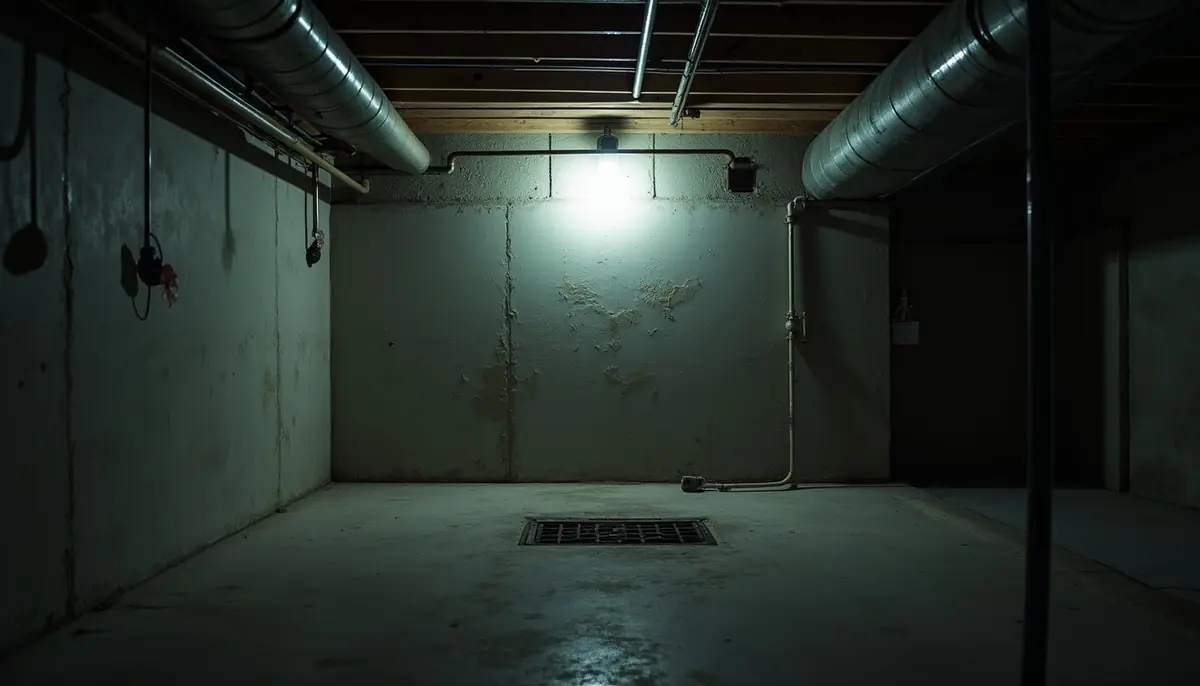
Location sorts most sightings before anyone looks at stripes, because the two species use buildings differently.
| Where you saw it | Most likely | Why |
|---|---|---|
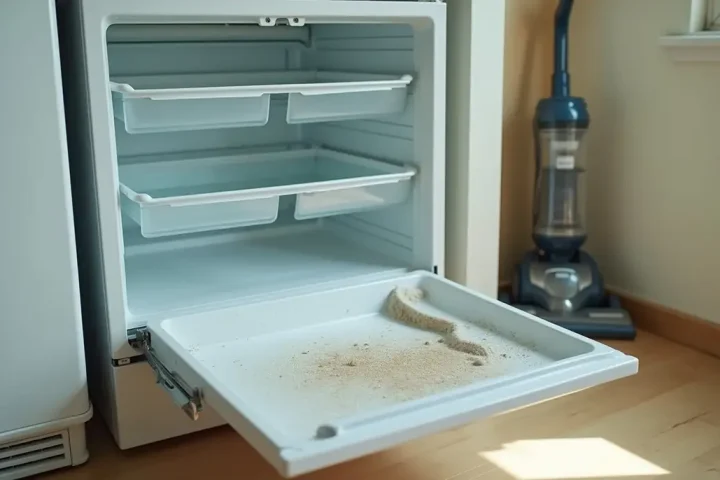
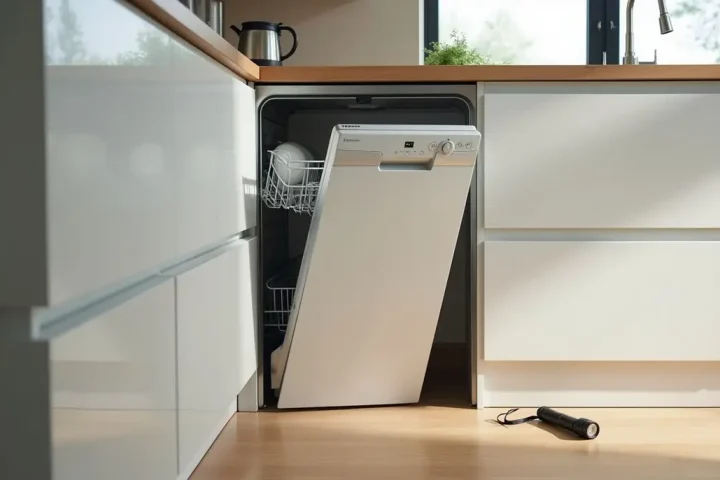
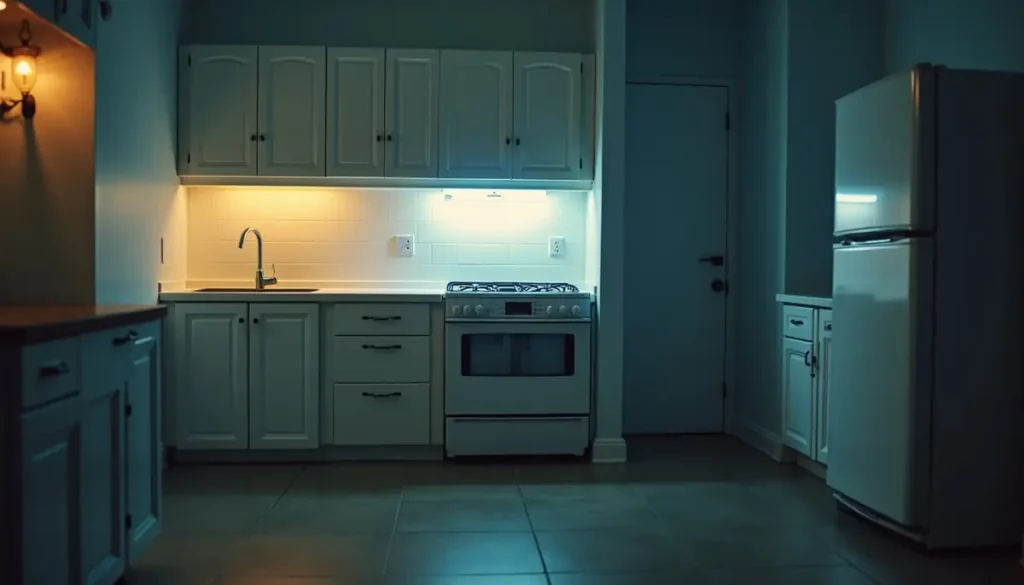
| Behind the stove, fridge or dishwasher | German | In a 188-unit New Jersey apartment study, traps by the stove and refrigerator caught more than traps under the sink or in the bathroom |
| Cracks in kitchen cabinets and around appliances | German | Adults hide in cracks 1/16 inch wide (UC IPM) |
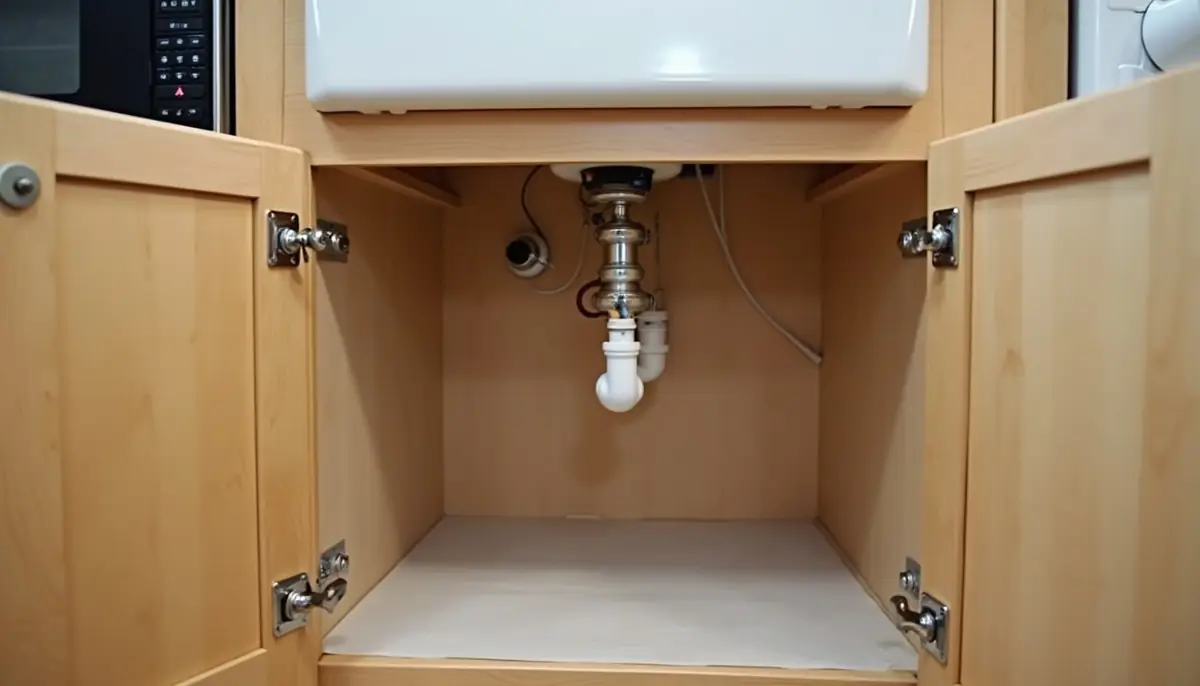
| Coming up a floor drain or bathtub | American | Penn State lists floor drains, bathtubs and pipe chases |
| Basement, crawl space, boiler room | American | Dark, warm, moist spaces at ground level |
| Flying to a porch light in the South | American (or smokybrown) | German cockroaches do not fly |
| Restaurant, apartment block, hospital kitchen | German | UC IPM: most common indoor species, especially in multi-unit housing |
Which is worse?
The German cockroach, for a homeowner, by every measure that matters. UC IPM calls it the most persistent and troublesome species and puts the reproductive gap in plain numbers: one female and her offspring can produce over 30,000 individuals in a year, against over 800 for the American. Our page on how fast German and American cockroach populations grow works through the arithmetic generation by generation.
Three biological details explain the gap. The German female carries her egg case until it is about to hatch, so the eggs stay moist and protected; Ebeling’s Urban Entomology (UC Riverside) notes the eggs dry out if the case is removed from the female early. Development from egg to adult takes about 100 days against an average of 600 days for the American, according to Texas A&M. And German adults fit in cracks 1/16 inch wide, so a kitchen offers thousands of hiding places a 2 inch American cannot use.
Health risk is closer between the two. Penn State lists gastroenteritis organisms carried on the legs and bodies of both species, and allergens in droppings and cast skins. Because German cockroaches live at high density inside the kitchen, the indoor allergen load tends to be far higher, which is the subject of our review of cockroach allergen and childhood asthma.
Are German roaches the hardest to get rid of?
Yes, among the US house species. In a 2019 North Carolina State study of cockroaches from apartments where bug bombs had failed, resistance to the pyrethroid cypermethrin was 202 times that of a susceptible laboratory strain, and over 96 per cent carried at least one copy of a knockdown resistance mutation. That is why our guide to why spraying stopped working on German cockroaches centres on bait rather than spray. American cockroaches have no comparable resistance problem documented in homes; they are hard to keep out, not hard to kill.
Eggs and babies: telling them apart early
The egg case is often the first thing found. A German case is light beige, about 8 mm long, and usually still attached to the female; NC State gives a mean of 40 eggs. An American case is dark brown to black, about 5/16 to 3/8 inch long, glued or dropped near food, with 14 to 16 eggs. UC IPM says the American female carries it for about 6 days, while Penn State says she drops it within a day of forming it, so treat the timing as variable. Our species-by-species guide to cockroach egg cases has photographs of both.
Nymphs differ more than adults. German nymphs are dark brown to black with a pale stripe down the middle of the back and start at about 3 mm, reaching 12.5 mm by the sixth instar (NC State). American nymphs are uniformly greyish brown when young, then reddish brown, with no stripe. A run of tiny striped nymphs in a kitchen is the clearest sign of a German population breeding indoors; our page on what baby cockroaches look like at each stage shows the instars to scale.
What our records data adds
iNaturalist research-grade records show where people photograph each species, which is mostly outdoors. American cockroach records outnumber German cockroach records many times over in Florida and Texas, which fits the American being a species of yards, sewers and porches and the German one of kitchen cracks that people rarely photograph.
The seasonal pattern points the same way. American cockroach records rise through September to November, when warm humid nights bring adults onto patios and walls. German cockroach records peak from November to January, at an index of 184 in November. German cockroaches do not breed more in winter; they live indoors all year, and with fewer outdoor insects to photograph, the ones in kitchens stand out.
What each one means for treatment
German cockroach
- Treat it as an indoor breeding population. Penn State says residual sprays and aerosol foggers “are of little value” and may disperse cockroaches.
- Gel and station baits placed where they shelter do the work; read the label for placement. Our comparison of gel bait against spray for roaches explains why the delivery method decides the result.
- In flats and apartment blocks, units infest each other, so a one-unit fix rarely holds; our guide to cockroaches in apartments and who has to fix them covers building-wide treatment.
- Expect a sustained programme. A licensed professional is usually the faster route once nymphs are visible.
American cockroach
- Find the entry point first: floor drains, damaged pipes, door gaps and roof soffits, as Texas A&M lists.
- Keep P-traps filled with water so the drain is a barrier between the sewer and the room.
- Seal gaps and screen soffits, and reduce mulch and leaf litter against the foundation.
- Baits in water meter boxes and around the perimeter are a UC IPM option for outdoor populations.
The step-by-step version, including when a single large roach needs no treatment at all, is in our page on American cockroaches in the house, visitor or infestation.
The look-alike that confuses both
The Asian cockroach, Blattella asahinai, is almost identical to the German: same 13 to 16 mm, same two stripes. UF/IFAS gives the tell. It lives outdoors in lawns and leaf litter and readily flies to lit windows and porches, where a German cockroach never would. A “German cockroach” that flies to your porch light on a Florida or South Carolina evening is almost certainly the Asian species, and it does not infest kitchens. Our page on which roach species fly, glide or never leave the ground covers the flight test for all of them.
Frequently asked questions
What are the worst cockroaches to have in your house?
German cockroaches. UC IPM describes them as the most persistent and troublesome species because they live and breed entirely indoors near food, and one female and her offspring can produce over 30,000 individuals in a year. Field populations are also widely resistant to pyrethroid sprays, with one 2019 study measuring 202 times the resistance of a laboratory strain.
Are German roaches the hardest to get rid of?
Yes, of the common US species. They reproduce fastest, with a generation in about 100 days, hide in cracks 1/16 inch wide, and many apartment populations resist pyrethroid sprays. Extension sources recommend baits and a sustained programme, and professional treatment is usually needed once nymphs are visible.
Does one German cockroach mean infestation?
Often, yes. German cockroaches do not wander in from outside, so one indoors usually came in with groceries, boxes or used furniture, or from a neighbouring unit, and NC State notes a single egg-carrying female can start an infestation. Set sticky traps by the stove and fridge for a week; our page on what finding one cockroach means sets out the checks.
Is it bad to have German cockroaches in your house?
Yes. Penn State links them to gastroenteritis organisms carried on their bodies and to allergens in droppings and cast skins that trigger sneezing, rashes and asthma. Populations also grow quickly, so a few cockroaches in autumn can become a heavy infestation within months. Health questions belong with a doctor; the cockroaches belong with a bait programme.
Is a palmetto bug a German or an American cockroach?
Usually the American cockroach, which Texas A&M notes is also known as a waterbug or palmetto bug; in parts of the South the name also covers other large outdoor species. It does not mean the German cockroach, which is 13 to 16 mm and does not fly. Our explainer on what palmetto bug, water bug and croton bug mean maps each name to a species.
Sources
- University of Florida, IFAS, Cockroach Photographs CD-ROM: American cockroach, German cockroach and Asian cockroach species pages.
- Penn State Extension, German Cockroaches and American Cockroaches fact sheets.
- University of California Statewide IPM Program, Pest Notes: Cockroaches, publication 7467.
- Texas A&M AgriLife Extension, Cockroach Biology and Management, E-359, 2012.
- NC State Extension, Biology and Behavior of the German Cockroach.
- Ebeling W., Urban Entomology, chapter 6, University of California Riverside.
- DeVries ZC, Santangelo RG, Crissman J, Suazo A, Kakumanu ML, Schal C. Pervasive resistance to pyrethroids in German cockroaches related to lack of efficacy of total release foggers. Journal of Economic Entomology, 2019.
- Zha C, Wang C, Eiden A, Cooper R, Wang D. Spatial distribution of German cockroaches in a high-rise apartment building during building-wide IPM. Journal of Economic Entomology, 2019.
- The Pest Control Brief analysis of iNaturalist research-grade records, pulled October 2026.