Do Rats Lay Eggs? No, So What Did You Find?

No, rats do not lay eggs: rats and mice are placental mammals that give birth to live, hairless young after a pregnancy of about 21 to 23 days for Norway rats. No rodent lays eggs. So if you found small round eggs in soil, mulch, an attic or a garage, something else laid or left them. The usual culprits are slugs and snails, lizards and geckos, snakes, cockroaches, spiders, fungi and slow-release fertiliser beads, and the key below separates them by size and texture.
What did you find? An egg identification key
| What it looks like | Size | Where you find it | Most likely |
|---|---|---|---|
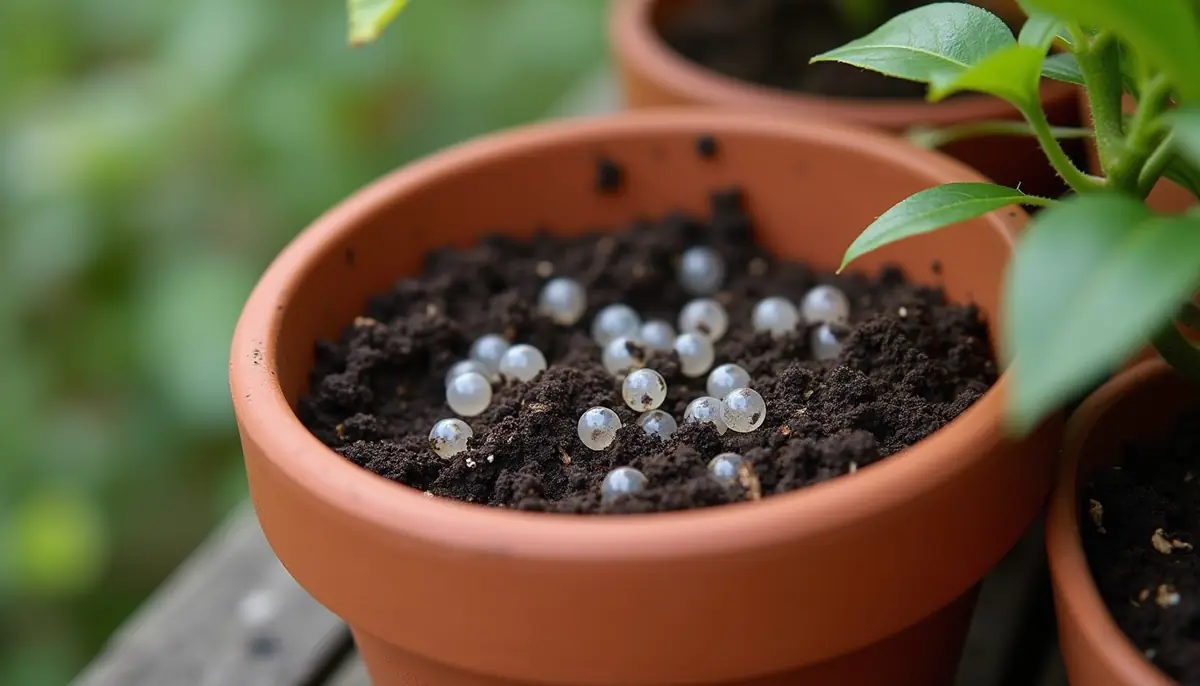
| Translucent pale yellow beads, hard or slightly rubbery, all the same size | About 1/8 in (3 mm), Purdue | Potting mix, planters, bagged soil | Slow-release fertiliser prills |
| Clear to white jelly-like balls in a cluster, burst when pressed | 2 to 2.5 mm for greenhouse and tree slugs; about 5 mm for brown garden snail (UF/IFAS) | Under leaves, in soil cracks, about 1 in deep in damp soil | Slug or snail eggs |
| Brown or black purse-shaped capsule with a ridged seam | About 4 to 11.5 mm long | Kitchens, cupboards, basements, behind appliances | Cockroach egg case |
| Pairs of hard white eggs, often stuck together | 10.4 to 11.7 mm long (Animal Diversity Web) | Under baseboards, in sheds, garages and attics | Mediterranean house gecko |
| A single soft white egg buried in a small hole | Small; we found no published size | Moist soil, mulch, leaf litter | Anole lizard |
| White, elongated, leathery eggs, often stuck in a clump | Larger than lizard eggs; clutches of 4 to 44 in Florida | Rotting logs, leaf piles, mulch, sawdust | Rat snake or another egg-laying snake |
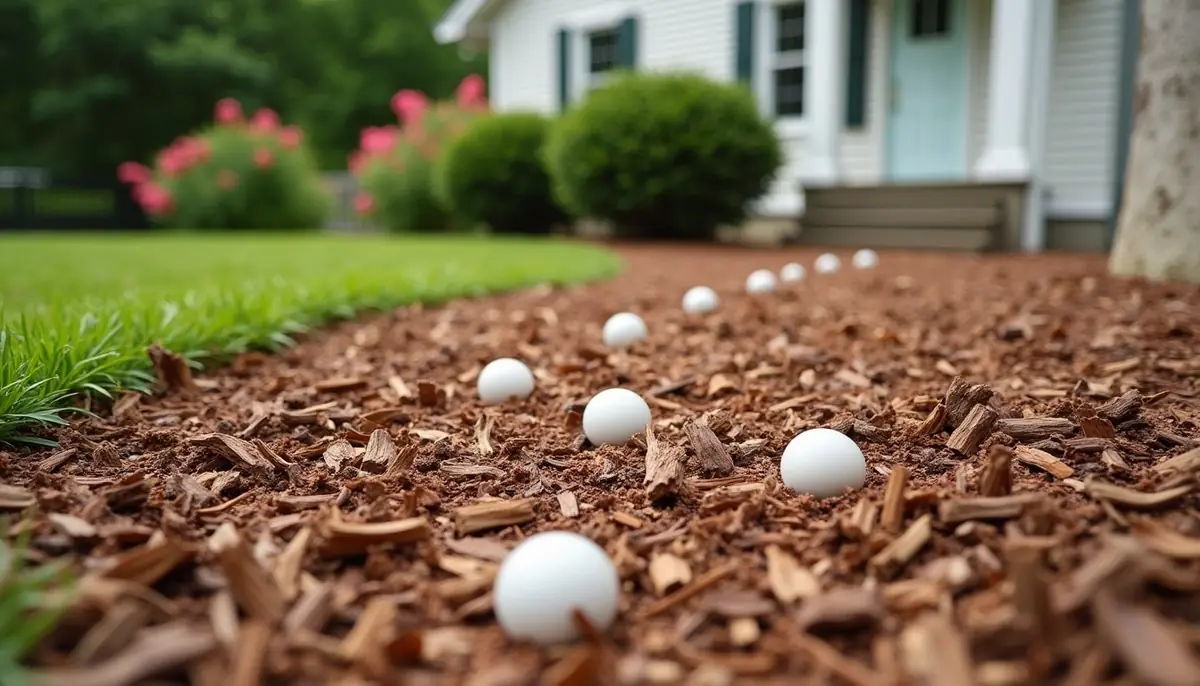
| White, rubbery “egg” with jelly inside when cut | About 2 in wide for Ravenel’s stinkhorn (Missouri Department of Conservation) | Mulch, wood debris, rotted stumps | Stinkhorn fungus |
| Soft, clear, marble-sized balls | Grow up to 100 times their dry size in water (CPSC) | Planters, vases, children’s play areas | Water beads |
| Silk ball or flattened silk disc, sometimes guarded | Varies by species | Corners, under ledges, in webs | Spider egg sac |
Compiled by The Pest Control Brief from Purdue Plant and Pest Diagnostic Laboratory, UF/IFAS, University of Maryland Extension, UC IPM, Animal Diversity Web, the Florida Museum, Missouri Department of Conservation and the US Consumer Product Safety Commission.
Two quick tests settle most finds in under a minute. Press one gently: slug and snail eggs are gelatinous and burst, while fertiliser prills are firm and uniform. Then check the spot: eggs in a cupboard are almost never reptile or slug eggs, and eggs in potting mix are almost never cockroaches.
Does a rat lay eggs or give birth?
A rat gives birth. The Merck Veterinary Manual gives an average gestation of 21 to 23 days for rats and describes newborns as deaf and blind. ICWDM says Norway rats are born hairless with closed eyes. Litters run 6 to 12 in the wild, and a female can mate again within a day or two of giving birth, which is why rat numbers climb so fast, as our guide to how fast rats reproduce sets out with the full litter and generation figures.
So “how long do rats lay eggs” has no answer, because there is no egg stage. The nearest equivalent is the 21 to 23 day pregnancy, after which a nest holds pink pups, not eggs.
Do mice lay eggs?
No. House mice give birth to live young after a pregnancy of about 19 to 21 days, with litters of 5 or 6 according to ICWDM. A mouse nest you open will hold pink, hairless pups weighing 0.5 to 1.5 grams, and our guide to ageing baby mice and what to do with them explains whether the mother will return. No rodent lays eggs; among mammals, only the platypus and echidnas do.
What a rat nest holds instead of eggs
A Norway rat nest is a loose mass of shredded paper, cloth, insulation, leaves or grass, usually in a chamber at the end of a burrow with an entrance 2 to 3 inches across. Inside you may find pups, droppings up to 3/4 inch long and cached food. Our guide to what a rat nest and burrow look like covers both rat species and the woodrat.
Rats do turn up near eggs, but as thieves. UC IPM lists young birds and eggs in the roof rat diet, and rats raid chicken coops mostly at night for feed, water and eggs. If eggs are vanishing or being found broken in a hen house, the steps in stopping rats taking eggs and feed from a chicken coop apply.
Droppings beside the find are the quickest way to tell which rodent is around, and our guide to telling a rat from a mouse confirms which rodent you are dealing with.
The look-alikes, one at a time
Slug and snail eggs
These are the most common “mystery eggs” in gardens. UC IPM says slugs lay translucent oval to round eggs in batches of 3 to 40 beneath leaves and in soil cracks, and brown garden snails lay an average of 80 pearly white eggs into a hole in the soil. University of Maryland Extension describes gray garden slug eggs as BB-sized, white, opalescent and gelatinous, laid about an inch deep in damp soil in spring and autumn. Removing the boards, stones and dense cover where they are laid is the first step in our guide to what the slug control trials say works.
Fertiliser prills
Purdue’s diagnostic lab fields this one often: coated slow-release fertiliser beads, “often somewhat of a transparent, pale yellow about 1/8th inch or so in diameter.” They are mixed into potting soil or scattered on the surface. If every bead is identical and they appeared after repotting or a new bag of compost, they are fertiliser.
Cockroach egg cases
Indoors, a small brown or black capsule is far more likely than any true egg. A German cockroach case is light brown and 6 to 8 mm long; an American cockroach case is about 8 mm and turns black within a day or two. Our species-by-species guide to what a cockroach egg case looks like has the sizes and hatch times.
Lizard and gecko eggs
In the South, eggs under baseboards or in a garage are often Mediterranean house gecko eggs, laid two at a time and incubated about 40 days at around 31°C (88°F), according to Animal Diversity Web. Brown anoles bury one egg, sometimes two, in moist soil or leaf litter every week or two, with hatching 6 to 8 weeks later. Neither is a pest risk; our page on lizard and iguana control covers when they become a nuisance.
Snake eggs
White, elongated, leathery eggs in a rotting log or mulch heap are most often a rat snake’s. The Florida Museum says females in Florida lay around 4 to 44 white elongate eggs, often in rotting vegetation and logs. Rat snakes eat rats and mice, so their eggs near a woodpile can indicate rodents nearby; our guide to rat snakes and why they climb houses covers identification and bites.
Stinkhorn “eggs”
White rubbery balls in bark mulch that smell bad later are the egg stage of stinkhorn fungi. The Missouri Department of Conservation describes Ravenel’s stinkhorn as starting as a white, rubbery “egg” about 2 inches wide on wood debris and sawdust. Cut one in half and you will see jelly and a folded stalk, not a yolk or embryo.

Frequently asked questions
Does a rat lay eggs or give birth?
A rat gives birth to live young. Pregnancy lasts about 21 to 23 days, according to the Merck Veterinary Manual and Nebraska Extension, and the pups are born hairless, blind and deaf. Norway rat litters are usually 6 to 12. No rat, mouse or other rodent lays eggs, so eggs found near a rat problem came from something else.
What smell do rats absolutely hate?
No smell has been shown to keep rats away for long. UC IPM states that no repellents have been found to solve a rat problem for more than a very short time. Peppermint oil, the most popular choice, lost its effect within a week in the one controlled mouse study covered in our peppermint oil repellent evidence review. Removing food and sealing gaps over a quarter inch works better.
How many rats are there usually if you see one?
There is no sourced rule, and figures quoted online are seldom traced to any study. What the biology supports is that one burrow can hold several adult females with litters of 6 to 12, so a rat seen regularly usually means a breeding group. Count fresh droppings, active burrows and gnawing to judge size.
Where do rats go during the day?
Back to the nest. UC IPM says rats are mostly active at night. Norway rats spend the day in burrows along foundations, under woodpiles and beneath slabs, or in basements and ground floors indoors. Roof rats rest above ground in attics, wall voids, palm fronds and dense ivy. Rats seen often in daylight deserve a closer look for nests nearby.
Sources
- Merck Veterinary Manual, Breeding and Reproduction of Rats (pet owner edition).
- Internet Center for Wildlife Damage Management, Norway Rat and House Mouse Damage Prevention and Control Methods.
- Nebraska Extension, NebGuide G1737 (via The Pest Control Brief reproduction guide).
- Purdue University Plant and Pest Diagnostic Laboratory, Picture of the Week: fertilizer “eggs”, 2022.
- University of Florida IFAS Mid-Florida Research and Education Center, Slug and Snail Species.
- University of Maryland Extension, Slugs and Snails in Vegetables.
- University of California Statewide IPM Program, Pest Notes: Snails and Slugs, and Pest Notes: Rats, Publication 74106.
- Animal Diversity Web, University of Michigan, Hemidactylus turcicus and Norops sagrei accounts.
- Florida Museum of Natural History, Florida Snake ID: Eastern Ratsnake.
- Missouri Department of Conservation, Field Guide: Ravenel’s Stinkhorn.
- US Consumer Product Safety Commission, water beads safety standard news release, 12 March 2026.