Are Fire Ants Active in Winter? Temperature Rules for Treating
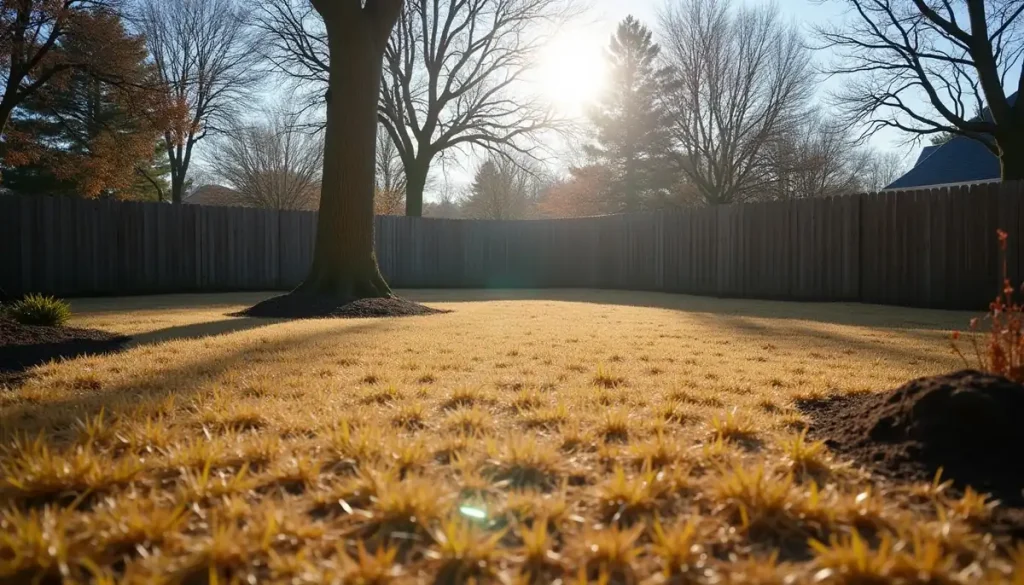
Fire ants stay alive through southern winters but are only partly active: they forage little, move deeper into the mound on cold days and come up again when the soil warms. Red imported fire ants are not true hibernators. Studies cited by University of Tennessee researchers put the point where they stop working outside the mound at about 50 to 59°F (10 to 15°C). Texas A&M notes they may still build mounds in winter while foraging little, which is why winter bait mostly goes to waste.
So fire ants do not go away in winter, and they do not die out except in a hard, prolonged freeze. What changes is where they are in the soil and whether they will pick up bait. The table below sets out the year as the extension services describe it.
The fire ant year, month by month
| Months | What colonies are doing | Bait? | Basis |
|---|---|---|---|
| December to February | Little foraging; colony lower in the mound on cold days; may still rebuild mounds after rain or on warm spells | Usually wasted. Only on a warm spell when a food test shows foragers | Texas A&M L-5070; James et al. 2002 |
| March | Activity picking up as soil warms; our iNaturalist records climb toward an April peak | Not yet in most areas; Alabama advises no earlier than April | Alabama Extension |
| April to May | Active foraging; mating most active in spring | Spring bait window | Alabama Extension; LSU AgCenter; UGA |
| June to August | Foraging mostly at night in hot weather | Evening only once daytime soil passes 90°F | Texas A&M L-5070 |
| September to mid October | Colonies at peak size; many young colonies | Best window of the year for most of the South | UGA; University of Arkansas; Alabama Extension |
| Late October to November | Foraging falling off with soil temperature | Only while soil stays at or above 60°F | University of Arkansas |
Compiled by The Pest Control Brief from Texas A&M AgriLife Extension, Alabama Cooperative Extension System, University of Arkansas Cooperative Extension, LSU AgCenter and University of Georgia Extension guidance, and James et al., Environmental Entomology, 2002.
What happens to fire ants in the winter, and where they go
Red imported fire ants are from South America and have no true dormancy. The 2002 University of Tennessee study by James, Pereira, Vail and Ownley summarises the earlier literature: overwintering adults are nondormant and not freeze tolerant, they may be active and forage on warm days in winter, and they cease activity outside the mound at 10 to 15°C, about 50 to 59°F. Colonies move up and down the nest soil with daily temperature, going deeper to avoid cold.
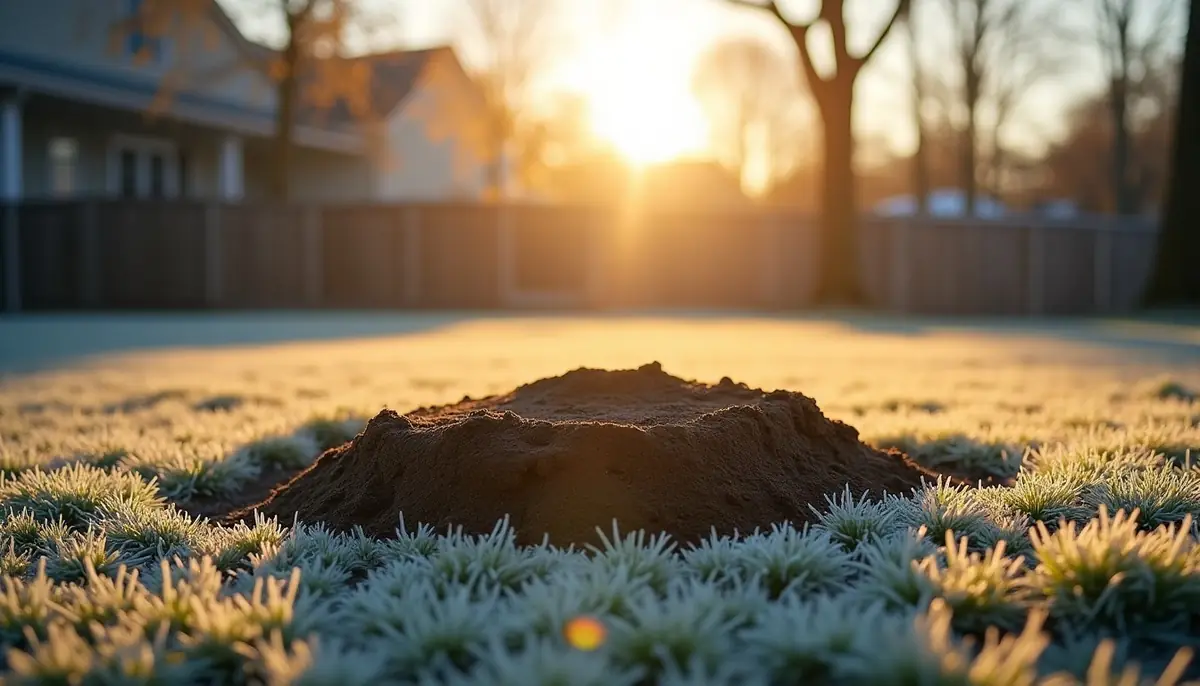
That is why a lawn can look clear in January and full of mounds two weeks later. Texas A&M’s Two-Step publication (L-5070) says that in winter, when soil temperatures are cooler, fire ants may build mounds but they forage little. A mound you see in winter is usually a live colony, not a dead one.
Do fire ants hibernate in the winter?
No. Hibernation implies a fixed dormant season, and the research says they lack one. They slow down and sit lower in the nest while the soil is cold, and the Tennessee review notes they may be active and forage on warm winter days.
The temperatures that decide it
Soil temperature, not air temperature, is the number that matters. In the most cited field study, Porter and Tschinkel (Environmental Entomology, 1987) found that soil temperature 2 cm (about three quarters of an inch) down was the best single predictor of foraging in Florida. Workers foraged at soil temperatures from 15 to 43°C (59 to 109°F), with peak rates between 22 and 36°C (72 to 97°F).
Extension thresholds are rounded versions of the same finding, and they do not all agree. Texas A&M says fire ants forage when soil surface temperatures are 70 to 90°F. Alabama Extension gives 70 to 95°F. UGA entomologist Dan Suiter says they are most active in spring and fall when daytime temperatures are 70 to 85°F. LSU AgCenter says they forage less actively below 65 to 70°F or above 90°F, and the University of Arkansas sets the floor at a soil temperature of 60°F. In practice, a cool December day is below every one of them.
Latitude changes how much of the year sits inside the window. A 2003 Oklahoma study by Vogt and colleagues estimated that conditions favour maximal foraging about 25 per cent of the year in Oklahoma, against 42 to 59 per cent in Florida, and warned that bait timing advice from the southern range may not fit farther north.
Do fire ants die in winter?
Some do, but cold rarely wipes out a colony in the core of the range. The University of Tennessee team held fire ant workers at low temperatures with no soil to hide in. Uninfected red imported fire ants were the least cold tolerant of the types tested.
At 39°F (4°C), mortality after seven days was 35.5 per cent. At about 33°F (0.5°C) it was 18.9 per cent after two days and 81.4 per cent after seven. At 25°F (minus 4°C), 82.1 per cent were dead by day three and none survived seven days. The authors also cite a field study of an isolated eastern Tennessee population in which 87.5 per cent mortality came in the winter of 1993 to 1994, with seven straight days at or below 1.1°C (34°F).
In the field, colonies escape most of this by moving down. The same paper notes that sunny days warm the nest soil and reduce exposure, while a cold front arriving fast can trap ants in the upper mound. UGA’s Suiter adds that young colonies are the most vulnerable, because with few workers they cannot dig deeper quickly enough.
Cold is also what sets the northern edge. James and colleagues note that imported fire ants were not expected north of the minus 12°C (about 10°F) minimum January isotherm, and that their spread past it into southern Tennessee prompted the research. Where the regulated area now stands is in our guide to the federal fire ant quarantine.
Are fire ants active in winter where you live?
Our analysis of US iNaturalist research-grade records shows fire ants do not vanish from view in winter. Of 21,937 red imported fire ant records, 5,893, about 27 per cent, were made in December, January and February; January alone has 2,542, against 794 in July. For carpenter ants the winter share is about 4 per cent. Some of those winter records come from Florida and south Texas, where winters are mild, and they are sightings of mounds and ants, not measures of foraging. The monthly pattern is charted in our main fire ants guide.
Toward the northern edge of the range, as in Oklahoma, the winter pause is longer and the spring start later, which is the point of the Vogt study; in Florida far more of the year falls inside the foraging window.
When to treat: winter, spring or fall?
Fall, for most of the South. Suiter’s case at UGA has four parts: ants are actively foraging, colonies are not yet deep in the ground, many colonies are young and small, and winter follows. Baits weaken colonies, he says, making them less able to respond to cold. In his words, winter is an ally in controlling fire ants.
Winter baiting is the mistake. Some company pages suggest treating dormant mounds in winter, but bait only works if foragers carry it home, and Texas A&M says winter colonies forage little. Fresh bait left uncollected loses its appeal; Suiter notes that if ants are inactive, the bait may not appeal to them by the time they find it.
The potato chip test
Before any application, check that ants are out. Texas A&M’s L-5070 says to put a little fresh bait, a hot dog slice or potato chips next to a mound; if ants begin removing it within an hour, it is fine to start the Two-Step. Alabama Extension suggests greasy chips and a wait of a few minutes. Texas A&M also advises against baiting when rain is expected within 8 hours. Full method and bait speeds are in our two-step guide.
Fire ants indoors in winter
Fire ants are an outdoor ant, but the University of Arkansas notes they occasionally forage indoors, especially in dry weather. Most small ants in a kitchen in winter are other species; our ant identification guide separates them, and our guide to bugs in the house in winter covers the other cold-month arrivals.
Frequently asked questions
What kills fire ants immediately?
A contact insecticide applied directly to the mound. Texas A&M calls mound treatment the fastest way to get rid of most fire ant colonies, with liquid drenches using 1 to 2 gallons of water per mound to reach the queen. UGA notes contact products work best when the queen and brood are near the surface, which is in mild weather, not on a cold winter day. Follow the label.
What is a fire ant’s worst enemy?
Phorid flies in the genus Pseudacteon, tiny parasitic flies under 1.5 mm long. LSU AgCenter says at least 24 species attack fire ants in South America, where populations are one fifth of US levels, and that released species disrupt foraging but will not eradicate fire ants. In winter, cold itself is a second enemy, as UGA’s Suiter puts it.
What month are fire ants most active?
April and May, then September and October, in most of the South. Extension sources describe spring and fall as the active, bait-friendly seasons, when soil sits around 70 to 90°F. In midsummer they forage mostly at night. Our iNaturalist data show US fire ant records peaking in April at 3,655 and falling to 794 in July.
What smell do fire ants hate?
We found no university study showing that any scent drives a fire ant colony away. Strong smells may divert a few foragers, but the colony and queen stay put underground. Extension testing has found that common kitchen remedies fail; see the home remedies table in our fire ants guide. Labelled baits in fall are what extension entomologists recommend.
Sources
- James, S. S., Pereira, R. M., Vail, K. M. and Ownley, B. H., Survival of Imported Fire Ant Species Subjected to Freezing and Near-Freezing Temperatures, Environmental Entomology 31(1): 127 to 133, 2002.
- Porter, S. D. and Tschinkel, W. R., Foraging in Solenopsis invicta: Effects of Weather and Season, Environmental Entomology 16(3): 802 to 808, 1987.
- Vogt, J. T., Smith, W. A., Grantham, R. A. and Wright, R. E., Effects of Temperature and Season on Foraging Activity of Red Imported Fire Ants in Oklahoma, Environmental Entomology 32(3): 447 to 451, 2003.
- Texas A&M AgriLife Extension, The Two-Step Method: Do-it-yourself Fire Ant Control for Homes and Neighborhoods, L-5070.
- University of Georgia CAES Field Report, Fall is fire ant killing time (Dan Suiter).
- Alabama Cooperative Extension System, Managing Fire Ants with Baits.
- University of Arkansas Cooperative Extension Service, Is fall too late to apply fire ant controls?, 3 October 2022.
- LSU AgCenter, Fall and Spring are Good Times to Apply Bait for Fire Ant Management (M. Ferguson).
- LSU AgCenter, Louisiana Agriculture magazine, Zombie Fire Ants: Biological Control of the Red Imported Fire Ant in Louisiana with Decapitating Phorid Flies, Fall 2010.
- The Pest Control Brief analysis of iNaturalist research-grade records (Solenopsis invicta and genus Camponotus, US), pulled October 2026.