The Fire Ant Quarantine Covers 367 Million Acres
A federal rule since 1958, binding businesses that move soil, sod and hay. It dropped from 14 states to 13 in August 2025. Plus why mound-by-mound treatment keeps failing.
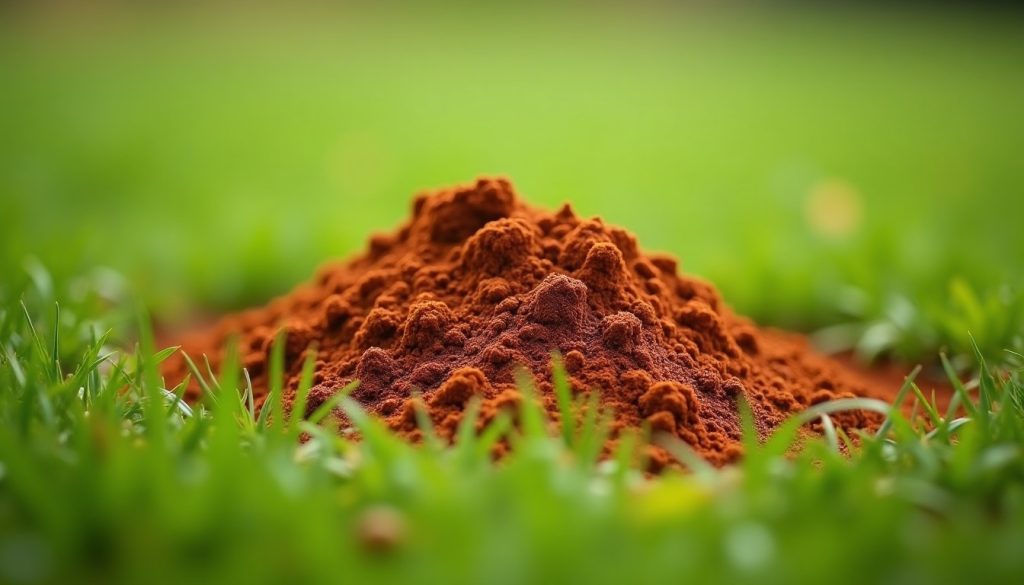
A federal quarantine covers more than 367 million acres across 13 states and Puerto Rico, and it quietly shrank in August 2025 when USDA removed Doña Ana County, New Mexico, taking the count down from 14 states. The quarantine binds businesses moving soil, sod, nursery stock, hay and used earth-moving equipment, not homeowners. For the yard itself, extension research is blunt: broadcast bait reduces colonies by 80% to 90%, and treating mounds one at a time is what most people do and why their yard keeps getting reinfested.
Imported fire ants occupy a strange position. They are among the most regulated pests in the country and among the least understood by the people living with them. The federal rule has been in place since 1958 and almost nobody outside the nursery and sod trades knows it exists.
The quarantine, and who it actually binds
The quarantine regulates the movement of things that can carry a colony out of an infested area. The regulated articles are specific: fire ant queens and reproducing colonies, soil, plants with roots and soil attached, grass sod, baled hay and straw stored in contact with soil, used soil-moving equipment, and logs with soil attached.
| Who | What applies |
|---|---|
| Businesses regularly shipping regulated articles out of the area | Enter a compliance agreement, then certify each shipment |
| Businesses rarely shipping | Contact the state inspector several weeks ahead for a certificate or limited permit per load |
| Homeowners treating their own yard | Nothing. The quarantine does not require treatment or reporting |
The regulated states are Alabama, Arkansas, California, Florida, Georgia, Louisiana, Mississippi, North Carolina, Oklahoma, South Carolina, Tennessee, Texas and Virginia, plus Puerto Rico. Most published lists still say 14 states, because they predate the New Mexico removal.
The boundary moves in both directions. Virginia expanded its own quarantine in May 2025, adding six counties and four independent cities and bringing it to 18 counties and 15 independent cities, after earlier expansions in 2019 and 2022. Landscapers, sod farms, hay producers and excavation contractors are the businesses most likely to be caught out by a boundary change they did not know about. Our licensing and regulation tracker covers the wider compliance picture for operators.
Why mound-by-mound treatment keeps failing
Texas A&M research puts the share of people who try to control fire ants by treating individual mounds at about 80%. It also explains why that approach disappoints.
- The treatment has to kill the queen, or the colony survives.
- Some nests are never seen. Untreated colonies nearby are read as the same colony moving around.
- Deep-dwelling colonies surface later, often forming visible mounds after heavy rain.
- Treated areas are recolonised from untreated ground nearby, and colonies float in on floodwater.
- The economics are poor. Mound treatment can run to a couple of dollars per mound in product and takes substantial labour, and densities reach 200 to 300 mounds per acre where multiple-queen colonies are established.
Individual mound treatment is sensible in one situation: a small area with fewer than about 20 mounds per acre.
The two-step method, and what it delivers
The extension standard is broadcast bait first, spot treatment second.
- Broadcast a bait once or twice a year across the whole area. Extension puts the result at 80% to 90% colony reduction, with Clemson reporting 85% to 95% for baits generally.
- Treat only the nuisance mounds that remain, no sooner than 24 hours after the bait, and often a week or more later. This step is frequently unnecessary.
Timing controls whether the bait works at all. Ants have to be foraging to carry it back, which means surface soil temperature roughly between 70 and 95 degrees Fahrenheit. The usual test is to put out a small amount of bait and see whether ants find it within about 30 minutes. Bait is also ruined by water, so it needs a dry window of about 12 hours and should not be watered in or applied before rain. The typical calendar is a spring application around late May or early June and an autumn one around late September or early October.
Speed varies by active ingredient, and expectations should follow. Some baits work within 3 to 10 days, others take 2 to 3 weeks broadcast, and insect growth regulators can take 1 to 2 months applied in spring and up to 6 months applied in autumn. A bait that has not visibly worked in a week has not necessarily failed.
Two things worth knowing before buying anything. Fire ants cannot be eliminated entirely, because not all infested ground can be treated, so the realistic goal is suppression. And coordinated treatment across neighbouring properties has been shown to improve control and reduce cost, which is the argument for getting a street to act together rather than one yard at a time. For pricing, see ant control costs. On home remedies, extension testing found boiling water works about 60% of the time and kills plants, while grits, molasses, aspartame and club soda do not work, and gasoline or diesel is strongly discouraged.
The sting, in proportion
Roughly 40 million people live in infested areas of the southeastern United States, and an estimated 14 million are stung each year. A survey of South Carolina health practitioners estimated more than 33,000 people sought medical attention for stings in a year, of whom about 660 were treated for anaphylaxis.
Published anaphylaxis rates conflict. One frequently cited study puts severe allergic reactions at 0.6% to 6% of people stung and attributes more than 80 deaths to them; the same extension document elsewhere states less than 1%. The honest position is that severe reactions are uncommon but not rare enough to ignore in a household where someone has a known sting allergy.
The sterile pustule that forms within a day is caused by an alkaloid in the venom killing cells, and generally dries up over a couple of weeks. Ants begin stinging within 10 to 20 seconds of climbing onto someone, which is why disturbing a mound produces so many stings at once.
About the $6 billion figure
The number quoted everywhere traces to a Texas A&M economic study published in August 2006, which put the national cost at roughly $6.3 billion a year including insecticide spending. It is a modelled extrapolation from survey data, not a measurement, and it has not been updated in 20 years. Variants circulating at $6.7 billion or $8 billion are re-quotes and inflation guesses rather than new research.
Frequently asked questions
Is there a federal quarantine for fire ants?
Yes. A federal imported fire ant quarantine under 7 CFR 301.81 has existed since 1958 and now covers more than 367 million acres across 13 states and Puerto Rico. USDA removed Doña Ana County, New Mexico in August 2025, which took the count from 14 states to 13.
Does the fire ant quarantine apply to homeowners?
Not in any practical sense. It regulates the movement of regulated articles such as soil, sod, nursery stock, baled hay stored on soil and used soil-moving equipment out of quarantined areas. Businesses that ship those things need a compliance agreement or a certificate. Homeowners are not required to treat or report.
What is the two-step method?
Broadcast a fire ant bait across the area once or twice a year, which extension research puts at 80% to 90% colony reduction, then treat only the remaining nuisance mounds no sooner than 24 hours later. The second step is often unnecessary.
How long does fire ant bait take to work?
It depends on the active ingredient. Some products work in 3 to 10 days, others in 2 to 3 weeks when broadcast, and insect growth regulators can take 1 to 2 months applied in spring or up to 6 months applied in autumn. Slow action is normal rather than a sign of failure.
Why do fire ants keep coming back after I treat the mounds?
Because mound treatment only works if it kills the queen, misses nests you never saw, and does nothing about colonies in untreated ground nearby. Deep colonies also surface after heavy rain, and colonies can float in on floodwater. Broadcast bait addresses the area rather than the visible mounds.
Can you get rid of fire ants permanently?
No. Extension guidance states plainly that fire ants cannot be eliminated entirely because it is not possible to treat all infested areas. Suppression maintained with one or two bait applications a year is the realistic objective.
When is the best time to treat for fire ants?
When ants are actively foraging, with surface soil temperatures roughly between 70 and 95 degrees Fahrenheit, and with about 12 dry hours after application. In much of the range that means late May to early June and again in late September to early October.
Sources
- USDA APHIS, Imported Fire Ants. Last modified August 2026. aphis.usda.gov
- Electronic Code of Federal Regulations, 7 CFR 301.81, Imported Fire Ant. ecfr.gov
- Drees BM, Nester P, Brown W, Keck M and Flanders K, Fire Ant Control: The Two-Step Method and Other Approaches, Texas A&M AgriLife Extension ENTO-034. tamu.edu
- Drees BM, Medical Problems and Treatment Considerations for the Red Imported Fire Ant, Texas A&M AgriLife Extension ENTO-005. tamu.edu
- Clemson Cooperative Extension, Fire Ant Management in the Home Lawn, HGIC. hgic.clemson.edu
- Virginia Department of Agriculture and Consumer Services, Expansion of Virginia’s Imported Fire Ant Quarantine, May 2025. vdacs.virginia.gov