Harvester Ants: Stings, Mounds and the Horned Lizard Link
Harvester ants are large, seed-collecting ants in the genus Pogonomyrmex, usually 1/4 to 1/2 inch long and red to dark brown, that nest under a bare, cleared patch of ground and deliver one of the most painful ant stings in North America. There are 22 US species, most in the West and Southwest; only the Florida harvester ant lives east of the Mississippi River. Their venom is the most toxic measured for any bee, wasp or ant, yet they rarely sting unless the nest is disturbed. Extension services advise leaving them alone unless a nest sits where children, pets or foot traffic meet it.
Harvester ants are also the main food of the Texas horned lizard, which is why treating them carelessly has consequences beyond the yard.
Harvester ant vs fire ant
| Harvester ants | Red imported fire ant | |
|---|---|---|
| Worker length | 1/4 to 1/2 in (about 6 to 13 mm); western harvester 5 to 7 mm | 2.4 to 6 mm (1/8 to 1/4 in) |
| Colour | Red, rust, brown or black | Reddish-brown, darker abdomen |
| Nest | Flat disc or low gravel mound in a cleared circle, single central hole | Soil mound, seldom over 18 in across |
| Bare ground around nest | Yes, 3 to 35 ft across (not the Florida species) | No |
| Temperament | Defends the nest but generally reluctant to attack | Emerges aggressively to bite and sting when the mound is disturbed |
| Sting pain (Schmidt scale, 1 to 4) | 3 | 1 |
| Pain duration | Waves of deep pain for 4 to 8 hours | White pustule usually appears the next day |
| Food | Mainly seeds, some dead insects | Omnivore |
| Native? | Yes | No, invasive |
| Treatment approach | Only problem mounds, one at a time | Broadcast bait plus mound treatment |
Compiled by The Pest Control Brief from Texas A&M AgriLife E-402, University of Arizona Cooperative Extension, Colorado State University Extension, UF/IFAS IN352 and Schmidt (2019), Toxins.
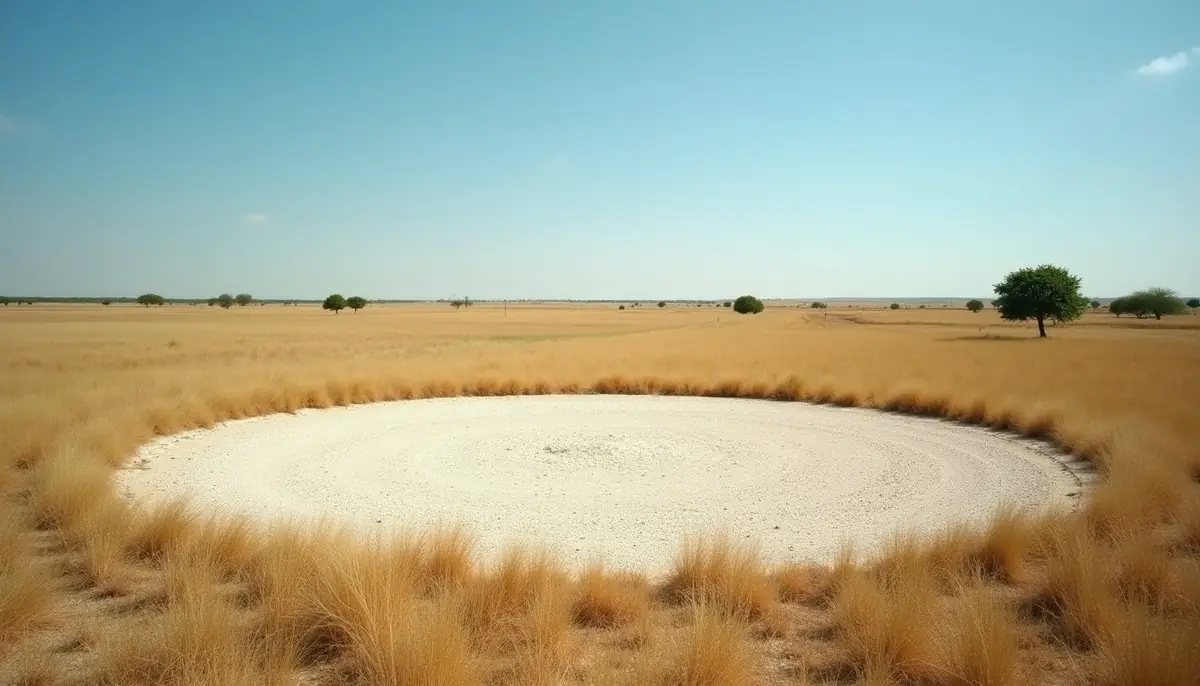
The fastest field test is the yard itself. UF/IFAS describes fire ant mounds as built of soil and seldom larger than 18 inches across, with no cleared ground around them. Texas A&M describes red harvester ant nests as barren circular areas with a single entry hole, often with small pebbles spread around it, and trails radiating out to the surrounding vegetation. For other species, our ant identification guide walks through the waist and size checks: harvester ants have a two-segment waist, like fire ants.
What is a harvester ant?
A native ant that lives on seeds. UF/IFAS explains that the genus got its name from its practice of gathering seeds for food, and counts 22 species in the US. The three most homeowners meet are:
- Red harvester ant (Pogonomyrmex barbatus): generally red, workers 1/4 to 1/2 inch according to Texas A&M E-402. Range runs from Kansas and Oklahoma through western Texas into Mexico and across New Mexico and Arizona, sporadically into southern Utah.
- Florida harvester ant (P. badius): dark rust red, workers 1/4 to 3/8 inch and, unusually for the genus, of several sizes including big-headed majors. UF/IFAS gives its range as Florida to North Carolina and west into Mississippi and Louisiana.
- Western harvester ant (P. occidentalis): Colorado State describes workers as moderately large, 5 to 7 mm, reddish-brown, on grassland across the plains and western valleys.
Where do harvester ants live?
In open, sunny, dry ground: grassland, desert, rangeland, pasture edges, road shoulders and lawns. Texas A&M says red harvester ants nest in soil on open land and may be more common on cultivated land because of the food. The Florida harvester ant nests by preference in sand and prefers xeric hammocks, with many nests on lawns, around gardens and in fire lanes, according to UF/IFAS.
Our analysis of 27,807 iNaturalist research-grade records of the genus shows where people find them most often relative to everything else they record. New Mexico leads at 28.2 records per 10,000 observations, followed by Arizona at 18.9. Florida ranks third, entirely on the one eastern species, and Texas has the most records of any state at 8,299. North Dakota and South Dakota rank well, but on only 47 and 83 records.

What do harvester ants eat?
Mostly seeds, stored underground. The University of Arizona says harvester ants forage primarily for seeds but sometimes feed on insects, and typically gather only one seed species until it is gone before switching. Texas A&M lists alfalfa, burr clover, Johnson grass, oats, wheat, Bermuda grass, wild sunflower, mesquite and beans among the seeds red harvester ants take. Our guide to what ants eat sets that diet against the sugar and protein feeders that end up indoors.
The mound and the cleared disc
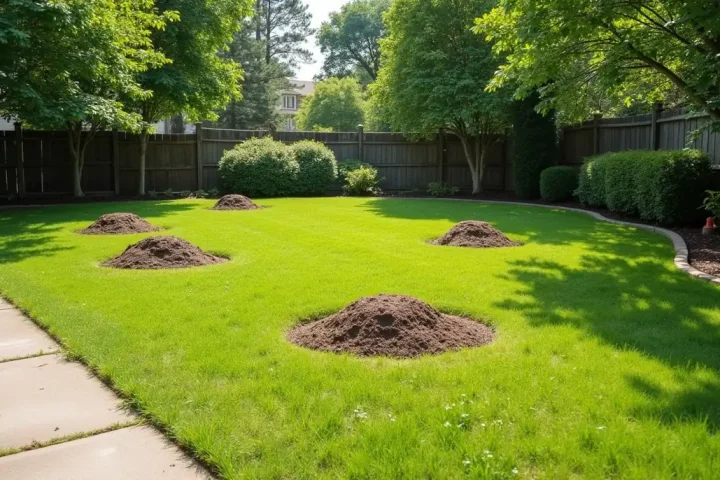
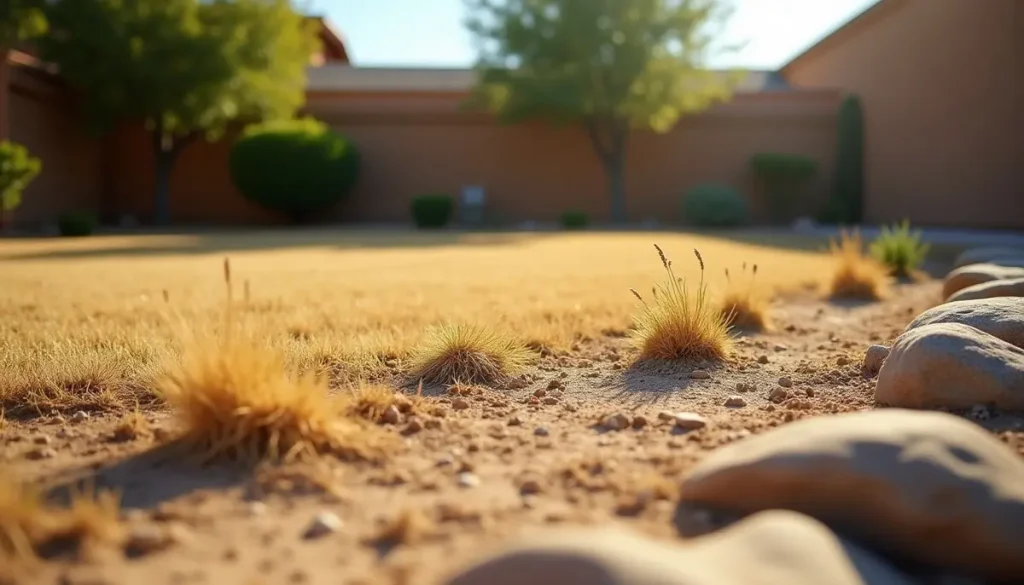
The bare circle is deliberate. The University of Arizona says workers keep the nest area free of vegetation to regulate underground temperature, and Colorado State adds that the mound, its surface covering and the clearing all help to warm the nest. Texas A&M puts the average red harvester nest area at about 12 feet across, with a range of 3 to 35 feet, and foraging trails reaching out 200 feet.
Underground, nests are commonly three feet deep, but Texas A&M reports one red harvester nest reaching 15 feet with 436 chambers. Colonies last: Nevada extension says a colony can survive 15 to 20 years, and UF/IFAS records a Florida harvester colony lasting at least 19 years. The Florida species is the exception to the cleared-disc rule: its mound is a slight, flattened patch 12 to 24 inches across, and it makes no effort to clear vegetation. It also moves house on average once every 234 days when plants shade the nest.
Do harvester ants bite?
They bite to grip, but the pain comes from the sting. Texas A&M calls it a painful, stinging bite and notes that workers are generally reluctant to attack. The University of Arizona says some species have stingers with reverse barbs that pull out when used, much like honey bees. Colorado State adds that the stinger is relatively short and cannot penetrate thicker areas of skin
Are harvester ants poisonous?
Venomous, not poisonous: they inject venom with a sting, and are not harmful to touch or eat. The venom is exceptional. Schmidt and Blum reported in Science in 1978 that the mammalian toxicity of Florida harvester ant venom was greater than that reported for any other insect venom. Schmidt’s 2019 review in Toxins, which compiled data for 90 stinging insects, gives North American harvester ants a lethal dose of 0.12 to 0.7 mg per kg in mice across 20 species, against 2.8 for the honey bee, and calls their venoms the most toxic known from any of the Hymenoptera.
Toxic per milligram is not the same as dangerous per sting. Each ant delivers a tiny dose, and Schmidt and Blum concluded that the venom appears to have evolved as a deterrent for vertebrate predators. Schmidt and Snelling note that, apart from horned lizards, harvester ant workers have no major vertebrate predators.
How bad is a harvester ant sting?
Very painful and slow to fade. Schmidt rates every Pogonomyrmex species at 3 on his 1 to 4 sting pain scale, and describes intense waves of deep, agonizing pain that lasts 4 to 8 hours, with goosebumps and local sweating at the sting site. UF/IFAS says the Florida harvester ant almost has to be forced to sting, but that its sting is among the more painful from ants and lasts longer than usual.
| Insect | Schmidt sting pain (1 to 4) | Venom LD50 in mice (mg/kg) |
|---|---|---|
| Red imported fire ant | 1 | No data in the table |
| Honey bee | 2 | 2.8 |
| German yellowjacket | 2 | 2.8 |
| North American harvester ants (20 species) | 3 | 0.12 to 0.7 |
| Cow killer velvet ant | 3 | 70 |
| Tarantula hawk (Pepsis grossa) | 4 | 90 |
| Bullet ant | 4 | 1.4 |
Source: Schmidt (2019), Pain and Lethality Induced by Insect Stings, Toxins, Table 1. Lower LD50 means more toxic venom.
The table shows why harvester ants are unusual: most insects with a painful sting, like the velvet ant and the tarantula hawk, have weak venom, and most with lethal venom hurt little. Harvester ants score high on both.
Are harvester ants dangerous?
Rarely, but a sting is not trivial. Texas A&M E-402 says the effects can spread along lymph channels and can be medically serious, and Nevada extension says allergic reactions are uncommon but not unheard of, so anyone allergic to other insect stings should be cautious. UF/IFAS notes that at least one death, a child in Oklahoma, has been credited to red harvester ant stings. Anyone with swelling beyond the sting site, hives or trouble breathing after a sting needs emergency care; for anything else, ask a doctor or pharmacist.
Why are harvester ants valuable?
Nevada extension credits them with dispersing seeds, increasing soil porosity and feeding other animals, and the University of Arizona notes research showing they change plant communities around their nests and create islands of extra nutrients. They have even been used for decades in children’s ant farms, according to Colorado State, because workers live a long time in captivity.
The horned lizard link
The Texas horned lizard depends on them. A Texas Parks and Wildlife Department bulletin says red harvester ants make up over 75 per cent of the lizard’s diet in most places, and the University of Arizona puts harvester ants at up to 90 per cent. The lizard is listed as threatened in Texas, and TPWD says the story of its decline hinges on what has happened to the red harvester ant.
Texas A&M E-402 lists the fire ant connections: red imported fire ants are believed to eliminate harvester ants and stop new colonies forming by preying on mated harvester queens, and many insecticides used against fire ants are toxic to harvester ants and kill them more efficiently than they kill fire ants. TPWD adds that fire ants compete with harvester ants for the same grass and forb seeds. If you treat fire ants under the method in our fire ant quarantine guide, E-402’s advice is to avoid broadcast fire ant baits in areas where harvester ants are found.
Harvester ants are seasonal. Relative to everything people record on iNaturalist, they peak in March and April and again in October and November, dip in the summer heat of June and July, and are scarcest in January and February. Nevada extension notes they are least active in midday heat, and mating flights follow rain: Texas A&M says red harvester ants swarm most commonly after rain in August and September, and UF/IFAS gives June to October for the Florida species, mostly August and September.
How to get rid of harvester ants
First decide whether you need to. Nevada extension says it is best to leave nests alone if possible and to remove them where children or pets are often nearby. UF/IFAS says management is generally not necessary unless the ant is where small children play. The decision rule is simple:
- Leave it if the nest is in a quiet corner, pasture, field edge or open land, and always where horned lizards still occur.
- Treat it if the nest is beside a path, patio, play area, dog run or doorway where people or pets will step on it.
When a nest has to go:
- Try mowing, discing or shade. Texas A&M says regular discing and mowing may eliminate them without insecticides, and Nevada extension reports that nests shaded by plants or human activity often leave.
- Bait the single mound. Arizona and Texas A&M both say baits labelled for harvester ants or lawns are very effective. Scatter bait around that nest only, not across the whole yard.
- Time it. UF/IFAS and the University of Arizona advise treating during the hottest part of the day, when the ants are least active.
- Be patient. Nevada extension says baits and diatomaceous earth take time, with results seen after about two weeks.
- Follow the label exactly, wear closed shoes and long trousers near the mound, and keep children and pets away until the product is dry or watered in as the label directs.
Consider a licensed professional when there are many mounds across a large property. Harvester ants do not invade homes, according to both Texas A&M and Nevada extension, so indoor treatment is never needed.
Frequently asked questions
What is a harvester ant?
A harvester ant is a native seed-eating ant in the genus Pogonomyrmex. Workers are usually 1/4 to 1/2 inch long and red to dark brown. They nest under a cleared, bare circle of soil with a single central entrance and store seeds in underground chambers. There are 22 US species, mostly in the West and Southwest; only the Florida harvester ant occurs east of the Mississippi River.
Are harvester ants poisonous?
They are venomous rather than poisonous, meaning they inject venom through a sting. Harvester ant venom is the most toxic measured for any bee, wasp or ant: Schmidt’s data give 0.12 to 0.7 mg per kg in mice, against 2.8 for honey bee venom. Each sting delivers only a tiny amount, so the main effect for most people is severe, lasting pain rather than danger.
How to get rid of harvester ants?
Treat only nests where people or pets will be stung. Mowing, discing or shading the nest can drive a colony away without chemicals. Otherwise, scatter a bait labelled for harvester ants around that single mound during the hottest part of the day, follow the label, and expect results in about two weeks. Avoid broadcasting fire ant bait where harvester ants and horned lizards live.
Do harvester ants bite?
They grip with their jaws, but the pain comes from a sting. Schmidt rates the sting 3 on a 1 to 4 scale and describes waves of deep pain lasting 4 to 8 hours, often with goosebumps and sweating at the site. Some species leave the stinger behind. Stings mostly happen when someone stands on or disturbs the nest. Seek urgent care for swelling, hives or breathing trouble.
What do harvester ants eat?
Mainly seeds of grasses, weeds and crops, which they gather and store in underground granaries, plus some dead insects. The University of Arizona notes they usually collect one seed species until it runs out before switching to another. Texas A&M lists alfalfa, clover, Johnson grass, oats, wheat, Bermuda grass, sunflower, mesquite and beans among red harvester ant seeds.
Sources
- Texas A&M AgriLife Extension, E-402, Red Harvester Ants (Drees), 2006.
- Texas A&M University, Urban and Structural Entomology Program, Red Harvester Ants, Pogonomyrmex barbatus.
- University of Florida IFAS, Featured Creatures EENY-298 (IN536), Florida Harvester Ant (Nickerson and Fasulo), revised 2024.
- University of Florida IFAS, IN352, Red Imported Fire Ant.
- University of Arizona Cooperative Extension, Backyard Gardener 16, Harvester Ants (Schalau), 2022.
- Colorado State University Extension, Colorado Insects of Interest: Harvester Ants.
- University of Nevada, Reno Extension, Fact Sheet 23-32, A Northern Nevada Homeowner’s Guide to Identifying and Managing Harvester Ants, 2023.
- Schmidt, J. O., Pain and Lethality Induced by Insect Stings: An Exploratory and Correlational Study, Toxins 11: 427, 2019.
- Schmidt, J. O. and Blum, M. S., A harvester ant venom: chemistry and pharmacology, Science 200: 1064 to 1066, 1978.
- Schmidt, J. O. and Snelling, G. C., Pogonomyrmex anzensis Cole: does an unusual harvester ant species have an unusual venom? Journal of Hymenoptera Research 18: 322 to 325, 2009.
- Texas Parks and Wildlife Department, Landowner Incentive Program Bulletin, Vol. 7, Summer 2014, Texas horned lizards.
- The Pest Control Brief analysis of iNaturalist research-grade records, pulled October 2026.