Rat Snakes: Identification, Bites and Why They Climb Houses

Rat snakes are large, non-venomous constrictors that eat rodents, birds and eggs, and they often turn up in attics, barns and chicken coops. Adults usually measure 3.5 to 6 feet. They bite only when grabbed or cornered, and North Carolina’s wildlife agency says even a large one’s bite is no worse than a briar scratch. Blotched young rat snakes are often mistaken for copperheads; the round pupil, belly pattern and head markings tell them apart.
The name covers several North American species in the genus Pantherophis: the black or eastern rat snake (P. alleghaniensis), the western rat snake (P. obsoletus), the gray rat snake (P. spiloides) and their close relative the corn snake (P. guttatus). The Florida Museum notes their names have changed many times and are still not universally accepted.
Rat snake or copperhead? The comparison that matters
A young rat snake is easy to mistake for a copperhead: both are brown or grey with dark markings, and both freeze and vibrate their tails. Use several features together.
| Feature | Young rat snake | Copperhead (any age) |
|---|---|---|
| Venomous? | No | Yes, a pit viper |
| Pupil | Round | Vertical, cat-like |
| Heat pit between eye and nostril | None | Present |
| Body pattern | Dark blotches on grey or tan, widest on the back, often H-shaped | Hourglass crossbands: narrow on the spine, wide on the sides |
| Head | Dark band between the eyes angling down towards the mouth | Plain copper or tan top of head, thin dark line from eye to jaw |
| Belly | Black checkerboard squares | Whitish, mottled, with dark smudges along the sides |
| Tail tip of young | Same colour as the body | Bright sulphur yellow in newborns |
| Scales | Weakly keeled, fairly smooth | Keeled, rough |
| Body in cross section | Loaf-shaped, flat belly with angled edges | Stout, slightly triangular |
Compiled by The Pest Control Brief from the Florida Museum of Natural History, University of Georgia Savannah River Ecology Laboratory, Missouri Department of Conservation, North Carolina Wildlife Resources Commission, Connecticut DEEP and the Vermont Reptile and Amphibian Atlas.
Head shape is the least reliable feature: the Florida Museum warns that many harmless snakes flatten and widen their heads when threatened. If you cannot see the pupils or belly from a safe distance, treat the snake as venomous and leave it alone. Our guide to the copperhead snake covers the venomous side in detail.

Identification: how big rat snakes get and what they look like
Most adult eastern, gray and western rat snakes are 42 to 72 inches (106 to 183 cm) long, according to the Florida Museum and the Missouri Department of Conservation. Missouri records occasional western rat snakes to 86 inches, and the Florida Museum gives a record of 101 inches (256.5 cm). Corn snakes are smaller, usually 30 to 48 inches. Colour depends on where you live:
- Black rat snake (Appalachians, Piedmont, Midwest, Northeast): glossy black with a white chin and throat, often with traces of the juvenile blotches and a black checkerboard belly.
- Yellow form (Coastal Plain of Florida, Georgia and the Carolinas): yellow, orange or greenish with four dark stripes along the body.
- Gray rat snake (in Florida, west of the Apalachicola River): light grey with darker grey blotches throughout life.
- Western rat snake (west of the Mississippi River, including Missouri): usually shiny black, sometimes with dark blotches, and the skin between the scales may show red.
- Corn snake (Southeast): orange to reddish brown with black-edged blotches, a spear-shaped head mark and a black and white checkerboard belly.
What does a baby rat snake look like?
Young rat snakes look nothing like the black adults. Missouri describes them as grey or tan with dark blotches on the back and sides and a black band between the eyes angling down towards the mouth; Connecticut adds a large head and a checkerboard belly. The Vermont atlas says the pattern lasts while they are under 20 inches, with blotches more H-shaped than round, and that by 3 feet long they are mostly black, which Missouri puts at a year or two of growth.
Black rat snake or black racer?
The racer is slimmer and faster, with smooth scales, a plain belly and no black lines on the lips, according to the Savannah River Ecology Laboratory. Connecticut adds that the rat snake has a square body and a visible iris, where the racer’s eye looks uniformly dark. Racers flee; a rat snake is more likely to freeze in a kinked posture or climb.
Are rat snakes poisonous or dangerous?
No. Rat snakes are non-venomous and kill by constriction. The Florida Museum states they are not dangerous to people or pets and that virtually all bites happen when someone deliberately handles or harasses one. The display can look alarming: cornered, they take an S-shaped striking posture and vibrate the tail tip, which buzzes in dry leaves like a rattle. If grabbed they bite and release a foul-smelling musk.
Do rat snakes bite?
They do if handled roughly or pinned, but North Carolina’s wildlife agency says a bite from even a large one is no more severe than a briar scratch. If you are not certain the snake was a rat snake, treat the bite as possibly venomous and call Poison Control on 1-800-222-1222 or a doctor; our bite identification guide explains why a mark alone rarely settles the question.
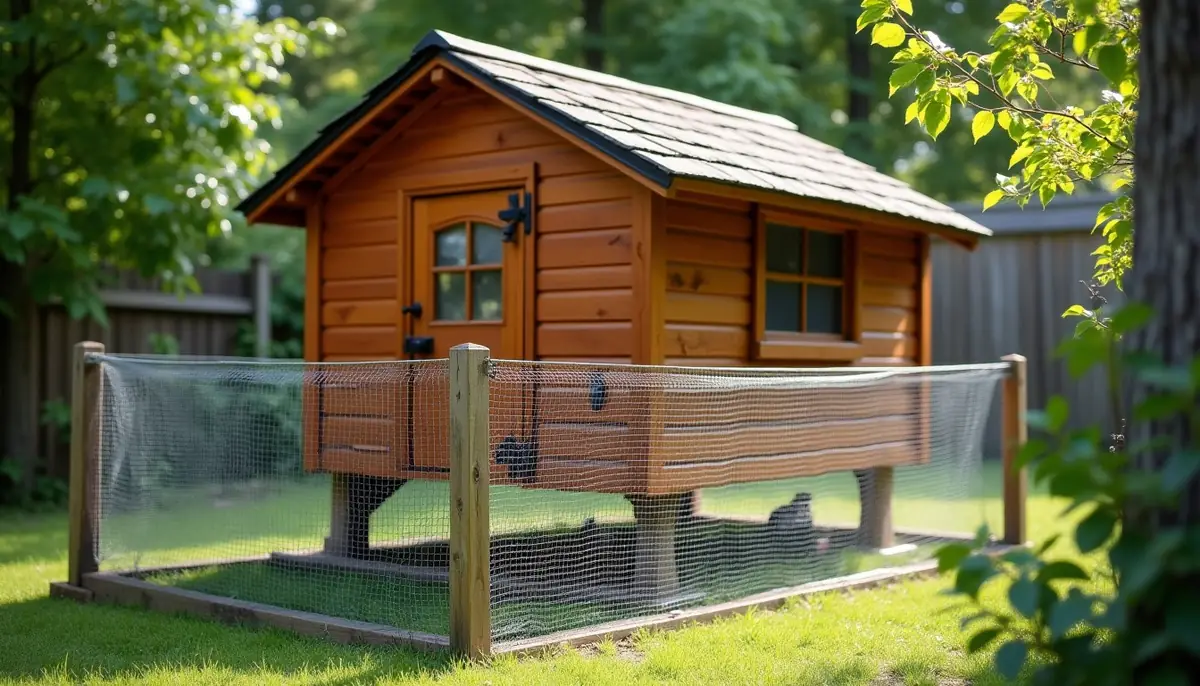
What do rat snakes eat?
Adults eat mostly rodents, squirrels, birds and bird eggs, according to the Savannah River Ecology Laboratory; Missouri adds small rabbits and bats. Young rat snakes start on frogs, lizards and small mammals. That diet explains why they turn up near people: barns and attics hold mice, coops and nest boxes hold eggs. Missouri’s conservation department calls them a valuable natural rodent control whose benefits far outweigh the occasional theft of a few hens’ eggs or chicks. For how much any predator really dents a mouse problem, see what eats mice: a snake helps outdoors but will not clear an indoor infestation.
Why rat snakes climb houses, attics and bird boxes
Rat snakes are exceptional climbers. North Carolina’s agency explains that their bodies are shaped like a loaf of bread in cross section, an adaptation believed to help with climbing, and Connecticut DEEP says this square shape lets them climb high in trees, attics and haylofts. Missouri notes they can be found along beams in barns and attics and between the walls of homes. North Carolina reports they enter buildings more often than any other snake in the state, and that large shed skins found indoors are usually theirs. Where they come in:
- Attics and soffits, reached via overhanging branches, vines and gaps at the roofline, usually because mice, squirrels or nesting birds are already up there. See squirrels in the attic for the roofline gaps involved.
- Chicken coops, through any gap at ground level or under the eaves, for eggs and chicks.
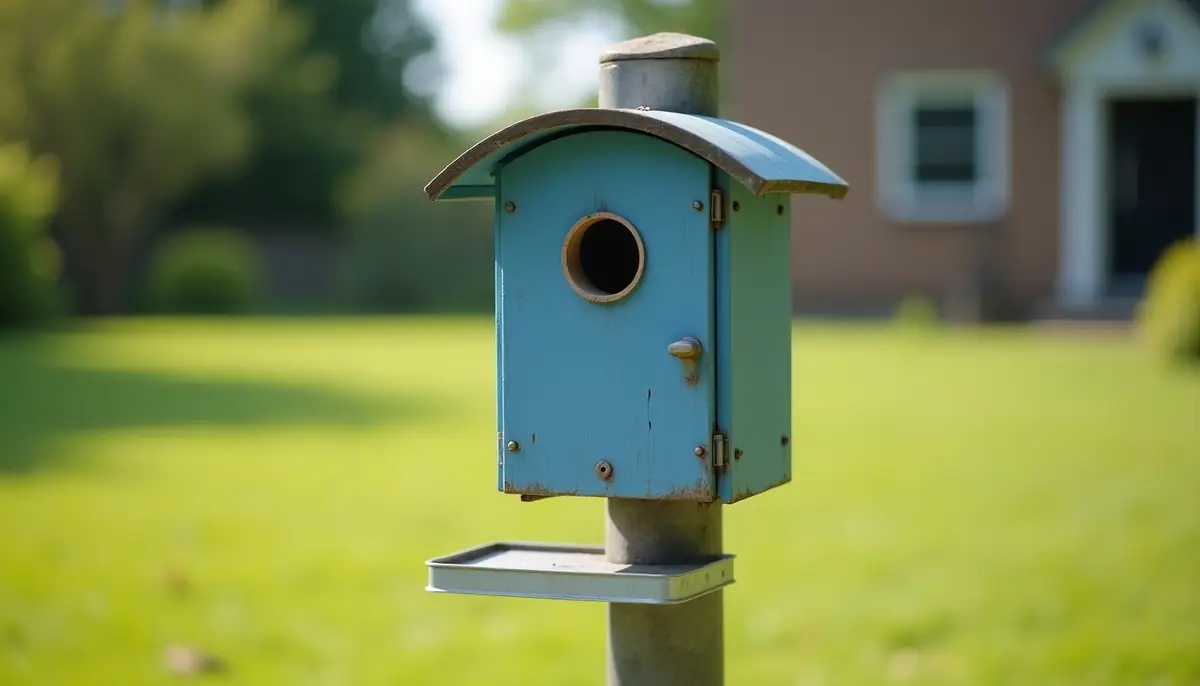
- Bird boxes, climbed from poles or overhanging branches; Missouri notes rat snakes often climb trees to raid nests, including bird boxes.
Where rat snakes live: our iNaturalist analysis
Rat snakes range across the eastern and central US, from New England south to Florida and west into the Great Plains. The Florida Museum notes they are often found in suburbs where development pushes into good habitat. We measured how often Pantherophis rat snakes appear among all research-grade iNaturalist observations in each state, which corrects for some states having more people recording wildlife.
Kansas has the highest rate, at 51.33 rat snake records per 10,000 observations, followed by Georgia (38.43), South Carolina (37.90) and North Carolina (36.37). Texas has the most records in raw terms, 22,830, followed by Florida with 14,968, but because both states record so much other wildlife their rates are lower, 20.62 and 26.70. The genus count includes corn snakes, fox snakes and Great Plains rat snakes, so a high rate on the plains reflects several species. These are sightings, not population counts.
When rat snakes are active
Rat snakes are active in the warmer months and hibernate for 2 to 4 months in winter, often in communal dens shared with racers and copperheads, according to the Savannah River Ecology Laboratory and Connecticut DEEP. They hunt by day in spring and autumn and switch to night activity in summer heat.
Both main species peak sharply in May: the eastern or black rat snake reaches 235 on our index and the western rat snake 232, more than twice their usual share of what people record. That matches the mating season, which runs from April to June. Records dip in July and August, when the snakes turn nocturnal and fewer are seen, then rise again in September and October, when hatchlings emerge. Copperheads, shown for contrast, peak in September instead. May is when you are most likely to see one on a porch or in a garage.
Rat snake eggs
Females lay white, elongated eggs in rotting logs, leaf piles, sawdust, mulch heaps and abandoned burrows in early to mid summer, and do not guard them. Missouri says eggs are laid in June or early July and hatch in autumn after 42 to 84 days; North Carolina gives 65 to 70 days and the Savannah River Ecology Laboratory about 60. A mulch or compost heap near the house can be a nest site.
How to get rid of rat snakes
Moving one on
- Give it time, or use a hose. A rat snake outdoors usually leaves on its own; for one on a doorstep or driveway, North Carolina’s agency recommends a spray of water from a hose to get it moving at a safe distance.
- Indoors, use a broom and a box. Mississippi State Extension suggests sweeping the snake into a box that can be sealed and releasing it away from houses. Do not grab it by the tail. For a snake you cannot find, it describes leaving rumpled damp cloths where the snake is likely to hide, then lifting the bundle into a box with a shovel.
- Call a wildlife control operator for a snake in a wall, attic or ductwork, or whenever you are not sure it is harmless. North Carolina’s wildlife agency, for one, does not remove snakes itself. Our guide to snake removal cost gives typical prices.
Keeping them out
- Deal with rodents first. Store pet food and bird seed in closed containers, as Mississippi State advises.
- Seal gaps. Close openings larger than a quarter inch around the foundation, pipes and wires, as Mississippi State specifies. See rodent exclusion materials for which products stand up to chewing.
- Coops: collect eggs daily and close every gap at ground level and under the eaves with the same quarter-inch hardware cloth, not wide-mesh wire.
- Bird boxes: mount them on a smooth metal pole away from trees and add a guard. Tennessee’s wildlife agency rates a 24-inch length of 8-inch aluminium stovepipe as the most effective simple guard, and Cornell’s NestWatch says a cone-shaped metal collar stops most snakes, with very large ones occasionally getting past.
- Remove cover. Clear brush, board and rock piles near the house and raise firewood at least 12 inches off the ground. See how to keep snakes away for the full list.
- Skip repellents. Mississippi State reports that sulfur, lime, mothballs, cayenne spray, creosote and king snake musk were all tested against black rat snakes and none worked.
Is it legal to kill a rat snake?
It depends on the state, and in several it is not. Check your state wildlife agency before acting.
| State | Status of rat snakes | Source |
|---|---|---|
| Missouri | All native snakes protected; killing is illegal except a venomous snake close enough to people that it might bite someone | Missouri Department of Conservation |
| Georgia | Protected | University of Georgia SREL |
| North Carolina | Nongame species with no open season; collecting needs a licence above a small personal limit | NC Wildlife Resources Commission |
| Vermont | Listed as threatened; the state asks for sightings to be reported | Vermont Reptile and Amphibian Atlas |
| Mississippi | Most snakes not protected, but no native snake may be bought or sold | Mississippi State University Extension |
Frequently asked questions
Are rat snakes poisonous?
No. Rat snakes have no venom and kill their prey by constriction. North Carolina’s wildlife agency says a bite from even a large one is no more severe than a briar scratch, and bites happen almost only when a snake is grabbed or cornered. If you are unsure what bit you, treat it as possibly venomous and call Poison Control on 1-800-222-1222.
How to get rid of rat snakes?
Move the snake, then remove the attraction. Outdoors, give it time or spray it gently with a hose; indoors, sweep it into a sealable box, or call a wildlife control operator if it is in a wall or attic. Then control rodents, seal gaps over a quarter inch, guard coops and bird boxes, and clear brush. Repellents such as mothballs and sulfur failed in tests on black rat snakes.
Do rat snakes bite?
Yes, but only in self-defence. When cornered they coil, strike and vibrate the tail, and if grabbed they bite and release a strong-smelling musk. North Carolina’s wildlife agency compares even a large one’s bite to a briar scratch, and the snake has no venom. Leaving rat snakes alone is the easiest way to avoid a bite.
What do rat snakes eat?
Adults eat mainly rodents such as mice, rats, chipmunks and squirrels, plus birds and their eggs, and occasionally small rabbits and bats. Young rat snakes eat frogs, lizards and small mammals. Larger prey is constricted and small prey often swallowed alive. Eggs and chicks draw them to coops and bird boxes; mice draw them to barns and attics.
What does a baby rat snake look like?
A young rat snake is grey or tan with bold dark brown or black blotches down the back and sides, a dark band across the head between the eyes, round pupils and a checkerboard belly. It keeps this pattern until roughly 20 inches to 3 feet long, then darkens to black in most regions. It is often confused with a copperhead, which has hourglass bands, vertical pupils and, when newborn, a yellow tail tip.
Sources
- Florida Museum of Natural History, Florida Snake ID Guide: Eastern Ratsnake, Gray Ratsnake, Red Cornsnake and Eastern Copperhead profiles.
- University of Georgia Savannah River Ecology Laboratory, Herpetology at SREL: Rat Snake, Corn Snake, Southern Black Racer and Eastern Copperhead.
- Missouri Department of Conservation, Field Guide: Western Ratsnake and Eastern Copperhead.
- North Carolina Wildlife Resources Commission, Rat Snake and Copperhead species pages.
- Connecticut Department of Energy and Environmental Protection, Wildlife Division, Eastern Ratsnake fact sheet.
- Vermont Reptile and Amphibian Atlas, Central Ratsnake (Pantherophis alleghaniensis).
- Mississippi State University Extension, Publication 2277, Reducing Snake Problems Around Homes.
- Tennessee Wildlife Resources Agency, Bird Nest Box Predator Guards.
- Cornell Lab of Ornithology NestWatch, Dealing with Predators.
- The Pest Control Brief analysis of iNaturalist research-grade records, pulled October 2026.