Can Mice Climb Walls? What They Can Climb, Jump and Squeeze Through

Yes: house mice can climb almost any rough vertical wall, including brick, stucco, concrete, wood and weathered sheet metal, and they run along wires, pipes and ropes. What stops them is a slick, smooth finish such as glass. Extension sources put a mouse’s standing jump at 12 to 18 inches onto a flat surface, so stairs are easy, and they can get under a gap only a quarter of an inch tall. A wall is a route for a mouse, not a barrier.
The short answer surprises people because a mouse looks like a floor animal. It is not. University of California IPM calls house mice “excellent climbers” that “can run up any rough vertical surface,” and the federal wildlife damage handbook lists climbing alongside gnawing, jumping and swimming as the ways mice get into buildings. The useful questions are which surfaces they can and cannot climb, how high they reach without climbing at all, and what that means for keeping them out.
What mice can and cannot climb
| Surface or route | Can a house mouse climb it? | What the sources say |
|---|---|---|
| Brick, stucco, concrete, wood siding | Yes | Rough vertical surfaces; Baker and colleagues list wood, brick and concrete by name |
| Weathered sheet metal and many plastics | Yes | Named in the same list; plastic is not automatically mouse-proof |
| Electrical wires, cables, ropes | Yes, along and up | UC IPM: they run horizontally along wire cables or ropes |
| Pipes, conduit, fences, poles | Yes | Climbed and crawled along, outside and inside buildings |
| Vines, shrubs, trees against the house | Yes | Listed as ways rodents reach a building |
| Window screen and wire mesh | Yes, even upside down | Mice can travel “considerable distances crawling upside-down along screen wire” |
| Inside wall voids, across ceilings | Yes | Climbing in walls and running across ceilings are classic mouse sounds |
| Stairs | Yes | A code-maximum riser is 7 3/4 inches, well under a mouse’s jump |
| Glass, polished metal, slick finishes | Usually not | The 1994 handbook: they walk up wood or concrete “unless the surfaces have a slick finish” |
Two entries in that table contradict much of what ranks for this question. Plastic is often listed as a surface mice cannot climb, yet the rodent-proofing chapter of Prevention and Control of Wildlife Damage names “many plastic products” among the surfaces rats and mice do climb. Weathered sheet metal is on the same list. A smooth, glossy finish is what defeats a mouse, not the material’s name, and finishes wear.
How mice climb walls
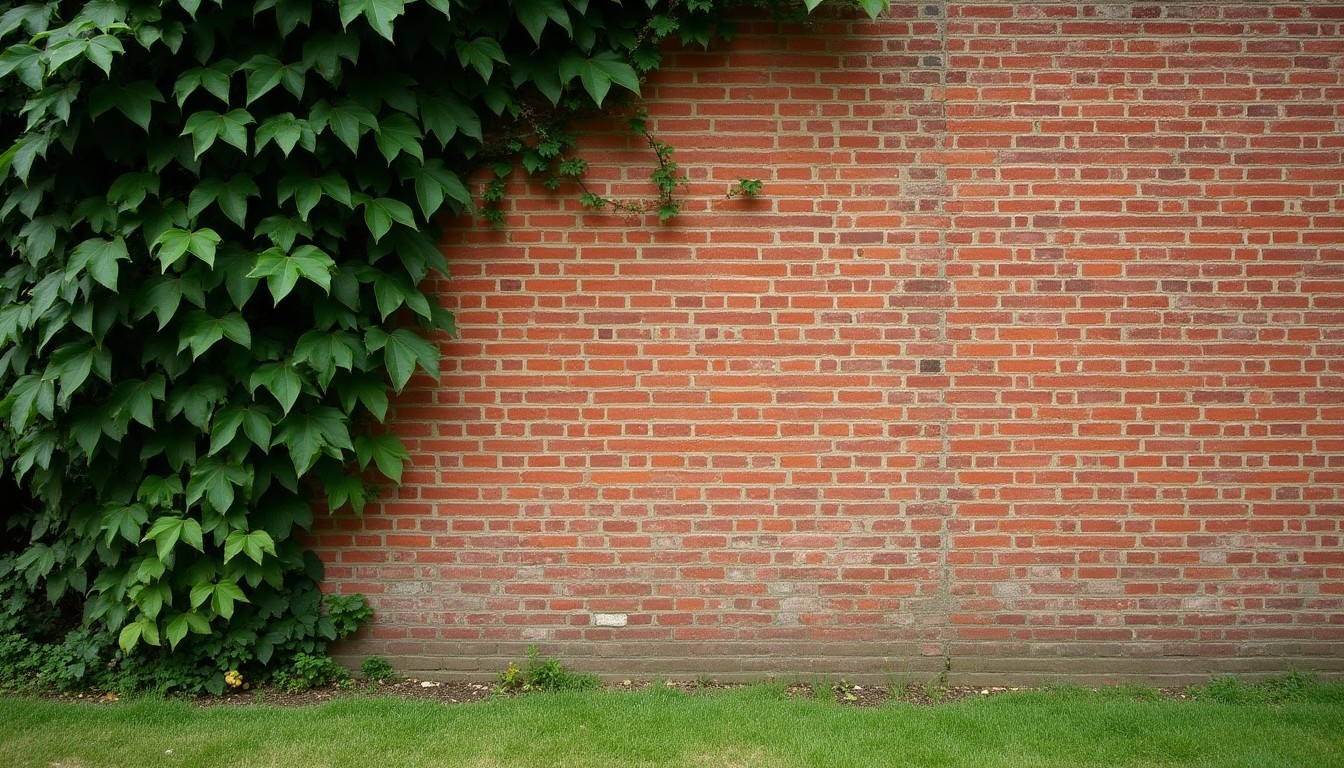
A mouse climbs a wall the way a person climbs a rock face: it needs texture to grip. Mortar joints in brick, the grain of stucco, the edges of siding laps and the seams of downpipes all give purchase. On a rough surface, the University of Arizona’s extension note says, a mouse “can run up a wall.” Inside a house the same skill lets mice move between floors inside wall cavities, along the back of pipework and up the cables that run through framing.
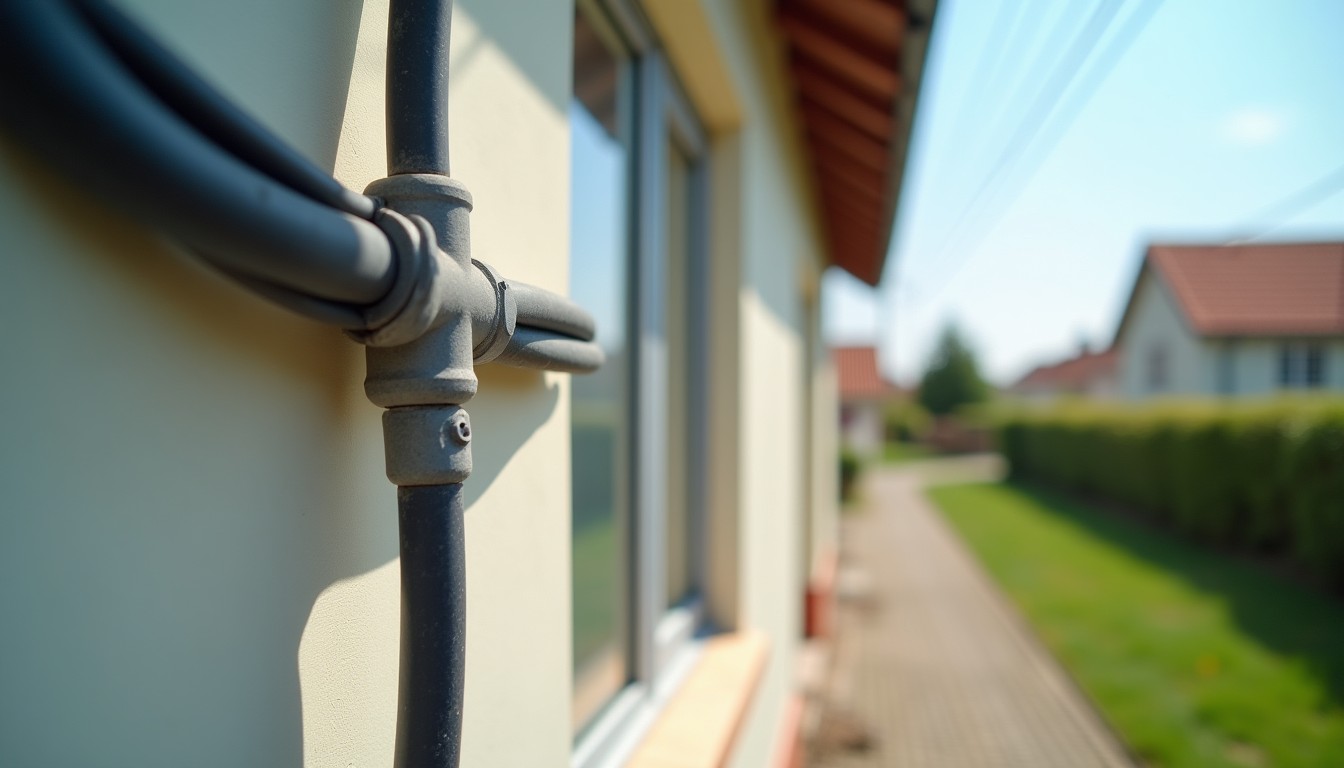
Mice also use anything that bridges a gap. The wildlife damage handbook lists electrical wires, pipes, fences, poles, ropes, cables, vines, shrubs and trees as routes into buildings. That is why a mouse problem on an upper floor does not always mean the mice came up through the house: an overhead utility line, a climbing plant or a downpipe can deliver them to the roofline, where gaps under eaves, around vents and at the top of siding are rarely inspected.
The upside-down finding is the one that changes how people think about screens. Both Baker’s 1994 chapter and Nebraska Extension’s current rodent-proofing guide (G1530) state that house mice can hang or crawl upside down on screen wire. A torn window or vent screen is a doorway, wherever it sits on the wall.
How high can mice jump?
This is where published figures disagree, and it is worth being exact about why. Two extension lines give 12 inches; two give 18.
| Ability | Figure | Source | What it means at home |
|---|---|---|---|
| Vertical jump onto a flat surface | Up to 12 inches | UC IPM Pest Notes 7483 (2025); University of Arizona (2023) | Low shelves, steps and pallets are within reach |
| Vertical jump onto a flat surface | More than 12 inches | Timm, Prevention and Control of Wildlife Damage (1994) | Treat 12 inches as a floor, not a ceiling |
| Vertical jump onto an elevated surface | Up to 18 inches | Baker, Bodman and Timm (1994); Nebraska G1530 (2009) | Most counter fronts and bed frames are climbed, not jumped |
| Jump down and survive | 8 feet | University of Arizona Cooperative Extension | A mouse on a rafter can drop into a room |
| Gap height it can squeeze under | 1/4 inch | UC IPM Pest Notes 7483 | Gaps under doors and around pipes |
| Round opening it can pass through | 3/8 inch | UC IPM Pest Notes 7483 | About the width of a pencil |
| Daily travel area | 10 to 30 feet across | Timm (1994) | The nest is usually close to where you see signs |
The safe reading is a range of 12 to 18 inches for a standing jump, with 12 inches as a dependable minimum. Several of the pest control pages that rank for this question say mice jump two feet. We could not trace that figure to any extension service, university or federal source, and the sources we read top out at 18 inches. Rats are a different animal here: Baker and colleagues give 36 inches vertically and 48 inches horizontally.
The jump matters for trapping. UC IPM recommends pairs of traps set 1 to 2 inches apart because some mice jump over obstacles, and it says traps can sit on ledges and on top of stored goods where mice are active. Our guide to how to catch a mouse covers placement in detail.
Can mice climb stairs?
Easily. The International Residential Code caps a stair riser at 7 3/4 inches (section R311.7.5.1), which is well under even the lower 12-inch jump figure. A mouse does not need to climb the riser at all, though carpet and wooden stringers give it something to grip if it does. Stairs are one reason a mouse first seen in the basement can turn up in an upstairs bedroom. Inside the walls, mice skip the stairs entirely and climb the framing, which our article on mice in walls describes from the noise side.
Can mice climb into beds?
They can, though it is not where they want to be. A wooden bed frame or leg is a rough vertical surface, and a bedspread or valance that reaches the floor is fabric, which gives a mouse a ladder. A bedside table sits within jumping range of a mouse on the floor, and the mattress is a short hop from there. What draws a mouse onto a bed is the same as anywhere else: food crumbs, a route to somewhere else, or nesting material, since UC IPM notes mice build nests from finely shredded paper and other fibres.
Practical steps follow from that. Keep bedding off the floor, do not eat in bed, move the bed a few inches from the wall so it is not part of a wall-hugging runway, and keep stored fabric under the bed in sealed boxes. None of this replaces finding how the mouse got into the room, which is usually low down along a wall.
Can mice climb smooth walls, glass or metal?
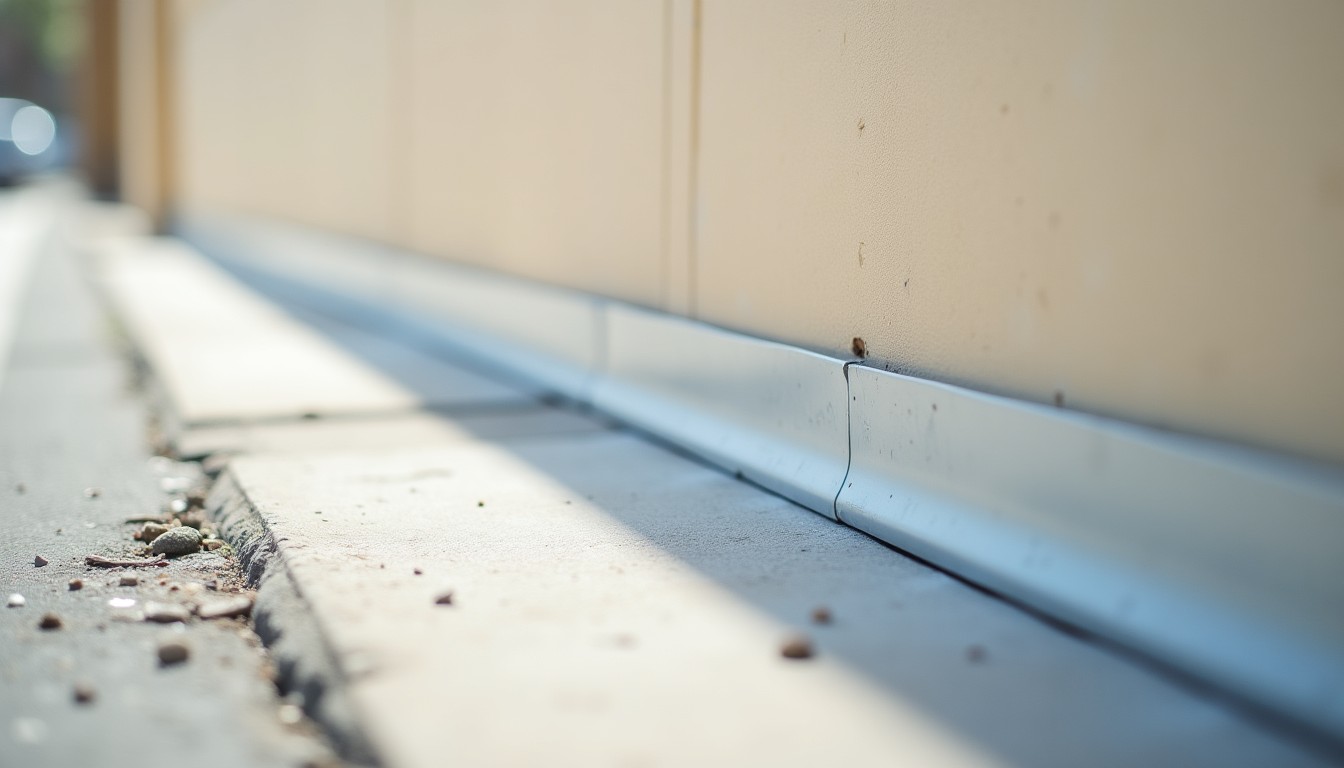
Generally not, and this is the one climbing limit the sources agree on. The 1994 handbook says mice can walk up wood or concrete “unless the surfaces have a slick finish.” Glass and polished metal are the obvious examples. The catch is twofold. Smooth surfaces rarely run unbroken from floor to target: a glass shower screen sits on a tiled ledge, and a smooth cabinet has a hinge gap and a handle. And the rodent-proofing chapter specifically lists weathered sheet metal and many plastics as climbable, so a metal or plastic barrier that was slick when new may not stay that way.
That is why extension rodent-proofing advice concentrates on sealing openings rather than trying to make walls unclimbable. Nebraska’s guide notes that rodent incisors find it hard to gnaw flat surfaces, round surfaces wider than 7/8 inch and anything harder than iron, which is why galvanized sheet metal and hardware cloth make durable patches. A smooth paint finish on the wall below does not stop a mouse reaching the gap above it by another route.
Can mice swim?
Yes. The house mouse chapter of Prevention and Control of Wildlife Damage lists swimming among the physical abilities that let mice enter structures. Rats are the stronger swimmers by a wide margin: Baker and colleagues credit them with swimming half a mile in open water and diving through water traps in plumbing. For a house mouse, water is more often an obstacle it crosses than a route it uses.
What climbing means for keeping mice out
Because mice climb, a home is not sealed when the foundation is sealed. Extension guidance converges on a short list:
- Seal every gap over a quarter inch, at every height. UC IPM calls exclusion “the most successful and permanent form of house mouse control.” Check under eaves, where siding meets the soffit, around roof and dryer vents, and where utility lines enter, not just at ground level. Our guide to rodent exclusion materials covers which patches hold and which do not.
- Use the pencil test. Baker and colleagues suggest a wooden pencil, usually 3/16 to 3/8 inch across, as a gauge: if it fits, a mouse can get through.
- Skip foam, rubber and vinyl as plugs. UC IPM lists plastic screening, rubber, vinyl, expanding foam and wood as ineffective for plugging mouse holes.
- Cut the aerial routes. Trim shrubs and climbing plants back from walls and keep branches off the roof, the same logic that applies far more strongly to roof rats, which are the stronger climbers.
- Remove the reason to climb. Food on counters, open pet food and cluttered storage give mice a reason to explore upward; our guide to what attracts mice covers the list.
When to call a professional: if signs keep appearing after you have sealed what you can reach, the openings are probably at the roofline or inside wall voids, and a licensed pest professional with ladders and an inspection camera is usually the faster route. That is especially true in multi-storey homes and attached housing.
When mice are on the move
UC IPM says outdoor house mice frequently enter homes in autumn as nighttime temperatures drop. Our analysis of iNaturalist research-grade records matches that pattern, and it also shows why the mouse seen climbing a garden shed in May is often not a house mouse at all.
US house mouse records climb from a June low of 235 to a peak of 443 in October. Deer mice, native mice that live mostly outdoors but also nest in sheds and other buildings, peak much earlier, at 1,015 records in May, and taper to 507 by December. UC IPM describes deer mice as proficient jumpers and runners that nest above ground in old bird and squirrel nests as well as in buildings. They matter for another reason: deer mice are the main carrier of Sin Nombre hantavirus, so cleanup of their nests and droppings should follow the CDC cleanup protocol.
How we did this
Climbing and jumping figures come from UC IPM, the University of Nebraska, the University of Arizona and the 1994 Prevention and Control of Wildlife Damage handbook, read in the original. Where they disagree, as on jump height, we show both figures. The seasonal data is The Pest Control Brief analysis of iNaturalist research-grade records, pulled October 2026: monthly counts of US records of house mice and deer mice, all years. These are photographed and identified sightings, mostly outdoors, and they reflect how many people are out recording as well as the animals themselves. They show when mice are noticed, not indoor infestation rates.
Frequently asked questions
Can mice climb walls inside a house?
Yes. Interior walls are usually climbed from the inside, through the wall cavity, where framing, cables and pipes give mice plenty to grip. The wildlife damage handbook lists sounds of mice climbing in walls and running across ceilings as a common sign. On the room side, painted plaster or drywall with a smooth finish is harder for them, so they tend to travel along the base of walls instead.
How high can a mouse jump?
Extension sources give 12 to 18 inches for a standing jump onto a flat surface. UC IPM and the University of Arizona say up to 12 inches; the 1994 rodent-proofing chapter and Nebraska Extension say 18. The University of Arizona adds that a mouse can jump down 8 feet and survive. Claims of two-foot jumps on some pest control sites do not trace to an extension source.
Can mice climb stairs?
Yes, without effort. The International Residential Code limits stair risers to 7 3/4 inches, well below a mouse’s 12 to 18 inch jump, and carpeted or wooden stairs are also easy to climb. Mice inside walls do not need the stairs at all: they climb the framing and cables inside the wall cavity between floors.
Can mice climb into your bed?
They can, by climbing a wooden frame, a bedspread that reaches the floor or a nearby piece of furniture, though beds are rarely their goal. Mice go where food, nesting material and safe routes are. Keeping bedding off the floor, not eating in bed and pulling the bed away from the wall make it a less useful route. Finding and sealing how mice reach the room matters more.
What surfaces can mice not climb?
Surfaces with a slick finish, such as glass and polished metal, according to the 1994 wildlife damage handbook, which says mice walk up wood or concrete unless it has a slick finish. Weathered sheet metal and many plastics are climbable, so a barrier that is smooth when new can lose its effect. Sealing gaps over a quarter inch works better than relying on smooth surfaces.
Sources
- University of California Statewide IPM Program, Pest Notes: House Mouse, UC ANR Publication 7483, Quinn and Frye, revised July 2025.
- University of California Statewide IPM Program, Pest Notes: Deer Mouse, UC ANR Publication 74161, Quinn, Baldwin and Timm, 2012.
- Timm, R.M., House Mice, in Prevention and Control of Wildlife Damage, University of Nebraska Cooperative Extension, USDA APHIS Animal Damage Control and Great Plains Agricultural Council, 1994.
- Baker, R.O., Bodman, G.R. and Timm, R.M., Rodent-Proof Construction and Exclusion Methods, in Prevention and Control of Wildlife Damage, 1994.
- University of Nebraska Extension, Rodent-Proof Construction: Structural, NebGuide G1530, revised 2009.
- University of Arizona Cooperative Extension, Backyard Gardener #102: House Mice, 2023.
- International Code Council, International Residential Code, section R311.7.5.1 Riser height, as summarised in Knox County Code Administration’s IRC residential stairs guide.
- The Pest Control Brief analysis of iNaturalist research-grade records, pulled October 2026.