Sugar Ants: Which Ants They Really Are and How to Stop Them
“Sugar ant” is not a species in the US: it is a nickname for several small ants that trail to sweets, most often odorous house ants, plus Argentine, pavement, pharaoh, little black and, in Florida, ghost ants. All are 1.3 to 4 mm long, and none is the true sugar ant, which lives in Australia. The way to stop them is the same for most: identify the ant, use a slow-acting bait it will eat, stop spraying, and seal the entry point.
If you have a line of tiny dark ants running to the sugar bowl, the pet dish or a sticky spot by the sink, you have what most Americans call sugar ants. The name is useful in conversation and useless for control, because the ants hiding under it differ in what they eat, where they nest and how they react to sprays. A few minutes spent working out which one you have saves weeks of treatment that does not work.
Which ants people call sugar ants
| Ant | Worker size | Look and tell-tale sign | Where it nests | Bait it usually takes |
|---|---|---|---|---|
| Odorous house ant | 2.4 to 3.25 mm | Dark brown to black; smells of rotten coconut when crushed | Shallow nests under mulch, stones, wood; wall voids near plumbing | Sweet |
| Argentine ant | 2.2 to 2.6 mm | Dull, uniform brown; huge trails | Shallow outdoor nests; mostly southern and western states | Sweet, protein in spring |
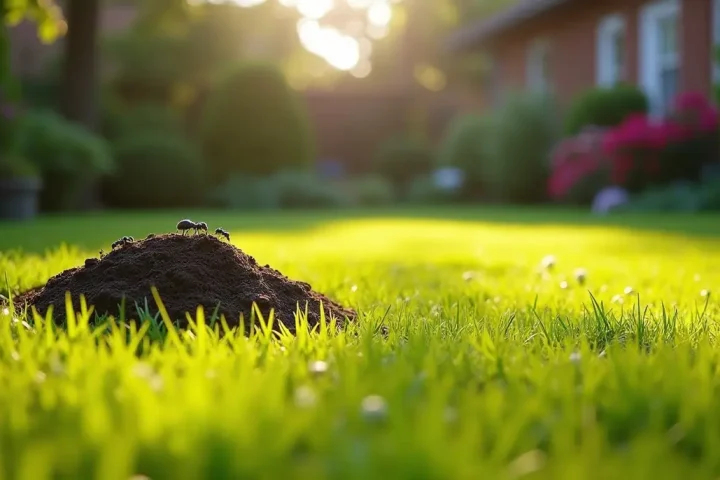
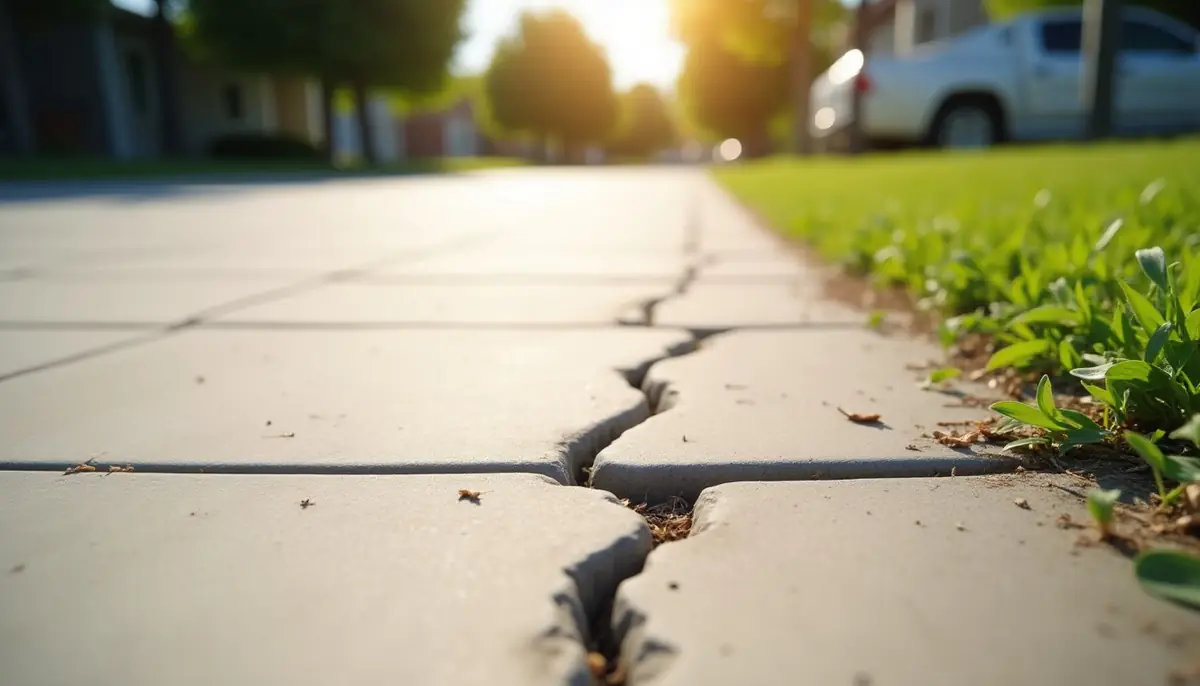
| Pavement ant | 2.5 to 4 mm | Dark brown to black; fine parallel lines on head and thorax | Under slabs, sidewalks, foundations; sand piles at cracks | Sweets, grease, protein |
| Little black ant | About 1.5 mm (1/16 inch) | Shiny black | Soil under stones and logs; woodwork, masonry, wall voids | Varied |
| Pharaoh ant | 1.5 to 2 mm | Yellowish to light brown | Warm, humid wall voids and cabinets | Fats, protein and sweets |
| Ghost ant (Florida) | 1.3 to 1.5 mm | Dark head and thorax, pale see-through legs and abdomen | Wall voids, cabinetry, potted plants; outdoors under bark | Sweet |
Sizes come from UF/IFAS, Penn State, Texas A&M and the Mississippi Entomological Museum. For the full picture of the ants that get into US homes, including fire ants, see our ant identification guide; this page sticks to the small, sweet-seeking ones.
What is the difference between sugar ants and regular ants?
Biologically, none. “Sugar ant” describes behaviour, not a group: small workers that recruit in a trail to sugary food. The real sugar ant, Camponotus consobrinus, is an Australian carpenter ant that the Australian Museum describes as 5 to 15 mm long and found throughout Australia. It does not live in the US, and many of the Wikipedia and social media pages people land on are describing it.
Two practical differences do matter. First, most US “sugar ants” are tiny, under about 4 mm, while carpenter ants are much bigger. Second, several of them, especially odorous house, Argentine, pharaoh and ghost ants, live in colonies with many queens and multiple linked nests. That one fact explains most failed DIY treatments.
The coconut test
The quickest way to narrow it down is to crush one ant and smell it. Odorous house ants give off a rotten coconut odour from their anal glands; University of Wisconsin entomologists also compare it to blue cheese, and Clemson to suntan lotion. If there is no smell, the ant is probably one of the others. A magnifier helps with the rest: pale see-through legs and abdomen point to ghost ants in Florida, a yellowish body to pharaoh ants, and fine grooves on the head to pavement ants.
Sugar ants vs carpenter ants
Carpenter ants are the ants most often mislabelled as giant sugar ants, partly because they do love sweets: Ohio State University Extension lists honeydew as a preferred food, along with fruit, honey, jelly and sugar. The differences are size and stakes.
- Size. Black carpenter ant minor workers are about a quarter of an inch and majors about half an inch, according to Ohio State, against a sixteenth to an eighth of an inch for most sugar ants. Carpenter ant workers in one trail also vary in size; odorous house ant workers are all the same size.
- Damage. Carpenter ants excavate nests in wood, leaving shavings that Ohio State likens to pencil sharpener shavings. They do not eat the wood. Sugar ants do not damage structures.
- Response. Large ants appearing indoors over and over, especially in spring, call for finding the nest. Our guide on how to get rid of carpenter ants covers that, and it is a job where a professional inspection often pays for itself.
Why do I suddenly have sugar ants?
Three things usually explain a sudden invasion.
- Spring. UC IPM notes that odorous house ants overwinter outdoors as workers or larvae until temperatures warm in March, when they begin to forage again. Our data, below, shows the same March jump.
- Rain. UC IPM’s ant key says odorous house ants are most likely to enter homes during rainy weather, because their natural food supply, honeydew from insects such as aphids, is washed from the vegetation. More generally, ants come indoors for food and water, warmth and shelter, or refuge from dry, hot weather or flooding.
- Something new to eat. A spill, a new pet food bowl or a ripe fruit bowl is enough for one scout to lay a trail.
The scale of the colony behind the trail is the part people underestimate. In a 2010 study, Purdue entomologist Grzegorz Buczkowski found odorous house ant colonies in natural forest habitat averaged 74 individuals with a single queen, while urban colonies had about 238 queens per nest, about 7 nests per colony and around 58,600 individuals per nest. The ant on your counter is a native woodland insect that has turned into a supercolony around buildings.
When sugar ants show up: our data
The Pest Control Brief analysis of iNaturalist research-grade records, pulled October 2026, tracks when Americans photograph and identify odorous house ants, as a share of everything recorded each month. The index jumps from 87 in February to 153 in March and stays at 153 through May, then 143 in June, before sliding to 48 by December. In raw terms, records peak in April with 1,848. Carpenter ants rise later and peak in June. These are mostly outdoor sightings rather than indoor infestation rates, but they agree with the extension biology: the colonies wake and bud in early spring, which is the best time to bait.
The same records show how hard tiny ants are to document. In Florida, carpenter ants log 127.5 records per 10,000 insect records and odorous house ants just 0.3. Small ants are difficult to identify from a photograph, so they are under-recorded everywhere. The contrast between Pennsylvania (9.5) and Florida (0.3) for odorous house ants also fits the extension picture that Florida’s kitchen ants are more often other species, such as ghost ants, which UF/IFAS says are common from Sarasota to Orlando and south.
Where do sugar ants nest?
Usually outdoors, close to the house, with satellite nests inside in warm, damp spots. The University of Wisconsin lists mulch beds, stones, wood and loose bark outdoors for odorous house ants, and wall voids, attics, damp wood or insulation, and spots near plumbing fixtures or vents indoors. Pavement ants nest under slabs and sidewalks and push sand up through cracks, Penn State notes. Pharaoh ants pick warm, humid voids; UF/IFAS gives 80 to 86°F and 80 per cent humidity as their preference. Ghost ants use wall voids, gaps between cabinets and baseboards, and potted plants. Ants that turn up only in a bathroom are usually after water; see our guide to ants in the bathroom.
How to get rid of sugar ants
- Identify the ant, using the table and the coconut test.
- Clean the trail once with soapy water, which UC IPM says removes the scent trail, then stop spraying. Vinegar does the same job and no more; we explain its limits in does vinegar kill ants.
- Offer a matching bait. UC IPM advises sweet baits for odorous house ants, with boric acid at low concentrations of less than 1 per cent, and suggests offering small portions of different baits first to see which the ants prefer. Pavement and pharaoh ants also take protein and grease baits.
- Place it on the trail, out of reach. Put baits in protected spots near trails, inaccessible to children and pets, and follow the label.
- Do not spray near the bait. The University of Wisconsin warns that sprays near bait reduce its effectiveness, and that ant activity may increase for a while as more workers are recruited to it. That surge is a sign the bait is working.
- Be patient. UC IPM says results may not be evident for several weeks, and baits alone usually do not control odorous house ants: sealing, cleaning and cutting back mulch against the foundation matter too.
Why sprays split colonies
Many-queen ants reproduce by budding: a queen and some workers carry brood to a new site. Clemson warns that overusing sprays can cause colony budding, Utah State advises non-repellent products because repellents can leave ants indoors disconnected from their colony, and UF/IFAS says even repellent baits can make pharaoh ant colonies fracture and bud. The result can be several small colonies where there was one.
What is the fastest way to get rid of sugar ants?
There is no truly fast way to end a colony, but the fastest reliable route is a bait the ants accept, placed on the active trail with no sprays nearby. Expect more ants at the bait for a few days, then a steady decline over the following weeks. If a problem persists across a building, or the ants are pharaoh ants, a licensed professional with access to non-repellent products is the realistic option; our ant control cost guide covers typical prices.
Frequently asked questions
Do sugar ants bite?
Rarely, and harmlessly for most people. Odorous house ants and Argentine ants have no stinger; the Mississippi Entomological Museum notes they can bite, but the bite of an odorous house ant is minimal given its size, and Argentine ants bite when provoked. Pavement ants have a modified stinger and UF/IFAS says they do not often sting people. If you are being bitten hard by a large ant, it is likely a carpenter ant, which bites readily.
Should I squish sugar ants?
Squishing one is a good identification test, since odorous house ants smell of rotten coconut when crushed. As a control method it does nothing: the workers you see are a small share of a colony that can hold many queens. Once you have put bait down, leave the trail alone so workers carry the bait back to the nest.
Are sugar ants harmful?
For most homes they are a nuisance rather than a structural or medical pest, and they do not damage wood, which is what separates them from carpenter ants. Pharaoh ants are the exception worth knowing: UF/IFAS notes that infestations in hospitals have become a chronic problem, that the ants can carry bacteria such as Salmonella, and that they cause much food to be thrown away. Discard food the ants have reached.
Do sugar ants go away on their own?
Sometimes, briefly. Odorous house ants often retreat when outdoor honeydew returns after rain, or when the food that drew them is gone. The colony is still there, though, and urban colonies can hold hundreds of queens per nest. Without baiting and sealing, the same trail usually returns with the next spell of wet weather or the next spill.
Sources
- University of California Statewide IPM Program, Pest Notes: Ants, Publication 7411, 2012, and UC IPM Ant Identification Key: Odorous house ant biology and baiting pages.
- University of Wisconsin Garden Facts XHT1285, Odorous House Ants (Liesch and Pierret), revised 2021.
- Utah State University Extension, Odorous House Ant (Davis and Taylor), 2019.
- Clemson Cooperative Extension Home and Garden Information Center, Tiny Ants Around Your Home (Benson).
- Buczkowski, Extreme life history plasticity and the evolution of invasive characteristics in a native ant, Biological Invasions 12: 3343 to 3349, 2010.
- Mississippi Entomological Museum, Mississippi State University: species pages for Tapinoma sessile and Linepithema humile.
- Penn State Extension, Pavement Ant (Jacobs).
- University of Florida IFAS Extension: IN1047 Immigrant Pavement Ant; IN532 Ghost Ant and IN533 Pharaoh Ant (Nickerson and colleagues).
- Texas A&M Urban and Structural Entomology Program, Little Black Ant.
- Ohio State University Extension HYG-2063, Carpenter Ants (Jones), 2017.
- Australian Museum, Sugar Ant, Camponotus consobrinus.
- The Pest Control Brief analysis of iNaturalist research-grade records, pulled October 2026.