Where Do Mosquitoes Go in Winter? Eggs, Basements and Drains

Mosquitoes spend winter in one of two ways: as mated adult females hiding in basements, cellars, culverts, storm drains and caves, or as eggs waiting on dry container walls and flood ground for spring water. House mosquitoes (Culex) and malaria mosquitoes (Anopheles) overwinter as adult females; the Asian tiger mosquito and other Aedes survive northern winters almost entirely as eggs. Males and most other adults die. Activity drops off as temperatures fall towards 50°F, and freezing kills more of those left in the open.
Which strategy a mosquito uses decides whether you can meet one in January, and where. It also explains the odd case of a mosquito biting in a heated house in midwinter, which usually means a different kind of mosquito from the one sleeping in the basement.
Where each mosquito spends the winter
| Mosquito | Winter stage | Where | Bites in winter? |
|---|---|---|---|
| Northern house mosquito (Culex pipiens, above-ground form) | Mated adult females in diapause | Caves, culverts, unheated basements, outbuildings, storm drains | No; diapausing females stop seeking hosts |
| Underground house mosquito (Culex pipiens form molestus) | All stages, breeding | Subways, basements, cellars and other below-ground water | Yes, people and other mammals |
| Southern house mosquito (Culex quinquefasciatus) | Adults | Mild southern areas; underground storm drains with stable temperatures | Possibly, where winters are mild |
| Anopheles, such as Anopheles quadrimaculatus | Mated adult females | North: storm drains, caves, hollow trees. South: near homes and animal quarters | Whenever temperatures allow |
| Asian tiger mosquito (Aedes albopictus) | Diapausing eggs in the north; adults stay active in subtropical areas | Dry inner walls of containers above the waterline | Not in northern winters |
| Floodwater and salt marsh Aedes | Eggs | Soil and plants in ground that floods | No |
| Winter mosquito (Culiseta inornata) | Active adults | Mild California winters, most active then | Sometimes, but rarely a problem |
The pattern: the mosquitoes you might find indoors in winter are almost all Culex, and the ones you will meet first in a northern spring hatch from eggs that sat through the cold in a bucket, tyre or blocked gutter.
Do mosquitoes die in winter?
Most individual mosquitoes do; the species do not. In Culex pipiens only adult females enter diapause, Robich and Denlinger note, so the males of the last generation do not see spring. In the Asian tiger mosquito, a study of North American populations by Leisnham and colleagues notes that in temperate zones the species suffers high larval and almost complete adult mortality over winter, and survives almost exclusively as diapausing eggs. In subtropical areas, by contrast, its larvae and adults are often active through the winter.
Culex and Anopheles bet on the adult female instead. Rutgers entomologists describe how the last generation of northern house mosquitoes builds up fat by feeding on carbohydrates and enters hibernation in autumn, and how Anopheles quadrimaculatus overwinters as mated females that usually die after a single round of egg laying in spring. How long mosquitoes live in each stage the rest of the year is covered in how long mosquitoes live.
Where do house mosquitoes hide in winter?
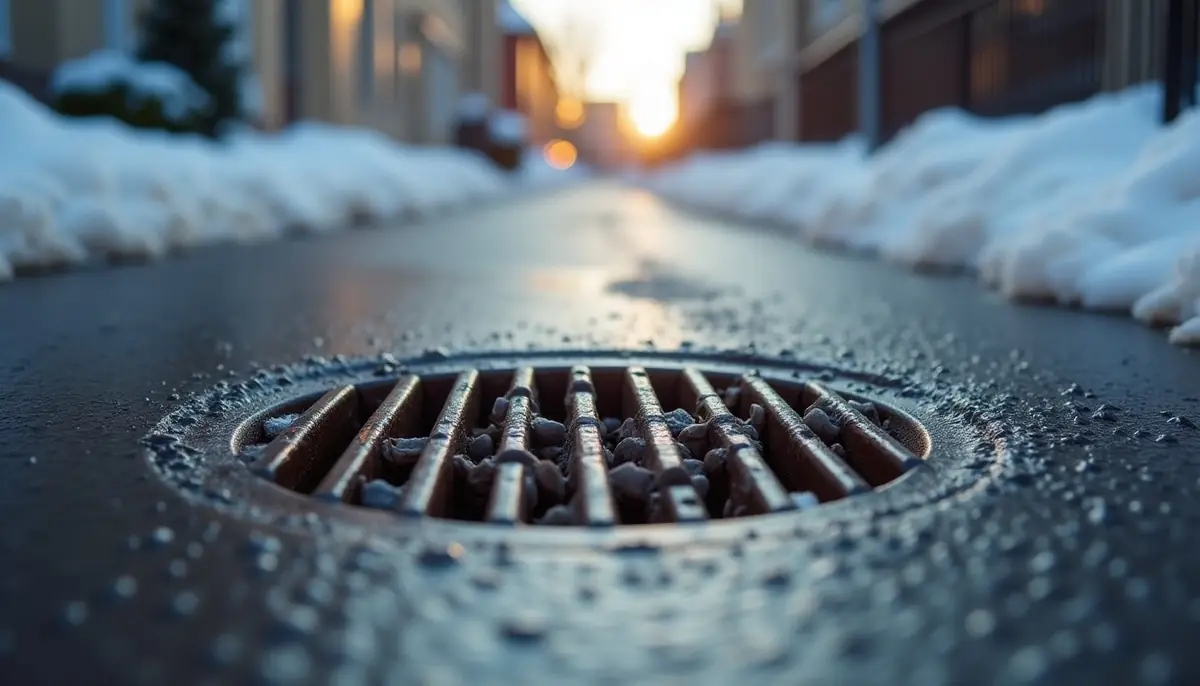
In cool, damp, sheltered places. A 2005 study of Culex pipiens diapause in the Proceedings of the National Academy of Sciences, by Robich and Denlinger, names caves, culverts and unheated basements as overwintering sites, and notes females can appear there as early as August. The trigger is set before they are even adults: short day length and low temperatures experienced late in the larval stage and early pupa. Contra Costa Mosquito and Vector Control District, in California, adds underground storm drains, with females moving in during late October or November.
Rutgers adds three practical details. Hibernating females are common in basements, outbuildings and underground enclosures. They gather near moisture and shift their resting spot through winter to stay in humid air, and mortality can be heavy during winter drought. And they pass the winter in diapause and do not become active during warm winter spells.
The most detailed field count comes from northwest Germany, where Sauer and colleagues searched 149 buildings over two winters. They found overwintering mosquitoes in 44 per cent of cellars and 33 per cent of above-ground buildings, and Culex pipiens was the most common species in cellars. Garages and concrete or masonry sheds were used too.
What a hibernating mosquito lives on
Diapausing females switch from blood to sugar. Robich and Denlinger found that within a week of emerging, females programmed for diapause carry twice the fat reserves of other females, and the genes for digesting blood are switched down. They also stop responding to lactic acid, a human skin odour that normally draws them. Sauer’s enclosure study backs up why this matters: females given sugar stored more fat and died less, and larger females survived better.

Where do Aedes mosquitoes go in winter?
Into the egg. CDC says Aedes females lay eggs on the inner walls of containers above the waterline, where they stick like glue, and that Aedes eggs can survive drying out for up to 8 months, hatching when rain or a sprinkler covers them. Diapausing eggs are better built for the job: Leisnham and colleagues report they carry about a third more surface lipids and lose water at half the rate of ordinary eggs.
How many eggs a female sets aside for winter depends on where her population lives. The species arrived in the continental US through Houston in the mid-1980s, and it has since adapted to the north.
Under 12-hour autumn days in the laboratory, females from northern populations (New Jersey, Illinois and Missouri) laid about 82 to 92 per cent of their viable eggs as diapausing eggs, against about 36 to 43 per cent for females from Florida. Northern populations have to bank almost everything on eggs; southern ones can keep breeding. The species’ northern range limit roughly follows a mean January temperature of about 23°F (minus 5°C).
Floodwater Aedes do something similar in soil. Contra Costa notes that pasture, rainwater and salt marsh mosquitoes spend part of the year as eggs on plants or soil that floods periodically, and that some eggs stay dormant for several years.
What temperature kills mosquitoes?
There is no single number, because a hibernating Culex female, a tiger mosquito egg and an active adult tolerate very different conditions. The thresholds below come from the sources named.
| Temperature | What happens | Source |
|---|---|---|
| About 70°F (21°C), sustained | Steady breeding in Anopheles quadrimaculatus | Rutgers |
| About 50°F (10°C) | Activity drops off; adults stop flying | UF/IFAS entomologist; Defense Health Agency |
| Below about 45°F (7°C) | Best survival for overwintering Culex in shelters | Sauer and colleagues, 2022 |
| 32°F (0°C) and below | More mortality; below 0°C, hibernating Culex died after several days in earlier work cited by Sauer | UF/IFAS entomologist; study cited by Sauer and colleagues |
| About 23°F (minus 5°C) January mean | Rough northern limit of the Asian tiger mosquito | Leisnham and colleagues, 2011 |
Eva Buckner, a medical entomologist at UF/IFAS, has put it simply: activity decreases when temperatures drop to 50°F, and freezing temperatures bring more mortality. Defense Health Agency entomologists writing for the US Army say adults stop flying below 50°F, after which females lay final eggs or look for a sheltered spot.
One finding runs against intuition. In Sauer’s enclosure study, hibernation sites with mean temperatures between 5 and 16°C (41 to 61°F) were compared, and warmer sites meant higher winter mortality; the best survival was below about 7°C (45°F). Hibernating females live on stored fat, and a cold, damp, undisturbed cellar suits them better than a heated room.
Mosquitoes in the house in winter
If a mosquito is biting you in a heated house in January, it is probably not a diapausing northern house mosquito, since those stop seeking hosts. A review by Haba and McBride in Current Biology (2022) describes a below-ground form of the same species, Culex pipiens form molestus, that thrives year round in subways, basements and other human-made underground habitats, bites mammals and can lay its first eggs without a blood meal. Reports go back to the 1920s, including breeding through winter in a wine cellar near Paris and the London Underground mosquitoes that bit shelterers during the Blitz. A California study by Nelms and colleagues describes the same form as reproductively active throughout the year underground.
In practice, a winter biter usually means standing water somewhere warm: a flooded crawl space, a sump pit, a leaking pipe or a little-used floor drain. Our guides to getting rid of mosquitoes in the house and bugs in the basement cover finding and removing them. Other insects that move in for the cold, such as stink bugs and lady beetles, are in bugs in the house in winter.
What the records show: eggs versus adults
We compared iNaturalist research-grade records of the northern house mosquito, which overwinters as an adult, with the Asian tiger mosquito, which overwinters as an egg, and with all mosquitoes. The index is each one’s share of all research-grade records that month, scaled so the yearly average is 100, which removes the effect of how many people are out recording.
The two strategies separate clearly. The tiger mosquito drops to 24 in December, 31 in January and 17 in March, and peaks at 236 in September, more than twice its usual share. The northern house mosquito stays above its yearly average in winter, at 129 in December and 117 in January. Its samples are small, 27 records in January and 42 in August, so read the shape, not single months such as the June spike. These are records of when people photographed and identified mosquitoes, not trap counts or infestation rates, but the pattern fits the biology: there are adult house mosquitoes to find in winter, and almost no adult tiger mosquitoes.
What month will mosquitoes go away?
It depends on latitude. Biting tails off as temperatures fall towards 50°F, so the date moves with your climate. In the Contra Costa area of California, Culex females head for shelter in late October or November and come out in late February or early March. In New Jersey, Rutgers says northern house mosquitoes leave hibernation during May. In subtropical areas such as south Florida, the tiger mosquito may not stop at all.
Across the US, our iNaturalist records show the seasonal drop: all mosquito records fall from 5,560 in September to 1,296 in November and 579 in December, against a peak of 5,657 in July.
What to do in autumn and winter
- Empty, scrub or throw out containers before winter. Tiger mosquito eggs on container walls are next spring’s first biters. Defense Health Agency entomologists list clogged gutters, plant saucers, tarps, tree holes, birdbaths, corrugated downspout pipes and air conditioner drip pans as places to drain, and recommend autumn and winter as the time to do it.
- Fix standing water below ground. Sump pits, flooded crawl spaces and leaks are where winter biters breed.
- Call your mosquito control district about storm drains and culverts, which homeowners cannot treat; our directory of mosquito control districts explains who covers what.
Repellent use is still worth knowing in mild southern winters: CDC lists EPA-registered repellents, and says to always follow the product label.
Frequently asked questions
What smell do mosquitoes hate the most?
The odours with real evidence are the active ingredients in EPA-registered repellents that CDC lists: DEET, picaridin, IR3535, oil of lemon eucalyptus, para-menthane-diol and 2-undecanone, used as the label directs. As our guide to what attracts mosquitoes sets out, scents in a room or yard do far less than repellent on skin or clothing. In winter the question mostly disappears in the north, because hibernating house mosquitoes stop responding to human odour; that guide covers the rest.
What is a mosquito’s worst enemy?
In winter, dryness and cold. Rutgers notes that mortality among hibernating house mosquitoes can be extensive during winter drought, and earlier work cited in a 2022 study found that temperatures below freezing killed hibernating Culex after several days. Through the rest of the year, the biggest enemy is a container emptied weekly: CDC puts egg to adult at 7 to 10 days for Culex and Aedes, so weekly emptying stops larvae finishing. Fish, dragonflies and other predators are covered in what eats mosquitoes.
Do mosquitoes prefer fat or skinny people?
Larger people, because of body size rather than fat as such: bigger bodies give off more carbon dioxide and heat, as our guide to what attracts mosquitoes sets out from the research. Among the mosquitoes themselves, size matters in winter too. In Sauer and colleagues’ 2022 study, larger Culex females stored more fat and were significantly more likely to survive the winter than small ones.
Do mosquitoes bite in winter?
Rarely in the north. Northern house mosquitoes hibernate as mated females that, Rutgers says, do not become active during warm winter weather, and tiger mosquitoes are eggs. Winter bites indoors usually come from the below-ground form of the house mosquito breeding in basement or crawl space water. Anopheles can become active whenever temperatures are favourable, Rutgers notes, and the tiger mosquito may stay active in subtropical areas.
Can mosquito eggs survive freezing?
Diapausing tiger mosquito eggs are built for cold and drought: they carry about a third more surface lipids and lose water half as fast as ordinary eggs, and the species is found roughly as far north as places with a mean January temperature near 23°F (minus 5°C). CDC notes Aedes eggs can survive drying for up to 8 months. Anopheles eggs, by contrast, do not tolerate drying, which is why Anopheles winter as adults.
Sources
- Robich, R. M. and Denlinger, D. L., Diapause in the mosquito Culex pipiens evokes a metabolic switch from blood feeding to sugar gluttony, Proceedings of the National Academy of Sciences 102(44), 2005.
- Sauer, F. G., Timmermann, E., Lange, U., Lühken, R. and Kiel, E., Effects of hibernation site, temperature, and humidity on the abundance and survival of overwintering Culex pipiens pipiens and Anopheles messeae, Journal of Medical Entomology 59(6), 2022.
- Leisnham, P. T., Towler, L. and Juliano, S. A., Geographic variation of photoperiodic diapause but not adult survival or reproduction of the invasive mosquito Aedes albopictus in North America, Annals of the Entomological Society of America 104(6), 2011.
- Haba, Y. and McBride, L., Origin and status of Culex pipiens mosquito ecotypes, Current Biology 32(5), 2022.
- Nelms, B. M. and colleagues, Phenotypic variation among Culex pipiens complex populations from the Sacramento Valley, California, American Journal of Tropical Medicine and Hygiene 89(6), 2013.
- Rutgers University, Center for Vector Biology: Culex pipiens species profile; O’Malley, Anopheles quadrimaculatus, Proceedings of the New Jersey Mosquito Control Association.
- Centers for Disease Control and Prevention, Life Cycle of Aedes, Culex and Anopheles Mosquitoes; Preventing Mosquito Bites.
- Contra Costa Mosquito and Vector Control District, Where do mosquitoes go in winter?
- Defense Health Agency Public Health, Atkinson and Harkins, Where do mosquitoes go during the winter?, US Army, 2025.
- Eva Buckner, UF/IFAS Florida Medical Entomology Laboratory, quoted by Fox Weather on mosquito activity and temperature.
- The Pest Control Brief analysis of iNaturalist research-grade records, pulled October 2026.