What Eats Mosquitoes? Bats, Dragonflies and the Myths

Bats, birds, dragonflies, spiders, frogs and fish all eat mosquitoes, but for most of them mosquitoes are a small side dish, not the main meal. The predators with the best record work underwater: fish, dragonfly nymphs, predatory mosquito larvae and tiny crustaceans called copepods eat the larvae before they can fly. The famous claims, a bat eating 1,000 mosquitoes an hour or a purple martin 2,000 a day, trace back to a confined laboratory test and to arithmetic, not to field diets.
Many predators are worth encouraging for their own sake. But for fewer bites, it helps to know which ones reduce mosquitoes, which only sample them, and why the most effective “predator” in your garden is an empty flowerpot saucer.
Mosquito predators ranked by the evidence
| Predator | Eats mosquitoes? | How much, on the evidence | Verdict |
|---|---|---|---|
| Mosquitofish (Gambusia) | Larvae | Very effective in isolated ponds and unused pools; little mosquito in their diet in natural waters | Useful in the right water; harmful if released into the wild |
| Copepods (Mesocyclops) | Young larvae | Part of a Vietnam programme that eliminated Aedes aegypti from 32 of 37 communes | Proven in water storage containers |
| Dragonfly and damselfly nymphs | Larvae | Voracious in the lab; mosquitoes a small part of a varied wild diet | Help in ponds; not a control method |
| Predatory mosquitoes (Toxorhynchites) | Larvae | Larvae eat other mosquito larvae; adults cannot take blood | Real but local, in tree holes and containers |
| Bats | Adults | Mosquito DNA in 72 per cent of little brown bat samples in Wisconsin, but under 1 per cent of gut contents in older studies | Regular eaters, no proof of control |
| Adult dragonflies | Adults | No quantified field evidence of mosquito control | Generalists that take what is abundant |
| Purple martins | Rarely | No mosquitoes in 350 nestling food samples; 0 to 3 per cent of the diet | Myth |
| Spiders, geckos, frogs | Adults | Some catch them, especially resting mosquitoes | Incidental |
The pattern is simple. Larvae are trapped in a small volume of water where predators can eat them in numbers. Adults are tiny, scattered and worth little to a bird or bat compared with a moth.
Do bats eat mosquitoes?
Yes, regularly, but less than their reputation suggests. The strongest evidence that bats eat mosquitoes is a 2018 University of Wisconsin study that screened bat droppings from 22 sites for mosquito DNA. It detected mosquitoes in 71.9 per cent of little brown bat samples and 33.3 per cent of big brown bat samples, and identified 15 mosquito species. The authors concluded that bats eat mosquitoes more often than previously shown.
That is a measure of how often mosquitoes turn up, not how much of the meal they make. The same authors note that DNA methods show the presence of prey in a sample but cannot reliably measure how much was eaten, and that mosquitoes are only part of a larger diet. Older diet studies, which measured quantity, found little: a 2022 review in Pest Management Science summarises one study of little brown bats as eating 71 per cent small moths, 16.8 per cent spiders and 1.8 per cent mosquitoes. The American Mosquito Control Association says mosquitoes have made up less than 1 per cent of the gut contents of wild-caught bats in all studies to date.
Where “1,000 mosquitoes an hour” comes from
Wisconsin researchers trace the figure to a 1960 study by Griffin, Webster and Michael, which was about echolocation, not diet. Bats chosen as active hunters were flown in a small room with mosquitoes as the only prey. According to the Butte County Mosquito and Vector Control District’s summary, the room was 8 by 16 feet, about 2,000 mosquitoes were released, and one bat averaged 9.5 mosquitoes a minute in one round and 1.7 in another. The AMCA says the “up to 10 a minute” result was extrapolated to 600 an hour, and the Wisconsin team notes the study is cited for as many as 1,000 an hour. A bat in a room with nothing else to eat says little about a bat over a garden full of moths.
Energy explains why. A 2013 study of small Australian bats calculated that a 4 g bat would need about 600 to 660 mosquitoes a night on a mosquito-only diet, against 160 to 180 moths of similar size. Mosquito DNA turned up in 55 per cent of one small species’ droppings, and not at all in the larger bats.
There is one experimental hint that bats matter locally: in a 2009 enclosure study, northern long-eared bats were associated with a 32 per cent reduction in egg laying by Culex mosquitoes. And the AMCA records that bat towers built near San Antonio in the 1920s to control malaria mosquitoes did not affect mosquito numbers and were abandoned. Bats are worth protecting regardless; if they roost in your house, our guide to bat removal and exclusion explains the legal, humane route.
Do purple martins eat mosquitoes?
Almost never. The AMCA quotes James Hill, founder of the Purple Martin Conservation Association, saying mosquitoes make up no more than 0 to 3 per cent of the diet of martins, and describes a three-year study at the association’s headquarters in Edinboro, Pennsylvania that found not one mosquito in 350 samples of food that parent martins brought to their young. Martins feed high in the sky in daylight, while mosquitoes stay low in damp places by day. Martins do eat dragonflies, which are themselves mosquito predators.
The Butte County district quotes a review of the ornithological literature concluding that mosquitoes appear to be a negligible item in the martin diet and that the oft-quoted “2,000 mosquitoes per day” has no evident means of support. The AMCA traces a larger “14,000 a day” figure to an amateur’s estimate of how many mosquitoes would equal a martin’s body weight. Our own data adds a timing problem.

Our data: predators and mosquitoes on the calendar
The Pest Control Brief analysis of iNaturalist research-grade records, pulled October 2026, shows each animal’s share of everything recorded in the US by month, scaled so the yearly average is 100. Mosquito records rise through summer and peak in September (index 182). Purple martins peak in May (247), fall to 17 by September and all but vanish from the records from October. Dragonflies peak in July (250) and fade through autumn. These are sightings, not counts of animals, but the mismatch is clear: martins leave just as mosquito records peak.
In raw records, 32.8 per cent of all US mosquito records fall in those two months, against 27.8 per cent of dragonfly records, 23.9 per cent of bat records, 21.9 per cent of western mosquitofish records and just 10.2 per cent of purple martin records. For where mosquitoes go once the season ends, see where mosquitoes go in winter.
Do dragonflies eat mosquitoes?
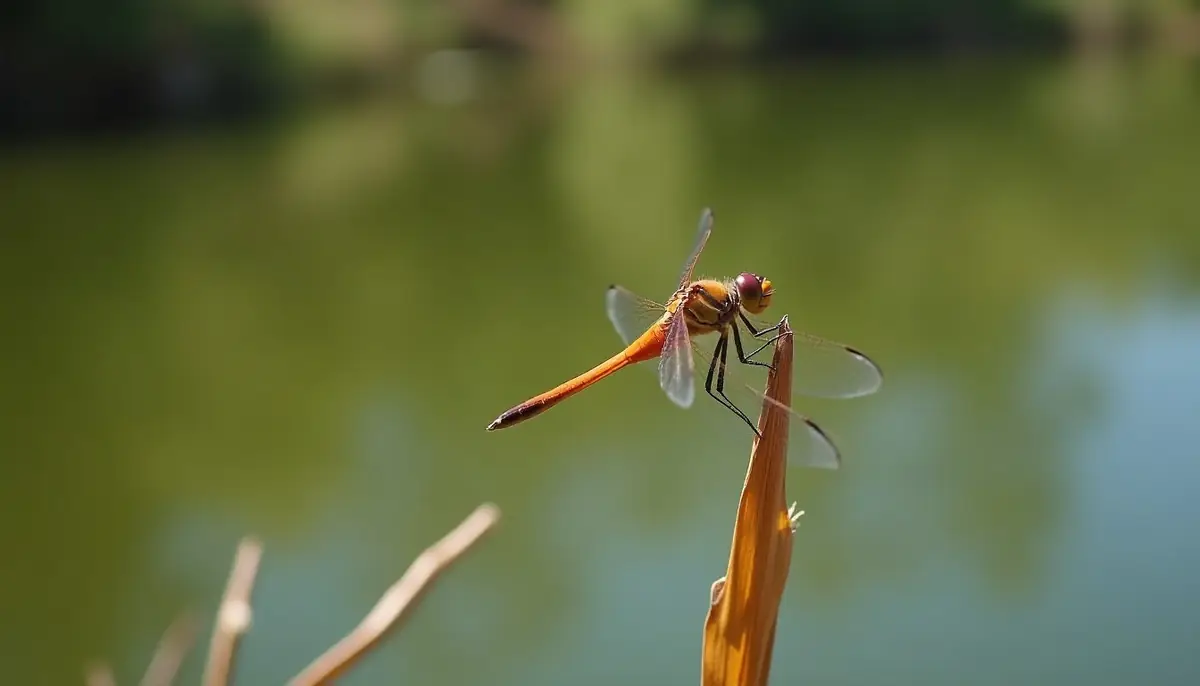
Yes, at both stages, but neither stage controls them. Adult dragonflies are flexible generalist predators that tend to feed on whatever prey is most abundant. The 2022 review found that despite a long reputation, there is no quantified published field evidence that adult dragonflies reduce mosquitoes, and that they are unlikely to affect numbers at a population scale or depend on mosquitoes as food.
The underwater nymphs are the better bet. Many laboratory studies show them to be voracious predators of mosquito larvae. In the wild, though, analysis of their droppings shows a varied diet set by what is abundant and easy to catch, with mosquito larvae only a small part. A pond with nymphs is not a mosquito-free pond.

What eats mosquito larvae?
This is where predators make a difference, because mosquitoes spend their first week or so in water. Eggs laid on water usually hatch within 24 to 48 hours, larvae live in water for 4 to 14 days depending on temperature, and pupae for 1 to 4 days, according to the AMCA. In summer, UC IPM says, the whole cycle can take a week or less.
| Larval predator | Where it works | What the evidence shows | For a homeowner |
|---|---|---|---|
| Mosquitofish | Ornamental ponds, troughs, unused pools | Very effective in isolated water; eats 42 to 167 per cent of body weight a day | Ask your vector control district; never release into natural water |
| Native fish | Permanent ponds | Among the main larval predators in long-lasting water | Fine in a stocked pond; ask your state about species |
| Dragonfly and damselfly nymphs | Ponds with plants | Voracious in the lab, varied diet in the wild | Arrive on their own |
| Toxorhynchites larvae | Tree holes, tyres, containers | Larvae prey on other mosquito larvae | Not something you can buy and deploy at home |
| Copepods | Water storage containers | Key to dengue mosquito elimination in Vietnam | Used by public health programmes, not garden kits |
| Spadefoot toad, green and giant treefrog tadpoles | Temporary pools | Eat larvae as part of an omnivorous diet | Most other tadpoles do not |
Mosquitofish: effective, and a problem
The western mosquitofish, Gambusia affinis, is native to the Mississippi basin and Gulf drainages. UC IPM calls it an important control agent in man-made water that does not connect with natural waters, and says vector control districts supply it. Orange County’s district uses it in unused pools, spas, ornamental ponds and water troughs.
Outside those settings, the record is poor. The US Geological Survey says critical reviews have not supported the view that Gambusia are particularly effective at reducing mosquitoes or mosquito-borne disease, and lists their harm: predation on native fish, the elimination of endangered Sonoran topminnows in Arizona, heavy predation on California newt larvae and treefrog tadpoles, and even more mosquitoes where the fish eat the insects that prey on larvae. UC IPM says releasing mosquitofish into streams, ponds and lakes in California is illegal. Check with your state or local district before stocking any fish.
The mosquito that eats mosquitoes
Larvae of Toxorhynchites, the largest mosquitoes known, prey on other mosquito larvae sharing their water, and the AMCA notes that the adult females cannot take a blood meal at all. A south Florida study examined the gut contents of 941 Toxorhynchites rutilus larvae from tree holes and tyres. They help where they already live; they are not a product.
What eats mosquitoes at night, and in the house?
At dusk and after dark, bats hunt flying insects, and spiders catch mosquitoes that fly into webs or rest on vegetation; the 2022 review notes that most adult frogs and salamanders are insectivores and some probably take resting mosquitoes. Indoors, house spiders and, in warm regions, house geckos take some, and the review found evidence that spiders and geckos are important predators of Aedes mosquitoes in parts of Asia. No indoor predator will clear a room, though: the fix is screens kept in good repair, as UC IPM advises. Light traps are no help either, as our review of whether bug zappers work explains.
How to attract mosquito predators, and what works better
Encourage predators because they are good for the garden, not as your mosquito control (our overview of biological pest control explains where natural enemies do work). A wildlife pond with plants and native fish will gain dragonflies and frogs. A bat house helps bats. A martin house is, in the AMCA’s words, worth promoting for its aesthetic and educational value. None will stop bites.
- Empty standing water weekly. UC IPM advises changing water in pet dishes, troughs and bird baths every week, and draining or filling anything that holds water for more than a few days.
- Treat water you cannot drain with Bacillus thuringiensis israelensis (Bti), which UC IPM describes as killing only mosquitoes and a few related flies. It does not affect pupae, which do not feed. Follow the label.
- Screen rain barrels and clear gutters.
- Use mosquitofish only in isolated water, from your district, as above.
- Protect yourself with screens and repellents; our guide to what attracts mosquitoes ranks repellents by evidence, and our review of mosquito repellent plants explains why living plants do so little.
UC IPM warns that some mosquitoes fly several miles from where they develop, so a clean garden may still get bitten. For persistent problems, our breakdown of mosquito control cost covers what private yard treatment involves.
Frequently asked questions
What is the biggest predator of mosquitoes?
There is no single one, and the biggest effect happens underwater. Fish such as mosquitofish, dragonfly nymphs, predatory mosquito larvae and copepods eat mosquito larvae confined in small volumes of water, where they are easy to catch in large numbers. Among flying predators, little brown bats eat mosquitoes most often, with mosquito DNA in 71.9 per cent of samples in a Wisconsin study, but mosquitoes are still a small share of what bats eat.
What animals kill the most mosquitoes?
No study has counted mosquitoes killed by every predator, so any ranking is a judgement. The best documented results come from aquatic predators: copepods were central to eliminating the dengue mosquito from 32 of 37 communes in Vietnam, and mosquitofish work well in isolated ponds and pools. Bats, birds and adult dragonflies eat adult mosquitoes, but no field study shows them controlling mosquito numbers.
What kills mosquitoes the best naturally?
Removing the water they breed in. Larvae need standing water for roughly a week, so emptying containers weekly breaks the cycle. For water you cannot drain, Bti is a naturally occurring bacterium that UC IPM says kills only mosquitoes and a few related flies. Mosquitofish suit ponds and pools that do not connect to natural waters. Predators you attract to the garden help a little, not a lot.
What do mosquitoes hate most?
The odours with real evidence are the EPA-registered repellents CDC recommends: DEET, picaridin, IR3535, oil of lemon eucalyptus, PMD and 2-undecanone, used on skin or clothing as the label directs. Scents released into the air of a yard, citronella candles and so-called mosquito plants do far less. No predator substitutes for repellent and screens, and none stops breeding the way emptying standing water does.
Do frogs eat mosquitoes?
Some, but less than people expect. Many adult frogs and salamanders are insectivores and probably take resting mosquitoes. Most tadpoles are mainly herbivores; one study of three urban frog species found none of their tadpoles ate mosquito larvae. In North America, spadefoot toad, green treefrog and giant treefrog tadpoles do eat larvae as part of a mixed diet.
Sources
- Wray, Jusino, Banik and colleagues, Incidence and taxonomic richness of mosquitoes in the diets of little brown and big brown bats, Journal of Mammalogy 99(3), 2018 (University of Wisconsin, USDA Forest Service).
- Bonds, Collins and Gouagna, Could species-focused suppression of Aedes aegypti and Aedes albopictus affect interacting predators? An evidence synthesis, Pest Management Science, 2022.
- Gonsalves, Bicknell, Law, Webb and Monamy, Mosquito consumption by insectivorous bats: does size matter?, PLoS ONE, 2013.
- Reiskind and Wund, Experimental assessment of the impacts of northern long-eared bats on ovipositing Culex mosquitoes, Journal of Medical Entomology, 2009.
- Griffin, Webster and Michael, The echolocation of flying insects by bats, Animal Behaviour 8, 1960, as summarised by Butte County Mosquito and Vector Control District, Mosquito Myths.
- American Mosquito Control Association, FAQs (bats; purple martins) and Mosquito Life Cycle.
- Kay and Vu, New strategy against Aedes aegypti in Vietnam, The Lancet, 2005.
- US Geological Survey, Nonindigenous Aquatic Species fact sheet, Western Mosquitofish (Gambusia affinis).
- University of California Statewide IPM Program, Pest Notes: Mosquitoes.
- Orange County Mosquito and Vector Control District, Mosquitofish.
- The Pest Control Brief analysis of iNaturalist research-grade records, pulled October 2026.