Crab Spiders: Identification, Colour Change and Bites
A crab spider is a small, web-less hunting spider (family Thomisidae) that holds its long front legs out sideways like a crab and waits on flowers or bark to grab passing insects. Most US species are 3 to 12 mm long (about an eighth to half an inch). They are harmless to people: extension services describe bites as rare and the spiders as harmless to humans and pets. The goldenrod crab spider can slowly switch between white and yellow, a change published studies time at 2 to 20 days.
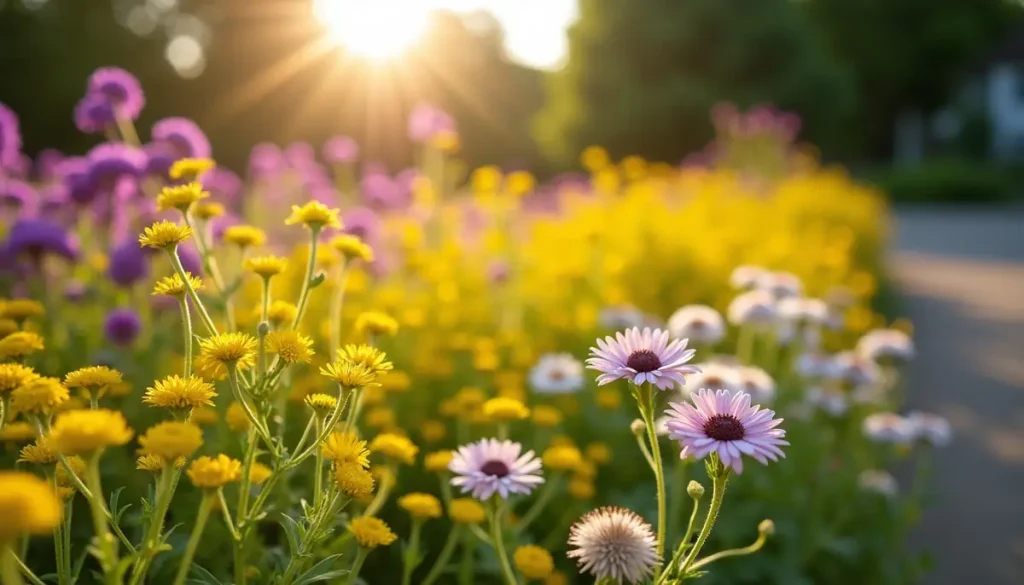
Crab spiders are among the most common and least noticed spiders in any garden with flowers, because the best of them match the petals they sit on. Most people find one by accident: a bee hanging oddly from a daisy, or a white spider on a white flower.
Crab spider or something else?
Three unrelated spider families get called crab spiders in the US, and one of them is many times larger than the others. The table separates them by the features you can see without a microscope.
| Flower and ground crab spiders (Thomisidae) | Running crab spiders (Philodromidae) | Giant crab spiders, huntsman (Sparassidae) | Jumping spiders (Salticidae) | |
|---|---|---|---|---|
| Body length | About 3 to 19 mm; most under 10 mm | Mostly under 13 mm (half an inch) | 22 to 28 mm for the pantropical huntsman | Bold jumper 6 to 19 mm |
| Legs | First two pairs longer and thicker, held out sideways | Second pair noticeably longer than the first | Long legs twisted to spread forwards and sideways; span 3 to 5 inches | Short, stout legs |
| Movement | Sits still for long periods; scuttles sideways or backwards | Fast, runs after prey | Very fast, mostly at night | Jumps |
| Where you see it | Flowers, leaves, bark, leaf litter | Plant stems and leaves, sometimes high on an indoor wall | Houses, sheds and garages in Florida, the Gulf Coast and the Southwest | Sunny walls, windowsills, fences |
| Colour | White, yellow, pale green or pink on flowers; drab brown on bark and ground | Drab, flat-bodied | Plain brown | Often black with white or orange spots |
| Danger to people | Harmless; bites rare | Not considered dangerous | Not dangerous; bite painful but brief | Harmless; bite rare and mild |
Compiled by The Pest Control Brief from UC IPM, UF/IFAS, Montana State University, Washington State University, the University of Wisconsin-Milwaukee Field Station and Penn State Extension.
A spider with a hand-sized leg span running across a wall at night is not a Thomisid at all: see our huntsman spider guide (UF/IFAS notes it is sometimes called the giant crab spider). A compact spider with two huge forward eyes that hops is one of the jumping spiders.
What is a crab spider?
Crab spiders are the family Thomisidae. UC IPM describes them as daytime hunters that do not spin webs, with the front two pairs of legs enlarged and extending beyond the sides of a flattened body, “making them look like tiny crabs”. UF/IFAS adds that, like crabs, they move sideways and backwards more easily than forwards. Their small eyes sit in two slightly curved rows, the top row often much wider than the lower one.
Species counts differ by source: over 140 in the US and Canada (UF/IFAS), about 130 (Missouri Department of Conservation) or over 200 (UC IPM) in North America. One search, “how big spider crab”, is about a different animal entirely: the spider crab is a marine crab, not a spider.
The crab spiders you are most likely to meet
| Spider | Female body length | Look | Where |
|---|---|---|---|
| Goldenrod crab spider (Misumena vatia) | 1/10 to 1/3 inch (UMN); up to 12 mm (Dukas and Morse) | White or yellow, sometimes brown; some with red stripes | Yellow and white flowers: goldenrod, milkweed, daisies |
| Whitebanded crab spider (Misumenoides formosipes) | 1/4 to nearly 1/2 inch; males under 1/8 inch | Whitish yellow to yellowish brown; white ridge below the eyes | Fleabane, asters, thistles, milkweed, goldenrod, garden marigolds |
| Green crab spider (Misumessus oblongus) | About 1/4 inch; males about 1/8 inch | Pale green to silvery white, few spines | Broad leaves of shrubs |
| Ground crab spiders (Xysticus) | 1/4 to 3/8 inch; males about 1/8 inch | Dull grey and brown with rusty or tan markings | Under bark, leaf litter, rocks, logs, fence posts |
Compiled by The Pest Control Brief from University of Minnesota Extension, the Missouri Department of Conservation and Dukas and Morse (Oikos, 2003).
Males are far smaller than females in every one of these, often under an eighth of an inch. In the green crab spider, the Missouri Department of Conservation notes, the male’s proportionately longer front legs are banded with red.
How the colour change works, and how long it takes
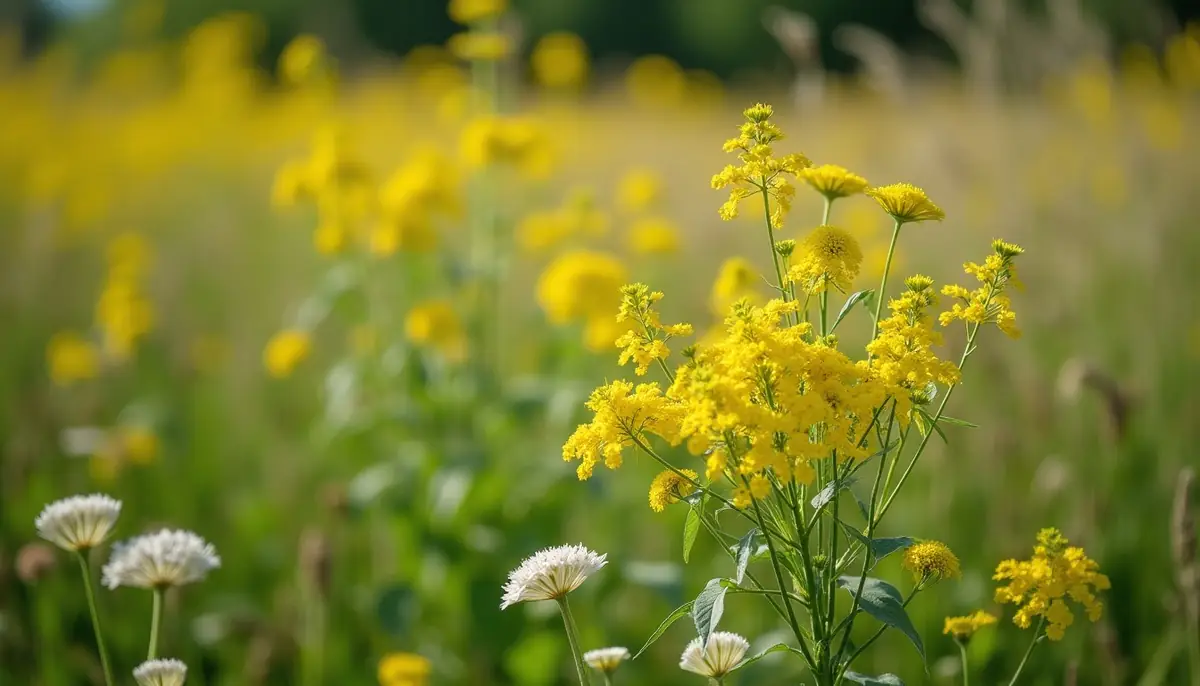
The goldenrod crab spider is the famous colour changer. Adult females can switch between white and yellow to match the flower they hunt on, and University of Minnesota Extension notes they are most common on yellow or white flowers. Montana State University lists Misumenoides as another genus that can change colour to match its substrate.
It is not instant camouflage. Insausti and Casas, in the Journal of Experimental Biology (2008), describe the change as reversible “within a few days, from white to yellow and back”. A 2010 study in the Proceedings of the Royal Society B reviewed the earlier experiments and found that the reported time to change colour ranged from 2 to 20 days, with a mean of 4 to 7 days. That slowness is why the authors class it as a morphological colour change: the spider has to build new pigment granules in its skin cells.
| Question | What the research says |
|---|---|
| How long does the change take? | 2 to 20 days across published studies; mean 4 to 7 days (Brechbühl, Casas and Bacher, 2010) |
| What makes the yellow? | Ommochrome pigments, not carotenoids as older work assumed (Insausti and Casas, 2008) |
| What makes the white? | Guanine and uric acid in cells seen through a transparent cuticle (Insausti and Casas, 2008) |
| Does every spider change? | No. Food and light increase the change, but many individuals stay white despite strong stimuli (Théry, 2007, cited by Insausti and Casas) |
| Who changes? | Adult females of several crab spider species (Brechbühl and colleagues) |
| Does matching help it catch more? | In a field experiment, colour-matched spiders did not have a higher encounter rate or capture success than mismatched ones |
That last row is the surprise. In the 2010 trial, white and yellow spiders were placed on white, yellow and violet flowers and filmed. Solitary bees and hover flies avoided spiders whatever their colour, while bumble bees and honeybees ignored them. The colour change is real, but its purpose is still debated.
What do crab spiders eat?
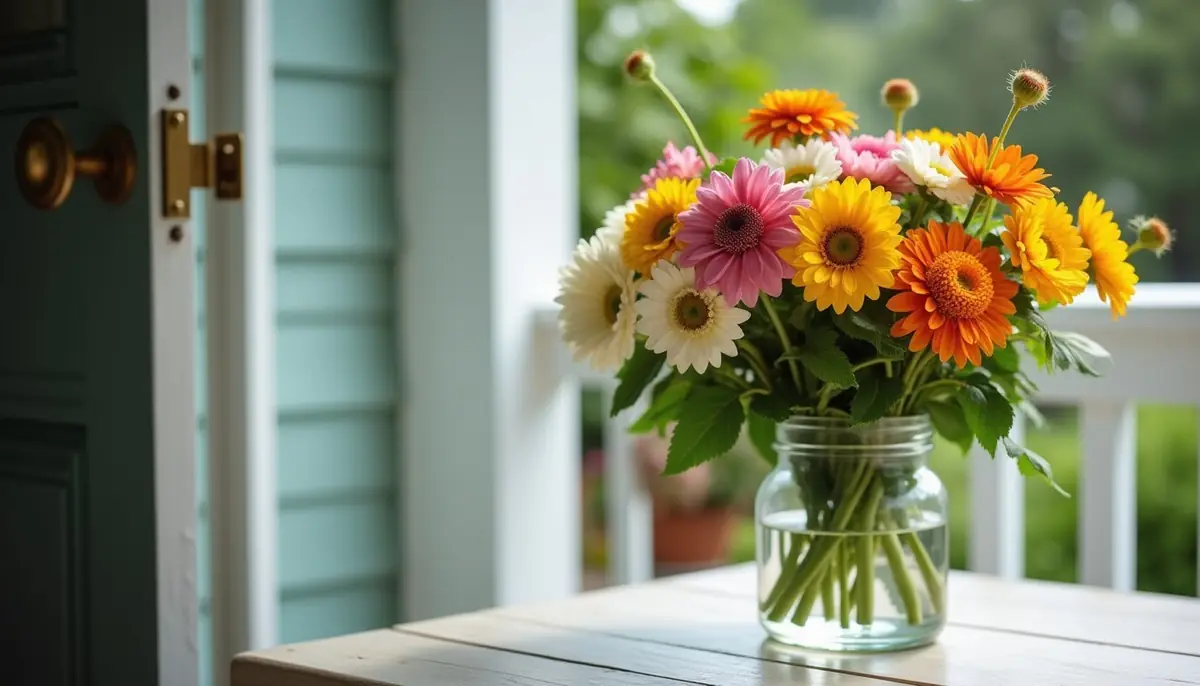
Insects that visit flowers. UF/IFAS lists bees, flies and other small flower-visiting arthropods, and the Missouri Department of Conservation adds other spiders, especially other crab spiders. Montana State University notes that unlike most spiders they can kill prey several times their size, such as bumble bees, and that some also feed on plant nectar.
They sit with the front legs open, grab whatever lands within reach and bite. The Missouri Department of Conservation suggests looking for bees and butterflies dangling oddly from flowers, because a crab spider is probably eating them. For spider diets in general, see what spiders eat.
How often they catch bees
The best field numbers come from Dukas and Morse (Oikos, 2003), who watched goldenrod crab spiders on milkweed in Maine. Of 45 spiders observed, 30 (67 per cent) attacked bees. The attack rate per visit depended on the bee.
About 80 per cent of bees that survived an attack left the flower cluster immediately, and the smallest bumble bee in the study visited spider patches less often. Spiders were thinly spread: in a patch of over 1,000 milkweed stems they occupied 0.2 to 2.2 per cent of stems over five years.
Are crab spiders a garden pest or a benefit?
Mostly a benefit, with an honest caveat. Montana State University calls them beneficial, feeding on many pest insects. Washington State University agrees they contribute to natural control of pest insects, but points out they are general feeders that take beneficial insects as well as harmful ones. A crab spider on your echinacea will eat a pollinator now and then.
The Dukas and Morse figures put that in proportion: spiders are thinly spread and most bee visits to an occupied flower end without an attack. For gardeners, the bigger threat to pollinators is usually insecticide drift onto open flowers, which our guide to pollinator protection and pesticides covers. Our garden pest control guide explains why spraying a bed can make pest problems worse by killing predators like these.
Where do crab spiders live?
Across the whole country, in meadows, roadsides, prairies, gardens and woodland. Flower crab spiders sit on blooms such as fleabane, asters, thistles, milkweed, goldenrod, snapdragons, Queen Anne’s lace and marigolds. Ground crab spiders (Xysticus) live under bark, leaf litter, rocks and logs, and turn up on low fence posts and outbuildings.
They are outdoor animals that may ride indoors on cut flowers but do not live in houses. The running crab spiders (Philodromus), a different family, are the ones sometimes seen high on an inside wall, according to the University of Wisconsin-Milwaukee Field Station.
Where people record goldenrod crab spiders
Our analysis of iNaturalist research-grade records shows the goldenrod crab spider is strongly northern: Washington, Maine and Vermont lead, and Florida and Texas recorded none. Crab spiders on Florida flowers are other species; the UF/IFAS example image is Misumenops oblongus.
When are crab spiders active?
Summer and early autumn. UF/IFAS says males are generally active from May to August and females from July to September; females lay eggs in the fall and spiderlings hatch the following spring. Most species live less than one year. The Missouri Department of Conservation adds that adults generally die when it freezes, while egg cases overwinter.
The iNaturalist season index agrees: goldenrod crab spider records peak in June and July at over three times their usual share, while the family as a whole peaks in August.
Are crab spiders poisonous or dangerous?
No. Like nearly all spiders, crab spiders have venom for subduing prey, but none in the US is a medical concern. Montana State University says they are harmless to humans and pets. University of Minnesota Extension says the goldenrod crab spider does not harm people. Washington State University notes that little is known about the toxicity of crab spiders, but bites seem to be rare. The Australian Museum says the same of Australia’s flower spiders: not dangerous to humans.
UC IPM explains why bites are so uncommon: most spiders’ fangs are too small to pierce adult skin, and spiders bite only when squeezed, lain on or otherwise provoked.
Do crab spiders bite?
Rarely, and only when pressed or handled. People often blame spiders for skin marks they did not cause, so a mark that spreads, blisters or comes with fever needs a doctor; our bite identification guide covers the usual culprits. The two US spider groups that matter medically, recluses and widows, are covered in our spider identification guide.
How to get rid of crab spiders
In almost every case you do not need to. Crab spiders are outdoor plant dwellers rather than house spiders, and they eat insects. Extension guidance on spiders in general is that pesticides are not generally needed.
- One indoors: place a jar over it, slide a card underneath and release it on a plant outside. UC IPM notes that vacuuming also works, because spiders’ soft bodies usually do not survive the hose.
- Cut flowers: shake stems over the lawn before bringing a bunch indoors.
- Prevention for any spider: seal gaps around doors and windows, keep screens in good repair and keep lights away from doors, as UC IPM advises, because lights draw the insects that spiders follow.
UC IPM states that insecticides will not provide long-term control of spiders outdoors, and spraying flower beds would also kill pollinators. For lots of spiders indoors, see our guide to getting rid of spiders in the house.
Frequently asked questions
What is a crab spider?
A crab spider is a member of the spider family Thomisidae: small, flat-bodied hunters that hold their long first two pairs of legs out to the sides like a crab and move sideways easily. They do not spin webs to catch prey. Most sit motionless on flowers or bark and grab insects that come within reach. The US and Canada have somewhere between 130 and 200 species, depending on the source.
Are crab spiders poisonous?
Crab spiders have venom, as almost all spiders do, but it is used on insects and none of the US species is considered a risk to people. Montana State University Extension calls them harmless to humans and pets, and the University of Minnesota says the goldenrod crab spider does not harm people. Washington State University notes that their toxicity has been little studied because bites are so rare.
Do crab spiders bite?
Very rarely. A crab spider will usually only bite if it is pressed against skin or held, and many are too small to get their fangs through adult skin. UC IPM says most spider bites cause, at worst, a reaction similar to a bee sting that lasts minutes to hours. Any bite that spreads, blisters or causes fever needs a doctor, not home diagnosis.
What do crab spiders eat?
Flower-visiting insects: bees, flies, butterflies, moths and other spiders, including other crab spiders. They can overpower prey several times their own size, such as bumble bees, and some also take plant nectar. In a Maine field study, goldenrod crab spiders attacked honeybees on about 11 per cent of their visits to an occupied flower and bumble bees on 5 to 7.5 per cent.
How to get rid of crab spiders?
Usually you should not. They live on outdoor plants rather than in homes and help control pest insects. Move a stray indoor one outside with a jar and card, shake cut flowers before bringing them in, and seal gaps around doors and windows. UC IPM advises that insecticides will not give lasting spider control outdoors, and spraying flowers would harm pollinators too.
Sources
- University of California Statewide IPM Program, Pest Notes: Spiders (Publication 7442).
- University of Florida IFAS, Beneficial Arthropods: Crab spiders (Araneae: Thomisidae), 2007.
- University of Florida IFAS Extension, EENY-160, Pantropical Huntsman Spider, Heteropoda venatoria, G. B. Edwards Jr., revised 2023.
- Montana State University Extension, Insect Fact Sheet: Crab Spiders, L. Kerzicnik, December 2022.
- Washington State University Puyallup, PLS-88, Crab Spiders (Family Thomisidae), A. L. Antonelli and L. Jones, updated 2003.
- University of Minnesota Extension, What insect is this? Goldenrod crab spider.
- Missouri Department of Conservation, Field Guide: Whitebanded crab spider, Green crab spider, Ground crab spiders.
- University of Wisconsin-Milwaukee Field Station, Bug of the Week: Running crab spiders.
- Penn State Extension, Bold Jumper Spider.
- Australian Museum, Flower spiders.
- Insausti, T. C. and Casas, J. 2008. The functional morphology of color changing in a spider: development of ommochrome pigment granules. Journal of Experimental Biology 211: 780 to 789.
- Brechbühl, R., Casas, J. and Bacher, S. 2010. Ineffective crypsis in a crab spider: a prey community perspective. Proceedings of the Royal Society B (doi 10.1098/rspb.2009.1632).
- Dukas, R. and Morse, D. H. 2003. Crab spiders affect flower visitation by bees. Oikos 101: 157 to 163.
- The Pest Control Brief analysis of iNaturalist research-grade records, pulled October 2026.