What Do Spiders Eat? House Spiders, Garden Spiders and Pests
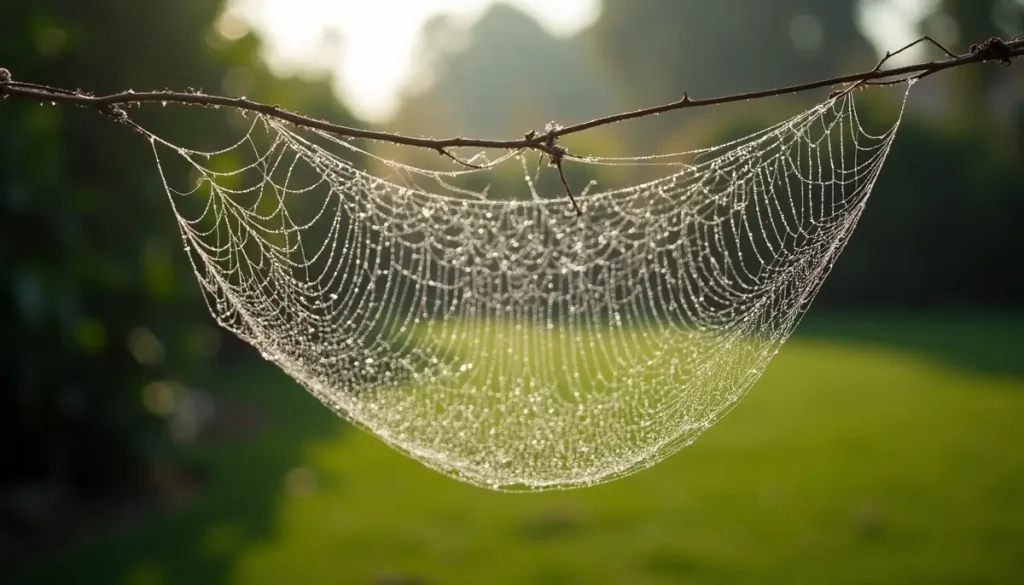
Spiders eat mainly insects: flies, mosquitoes, moths, beetles, aphids and other bugs, plus springtails and other spiders. House spiders eat whatever walks or flies into their webs or crosses their path indoors, and garden orb weavers catch flying insects. A few species also take nectar, pollen or, rarely, small fish. Worldwide, spiders kill an estimated 400 to 800 million tonnes of prey a year, and none of them eats people.
That last figure, from a 2017 study by Martin Nyffeler and Klaus Birkhofer, puts spiders among the biggest insect predators on land. Below we cover what the spiders in your house and garden actually eat, which household pests they help with and which they do not, and how long a spider can go without a meal.
What different spiders eat, and how they catch it
Every spider is a predator, but each family hunts in its own way, and the method decides the menu. The table draws on UC IPM Pest Notes: Spiders (Publication 7442), the University of Kentucky, UF/IFAS and the University of Michigan’s Animal Diversity Web.
| Spider | Where you see it | What it eats | How it catches prey |
|---|---|---|---|
| Common house spider (cobweb spider) | Corners of rooms, windows, basements | Insects that walk or fly into the web, up to camel crickets | Tangled sticky web; throws more silk over the catch |
| Cellar spiders | Webs inside homes | Other pests, including brown recluse spiders | Web |
| Brown recluse | Basements and attics in Kentucky and much of the Midwest | Insects, alive or dead | Hunts at night; no web for catching food |
| Jumping spiders | Plants and the ground, by day | Insects such as flies | Stalks and pounces by sight; no web |
| Wolf spiders | Ground, leaf litter, low plants | Insects walking or resting on the ground | Runs prey down; no capture web |
| Sac spiders | Silk sacs under bark, among leaves | Prey walking or resting on surfaces | Nocturnal stalker |
| Orb weavers (garden spiders) | Gardens and plants | Insects that fly, fall or are blown into the web | Wheel-shaped web; feels for vibrations |
| Funnel weavers (grass spiders) | Lawns, shrubs, low plants | Insects that fly or walk into the web | Sheet web with a funnel retreat |
| Huntsman spider | Subtropical FL, TX and CA | Cockroaches and other household insects | Speed and strong jaws; no web |
If you are not sure which spider you have, our spider identification guide works through the features in the order that matters, including how to rule out a recluse.
How much spiders eat: the global estimate
Nyffeler and Birkhofer, at the University of Basel and Lund University, combined 65 published measurements of spider biomass with feeding rates and land areas. Their estimate, published in The Science of Nature in 2017, is that the world’s spiders kill 400 to 800 million tonnes of prey a year, fresh weight, with insects and springtails making up more than 90 per cent of it. That is about one thousandth of all the plant growth on land each year.
Almost all of that happens in wild habitats. Spiders in forests and grasslands account for more than 95 per cent of the global kill, and those in annual crops for less than 2 per cent. For comparison, the authors note, all the world’s seabirds eat about 70 million tonnes a year.
Why house and city spiders catch so little
Divide the kill by area and the gap is stark. The study puts annual prey kill at 17.3 grams per square metre in tropical forests and 9.0 in temperate and boreal forests, against 0.25 in annual cropland and about 0.2 in urban areas, the last figure from Nyffeler’s own earlier field work. Disturbed habitats hold far fewer spiders, so they kill far less.
The practical meaning: the handful of spiders in a house are not a meaningful pest control service on their own. They help, but they do not replace sealing gaps and removing what attracts the insects in the first place.
What do house spiders eat?
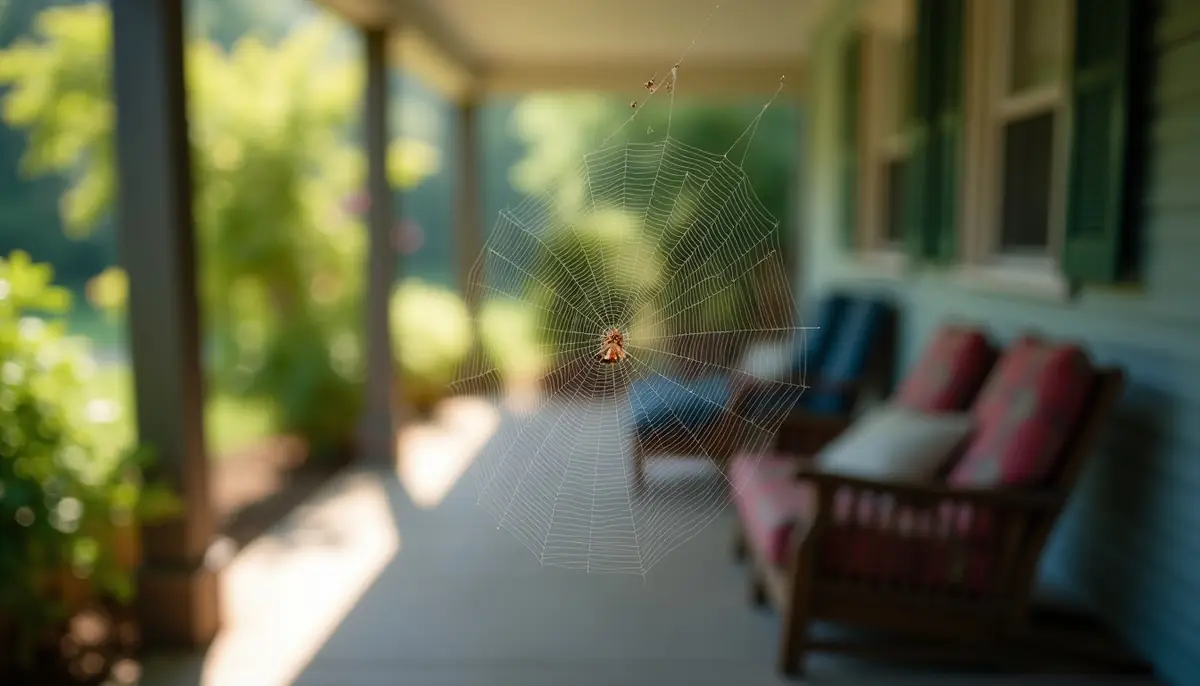
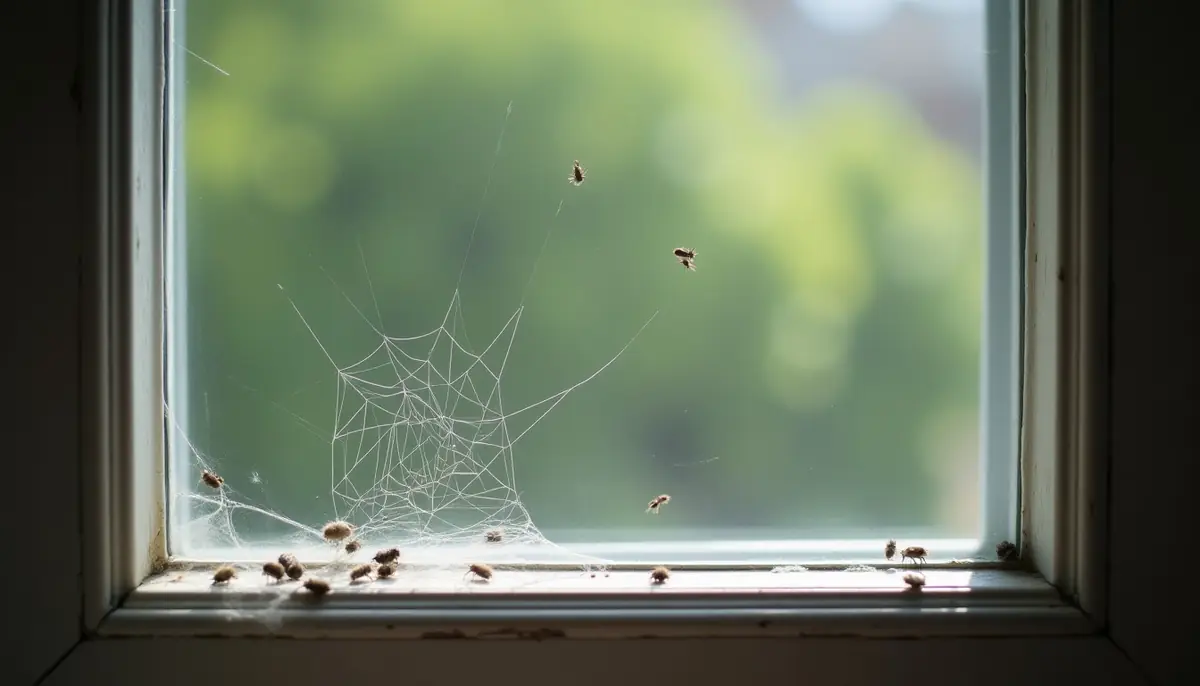
Whatever insects share the house with them. UC IPM describes cobweb spiders, the family that includes the common house spider, as feeding on insects that walk or fly into their webs. The University of Michigan’s Animal Diversity Web notes the common house spider waits until an insect as large as a camel cricket is caught, throws more silk over it and hauls it up, and moves its web if it is not catching enough. The University of Kentucky adds that many of the spiders around homes are beneficial because they prey on nuisance insects such as mosquitoes and flies.
Indoors, then, a house spider’s diet reflects whatever other insects are in the house. Because house spiders move their webs when they are not catching enough, a corner that keeps its cobwebs is usually one where insects are getting in. That is why the most effective spider control indoors is to cut the insect supply, which our guide on how to get rid of spiders in the house sets out step by step.
Spiders that eat other spiders
Spiders are also prey for each other. The University of Kentucky notes that cobweb and cellar spiders prey on other pests, including brown recluses, and in that sense can be considered beneficial. Cannibalism has limits, though: UC IPM says the female black widow rarely eats the male after mating, although she may do so if hungry.
What do spiders eat in the garden?
Flying and crawling insects, many of them plant pests. Nyffeler and Birkhofer list fewer than 10 groups that make up most spider prey: flies and mosquitoes, true bugs such as aphids and leafhoppers, ants, bees and wasps, springtails, beetles, moths and caterpillars, grasshoppers and crickets, and other spiders. Studies they review found spiders depress populations of plant-eating insects by 1 to 20 per cent, and plant-feeding and decomposer insects and springtails increased significantly when spiders were removed from experimental plots.
Orb weavers are the most visible garden hunters. UC IPM says they feed on insects that fly, fall or are blown into the web, and that they have poor vision and rely on web vibrations to find their catch. Our guide to orb weaver spiders covers the yellow garden spider and its relatives. Jumping spiders hunt by sight on leaves and walls, stalking and pouncing on prey many times their body length away, and wolf spiders run down insects on the ground.
When spiders and their prey peak: our data
The Pest Control Brief analysis of iNaturalist research-grade records, pulled October 2026, shows spiders peaking in September at an index of 184, against a yearly mean of 100. Two of their prey groups peak in the same month: mosquitoes at 182 and owlet moths at 198.
Indoors and out, the pattern differs by spider. The common house spider climbs to 174 in September and orb weavers to 290, while cellar spiders, which live indoors all year, stay much flatter, between 75 and 144 across the year.
These are records of when people photographed and identified spiders, mostly outdoors. They show seasonality and how often each group is noticed, not how many spiders are in homes. Our article on where spiders go in winter covers the other end of the year.
Do spiders eat household pests?
Some, yes, but rarely enough to fix an infestation. Here is what the evidence supports for the pests people ask about most.
| Pest | Do spiders eat it? | Will spiders control it? |
|---|---|---|
| Flies and mosquitoes | Yes; Kentucky names both as prey of spiders around homes | No; screens and removing breeding sites do far more |
| Cockroaches | Huntsman spiders feed on them in warm states | No; cockroaches need baiting, and German cockroaches a professional |
| Bed bugs | We found no study showing spiders feed on them meaningfully | No; bed bugs need professional treatment |
| Ants | Ants, bees and wasps are one of the main prey groups | No; baiting is the tool for ants |
| Brown recluse spiders | Cobweb and cellar spiders prey on them | Not reliably; confirm the identification first |
| Aphids and other garden pests | Yes, true bugs are a main prey group | Partly; spiders reduce plant-eating insects by 1 to 20 per cent in studies |
Do spiders eat bed bugs?
Not in any way that helps. We could find no peer-reviewed study showing that house spiders feed on bed bugs often enough to matter, and the biology argues against it: the CDC says bed bugs hide by day in mattress seams, bed frames and cracks, feed at night, and tend to live within 8 feet of where people sleep, away from the corners where web-building spiders wait. If you suspect bed bugs, check against our bed bug identification guide; confirmed infestations are a job for a licensed professional.
Do spiders eat cockroaches?
Some large hunting spiders do. UF/IFAS says the huntsman spider, introduced to subtropical Florida, Texas and California, is highly valued in tropical countries because it captures and feeds on cockroaches and other domestic insect pests. It does not use a web, relying on speed and strong jaws. Most house spiders are too small to tackle an adult cockroach, and none will clear an infestation.
What do spiders eat other than insects?
More than most people expect. A 2016 review in the Journal of Arachnology by Nyffeler, Eric Olson and William Symondson tracked down 95 reports of spiders feeding on plant food in nature. More than 60 species from ten families have been seen eating plant material, including floral and extrafloral nectar, plant sap, honeydew, seeds and pollen. Hunting spiders such as jumping, sac and crab spiders make up more than 80 per cent of the reports.
One Central American jumping spider, Bagheera kiplingi, derives the majority of its nutrition from plant resources, mainly food bodies called Beltian bodies that it plucks from the leaflet tips of ant acacias. Young orb weavers swallow pollen by accident when they eat and recycle their old webs, which catch airborne pollen. For most spiders, plant food is a supplement; the authors describe spiders as predominantly insectivorous.
At the other extreme, a 2014 review by Nyffeler and Bradley Pusey gathered more than 80 records of semi-aquatic spiders, mostly fishing spiders, catching small fish, usually 2 to 6 cm long, including mosquitofish in the southeastern US. Those fish averaged 2.2 times the spider’s own length.
How spiders eat
Spiders cannot chew a beetle the way we chew food. Researchers at Aarhus University explain that spiders use venom to immobilise prey and digestive fluids that break down nutrients inside the prey’s body, a process called extra-oral digestion; the venom goes in first, the digestive fluid second. The spider then takes up the liquefied meal. For drink, the 2016 plant-feeding review records spiders sipping nectar, plant sap and honeydew.
Do spiders eat humans?
No. No spider eats people, and none feeds directly on human blood. The closest any spider comes is an East African jumping spider, Evarcha culicivora, which gets blood second hand: a 2005 study in PNAS by Robert Jackson and colleagues found it chooses female mosquitoes that have recently fed on blood. The authors open by stating that spiders do not feed directly on vertebrate blood. Bites on people are defensive, and UC IPM notes that spiders seen out in the open during the day are unlikely to bite.
How long can a spider go without eating?
Months. In a 1974 study in Ecology, John Anderson found starving adult wolf spiders survived an average of 208 days, and a web-building spider, Filistata hibernalis, 276 days. Both cut their metabolic rate by 30 to 40 per cent while starving. When food returns, starved spiders can double their body weight by eating large amounts. The University of Kentucky says the brown recluse can persist many months without food or water. Our guide to how long spiders live covers the species differences, but the upshot is that starving spiders out of a house is not a realistic plan.
What do spiders eat? The short answer for kids
Spiders are hunters. Most of them eat insects such as flies, mosquitoes, moths and beetles. Some build sticky webs and wait for insects to fly in; others, like jumping spiders and wolf spiders, chase or pounce on their food. A spider cannot chew, so it melts its food with special juices and drinks it. A few spiders sip flower nectar too.
Frequently asked questions
What do most house spiders eat?
Small insects that live in or wander into the house. UC IPM says cobweb spiders, which include the common house spider, feed on insects that walk or fly into their webs, and the University of Kentucky names mosquitoes and flies as typical prey. Larger catches can include camel crickets, and cobweb and cellar spiders also eat other spiders. A corner where webs persist usually marks a spot where insects are getting in.
Why shouldn’t you squish spiders?
Mostly because they are on your side: UC IPM notes that spiders eat a large number and variety of nuisance and pest insects. Squashing one is not harmful, and UC IPM lists squashing or catching and releasing as acceptable. The practical reason to avoid crushing a spider bare-handed is the small chance it is a black widow or brown recluse. For more, see our guide to spider lifespans.
What do spiders eat if there are no bugs?
Often nothing for a long time, because they can wait. In Anderson’s 1974 study, starving wolf spiders lived an average of 208 days and a web-building spider 276 days by cutting their metabolism by 30 to 40 per cent. Some spiders eat other spiders, and some supplement their diet with nectar, sap or pollen, which orb weavers swallow when they recycle their webs. Eventually, without prey, a spider dies.
What is a spider’s favorite food?
It depends on the spider, but flies are a staple for many. Nyffeler and Birkhofer list flies and mosquitoes, true bugs such as aphids, ants and wasps, springtails, beetles, moths, grasshoppers and other spiders as the main prey groups. Some species specialise: one East African jumping spider prefers blood-fed female mosquitoes, and the huntsman spider is valued in the tropics for eating cockroaches.
Sources
- Nyffeler, M. and Birkhofer, K. An estimated 400 to 800 million tons of prey are annually killed by the global spider community. The Science of Nature 104: 30, 2017.
- Nyffeler, M., Olson, E.J. and Symondson, W.O.C. Plant-eating by spiders. Journal of Arachnology 44: 15 to 27, 2016.
- Nyffeler, M. and Pusey, B.J. Fish predation by semi-aquatic spiders: a global pattern. PLoS ONE 9(6): e99459, 2014.
- Jackson, R.R., Nelson, X.J. and Sune, G.O. A spider that feeds indirectly on vertebrate blood by choosing female mosquitoes as prey. PNAS 102(42): 15155 to 15160, 2005.
- Anderson, J.F. Responses to starvation in the spiders Lycosa lenta Hentz and Filistata hibernalis (Hentz). Ecology, 1974.
- Walter, A. and others. Characterisation of protein families in spider digestive fluids and their role in extra-oral digestion. BMC Genomics 18: 600, 2017.
- University of California Statewide IPM Program, Pest Notes: Spiders, UC ANR Publication 7442, R.S. Vetter.
- University of Kentucky Entomology, Brown Recluse Spider, ENTFACT 631, M.F. Potter.
- UF/IFAS Extension, Featured Creatures EENY 160, Huntsman Spider, G.B. Edwards.
- University of Michigan Museum of Zoology, Animal Diversity Web, Parasteatoda tepidariorum.
- The Pest Control Brief analysis of iNaturalist research-grade records, pulled October 2026.