Pollinator Protection: What Pesticide Labels Require
Labels for products acutely toxic to bees can prohibit application during bloom or while bees forage. Those are legally binding directions.
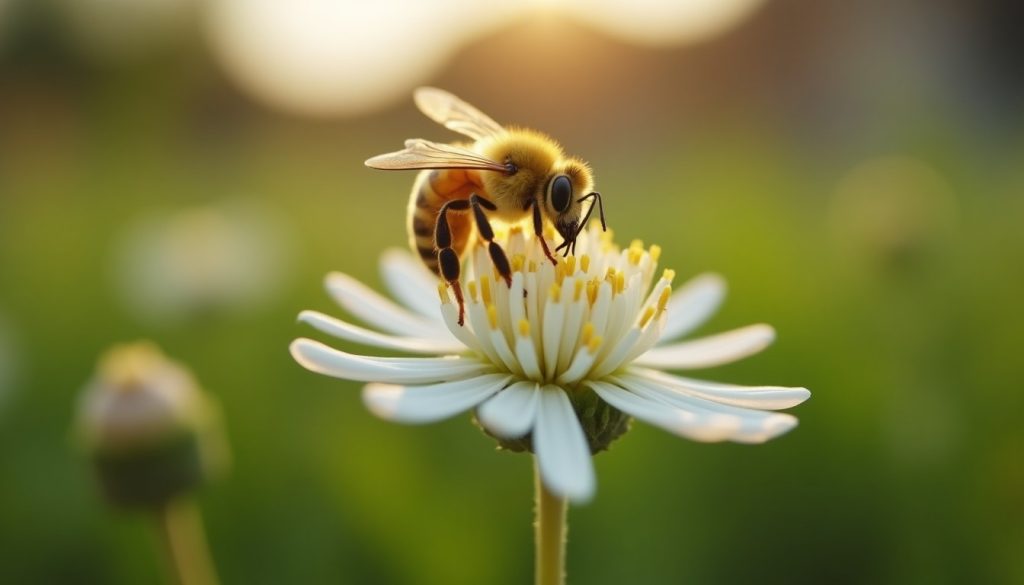
Pesticide labels carry bee protection language, and for products acutely toxic to bees that can include instructions not to apply while bees are foraging or until flowering is complete and all petals have fallen. The EPA classes a pesticide as acutely toxic to bees at a 48 to 96 hour contact LD50 below 11 micrograms per bee. Those instructions are label directions, which applicators are legally required to follow.
Most pollinator coverage is aimed at agriculture. The relevant question for a homeowner buying a perimeter or mosquito treatment is narrower: what is being applied, when, and whether anything is in bloom where it lands.
What the label actually requires
The EPA bee advisory box appears on certain product labels and can include directions such as not applying while bees are foraging, and not applying until flowering is complete and all petals have fallen.
This matters because the label is a legal document rather than guidance. An applicator is required to follow it, so a bloom-time restriction is an instruction, not a preference. Our guide to restricted use pesticides covers why the label controls and what certification permits.
| Concept | Definition |
|---|---|
| Acutely toxic to bees | 48 to 96 hour contact LD50 below 11 micrograms per bee |
| Bee advisory box | Label section carrying pollinator protection directions |
| Bloom-time restriction | Prohibits application while a plant is blooming, since blooms attract pollinators |
| Foraging restriction | Prohibits application while bees are actively foraging |
EPA policy on acute risk focuses on managed bees under contract for pollination, and the agency has stated it believes the measures also protect native bees and other pollinators.
Where this touches residential work
Three common residential treatments put product where pollinators forage, and each has a straightforward mitigation.
- Mosquito barrier treatment. Applied to vegetation, which is where foraging happens. Ask whether flowering plants are being treated and whether application timing avoids peak foraging.
- Ornamental and turf treatment. Flowering weeds in lawn, particularly clover and dandelion, are pollinator forage even when the lawn is not thought of that way. Mowing before treatment removes the blooms.
- Exterior perimeter treatment. Foundation planting is frequently in bloom. The mitigation is placement rather than timing: treat the structure and the band immediately around it, not the flowering shrubs.
Our guide to mosquito control costs covers the barrier method these questions apply to.
What to ask before a treatment
- Is the product acutely toxic to bees, and does the label carry a bee advisory box.
- Is anything in bloom in the area being treated, including lawn weeds.
- Can the timing avoid peak foraging, which generally means avoiding warm sunny middays.
- Can flowering plants be excluded from the treated area entirely.
- Can mowing precede treatment where flowering weeds are the issue.
- Are bait stations or targeted placement suitable instead of broadcast application, which reduces pollinator contact along with everything else.
These are the same placement questions that reduce human exposure, covered in our guide to safety for pets and children.
If you have honey bees on the property
Tell the company before any treatment, and tell any neighbouring beekeeper if you know of hives nearby. Honey bees forage over a wide radius, so a hive need not be on your land to be exposed.
Where the problem is a bee colony rather than a pest, relocation is usually preferred and often cheaper than extermination, covered in our guide to bee removal costs. Many general pest control companies decline honey bee work and refer it to a beekeeper, which is the correct call rather than an evasion.
Frequently asked questions
Can pest control spray while plants are flowering?
It depends on the product. Labels for pesticides acutely toxic to bees can carry directions not to apply until flowering is complete and all petals have fallen, or not to apply while bees are foraging. Those are legally binding label directions rather than guidance, so ask what the label says.
What makes a pesticide acutely toxic to bees?
The EPA applies a threshold of a 48 to 96 hour contact LD50 below 11 micrograms per bee. Products meeting that definition can carry bee advisory box language on the label, including bloom-time and foraging restrictions, and EPA policy addresses acute risk where bees are likely to be present.
How do I protect pollinators during pest control?
Ask whether the product is acutely toxic to bees, identify anything in bloom in the treatment area including lawn weeds such as clover and dandelion, mow before treatment where flowering weeds are the issue, exclude flowering plants from the treated area, and ask about targeted placement rather than broadcast application.
Should I tell my pest control company about beehives nearby?
Yes, before treatment rather than after. Honey bees forage over a wide radius, so hives need not be on your property to be exposed. Where the issue is a bee colony itself rather than a pest, relocation is generally preferred and often cheaper than extermination.
Sources
- U.S. Environmental Protection Agency, Tools and Strategies for Pollinator Protection. epa.gov
- U.S. Environmental Protection Agency, EPA Actions to Protect Pollinators. epa.gov
- North Carolina Department of Agriculture, The New EPA Bee Advisory Box. ncagr.gov
- University of Florida IFAS, Pesticide Labeling: Protection of Pollinators. edis.ifas.ufl.edu