Moles and Voles: Telling the Lawn Damage Apart
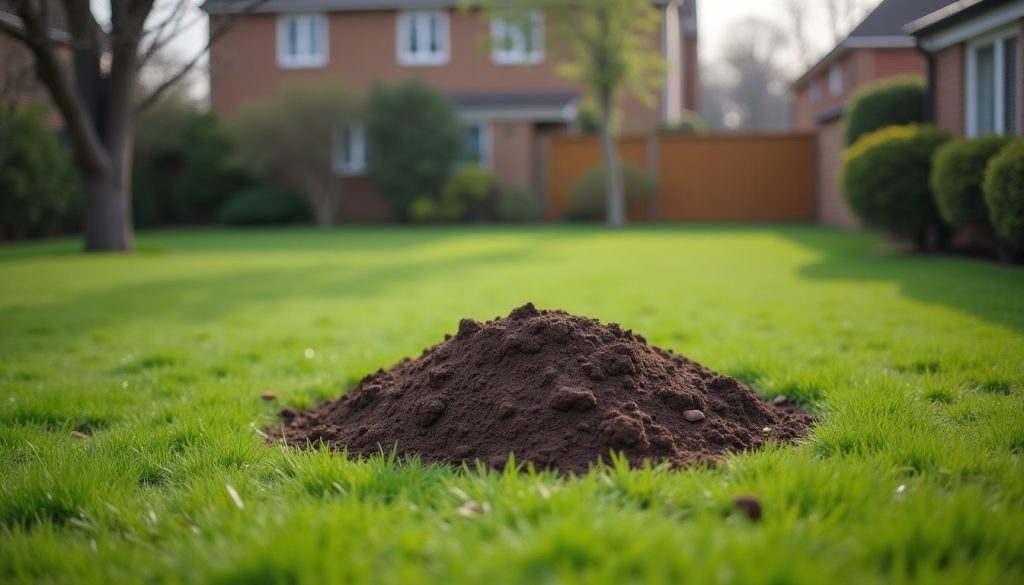
Moles push soil up and voles eat plants down, and that single sentence resolves most lawn damage disputes. Moles are insectivores, not rodents: they eat earthworms and grubs and, as Nebraska extension puts it, seldom eat roots, bulbs or other plant material. Voles are rodents that clip surface runways and girdle bark. The widespread belief that killing grubs removes moles is wrong, and Purdue says so in those terms. The one repellent with supporting research is castor oil, which is usually written off and should not be.
These two animals get blamed for each other constantly, and the treatments barely overlap. Worse, the single most common piece of advice given for moles is one that extension entomologists have been contradicting for decades.
Reading the damage
| Mole | Vole | |
|---|---|---|
| What it is | Insectivore, not a rodent | Rodent |
| Size | 4 to 7 in, 3 to 5 oz | 4.5 to 8 in, 1 to 2 oz |
| Diet | Earthworms, grubs, soil invertebrates | Plants, bark, roots, bulbs |
| Signature sign | Raised ridges and conical mounds under a foot across | Surface runways 1 to 2 in wide, clipped vegetation |
| Holes | No open holes; soil is pushed up | Open golf-ball-sized holes, no spoil |
| Plant damage | Indirect, roots disturbed by tunnelling | Direct, girdled stems and bark |
| Social | Solitary | Colonial, cyclical populations |
The surface runway is the most useful measurement on a lawn: a one to two inch wide path of clipped vegetation, often only visible when snow melts. Nothing else makes it.
Mole mounds are conical with a circular margin, which distinguishes them from pocket gopher mounds, which are crescent-shaped. A single mole tunnels 100 to 150 feet a day, so one animal produces damage that reads like several.
Clemson explains the confusion that keeps the myth alive: voles sometimes use mole tunnels, which causes moles to be blamed for eating roots. The mole dug the tunnel; the vole ate the plant.
The grub myth, stated plainly
Purdue’s position is worth quoting directly: it is an old wives’ tale that grubs are the reason moles are in a lawn, so using grub control products as a method of controlling moles will not be effective, and even in grub-free lawns moles continue to survive because the majority of their diet consists of the ever-present earthworm. Iowa State puts it the same way: white grub treatment does not remove the mole food source.
Moles eat 70 to 100 per cent of their body weight daily, and earthworms are the bulk of that. Treating for grubs removes a minority of the diet and leaves the main one untouched.
The advice persists because it was once accurate for the wrong reason. Mid-century soil insecticides killed earthworms along with grubs, so grub treatment did reduce moles. Modern grub products are far more selective, and the side effect that made the advice work is gone. It is a fossil.
That matters commercially. Selling a grub application as mole control is selling a treatment the published guidance says will not work, which is the kind of claim our guide to reading a guarantee exists to help customers test.
What else has been tested and failed
Extension sources have worked through the home remedies: ultrasonic and soil-vibrating devices, pinwheels and windmills, chewing gum, mothballs, human hair, razor blades and broken glass, cat litter, kerosene, flooding, cement, and castor-bean plants. None works.
Grain baits and so-called poison peanuts deserve a specific mention, because they are sold for moles and cannot possibly work: moles do not eat seeds. A bait a mole will not eat is not a control method, whatever the packaging says. For voles, which are rodents and do eat grain, baits are a different proposition entirely.
Ultrasonic devices fail here for the same reasons they fail generally, which we cover in our review of ultrasonic pest repellers.
Castor oil, the exception worth correcting
Castor oil is usually listed alongside the failed remedies. That is not what the research says, and we had assumed otherwise before checking.
A 1995 study presented at the Eastern Wildlife Damage Control Conference tested a 65 per cent castor oil product against eastern moles and found activity ceased on 11 of 11 treated lawns, while continuing on 5 of 6 untreated controls, with the effect lasting 30 days and up to 65 days at one site. UC IPM concedes some efficacy for eastern moles, while noting it is untested against the western species.
So the accurate position is narrower than either camp claims: temporary, partial, demonstrated for one species, and the only repellent in this category with supporting trial data behind it. It is not a permanent fix, and it is not snake oil.
What actually works
- Identify which animal you have before buying anything, using the runway test and the mound shape.
- For moles, trapping is the control method extension sources recommend, placed on active main runways rather than surface feeding tunnels.
- Find the active runs first by flattening a section and checking which are raised again within a day or two.
- For voles, reduce the cover. Mow, pull mulch back from trunks, and remove dense ground cover, since the runway system depends on concealment.
- Protect trunks with quarter-inch hardware cloth guards set below the soil line and tall enough to clear expected snow depth, since girdling happens higher under snow.
- Do not buy grub treatment as mole control, and do not buy grain bait for moles at all.
- Expect vole numbers to swing. Populations peak every two to five years and are not predictable, running from 10 to 250 animals per acre.
For the wider picture on lawn pests and when turf damage is actually an insect problem, see our lawn pest control guide, and our guide to chipmunks, groundhogs and ground squirrels covers the other burrowers people confuse with these two.
How we did this
Biology, damage signs and control guidance come from university extension publications, chiefly Nebraska G1538 and G887, Purdue HN-49-W, Penn State, Iowa State, Clemson and UC IPM. The castor oil trial is Dudderar, Tellman and Elshoff, presented at the Seventh Eastern Wildlife Damage Control Conference in 1995.
One figure we have deliberately not averaged: sources disagree on vole gnaw-mark width, with Penn State giving an eighth of an inch, Nebraska a sixteenth and Clemson a quarter. We have left it out rather than publish a false consensus. Vole density figures beyond the 10 to 250 per acre range appear only in secondary sources.
Frequently asked questions
Do moles eat grass roots?
No. Moles are insectivores, not rodents, and Nebraska extension states they seldom eat roots, bulbs or other plant materials. Their diet is mostly earthworms with some grubs and soil invertebrates. Plant damage from moles is indirect, caused by tunnelling disturbing roots. Where roots and bulbs are actually eaten, the animal is usually a vole using the mole’s tunnels.
Does killing grubs get rid of moles?
No. Purdue describes this as an old wives’ tale and states that grub control products will not be effective, because moles continue to survive in grub-free lawns on a diet consisting mostly of earthworms. The advice survives from an era when soil insecticides killed earthworms too; modern grub products are selective and do not.
How do I tell moles from voles?
Moles push soil up: raised ridges and conical mounds under a foot across, with no open holes. Voles work at the surface: runways one to two inches wide of clipped vegetation, open holes about the size of a golf ball with no soil pile, and girdled bark at the base of trees and shrubs.
Does castor oil repel moles?
Partly and temporarily, and it is the only repellent in this category with supporting trial data. A 1995 study of a 65 per cent castor oil product found mole activity ceased on 11 of 11 treated lawns against 5 of 6 untreated controls still active, lasting about 30 days. UC IPM accepts some efficacy for eastern moles but notes it is untested on western species.
Sources
- University of Nebraska Extension G1538 (moles) and G887 (voles).
- Purdue Extension HN-49-W, moles in the lawn, on the grub myth.
- Iowa State University Extension, Penn State Extension and Clemson Cooperative Extension.
- University of California Statewide IPM Program, Pest Notes: Moles and Voles.
- Dudderar, Tellman and Elshoff, castor oil repellent trial, Proceedings of the Seventh Eastern Wildlife Damage Control Conference, 1995.