Squirrels in the Attic: Timing, Gnawing and the Law
A squirrel gets through a 1.5 inch opening and enlarges anything smaller by gnawing, so the hole you find is rarely the hole it started with. Exclusion has to work around two breeding seasons a year, because sealing a female out while dependent young are inside produces both a dead-animal problem and a determined animal chewing a new entrance. And relocating the squirrel you catch is illegal or restricted in much of the country: tree squirrels are game animals in many states, and USDA’s position is that trapping and translocating wild animals is rarely legal.
Squirrels sit awkwardly between pest control and wildlife work. The biology is simple enough; the legal position and the timing are what cause expensive mistakes.
Which squirrel is in the attic
| Species | Size | Behaviour | What it means for the job |
|---|---|---|---|
| Eastern gray squirrel | 16 to 24 in, 15 to 24 oz | Diurnal, solitary nests | The usual attic animal |
| Fox squirrel | About 2 lb | Diurnal | As above, larger |
| Red squirrel | 9 to 13 in, 4 to 8 oz | Diurnal, caches food | Smaller entry points, noisy |
| Flying squirrel | 8 to 10 in, 1.3 to 4 oz | Strictly nocturnal, colonial | Routinely mistaken for rats or mice |
The flying squirrel is the one that gets misdiagnosed, and Nebraska extension says so directly: their activity is frequently misattributed to mice. They are nocturnal, which fits the rodent assumption, and colonial, with typical groups of 8 to 15 and dens recorded holding 40 to 50.
Getting that wrong is a legal problem as well as a technical one. No rodenticide is labelled for flying squirrels, and in some states they carry protected status. Scratching in a ceiling at night is not automatically a rat, and our guide to telling rodent activity apart covers the acoustic signs.
The two breeding seasons decide the timing
Tree squirrels breed twice a year, and the months shift with latitude: Nebraska gives December to January and sometimes June to July for fox squirrels, Penn State mid-December and June for grays, and Alabama reports February to March and July to August. There is no single national pair of dates, which is why a calendar rule imported from another state goes wrong.
What matters is the dependency window. Young are weaned at around 50 days and take 10 to 12 weeks to leave the nest, so the practical periods when exclusion should not be completed run roughly February to April and July to September in most of the range.
Sealing an adult out during those windows leaves dependent young inside. The outcome is predictable: a dead-animal problem in a void, followed by the dermestid beetle infestation that feeds on it, which is covered in our guide to larder beetles. Meanwhile the excluded female will work hard at a new entrance, and squirrels are equipped to make one.
Why the gnawing is the whole problem
Squirrel incisors grow continuously and are self-sharpening, with hard enamel on the front face and softer dentine behind, so wear keeps the cutting edge. Extension sources describe the mechanism clearly but publish no growth rate; the “six inches a year” figure that circulates online appears only on commercial and rehabilitation sites, so we are not repeating it.
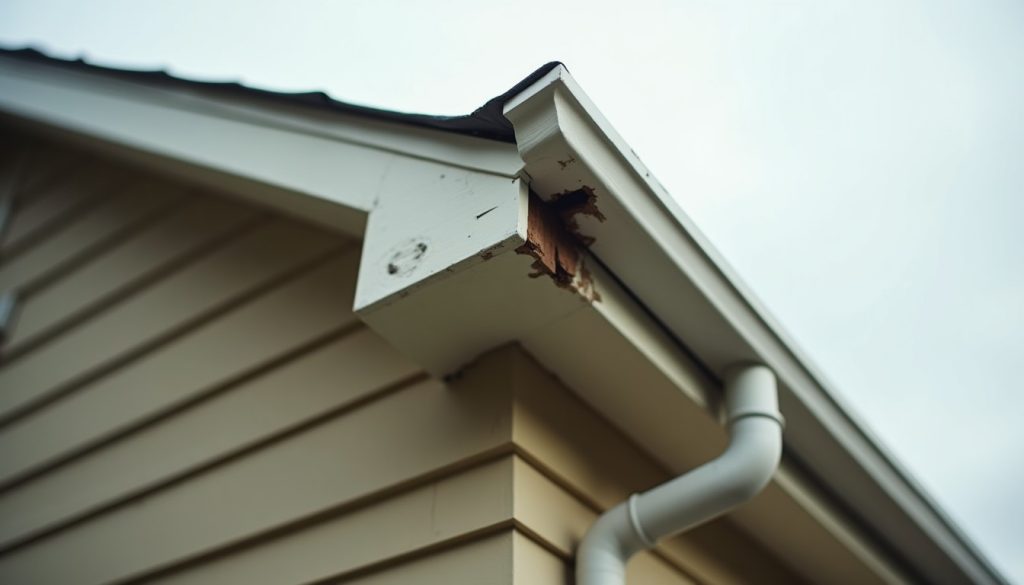
What the mechanism means in practice is that any opening is a starting point. Nebraska reports squirrels squeezing through 1.5 inch holes and enlarging smaller ones by gnawing. Soffit returns, fascia gaps, roof-to-wall junctions, gable and ridge vents, and rotten trim are the usual entries.
The damage that follows is chewed wiring, compacted or soiled insulation, gnawed structural timber and the contamination from urine and droppings. Chewed wiring is the reason an attic squirrel is a fire risk rather than only a noise complaint.
Exclusion material has to match the animal. Quarter-inch to half-inch woven hardware cloth, or screwed galvanized sheet metal, is what extension sources specify. Foam, caulk, insect screen and steel wool all fail here, for the reasons set out in our guide to rodent exclusion materials.
The legal position most people get wrong
Fox and gray squirrels are classified as game animals in many states, with defined seasons, which places them under wildlife law rather than general pest law. That has two consequences.
First, relocation is usually not available. Nebraska states that translocation of squirrels is illegal and that a problem squirrel must be released within 100 yards of the capture site or euthanised. California requires a permit to release elsewhere. USDA’s national position is that trapping and translocating wild animals is rarely legal.
Second, “catch and release in the woods” is the thing most customers expect and most operators should not promise. Beyond legality, a relocated squirrel is released into occupied territory without caches, in an area it does not know.
Check the state wildlife agency rather than assuming, because the rules differ sharply and the licence at risk is yours. Our state regulator guide covers who oversees what, and wildlife removal pricing covers what this work costs.
How the job should run
- Identify the species first, and specifically rule flying squirrels in or out, since nocturnal activity changes both the diagnosis and the legal position.
- Establish whether young are present before sealing anything. This is the decision that most often goes wrong.
- Use a one-way door on the active entrance rather than trapping blind, once you are confident there are no dependent young.
- Seal with hardware cloth or screwed sheet metal, not foam, and treat the whole roofline rather than the one hole.
- Trim back branches that give roof access, generally to six to eight feet from the structure.
- Clean up afterwards. Soiled insulation and droppings are part of the job, and our guidance on dropping cleanup covers doing it safely.
- Check the state rules on disposition before you set a trap, not after.
How we did this
Sizes, breeding seasons, entry dimensions and exclusion specifications come from university extension publications, chiefly Nebraska G1924, Penn State, UC IPM and Alabama Extension, with the legal position from state agencies and USDA APHIS Wildlife Services.
Two limits worth stating. Breeding months differ by latitude and we have given the range rather than inventing a national figure. And no extension or peer-reviewed source publishes an incisor growth rate for tree squirrels, so we describe the mechanism without a number.
Frequently asked questions
How do squirrels get into an attic?
Through an opening of about 1.5 inches, and by gnawing smaller gaps larger. The usual entries are soffit returns, fascia gaps, roof-to-wall junctions, gable and ridge vents, and rotten trim. Because they enlarge openings, the hole you find is rarely the size it started at, and overhanging branches give roof access.
When should you not exclude squirrels?
When dependent young are present. Tree squirrels breed twice a year, with months varying by latitude, and young take 10 to 12 weeks to leave the nest, so the periods to avoid completing exclusion run roughly February to April and July to September. Sealing a female out during those windows leaves young to die inside.
Can I trap a squirrel and release it somewhere else?
Usually not legally. Fox and gray squirrels are game animals in many states, relocation is illegal or permit-restricted in several, and USDA’s position is that trapping and translocating wild animals is rarely legal. Nebraska, for example, requires release within 100 yards of capture or euthanasia. Check your state wildlife agency first.
Is it squirrels or rats in my attic?
Daytime activity points to gray, fox or red squirrels, which are diurnal. Night activity is often assumed to be rats but is frequently flying squirrels, which are strictly nocturnal and colonial, with groups of 8 to 15 and dens recorded up to 40 or 50. The distinction matters legally, because no rodenticide is labelled for flying squirrels and they are protected in some states.
Sources
- University of Nebraska Extension G1924, controlling tree squirrel damage.
- Penn State Extension and Alabama Cooperative Extension, tree squirrel biology.
- University of California Statewide IPM Program, tree squirrels.
- Mengak, USDA APHIS Wildlife Services National Wildlife Research Center, on translocation.