Spiders Coming Through Air Vents: Do They Live in the Ducts?
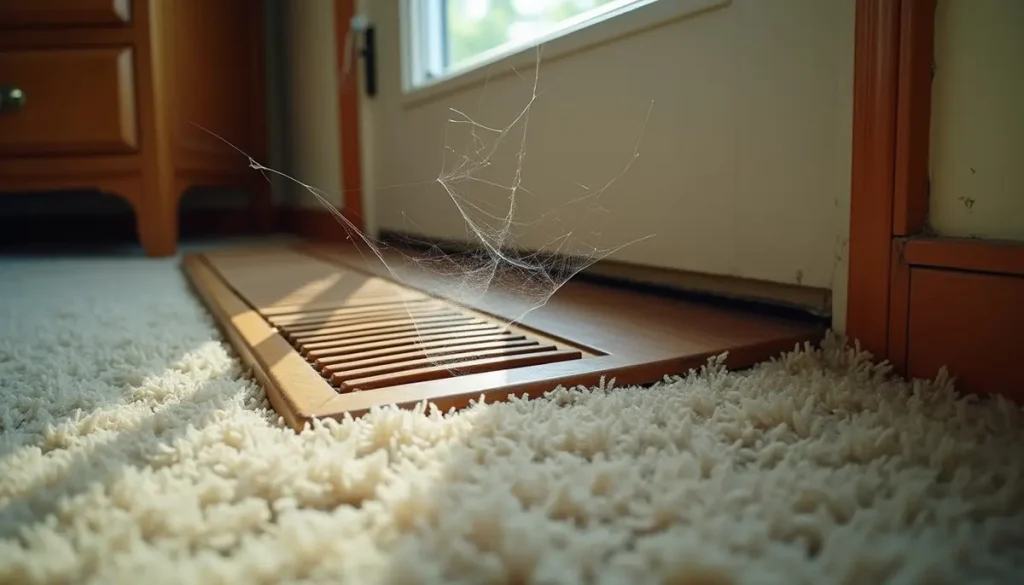
Spiders can come out of air vents, but they rarely live inside the ducts; most spiders seen at a vent are house spiders already living in the wall and floor voids, or wanderers using the register as a hiding place. The real exceptions are floor registers over a crawl space and leaky ducts in attics, where gaps open onto spaces full of spiders and insects. Vacuum the vent, put fine mesh behind floor registers and seal duct leaks with mastic.
Which vent, and what it means
| Where you see spiders | Most likely route | What to do |
|---|---|---|
| Ceiling or high wall supply vent, one spider now and then | A house spider walking across the ceiling and sheltering in the louvres | Vacuum; no duct work needed |
| Floor register over a crawl space, repeated spiders | Gap where the duct boot meets the subfloor, or a leaking duct under the house | Mesh behind the register; seal the boot and duct joints from below |
| Low return grille in a hallway | Spiders and insects walking in at floor level | Vacuum webs and egg sacs; check the return box for gaps |
| Any vent, late August to October, big fast brown spiders | Mature males wandering in search of mates | Catch or vacuum; sightings tail off after the mating season |
| Bathroom exhaust or dryer vent | Outdoor opening with a flap that does not close | Repair the damper; do not screen a dryer vent |
| Car dashboard vents | Cabin air intake, not a house duct | Cabin clean-out |
Compiled by The Pest Control Brief from UC IPM Pest Notes 7442, the Burke Museum of Natural History and Culture, US EPA and ENERGY STAR.

Can spiders come from air vents?
Yes, but usually as a walk-through rather than a home. The Burke Museum in Seattle says fewer than 5 per cent of the spiders people see indoors have ever been outdoors. The rest live in the house year round, and the museum lists where the females and young stay hidden: crawlspaces, storage areas and other neglected rooms, wall and floor voids, and behind furniture and appliances. A floor register is a hole straight into one of those voids, and a ceiling vent is a sheltered ledge on a spider’s route across the room.
The inside of a working supply duct is a poor place to live. Air moves through it whenever the system runs, and there is little to eat. UC IPM notes that the more insects there are inside a building, the more likely it is to have spiders living there, and a clean sheet metal duct holds few insects. No extension source we found describes spiders living in ducts as a common problem; the spiders are in the spaces the ducts pass through.
Do spiders come through vents from outside?
Rarely through the heating and cooling system itself, because a central system recirculates indoor air. The outdoor openings that do connect are exhaust fans, dryer vents and fresh air intakes, each with a flap or damper. The dryer vent is the one to get right: as our dryer vent page sets out, the International Residential Code requires a backdraft damper at the outside end and forbids a screen there, because screens catch lint. Our page on keeping pests out of a dryer vent without a screen covers the damper fix.
Why am I suddenly finding so many spiders in my room?
In late summer the most likely answer is males. The Burke Museum says the spiders people notice in August and September are sexually mature males wandering in search of mates, not spiders coming in from the cold. Our analysis of iNaturalist records shows the same timing: the hobo spider’s share of US records peaks in August at an index of 286, almost three times its yearly average, and the common house spider peaks in September at 174.
A wandering male that ends up on a register in September is using the vent as cover, not as a nest. Our guide to why there are suddenly so many spiders in the house covers the other causes, from hatched egg sacs to insect booms.
The timing question is set out in our page on where spiders go in winter and why autumn brings more indoors.
Where spiders get into the duct system
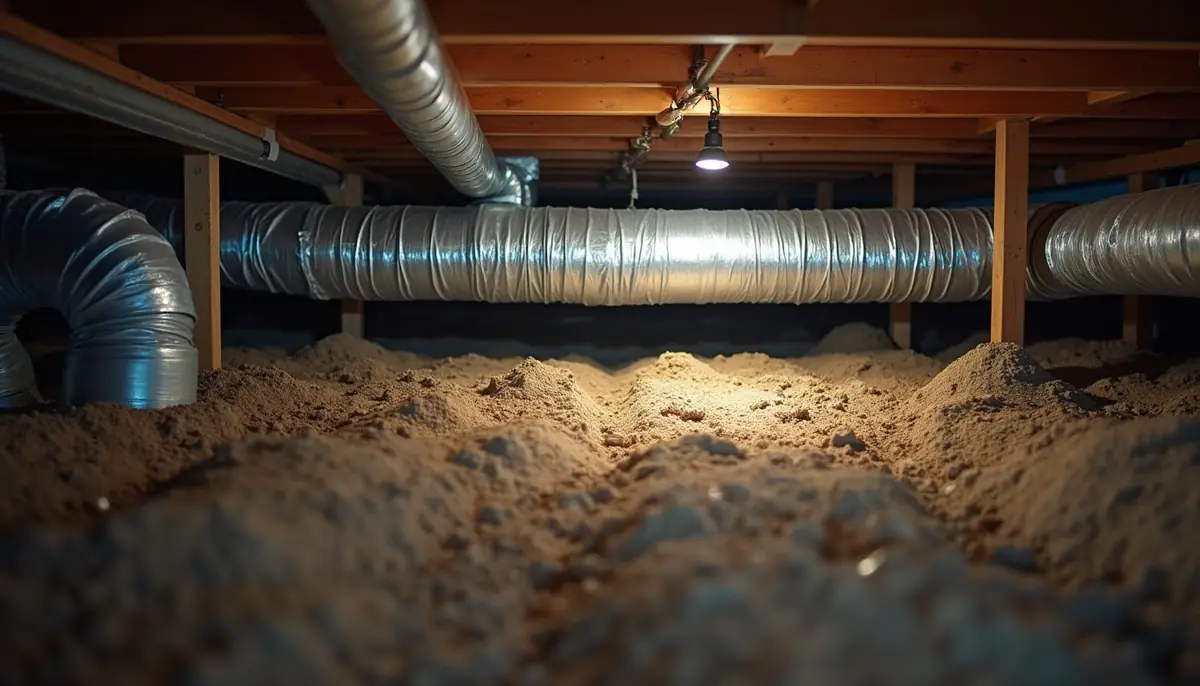
The exceptions to the rule all involve a gap between a duct and an unconditioned space:
- Leaky ducts. ENERGY STAR says about 20 to 30 per cent of the air moving through a typical duct system is lost through leaks, holes and poorly connected ducts, and that ducts often run through attics, crawlspaces, unfinished basements and garages. Those are the spaces the Burke Museum lists as spider habitat.
- Floor duct boots over crawl spaces. Where the boot meets the subfloor, a gap can open straight to the crawl space, the same route our page on cockroaches coming out of air vents describes for large roaches.
- Return grilles near the floor. A return pulls room air in and sits where wandering spiders and their insect prey walk.
- Window and through-wall air conditioners. These sit in an opening to the outside, so check the side panels and foam seals each spring.
How to stop spiders from coming through air vents?
- Vacuum the vent and the area round it. Lift the register and vacuum inside the boot as far as you can reach, including webs and egg sacs. UC IPM says vacuuming is an effective control because spiders’ soft bodies usually do not survive it.
- Put a fine mesh behind floor registers. Cut a piece of fine insect screen to the register size and set it under the grille. Clean it when you change the furnace filter so it does not restrict airflow, and ask an HVAC technician if the room starts to feel stuffy.
- Seal duct leaks. ENERGY STAR recommends mastic sealant or metal tape, not duct tape, which does not last. Seal the boot to the subfloor from the crawl space, and the joints along ducts in the crawl space or attic.
- Cut the food supply. UC IPM notes that outdoor lighting attracts insects, which in turn attract spiders, and advises keeping light fixtures away from windows and doorways where possible.
- Seal the house as well as the ducts. UC IPM recommends sealing cracks in the foundation and gaps around windows and doors, and says good screening keeps out many spiders.
Our full plan for getting rid of spiders in the house covers repellent claims and the rest of the house.
Do not spray or fog the ducts
EPA states that it is a violation of federal law to use a pesticide product in any manner inconsistent with its label directions, and that no chemical biocides are registered for use in internally insulated duct systems. Spraying a household insecticide into ductwork blows it round the house the next time the system runs. UC IPM adds that spraying for spiders is only temporary unless accompanied by housekeeping. If you think the ducts themselves need attention, EPA lists ducts infested with vermin, such as rodents or insects, as one reason to consider cleaning, gives a published estimate of $450 to $1,000 per heating and cooling system, and says the cause must be fixed first or the problem will likely recur.
Is the vent spider dangerous?
Usually not. The large, long-legged brown spiders seen running in late summer are most often house spiders; UC IPM describes the hobo spider as 1 to 1.75 inches including legs and notes it has not been documented in California, and our page on why the hobo spider’s dangerous reputation has collapsed covers the evidence on bites.
A small pale spider sheltering in a silk sac where the wall meets the ceiling is more likely a yellow sac spider, which our guide to yellow sac spider bites and indoor sightings covers.
To rule out a brown recluse, go by the spider itself rather than where it turned up, using our spider identification by the evidence.
Why should you never kill spiders?
There is no rule against it, but there is a practical case for leaving a few. UC IPM links spider numbers to insect numbers indoors, so a house spider at a vent is eating the insects that use the same route; our page on what house spiders eat explains which pests they take. Where spiders bother you, vacuuming is the method UC IPM supports, and the Burke Museum’s point that fewer than 5 per cent of indoor spiders have been outdoors means putting one outside rarely sends it home.
Frequently asked questions
Can spiders come through AC vents?
They can walk out of them, but the air conditioning does not carry them in. A central system recirculates indoor air, so spiders at an AC vent usually came from the house itself, a crawl space or an attic through a gap in the ductwork. ENERGY STAR says 20 to 30 per cent of duct air is lost through leaks, which shows how many gaps a typical system has.
Do spiders live in air vents?
Some shelter in the louvres or just inside the boot, especially webs near floor registers, but extension sources do not describe working ducts as spider habitat. The Burke Museum places indoor spiders in crawlspaces, storage areas, wall and floor voids and behind furniture. Vacuum the register and the boot, then seal the gap that connects it to those spaces.
Should I get my ducts cleaned for spiders?
Usually not for a few spiders. EPA says cleaning is worth considering when ducts are infested with vermin such as rodents or insects, does not recommend routine cleaning, and gives a published estimate of $450 to $1,000 per system. Fix the entry gaps first, because EPA says the problem will likely recur otherwise.
Why are there spiders in my car vents?
Car vents draw from the vehicle’s own cabin air intake, not a house duct. NHTSA filings record four US recalls where spider webs blocked a fuel vent line or air conditioning drain, and our guide to spiders in the car, webs and recalls covers the clean-out.
Sources
- University of California Statewide IPM Program, Pest Notes: Spiders, Publication 7442.
- Burke Museum of Natural History and Culture, University of Washington, Myth: Spiders come indoors in the fall.
- US Environmental Protection Agency, Should You Have the Air Ducts in Your Home Cleaned?
- ENERGY STAR (US EPA and Department of Energy), Duct Sealing.
- International Code Council, International Residential Code, clothes dryer exhaust provisions, as cited on our dryer vent page.
- NHTSA recall filings, as compiled on our spiders in the car page.
- The Pest Control Brief analysis of iNaturalist research-grade records, pulled October 2026 (b19 to b30 files).