How to Get Rid of Fleas: Pet, House and Yard in One Plan
To get rid of fleas, treat every pet with a vet-chosen flea product and, in the same week, treat the home: vacuum daily, wash pet bedding hot, and apply an adult flea killer with an insect growth regulator where pets rest. Treat outdoors only in shaded spots where pets lie. Expect new fleas for up to four weeks as cocooned fleas hatch; Texas A&M advises a follow-up treatment 10 to 14 days after the first, and the University of Kentucky says fleas still seen after four weeks call for retreatment.
Fleas are a three-place problem. Adult cat fleas, the species on most US dogs and cats, live on the animal; their eggs fall off wherever it rests, and the larvae and cocoons develop in carpet, bedding and shaded ground. UC IPM’s Pest Notes: Fleas (Publication 7419, Rust) puts egg laying at about 20 to 50 eggs per female per day, so a treatment that clears only one of the three places is refilled from the others.
The plan: pet, house and yard in one week
The order follows the University of Kentucky’s ENTFACT-602 (Potter, revised March 2026): treat the pet, then the home if needed, then the yard if pets spend time outdoors. CDC’s four-step process says to start the home treatment “at the same time” as the pet’s, which is the timing rule most failed attempts break.
- Confirm it is fleas. Comb the pet over white paper and wet the black specks: flea dirt is digested blood and turns red. Walk pet resting areas in white socks pulled to the knee; fleas jump on and show up. Our guide to what fleas look like, with the flea dirt test covers size and colour.
- Treat every animal in the home. CAPC, the Companion Animal Parasite Council, says “every pet in the home must be treated” to control an infestation. The product is a veterinary decision: dose depends on species, weight and age, and Texas A&M warns that products made for adult dogs should not be used on puppies or cats unless the label says so.
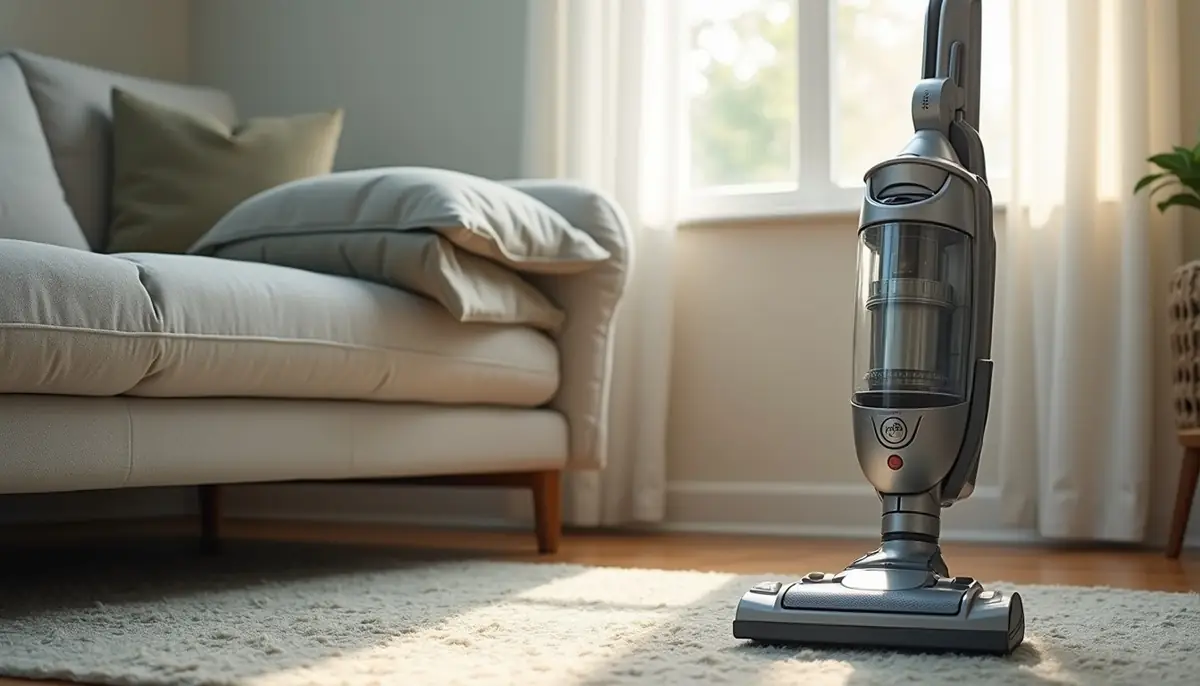
- Vacuum the whole house the same day. Floors, rugs, upholstered furniture, under cushions and along walls. Empty the canister or seal the bag into an outdoor bin.
- Wash pet bedding hot. UC IPM says to launder pet bedding in hot, soapy water at least once a week.
- Treat pet resting areas with an adulticide plus an IGR. Kentucky rates products combining an adult flea insecticide with methoprene or pyriproxyfen as the effective choice. Apply to label directions and keep people and pets off until dry.
- Check the yard before treating it. Treat only shaded resting spots, and only if the sock test finds fleas there.
- Vacuum daily and follow up. Texas A&M calls a follow-up treatment at 10 to 14 days “critical” because pupae are hard to kill. CDC calls for two or more follow-ups within 5 to 10 days of the first application. The two agree on the point: one treatment is half a course.
- Judge it at four weeks. Kentucky expects some fleas “for a few weeks or longer,” and says retreatment may be needed if adults are still seen beyond four weeks.
Where each flea stage is, and what reaches it
The adults you see are a fraction of the problem. With each female laying about 20 to 50 eggs a day (UC IPM), the eggs, larvae and cocoons in the house soon outnumber them, and each stage needs a different tool. Larvae develop in carpet and bedding where pets rest, and our page on how long fleas live in carpet and how to clear it deals with carpet by stage and style.
| Stage | Where it is | How long it lasts | What kills or removes it | What misses it |
|---|---|---|---|---|
| Egg | Laid on the pet, falls off where it rests | Hatches in about 2 to 5 days | Vacuuming (removes up to 60%); IGRs stop hatching | Adult-only sprays |
| Larva | Pet bedding, carpet base, shaded soil | 8 to 15 days (UC IPM); 5 to 11 days (Texas A&M) | IGRs; hot washing; dry air below 50% humidity | Vacuuming lifts only up to 30% |
| Pupa in cocoon | Carpet, cracks, under furniture | 1 to 4 weeks, sometimes longer; up to 12 months when cool | Vacuum vibration makes it hatch into treated areas | Insecticide: the cocoon is “impervious” |
| Adult | On the pet; newly hatched ones wait at floor level | A few days to a few weeks without a host | Pet adulticide; vacuuming; contact sprays | IGRs alone |
Compiled by The Pest Control Brief from UC IPM Pest Notes: Fleas (7419), University of Kentucky ENTFACT-602 and Texas A&M AgriLife ENTO-PU-046, Managing Fleas (Brown and Keck, January 2025).
Why fleas keep appearing for weeks
The cocoon is the reason most people decide a treatment failed. Kentucky states that “the cocoon is also impervious to insecticides,” and pupae stay in it for one to four weeks, sometimes longer. UC IPM adds that in cool conditions fully formed fleas can stay in their cocoons for up to 12 months. They hatch when warmth or the vibration of footsteps signals a host, so a treated room keeps producing new adults that were never exposed to the spray.
At room temperature UC IPM puts the whole cycle at about 18 days, with larvae needing at least 75 per cent relative humidity and developing best at 70 to 90°F. Our explainer on why fleas come back two weeks after treatment follows that cycle stage by stage. The practical rule: new fleas in week two are expected; new fleas in week five are not.
What kills fleas: methods compared
The table groups methods by where they work and by active ingredient class. On-animal products are listed so you can recognise what a vet prescribes, not to choose one; the vet knows the animal’s age, weight and health. Kentucky’s rule is absolute: “Never treat pets with the same products used to treat carpeting or the yard.”
| Method or active class | Where | Stage it hits | Speed and duration | Risk notes | Source |
|---|---|---|---|---|---|
| Isoxazolines (fluralaner, afoxolaner, sarolaner, lotilaner) | Pet, oral chewable | Adults feeding on the pet | Given monthly, one product every 3 months | Vet decision | Kentucky ENTFACT-602; Texas A&M ENTO-PU-046 |
| Nitenpyram | Pet, oral tablet | Adults on the pet | Knocks fleas down within 30 minutes; short acting | Vet or label dosing | UC IPM 7419 |
| Fipronil, imidacloprid, selamectin, spot-on classes | Pet, skin | Adults | Monthly; water can reduce spot-on effect | Species-specific labels | UC IPM 7419; Texas A&M |
| Lufenuron | Pet, oral | Eggs: stops reproduction | Slow; “doesn’t kill adult fleas” | Use with an adulticide | UC IPM 7419 |
| Soap bath and flea comb | Pet | Adults removed or drowned | Immediate, no residual | Dip comb in soapy water | CDC; Texas A&M |
| Vacuuming | Home | All stages it collects | Killed 96% of adults and 100% of pupae and larvae vacuumed in tests | None; empty outdoors | Hink and Needham, Ohio State |
| Hot washing | Bedding | Eggs, larvae, adults | Weekly during treatment | None | UC IPM 7419 |
| IGR: methoprene | Indoors only | Eggs and larvae | Breaks down in sunlight, so not for outdoor use | Indoor labels only | Texas A&M ENTO-PU-046 |
| IGR: pyriproxyfen | Indoors and yard | Eggs and larvae | Outdoor products work “for several months” | Follow label | Kentucky; Texas A&M |
| Adulticide sprays (bifenthrin, etofenprox, prallethrin, dinotefuran) | Home and yard | Adults and larvae contacted | Kills on contact; residual varies by label | Stay off until dry; never on pets | Texas A&M ENTO-PU-046 |
| Citrus oil extracts (limonene, linalool), pyrethrins | Home | Larvae and adults | Contact kill | Some pets, especially certain cat breeds, are sensitive | Texas A&M ENTO-PU-046 |
| Diatomaceous earth (registered dust) | Home and yard | Larvae and adults contacted | Reapply if wet | Thin layer, kept from becoming airborne; our review covers what testing on diatomaceous earth shows | Texas A&M ENTO-PU-046 |
| Room foggers | Home | Exposed adults | “Seldom effective against fleas” | Less coverage than direct sprays | Kentucky; UC IPM |
Compiled by The Pest Control Brief from UC IPM 7419, University of Kentucky ENTFACT-602 (2026), Texas A&M AgriLife ENTO-PU-046 (2025), CDC and the Ohio State vacuum study (Hink and Needham, Entomologia Experimentalis et Applicata).
Vacuuming: the evidence behind the daily chore
Vacuuming is the most consistent instruction across the sources, and it has published numbers behind it. In the Ohio State study by W. Fred Hink and Glen Needham, six tests on adult cat fleas averaged 96 per cent killed, and tests on pupae and third-stage larvae killed 100 per cent. Only about 5 per cent of adults died when simply held in a paper vacuum bag, so the machine did the killing. Eggs were not tested, and one upright model was used.
Removal is weaker than killing. Texas A&M’s 2025 Managing Fleas puts vacuuming at removing up to 30 per cent of larvae and up to 60 per cent of eggs from a carpet, along with the dried blood larvae feed on. That is why daily repetition matters more than one deep clean, and why Kentucky notes the vibration “stimulates fleas to emerge sooner from their insecticide-resistant cocoons” into treated carpet.
Treating the pet
CAPC recommends that dogs and cats be on flea control year round, throughout their lives. For an active infestation the choice is between oral and topical adulticides, and both come in several classes. Texas A&M lists chewable actives including spinosad, fluralaner, afoxolaner, lotilaner and sarolaner, and spot-on actives including fipronil, imidacloprid, selamectin and indoxacarb. Some oral isoxazolines are given monthly and one every three months, according to Kentucky.
Cats need the most care. Texas A&M notes some cat breeds are sensitive to botanical products, especially citrus oils, and that dog products should not be used on cats unless the label allows it. A bath with ordinary soap kills adult fleas on the animal; CDC and Texas A&M both describe soap as a mild insecticide. It leaves nothing behind, so the pet is reinfested by the next fleas to hatch unless the house is treated too. Our guide to what to look for in pet-safe pest control products covers the house side of that.
Treating the yard: shaded spots only
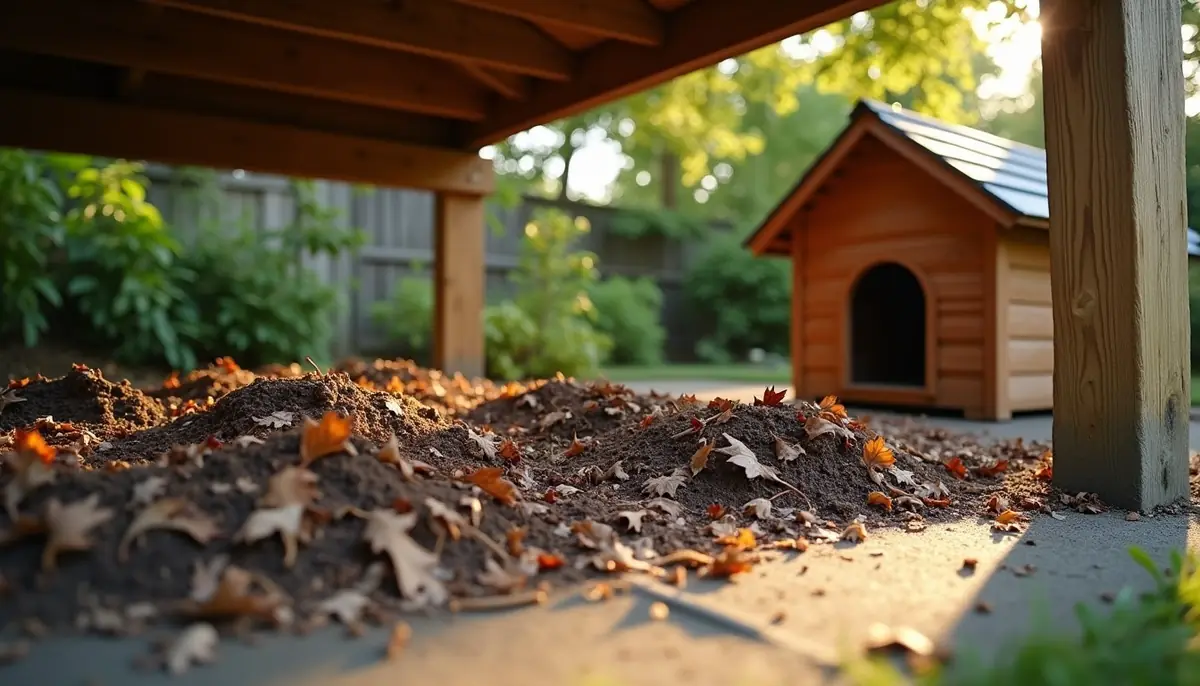
UC IPM: “It is seldom necessary to treat the entire yard or lawn areas.” Kentucky lists the places that matter: doghouses, kennels, fence lines, under decks and along the foundation, and adds that areas in full sun seldom need treatment. Texas A&M says relative humidity below 50 per cent or soil temperatures above 95°F kill flea larvae, which is why sunny lawns rarely hold them.
Pyriproxyfen is the IGR suited to outdoor use, because methoprene breaks down in sunlight. Texas A&M is cautious about predatory nematodes, saying their effectiveness “has not been well-tested” and that they need 1/4 to 1/2 inch of irrigation before and after application. Our page on where fleas live in a yard and how to treat it covers the sock test and wildlife exclusion in more detail.
Fleas with no pet, or after moving in
Texas A&M says long-vacant homes or apartments “come alive” with fleas when new tenants move in: cocooned adults from the previous occupants’ pets wait for a host. The other source is wildlife. Bats, rats, squirrels, raccoons and feral cats living under or around a building can seed it, and Texas A&M says the wildlife needs to be removed before a flea treatment will hold. How long an empty house stays infested is the subject of our page on how long fleas live without a host, by life stage.
Fleas also ride into vehicles on pets and people. The same cocoon biology, with new adults emerging for up to four weeks, applies to car carpet, which our guide to how long fleas last in a car and how to clear them covers with the vacuuming steps for seats and footwells.
What does not work
- Brewer’s yeast and vitamin B1. UC IPM: neither “prevents fleas from feeding.” Texas A&M adds that tests showed brewer’s yeast does not protect pets.
- Garlic, herbal sachets and cedar bedding. Texas A&M: “little scientific evidence”; cedar chip oils are toxic to fleas but the effect “lasts for a very short time.”
- Herbal collars and ultrasonic devices. UC IPM says they “aren’t effective flea repellents.”
- Foggers. Kentucky says they are seldom effective; UC IPM says they lack the coverage of direct sprays.
- Flea traps alone. Texas A&M: unlikely to solve most problems, though useful for finding where fleas are concentrated.
- Treating only the pet or only the house. The untreated place refills the treated one, the reason CDC starts both together.
The broader record on home remedies, and why most are never tested at all, is in our review of whether natural pest control products work.
How long it takes
| Milestone | Typical timing | Source |
|---|---|---|
| Fleas on the pet knocked down by a fast oral product | Within 30 minutes | UC IPM 7419 |
| First follow-up home treatment | 10 to 14 days (Texas A&M); within 5 to 10 days, two or more (CDC) | Texas A&M; CDC |
| Daily vacuuming | Throughout the follow-up period | CDC; UC IPM |
| New adults still hatching | 1 to 4 weeks, sometimes longer | Kentucky ENTFACT-602 |
| Retreat if fleas persist | Beyond 4 weeks | Kentucky ENTFACT-602 |
| Moderate to severe infestation under control | Several months | CAPC; CDC |
| Cocooned fleas in a cool, empty building | Up to 12 months | UC IPM 7419 |
Health: what fleas can carry
Most flea bites are an itchy nuisance: small red bumps, usually on the ankles and lower legs. Bite marks alone are weak evidence of what bit you, as our guide to why bite patterns are weak evidence explains, and a doctor is the right person for any rash, swelling or infection. Three health points are worth knowing.
- Flea-borne typhus. CDC says fleas pick up the bacteria from infected animals “such as rats, cats, or opossums,” and the bacteria can enter through flea dirt rubbed into bites or other wounds. Most cases are reported in southern California, Hawaii and southern Texas.
- Tapeworm. CDC says people get Dipylidium tapeworm “by swallowing a flea infected with tapeworm larvae,” most reported cases are in children, and it is easily treatable. Flea control is its prevention.
- Flea allergy in pets. Texas A&M notes that as few as one or two bites can cause severe itching in allergic animals.
Texas A&M also states that cat fleas do not carry plague; that risk comes from wild rodent fleas. Why cat fleas bite people but do not stay on them is covered in our page on whether humans can get fleas.
DIY or a professional?
Most households can clear fleas themselves if every pet is treated and the vacuuming is kept up. A professional earns the fee for heavy infestations, multi-unit buildings, wildlife under the house and homes where nobody can vacuum daily. Prices are published estimates from home services marketplaces, as compiled on our page on flea treatment cost and why one visit is never enough. A company treats the structure; the pets remain a job for the vet.
| Situation | DIY usually enough? | Call a professional when | Published cost estimate |
|---|---|---|---|
| One or two pets, fleas found early | Yes | Fleas persist past 4 weeks of correct treatment | DIY spray and vacuuming $10 to $75 |
| Heavy infestation, bites on people daily | Sometimes | Carpeted house too large to treat evenly | $100 to $450, around $250 typical |
| Follow-up visit | n/a | Booked with the first visit | $75 to $200 |
| Wildlife or rodents under the house | No | From the start; animals must go first | Wildlife removal priced separately |
| Rental or newly bought home, no pets | Often | Fleas return after vacuuming and one treatment | $100 to $450 |
| Ongoing protection | Pet products usually suffice | Repeated outdoor reinfestation | Annual contract $300 to $600 |
If you book a service, Texas A&M says companies will usually ask you to vacuum and clear floors first, and that people and pets must stay off treated areas until dry. Our checklist for preparing a home for pest control covers the rest.
Every flea guide we publish
Identification and bites
- What Do Fleas Look Like? Size, Colour and the Flea Dirt Test
- Can Humans Get Fleas? Why They Bite You but Do Not Stay
- What Bit Me? Why Bite Patterns Are Weak Evidence
Biology and timing
Where fleas live
- Can Fleas Live in Carpet? How Long, and How to Clear It
- Fleas in the Yard: Where They Live and How to Treat It
- Fleas in Your Car: How Long They Last and How to Clear Them
Costs
Frequently asked questions
What kills fleas instantly in the house?
Nothing kills every stage at once. A vacuum killed 96 per cent of adult fleas it collected in the Ohio State study, and contact sprays kill exposed adults and larvae. Cocooned pupae survive insecticide, which Kentucky calls impervious, so new fleas keep hatching for one to four weeks. On the pet, UC IPM says nitenpyram knocks fleas down within 30 minutes.
Can you 100% get rid of fleas?
Yes. Texas A&M says you can eliminate fleas from your home with proper treatment, but it may take time, especially in a heavy infestation; CAPC says moderate to severe cases may take several months. Success depends on treating every pet, treating the home in the same week, vacuuming daily and doing the follow-up.
What smells do fleas hate?
No scent has been shown to keep fleas away. UC IPM says herbal collars are not effective repellents, and Texas A&M finds little scientific evidence for herbal sachets or garlic; cedar chip oils kill fleas only briefly. Citrus oil insecticides kill on contact, but some cats are sensitive to them.
How can you get rid of fleas quickly?
Do everything in the same week: a vet-chosen product for every pet, a full vacuum, hot-washed bedding and an adulticide plus insect growth regulator on pet resting areas. Vacuum daily and repeat the home treatment 10 to 14 days later, per Texas A&M. Quick, in flea terms, still means several weeks.
How long does it take to get rid of fleas?
Usually a few weeks for a light problem treated properly, and several months for a severe one, according to CAPC and CDC. Kentucky expects some fleas for a few weeks after treatment as pupae hatch, and says fleas seen beyond four weeks mean the pets or the house need retreating.
Sources
- University of California Statewide IPM Program, Pest Notes: Fleas, UC ANR Publication 7419 (M.K. Rust), updated 2010.
- Potter, M.F., Flea Control and Prevention, University of Kentucky ENTFACT-602, revised March 2026.
- Brown, W. and Keck, M., Managing Fleas, Texas A&M AgriLife Extension ENTO-PU-046, January 2025.
- Centers for Disease Control and Prevention, Getting Rid of Fleas: four-step process.
- Centers for Disease Control and Prevention, About Flea-borne Typhus.
- Centers for Disease Control and Prevention, About Dipylidium (dog and cat flea tapeworm).
- Companion Animal Parasite Council, Fleas guidelines for dogs and cats, updated 2017.
- Hink, W.F. and Needham, G., vacuuming of cat flea life stages, Entomologia Experimentalis et Applicata, with Ohio State University news release, December 2007.
- Published price estimates as compiled on The Pest Control Brief flea treatment cost page, 2026.