The Murder Hornet Is Gone. What You Are Actually Seeing
Declared eradicated in December 2024 after only four nests were ever found in the US. A diagnostic lab reports most suspect insects are European hornets.
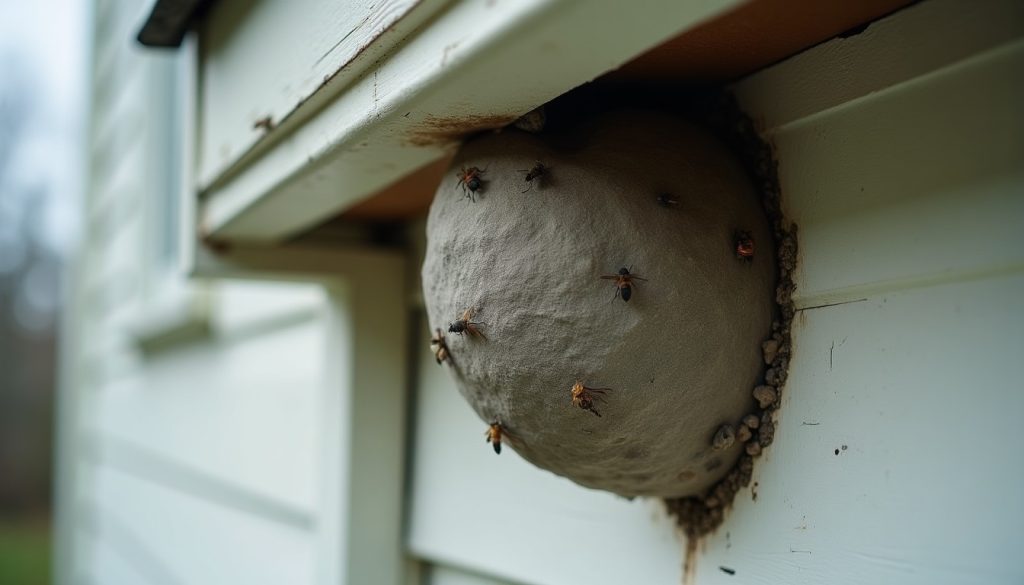
The northern giant hornet, the insect that got nicknamed the murder hornet, was declared eradicated from the United States on December 18, 2024. Four nests were ever found in the country, all of them in one corner of Whatcom County, Washington, and there has been no confirmed detection since 2021. A state diagnostic lab reports that the vast majority of suspect insects sent in for identification turn out to be European hornets.
Five years of alarming coverage left a lot of people scanning their gardens for an insect that was never in their state. The large hornets and wasps that actually turn up in American yards are a short list, most of them are not worth treating, and the one scenario that does call for a professional is the one people most often make worse on their own.
What happened to the giant hornet
The species arrived in the Pacific Northwest, was found, and was tracked down over five years by a trapping effort that relied heavily on public reports. Nearly half of all confirmed detections came from members of the public.
| Date | Event |
|---|---|
| December 2019 | Two reports near Blaine, Whatcom County, Washington verified. First confirmed US sightings |
| Summer 2020 | A Whatcom County beekeeper finds hundreds of decapitated bees and contacts the state |
| October 2020 | First nest located and destroyed |
| August and September 2021 | Three further nests destroyed, all related to the first |
| 2021 | Last confirmed detection anywhere in the United States |
| July 2022 | Entomological Society of America adopts the name northern giant hornet |
| December 18, 2024 | Washington State Department of Agriculture and USDA declare eradication |
Eradication was declared on a specific standard: three consecutive years of surveying with no confirmed detections. None were found in 2022, 2023 or 2024. Four nests, one county, one state, across the entire episode.
One loose end is worth knowing about. In October 2024, the Washington State Department of Agriculture received a photograph of what appeared to be a dead northern giant hornet near Burley in Kitsap County. The specimen was never obtained, so no county record could be confirmed. The state set traps and found nothing further.
What you are more likely to be looking at
Virginia Tech Extension, whose insect identification lab receives these specimens, puts it plainly: the vast majority of suspect insects examined have been the European hornet. The sizes below come from that same publication.
| Insect | Size | How to tell | In the US? |
|---|---|---|---|
| Northern giant hornet | 1.5 to 2 inches | Entirely yellow or orange head | No. Eradicated |
| European hornet | About 1 inch | Reddish-brown thorax, yellow face, teardrop-shaped black marks descending from the abdominal stripes | Yes, widely in the east |
| Eastern cicada killer | 1.5 to 2 inches | Same size as a giant hornet, but the last abdominal segments are entirely black and there is no yellow on the head | Yes, native |
| Bald-faced hornet | 0.5 to 0.8 inch | Black with white markings on the head, grey football-shaped aerial nest | Yes, native |
The European hornet reached the eastern United States in 1840 and has spread west as far as Oklahoma and Kansas. It is one of the few hornets that flies at night, which is why people meet it at porch lights and windows after dark and assume something exotic has arrived. It nests in attics, garages, barns, wall voids and shutters, usually with an entrance 6 feet or more above the ground.
Deciding what to do
- Large wasps flying in and out of holes in the lawn, one per hole, in mid to late summer. Cicada killers. Males cannot sting and females are not aggressive. The standing extension advice is to leave them alone; they finish their season on their own.
- A big reddish-brown hornet at the windows or porch light at night. European hornet. Worth treating only if a nest is in or against the structure. Reducing outdoor lighting at night lowers the encounters.
- A grey, papery, football-shaped nest hanging in a tree or under an eave. Bald-faced hornet. High in a tree and away from traffic, it can be left; beside a door or walkway it is a genuine stinging hazard.
- Hornets going in and out of a gap in the siding or a wall void. This is the one to hand over. See wasp nest removal for what that work involves.
- Something you genuinely cannot place. Photograph it from a safe distance and send the photo to your state department of agriculture.
Do not seal the outside entrance of a nest inside a wall. Extension guidance is consistent on this point: blocking the exit of a wall-void colony can drive the insects to chew through the interior wall instead, which turns an outdoor problem into an indoor one.
The hornet that is actually spreading
While the giant hornet is gone, a different invasive hornet is established in coastal Georgia. The yellow-legged hornet was first confirmed near Savannah in August 2023, the first live specimen of the species found in the open United States. Like the giant hornet, it preys on honey bees.
| Period | Hornets captured | Nests eradicated |
|---|---|---|
| All of 2025 | 3,700 | 18 |
| 2026 to date | 866 or more | 44 |
The Georgia Department of Agriculture reports the species in five counties: Bryan, Bulloch, Chatham, Effingham and Liberty. Nest eradications have more than doubled year on year with the season not finished, which is the opposite trajectory to the insect that got all the attention.
Beekeepers are the group with a real stake here. If you keep hives in coastal Georgia and find bees being taken at the hive entrance, that is a report worth making. For general honey bee questions, see bee removal.
Whether any of this is an emergency
Almost none of it. A ground-nesting cicada killer is not a threat, and a high aerial nest away from foot traffic can usually be left to die off with the first hard frost. Stinging insects become urgent when a nest sits next to a door, a walkway or a child’s play area, or when someone in the household has a known sting allergy. Our guide to what actually counts as a pest control emergency covers how to judge it. For the autumn context, see fall invaders.
Frequently asked questions
Are murder hornets still around?
Not in the United States. The Washington State Department of Agriculture and USDA declared the northern giant hornet eradicated on December 18, 2024, after three consecutive years of surveying without a confirmed detection. The last confirmed detection was in 2021. Only four nests were ever found in the country, all in Whatcom County, Washington.
What is the difference between a cicada killer and a giant hornet?
They are close in size, both around 1.5 to 2 inches, which is why cicada killers generate so many false alarms. The cicada killer has the last segments of its abdomen entirely black and no yellow on its head, while the northern giant hornet has an entirely yellow or orange head. Cicada killers are native, solitary, and dig individual burrows in lawns.
Are cicada killers dangerous?
Rarely. Males have no sting, and females are not aggressive toward people, since their sting is used to paralyse cicadas. They nest individually rather than defending a shared colony, so they do not swarm. Extension services generally advise leaving them alone.
Why is a huge hornet flying at my window at night?
Almost certainly a European hornet, which is one of the few hornet species that flies after dark and is drawn to artificial light. It is about an inch long with a reddish-brown thorax and yellow face. It is not especially aggressive toward people, though a nest in a wall or attic is worth treating.
Should I still report a giant hornet sighting?
Yes, if you genuinely cannot identify what you have. Washington State still accepts reports of any hornet sighting, and USDA has asked the public to keep reporting possible invasive species to state agricultural officials. Outside Washington, the right recipient is your state department of agriculture rather than a pest control company.
Can I seal the hole where hornets are entering my wall?
No. Sealing the outside entrance of a nest inside a wall void can push the colony to chew through into the interior of the building. The nest needs to be treated first. This is the situation where professional help is genuinely warranted.
Do I need to worry about yellow-legged hornets?
Only in coastal Georgia at present, and mainly if you keep bees. The species has been confirmed in Bryan, Bulloch, Chatham, Effingham and Liberty counties, where the state has eradicated 44 nests in 2026 so far against 18 in all of 2025. Elsewhere it is not an established concern.
Sources
- Washington State Department of Agriculture, Northern giant hornet eradicated from Washington State, December 2024. agr.wa.gov
- USDA APHIS, Victory Over the World’s Largest Hornet Species, December 2024. aphis.usda.gov
- Entomological Society of America, Northern Giant Hornet Adopted as Common Name for Vespa mandarinia, July 2022. entsoc.org
- Dellinger T and Day E, Large Invasive Hornets, Virginia Cooperative Extension ENTO-592, April 2024. pubs.ext.vt.edu
- Kulhanek A, European Hornet, Ohio State University Extension ENT-0102, February 2025. ohioline.osu.edu
- Georgia Department of Agriculture, Yellow-Legged Hornet. agr.georgia.gov