Squirrel Poop: What It Looks Like vs Rat Droppings

Squirrel poop is a small, dark brown, oblong pellet about 3/8 inch long and 1/8 inch thick (roughly 10 by 3 mm), with rounded ends and a slightly fat middle, and it fades lighter as it ages. That makes it fatter and blunter than a mouse dropping, rounder tipped than a roof rat dropping and shorter than a Norway rat dropping, which runs up to 3/4 inch. Tree squirrels do not use fixed toilets, so pellets turn up wherever they feed or rest: under nest trees, below bird feeders and in attics. Squirrels are not listed by CDC as hantavirus carriers, but their urine can carry leptospirosis, so clean droppings wet, never dry.
Most people who search for squirrel poop are holding a flashlight in an attic or staring at pellets on a deck rail, and the real question is “is this a squirrel or a rat?” The answer is in three measurements and the shape of the ends, and the cleanup that follows is the same either way.
Squirrel poop vs rat, mouse, bat and cockroach droppings
Read the ends first, then the length. Extension and wildlife agency sources describe squirrel scat as oblong with rounded tips; rat and mouse droppings run thinner and more pointed, or, for the Norway rat, capsule shaped with blunt ends but twice the length.
| Dropping | Length | Thickness | Shape and colour | Where it is usually found |
|---|---|---|---|---|
| Tree squirrel (grey, fox) | About 3/8 to 1/2 in (10 to 13 mm) | About 1/8 in (3 mm) | Oblong or nearly spherical, rounded tips, slight bulge in the middle; dark brown when fresh, lighter with age | Under nest trees, near bird feeders, attic floors and insulation |
| House mouse | About 1/4 in (6 mm) | Thin | Rod shaped, pointed ends | Scattered along runways, drawers, feeding areas |
| Roof rat | About 1/2 in (13 mm) | Thicker than a mouse | Pointed ends | Attics, upper floors, overhead runs |
| Norway rat | Up to 3/4 in (19 mm) | Up to 1/4 in (6 mm) | Blunt ends, usually clumped in small groups | Basements, ground floor, near burrows |
| Bat | Varies | Varies | Contains insect fragments and crushes easily | Piles below a roost and below the gaps bats use to get in |
| Cockroach | 1/8 to 1/4 in (3 to 6 mm) | Very small | Ridges along the length, squared-off ends | Cabinets, behind appliances |
The overlap that causes trouble is the roof rat. Both a roof rat and a squirrel leave droppings in an attic, and the lengths are close. The tips settle it: roof rat droppings are pointed, squirrel droppings are rounded and slightly swollen in the middle, according to the Aldo Leopold Nature Center’s squirrel sign guide. If you are still unsure, our droppings identification guide has the rodent and cockroach droppings drawn to scale, and rat vs mouse covers the animals themselves.
Fresh or old?
Fresh squirrel droppings are dark brown and soft; they lighten as they dry. A mix of dark and pale pellets in one spot means the animal keeps coming back, which matters more than the total count. Clean a defined patch and look again after a few days: anything new is current activity.
Flying squirrel droppings
Southern and northern flying squirrels are much smaller, 8 to 12 inches long including the tail, and nocturnal. Nebraska Extension warns that their activity in buildings is frequently misattributed to mice. We found no extension source that publishes a measured size for flying squirrel droppings, so we have not given one. If pellets in an attic look too large and rounded for a mouse, and the noise is at night, a flying squirrel is a real possibility.
Do squirrels poop everywhere, or in one spot?
Mostly everywhere they spend time. The Aldo Leopold Nature Center’s guide says squirrel scat “is deposited randomly and can appear anywhere,” which matches what wildlife agencies describe. That is the opposite of a raccoon, which returns to a fixed latrine.
| Where you find pellets | What it usually means | Next step |
|---|---|---|
| Under a tree with a leaf nest (drey) | Normal outdoor squirrel activity; Oregon Department of Fish and Wildlife says droppings are most easily found here | No action needed beyond hand washing after yard work |
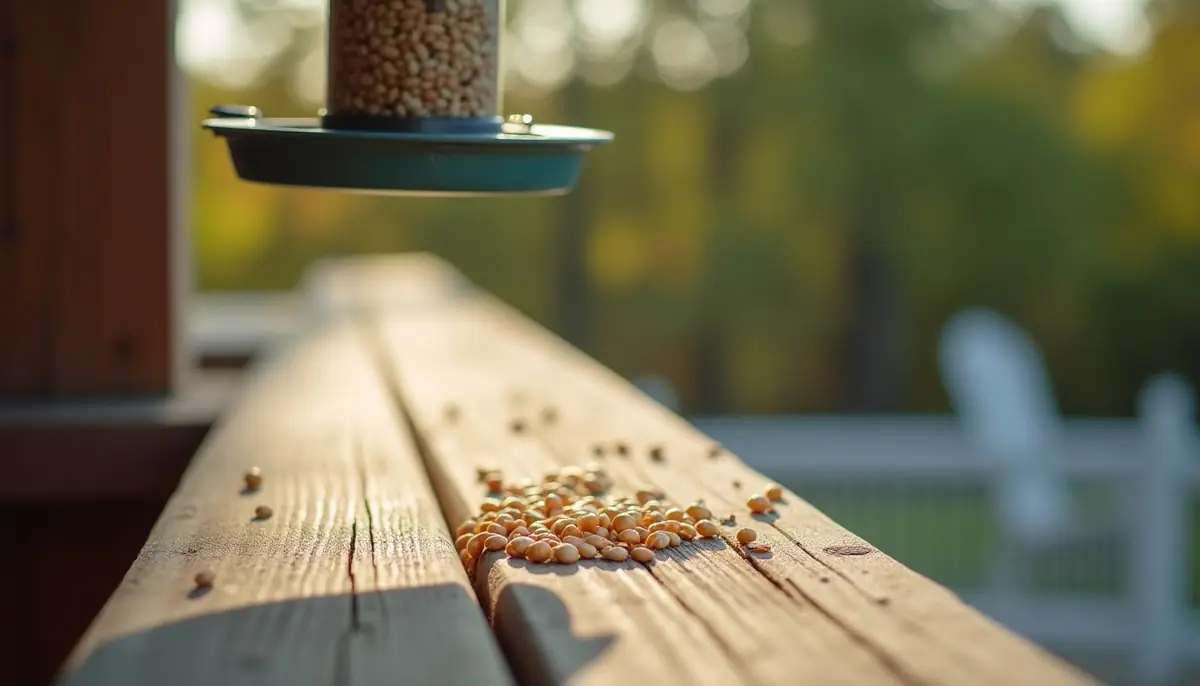
| Below a bird feeder or on a deck rail | Feeding site; also the second spot ODFW names | Move or baffle the feeder, wipe the rail wet |
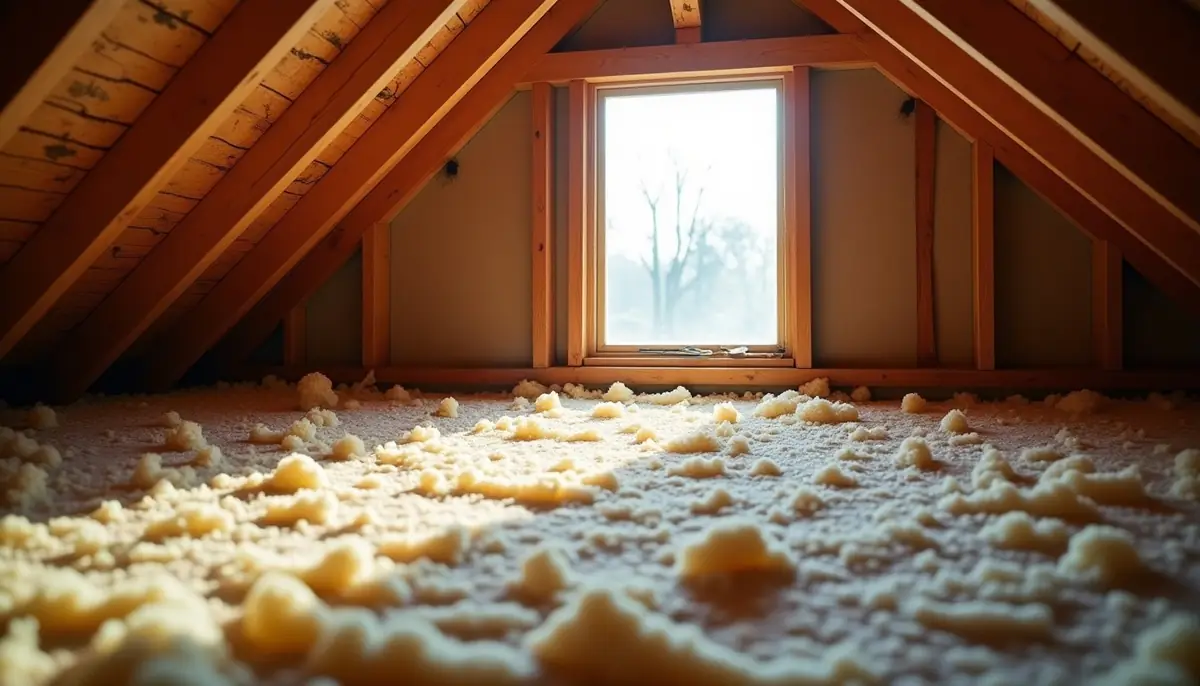
| Attic floor, insulation, near a roof gap | A squirrel is living or travelling inside the roof space | Find the entry and check for young before sealing |
| Garage or shed beside stored nuts or seed | A cache or feeding stop | Store seed in metal bins with lids |
| Small clumped groups along a wall, blunt and long | More likely a Norway rat, which clumps droppings | Treat as a rodent problem, not wildlife |
Do squirrels poop where they eat, live and sleep?
Where they eat, yes: feeders and the ground beneath nut trees collect pellets. Where they live, yes in a building: University of Nebraska Extension lists droppings alongside gnawed holes, shells, hulls and shredded insulation as the signs of squirrels in an attic. Where they sleep is less clear. We found no extension or research source describing whether tree squirrels soil their own nest cups, so we cannot say either way.
Do squirrels poop when scared?
We could not find any extension, wildlife agency or peer-reviewed source that addresses this in squirrels, so we are not going to guess. Practically, droppings inside a live trap or at a one-way door tell you only that an animal was there.
Can squirrel poop make you sick?
Less often than the internet suggests, but it is not risk free. The Oregon Department of Fish and Wildlife puts it plainly: there is “minimal documentation of disease transmission from tree squirrels to humans,” although pathogens isolated from tree squirrels in North America include leptospirosis, plague, tularemia, ringworm and Rocky Mountain spotted fever. Most of those do not travel in droppings at all.
| Disease | Linked to squirrels? | How it spreads | Source |
|---|---|---|---|
| Hantavirus pulmonary syndrome | No. CDC names the deer mouse, white-footed mouse, cotton rat and rice rat as the North American hosts | Breathing dust from infected rodent urine, droppings or nests | CDC MMWR 2002, RR-9 |
| Leptospirosis | Yes, rodents and wild animals carry it | Urine, and water or soil it contaminates, which stays infectious for weeks to months | CDC; Washington State Department of Health |
| Sylvatic typhus | Flying squirrels only | Linked to flying squirrels, their nests and their fleas and lice; exact route unknown | Chapman and others, Emerging Infectious Diseases, 2009 |
| Plague | Ground squirrels, rock squirrels and chipmunks in the West | Bites of infected fleas, not droppings | CDC |
| Rabies | Small rodents, squirrels included, are rarely infected | Bites and scratches; contact with blood, urine or feces is not an exposure | CDC ACIP, MMWR 2008 |
Does squirrel poop have hantavirus?
Not as far as CDC’s host list goes. The CDC’s risk reduction recommendations name four rodents as the hosts of the hantaviruses that cause pulmonary syndrome in North America, and no squirrel is among them. Two cautions follow. An attic with squirrels often has mice too, and deer mouse droppings look nothing like squirrel droppings once you know the sizes. And the cleanup method CDC recommends for rodent droppings is the right method for squirrel droppings anyway, because leptospirosis travels in urine soaked into the same insulation. Our hantavirus and mouse dropping cleanup guide sets out which rodents actually carry it.
The flying squirrel exception
This is the part most squirrel poop pages leave out. Southern flying squirrels carry Rickettsia prowazekii, the cause of sylvatic epidemic typhus. In a CDC investigation at a Pennsylvania wilderness camp, four counselors who slept in the same bunk, next to a wall where flying squirrels nested, fell ill over three winters between 2004 and 2006. Of 14 flying squirrels trapped around the camp, 10 showed evidence of infection.
The investigators could not pin down how the infection passes to people; nesting material, dander, insect droppings or the squirrels’ fleas and lice were all candidates. Their advice is specific: exclude flying squirrels from occupied buildings, and do not remove squirrels without also controlling the ectoparasites, because infected fleas and lice left behind may raise the risk. Illness is rare and none of the reported cases were fatal, but if someone in a house with flying squirrels develops fever and headache, tell the doctor about the squirrels.
Can squirrel poop make dogs sick?
The main risk to dogs is leptospirosis, and it comes from urine rather than the pellets. CDC says dogs catch it through direct contact with infected urine or contaminated water, and that rodents are a key carrier; the Washington State Department of Health adds that infected animals can shed the bacteria for months to years. A lepto vaccine for dogs exists, though CDC notes it does not cover every strain. If a dog has been eating droppings and becomes lethargic, feverish or starts vomiting, that is a question for a vet, not a search engine.
When squirrels are most active
Our analysis of iNaturalist research-grade records shows two clear peaks for tree squirrels. Records of eastern grey squirrels peak in April (43,964 records) with a second rise in September and October (32,276 and 37,604), and fox squirrels follow the same pattern. The lows come in July and August.
Spring and late summer are also the windows when dependent young are most likely to be in a roof space, which is why our attic guide warns against sealing an entry without checking for a litter first. Flying squirrels are recorded far less often (355 to 580 records a month) because they are out at night. These are records of when people photographed squirrels, not counts of attic infestations, but they show when to inspect a roofline.
How to clean up squirrel poop safely
- Ventilate first. CDC’s rodent guidance is to open doors and windows for at least 30 minutes before working in a building that has been closed up.
- Wear disposable gloves, and in a confined attic a well fitted N95 respirator is sensible.
- Soak, do not sweep. CDC advises spraying droppings and urine with disinfectant or a 1:10 bleach solution until thoroughly wet, and not sweeping or vacuuming until they are disinfected.
- Wipe up with paper towels, double bag everything, and put it in the outside bin.
- Remove soiled insulation where urine has soaked in, rather than trying to clean it.
- Wash your hands with soap and running water afterwards, even if you wore gloves.
A few pellets on a deck rail are a five minute job. A whole attic of soaked insulation, a flying squirrel colony, or droppings over a child’s bedroom is reasonable to hand to a professional, and the job only makes sense once the animals are out. Our guide to squirrels in the attic covers breeding windows, one-way doors and the legal limits on trapping, and wildlife removal costs covers what that work runs to. For the ground-dwelling relatives, see chipmunks, groundhogs and ground squirrels, and if the droppings are high in the roof and pointed, read our page on roof rats.
How we did this
Dropping sizes come from the Aldo Leopold Nature Center’s squirrel sign guide (3/8 inch by 1/8 inch) and the Oregon Department of Fish and Wildlife (about 1/2 inch), with rodent and cockroach sizes from the Internet Center for Wildlife Damage Management. Disease information is from CDC, the Washington State Department of Health and a 2009 CDC investigation published in Emerging Infectious Diseases. Commercial pages commonly claim squirrel droppings spread hantavirus; CDC’s host list does not support that, so we have not repeated it. We also found no primary source measuring flying squirrel droppings or describing squirrel nest hygiene, and left those out.
Frequently asked questions
What does squirrel poop look like?
Squirrel poop is an oblong pellet about 3/8 inch long and 1/8 inch thick, with rounded tips and a slight bulge in the middle. Fresh pellets are dark brown and turn lighter and duller as they dry. Oregon’s wildlife agency describes them as small cylinders or spheres about half an inch long.
How can I tell squirrel poop from rat poop?
Look at the ends and the length. Squirrel droppings have rounded tips and run about 3/8 to 1/2 inch. Roof rat droppings are similar in length but pointed. Norway rat droppings reach 3/4 inch with blunt ends and tend to sit in small clumps. If the droppings are long, blunt and grouped along a wall at ground level, think Norway rat.
Is squirrel poop dangerous to touch?
Touching a pellet with bare hands is unlikely to make you ill, but it is not a good habit. Squirrel urine can carry leptospirosis, which enters through cuts and the eyes, nose or mouth. Wear gloves, wet the droppings with disinfectant before wiping them up, and wash your hands with soap and water afterwards. Large attic accumulations call for a respirator too.
Do squirrels carry diseases in their droppings?
Rarely, by the evidence available. Oregon’s wildlife agency notes minimal documented transmission from tree squirrels to people. CDC does not list squirrels as hantavirus hosts, and rabies does not spread through feces. The documented exceptions are leptospirosis, carried in urine, and sylvatic typhus linked to flying squirrels and their nests, which is why flying squirrel colonies in occupied rooms deserve attention.
Should I vacuum squirrel droppings in the attic?
No, not dry. CDC’s rodent guidance is to soak droppings and urine with disinfectant first and never sweep or vacuum them dry, because that puts dust into the air. Ventilate the attic, wet the droppings, wipe them up with paper towels, bag them and remove soiled insulation. For a large area, a professional cleanup crew with proper filtration is the sensible choice.
Sources
- Aldo Leopold Nature Center, Squirrel Tracks and Sign (squirrel scat description).
- Oregon Department of Fish and Wildlife, Living with Wildlife: Tree Squirrels.
- University of Nebraska Lincoln Extension, NebGuide G1924, Control of Tree Squirrel Damage, 2009.
- Internet Center for Wildlife Damage Management, species pages for Norway rats, roof rats and house mice (scat identification).
- US Centers for Disease Control and Prevention, Hantavirus Pulmonary Syndrome: Updated Recommendations for Risk Reduction, MMWR Recommendations and Reports 51(RR-9), 2002.
- CDC, About Leptospirosis, and Leptospirosis in Pets.
- Washington State Department of Health, Leptospirosis.
- Chapman AS and others. Cluster of Sylvatic Epidemic Typhus Cases Associated with Flying Squirrels, 2004 to 2006. Emerging Infectious Diseases 15(7), 2009.
- CDC, Plague: Causes and How It Spreads.
- CDC, Human Rabies Prevention, Recommendations of the Advisory Committee on Immunization Practices, MMWR 57(RR-3), 2008.
- CDC, Healthy Pets: Wildlife (hand washing after contact with wild animals or their poop).
- Public Health Seattle and King County, Diseases from raccoons (leptospirosis routes of infection).
- Bat Conservation Trust, Identifying bat droppings.
- The Pest Control Brief analysis of iNaturalist research-grade records, pulled October 2026.