How Long Do Bed Bugs Live, With and Without Food?
A well-fed adult bed bug lives roughly 3 to 10 months indoors, and some live close to a year. Virginia Tech researchers recorded 99 to 300 days for well-fed adults at room temperature in the lab, and University of Kentucky gives an average lifespan of about 10 months. Without a blood meal, most adults at normal room temperature die within about 1 to 4 months, but in cool rooms they can last a year or more. Newly hatched nymphs are the weakest stage and usually die within two to five weeks if they cannot feed.
Those numbers vary so widely because a bed bug is cold-blooded: the cooler the room, the slower it burns through the last meal. That single fact explains why leaving a flat empty, or sealing belongings in bags for a season, is a slow and uncertain way to kill them.
How long bed bugs live without food, by temperature
Most of what is written about bed bug survival repeats one figure, often “a year”, without saying at what temperature. The studies give a much more useful picture when read together.
| Conditions | Stage | Survival without a blood meal | Source |
|---|---|---|---|
| About 79°F (26°C), insecticide-resistant bugs from a Richmond apartment and a Cincinnati hotel | Adults | 43 to 63 days on average | Polanco, Miller and Brewster, Virginia Tech, 2011 |
| About 79°F, long-kept susceptible strains | Adults | 75 to 99 days on average | Polanco and others, 2011 |
| About 79°F, all four strains | First-stage nymphs, never fed | 14 to 36 days on average | Polanco and others, 2011 |
| Temperature-controlled homes | Nymphs and adults | Typically 1 to 4 months | University of Kentucky Entomology |
| About 72°F (22°C), 40 to 45 per cent humidity | Adults | 131 to 143 days | Kemper, 1930, as reported by Polanco and others |
| About 64°F (18°C) | Unmated adult females | 277 days on average | Omori, 1941, as reported by Polanco and others |
| About 50°F (10°C) | Unmated adult females | Up to 425 days | Omori, 1941, as reported by Polanco and others |
| 55°F or below | Nymphs and adults | Potentially a year or longer | University of Kentucky Entomology |
Two things stand out. First, the old claims of bed bugs living well over a year without food come from studies at cool temperatures; Virginia Tech notes that early British observations reflected bugs living below 40°F in homes without central heating. Second, the modern field strains tested at Virginia Tech, which were resistant to pyrethroid insecticides, died sooner than the old laboratory strains at every stage. The authors found resistant strains were significantly more vulnerable to starvation.
Virginia Tech’s extension summary puts the practical number plainly: on average, starved bed bugs of any stage held at room temperature die within 70 days, and most are probably dying of dehydration rather than starvation, since a blood meal is their only source of water.
The bed bug life cycle at room temperature
Lifespan and development are tied together, because a nymph must feed before every moult. At room temperatures above 70°F, Virginia Tech researchers found 60 per cent of eggs hatch by day 6 and over 90 per cent by day 9. A nymph that feeds usually moults within about 5 days, and spends about 5 to 8 days in each of its five stages. From egg to breeding adult takes about 37 days. UC IPM gives a wider range of five weeks to four months, depending on temperature and food, and says development is fastest between 70 and 82°F.
Once adult, a bed bug that can feed regularly keeps going for months. Virginia Tech recorded 99 to 300 days for well-fed adults in the lab at room temperature, and noted that real homes are harsher, with fluctuating temperature and humidity, insecticides and the risk of being crushed. UC IPM says adults may live up to a year or more, and that there can be up to four generations a year. For sizes and colours at each stage, see our bed bug identification guide.
Every bed bug stage after the egg needs blood, and there is no resting stage that can wait out a treatment the way some pests do. If you are not sure which biting pest you have, our flea life cycle guide explains how fleas develop and why their timing differs.
Which stage survives longest without food?
The Virginia Tech starvation trial measured every stage separately, each starved straight after a moult. Unfed first-stage nymphs died first in every strain, which the authors put down to water loss: tiny bodies have a large surface area for their volume. Larger nymphs and adults survived longest.
The gap between strains matters for anyone tempted to wait an infestation out. Bugs from the Richmond apartment strain, the most resistant tested, survived on average 44 days as fifth-stage nymphs or adults. The susceptible laboratory strain survived around 92 to 99 days at the same stages and temperature. You cannot know which kind you have.
How long do bed bugs live on clothes?
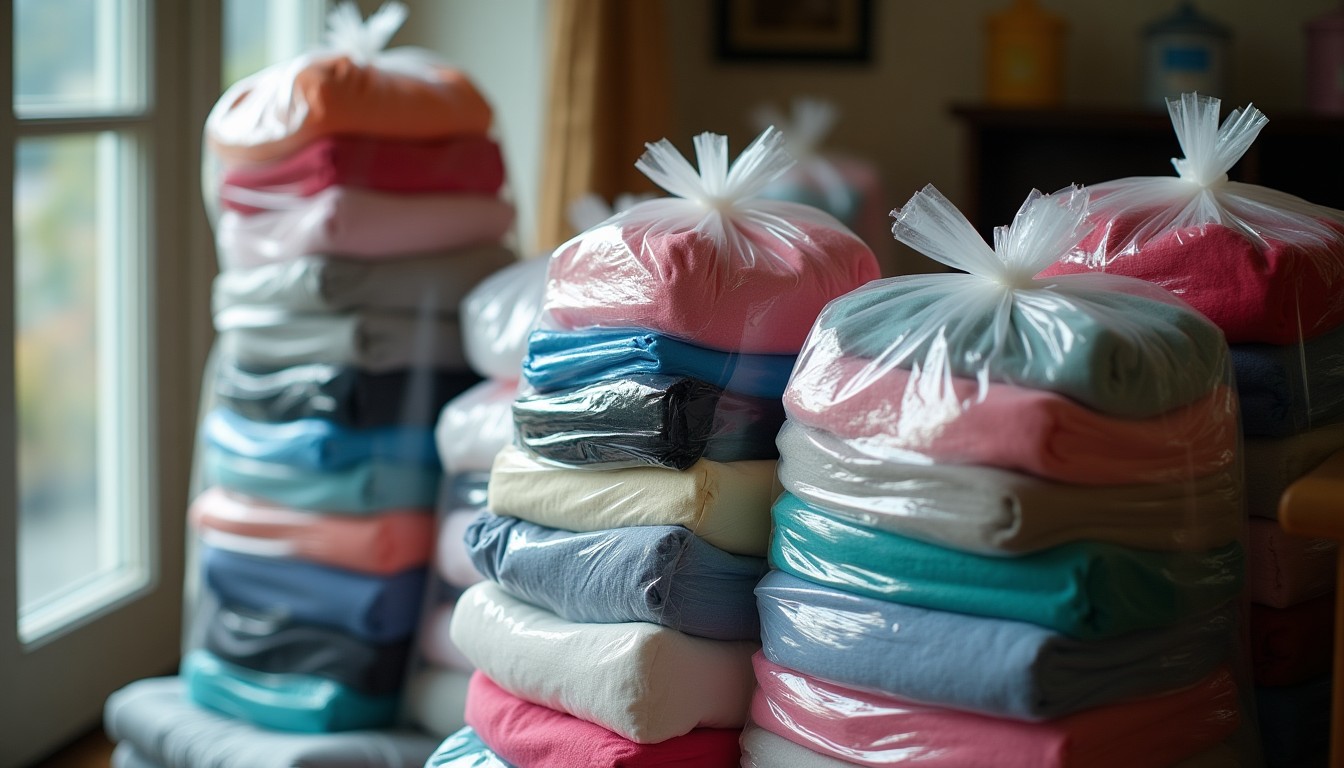
A bed bug on clothing survives as long as it would anywhere else at that temperature without a meal: weeks to months at room temperature. Clothing is not a hostile place for it. Kentucky notes the bugs can be carried in on clothing, shoes and belongings, and the Sheffield study discussed in what attracts bed bugs found they gather on worn clothes.
The good news is that clothes are the easiest thing to clear. Kentucky recommends washing at 120°F or more, or putting dry items in a dryer on medium to high heat for 10 to 20 minutes, which kills all life stages. Bag items before carrying them to the machine so bugs do not drop off on the way.
How long do bed bugs live in a vacant house?
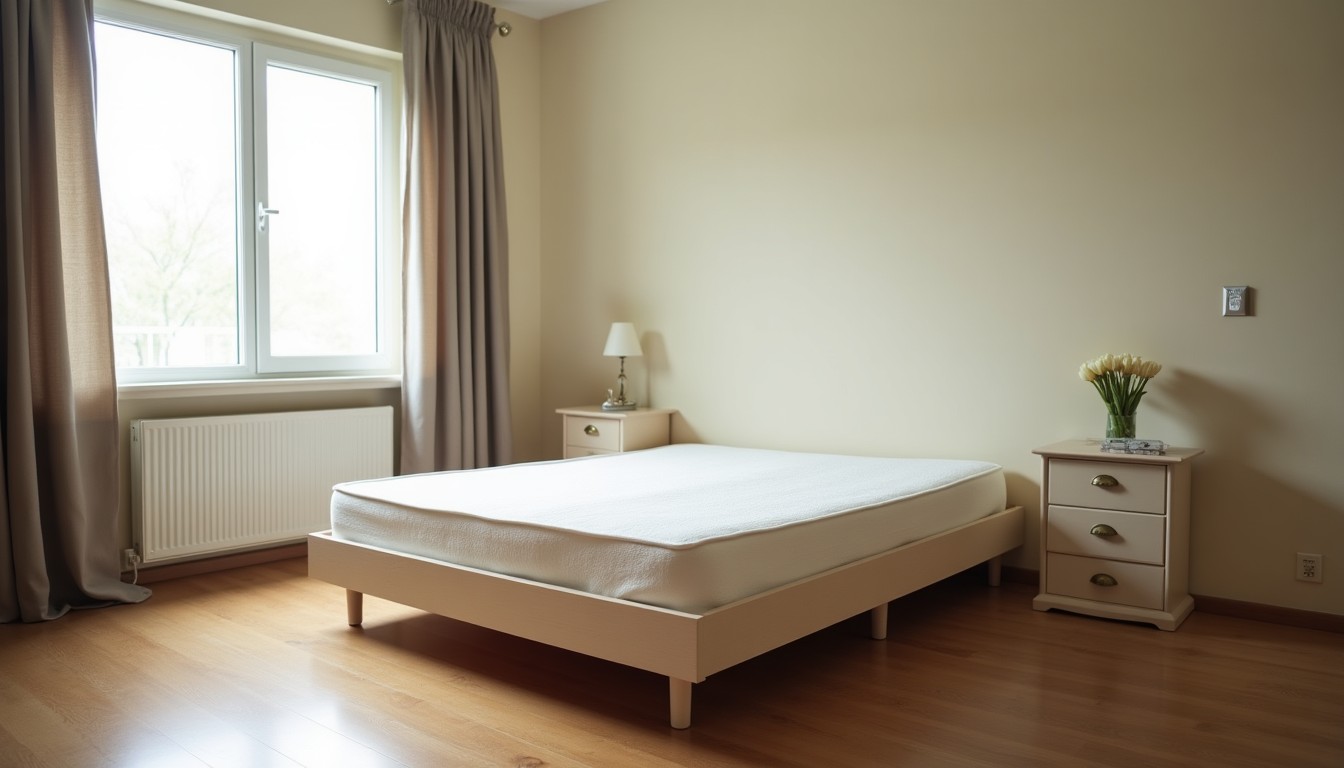
Usually longer than people are willing to leave it empty. Kentucky’s guidance is that it is usually impractical to leave homes unoccupied in hopes of starving an infestation. In apartments there is a second problem: when a unit is vacant, bed bugs often disperse to nearby units, or reduce their activity until it is reoccupied. A Rutgers field study tracked this directly: in a vacant apartment, marked adult males were still being recaptured 134 days after the occupant left, and unmarked large nymphs and adults were still there at 155 days, when the study ended. Our analysis of New York landlord filings found 15 to 21 per cent of infested units in the four larger boroughs were re-infested, which is consistent with bed bugs moving between adjoining units; see how bed bugs spread.
Why bagging items for months is unreliable, and what works faster
Sealing belongings in plastic and waiting is a common suggestion, and it does work eventually. The difficulty is knowing when. In a warm room the survival times in the table above suggest a few months; in a cool garage or storage unit, the older studies suggest a year or more. Heat and cold, applied properly, do the same job in hours or days.
| Method | Time needed to kill all stages | Notes |
|---|---|---|
| Clothes dryer, medium to high heat | 10 to 20 minutes | Items should be dry first; University of Kentucky |
| Hot wash | 120°F minimum | Bedding and garments; University of Kentucky |
| Laboratory heat, 113°F (45°C) | About 95 minutes for adults; eggs survived 7 hours | Kells and Goblirsch, University of Minnesota, 2011 |
| Laboratory heat, about 118°F (48°C) | About 72 minutes for eggs | Kells and Goblirsch, 2011 |
| Household freezer at 0°F (minus 17.8°C) | At least 3.5 days | Bag items first; check the freezer temperature with a thermometer; Olson and others, 2013 |
| Outdoors below 32°F | One to two weeks | University of Kentucky |
| Sealed bag at room temperature | Months, and uncertain | Depends on temperature, stage and strain |
The freezer figure surprises people. A Minnesota and Rutgers study estimated that bed bugs could survive temperatures above about 10°F (minus 12°C) even after a week of continuous exposure, so a freezer that is not truly at 0°F may not finish the job. Kentucky also notes that turning a home’s thermostat up or down will not work; professional heat treatments use supplemental heaters to raise rooms to about 120 to 130°F.
How long can bed bugs reproduce without a mate?
A single mated female can start an infestation on her own. Virginia Tech’s extension researchers explain that she will eventually run out of sperm and need to mate again, but she can mate with her own offspring once they mature. In a 2017 North Carolina State study, once-mated females fed every five days kept up steady egg production for about 75 days before it declined towards zero, while the share of eggs that hatched began to fall after about 30 days. Each female produces between 1 and 7 eggs a day for about 10 days after a blood meal, then must feed again.
How do bed bugs die naturally?
Mostly by drying out. Virginia Tech calls dehydration the greatest natural threat to bed bugs indoors, which is one reason they pack tightly into cracks that hold humidity. Newly hatched nymphs laid too far from a sleeper may die before their first meal. Females that are mated repeatedly also live shorter lives: a 2021 North Carolina State study found females subjected to frequent mating attempts had lower survival and lifespan. None of this clears an occupied home, because a sleeping person supplies both food and water every night.
Our data: bed bugs are recorded all year
Because bed bugs live indoors with us, there is no off season. Our analysis of 867 research-grade iNaturalist bed bug records in the US shows monthly totals ranging from 47 in February to 96 in October, with no month close to zero. These are photographs people chose to upload and have identified, not infestation counts, but they reflect a pest whose lifespan and breeding are set by room temperature rather than by the weather outside.
When to stop waiting and call a professional
Because adults can outlive any sensible waiting period, CDC advises contacting a professional pest control company experienced with bed bugs. Treatment usually means heat, labelled insecticides or both, with follow-up visits. What that costs and what affects the price is covered in bed bug treatment costs, and how to get the home ready in preparing for pest control. Avoid foggers, alcohol and bleach: Kentucky says they are ineffective against bed bugs and can cause fires.
Frequently asked questions
What kills bedbugs permanently?
Heat that reaches every hiding place kills all stages, and is why professionals heat rooms to about 120 to 130°F and hold the temperature. Heat leaves no residual protection, so some firms also apply insecticides, and follow-up inspections matter. In New York landlord filings we analysed, 15 to 21 per cent of infested units in the larger boroughs were re-infested, so permanence depends on treating neighbouring areas and preventing reintroduction.
Do bed bugs go away on their own?
No. As long as someone sleeps in the home, bed bugs have food and the water that comes with it, and the population keeps breeding; UC IPM says there can be up to four generations a year. Even in an empty home, adults at room temperature typically survive one to four months without feeding, according to University of Kentucky, and much longer in cool conditions. In apartments they may move next door instead.
What does a bed bug hate the most?
Heat and dry conditions are what kill them. Adults died after about 95 minutes at 113°F in University of Minnesota trials, and a dryer on medium to high heat for 10 to 20 minutes kills all stages in fabric. Dehydration is their greatest natural threat. Smells and repellents are a different matter: University of Kentucky reports tick and mosquito repellents do not appear as effective against bed bugs, and we found no extension source that recommends any scent to drive them out.
How long do bed bugs stay in your house?
Indefinitely, if nothing is done. Each adult can live many months, a new generation can mature in about 37 days at room temperature, and females keep laying while they can feed. A household infestation does not die out on its own while the home is occupied. Early detection makes it far easier and cheaper to clear, which is why interceptor traps and regular checks of the bed are worth the effort.
Sources
- Polanco, Miller and Brewster, Survivorship during starvation for Cimex lectularius L., Insects 2(2), 2011 (Virginia Tech).
- Miller and Polanco, Bed Bug Biology and Behavior, Virginia Tech Department of Entomology, published by the Virginia Department of Agriculture and Consumer Services.
- University of Kentucky Entomology, Potter, Bed Bugs, ENTFACT-636.
- University of California Statewide IPM Program, Bed Bugs, Pest Notes.
- Kells and Goblirsch, Temperature and time requirements for controlling bed bugs under commercial heat treatment conditions, Insects 2(3), 2011.
- Olson, Eaton, Kells, Morin and Wang, Cold tolerance of bed bugs and practical recommendations for control, Journal of Economic Entomology 106(6), 2013.
- Matos, Osborne and Schal, Effects of cyclic feeding and starvation, mating, and sperm condition on egg production and fertility in the common bed bug, Journal of Medical Entomology, 2017.
- Cooper, Wang and Singh, Mark-release-recapture reveals extensive movement of bed bugs within and between apartments, PLoS ONE, 2015.
- Saveer, DeVries, Santangelo and Schal, Mating and starvation modulate feeding and host-seeking responses in female bed bugs, Scientific Reports, 2021.
- The Pest Control Brief analysis of iNaturalist research-grade records, pulled October 2026.
- The Pest Control Brief, analysis of NYC HPD bed bug disclosure filings, 2026.