Orb Weaver Spiders: The Big Garden Spiders Are Harmless
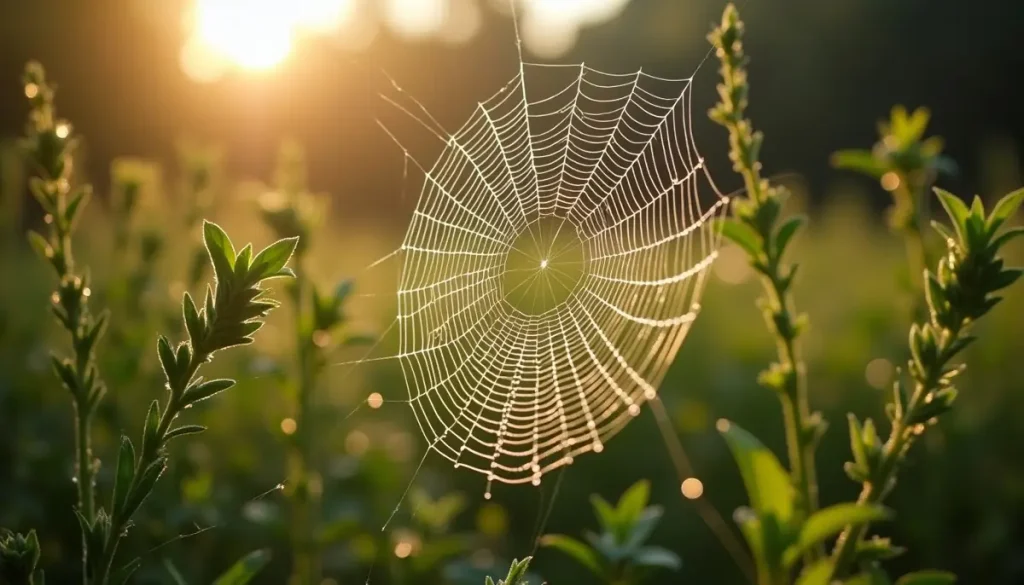
Orb weaver spiders are the big garden spiders that build round, wheel-shaped webs, and they are harmless to people. They do have venom, as almost all spiders do, but extension entomologists describe bites as rare and usually no worse than a bee sting. Common US species include the yellow garden spider with its zigzag web, the cross orbweaver and, in the Southeast, the golden silk orb-weaver or banana spider. Most are noticed in late summer and autumn, when they reach full size.
Orb weavers turn up in the same places every year: across a doorway, between porch posts, among tomato plants, at the edge of a lit window. That predictability is part of what makes them alarming, because by the time people notice them in August or September, the females are at their largest. UC IPM counts about 200 orb weaver species in North America. A handful account for nearly all the questions.
The common US orb weavers at a glance
| Spider | Female body length | How to recognise it | Where and when |
|---|---|---|---|
| Yellow garden spider (Argiope aurantia) | 19 to 28 mm (about 3/4 to 1 1/8 in) | Black and yellow abdomen, silver-haired front; white zigzag band down the web centre | Sunny gardens and tall weeds in every state but Alaska; adults late summer |
| Golden silk orb-weaver or banana spider (Trichonephila clavipes) | 24 to 40 mm (about 1 to 1 1/2 in) | Long orange to tan body with yellow spots, feathery tufts on the legs, golden silk | Woodland edges and trails in the Southeast and Gulf states; late summer and autumn |
| Spotted orbweaver (Neoscona crucifera) | 8.5 to 19.7 mm (1/3 to 3/4 in) | Plump, hairy, brownish; web often hung from house eaves | Florida to New England and west to Minnesota; in Florida, adults from late August |
| Cross orbweaver (Araneus diadematus) | 6 to 20 mm (all adults) | White cross or “T” of spots on a tan to orange abdomen | A European import now across much of the US and Canada; peaks in autumn |
| Marbled orbweaver (Araneus marmoreus) | About 8.5 to 19 mm (1/3 to 3/4 in) | Large bulbous abdomen, usually bright orange | Grassy and wooded areas, including Minnesota; midsummer to autumn |
Males are much smaller in every species. A male golden silk orb-weaver averages about 6 mm against a female of up to 40 mm, and yellow garden spider males are 5 to 8 mm. People rarely notice them except when they are sitting in a female’s web.
In Minnesota and other northern states, the orb weavers you will see are the yellow garden spider, which Rutgers Extension says occurs in every state but Alaska, the spotted orbweaver, whose range UF/IFAS gives as reaching west to Minnesota, and the marbled orbweaver, which University of Minnesota Extension lists in grassy and wooded areas from midsummer to autumn. The golden silk orb-weaver has no iNaturalist research-grade records in Minnesota at all.
Is the orb weaver spider poisonous?
No. Orb weavers are venomous, not poisonous, and their venom is built for insects. The UC Berkeley Essig Museum’s note on the cross orbweaver says it bluntly: they are completely harmless, and while a bite might be painful and cause a small local reaction much like a bee sting, the chance of being bitten is so slim that it is a non-issue.
The extension write-ups for the other common species agree:
- Golden silk orb-weaver: UF/IFAS says it bites only if held or pinched, and the bite produces localised pain with slight redness that quickly goes away. On the whole, it is much less severe than a bee sting.
- Yellow garden spider: Penn State says it is not known to be medically important, and people are unlikely to be bitten unless they handle a female with an egg sac in the web.
- Spotted orbweaver: UF/IFAS states bites are not known to cause serious effects in people.
- Marbled orbweaver: University of Minnesota Extension lists it as beneficial and not harmful to people.
Orb weaver spider bite
If one does bite, usually because it was squeezed or grabbed, expect brief local pain and redness. As with a bee sting, people vary, so anyone with an unusual or worsening reaction should contact a doctor or poison control. A skin mark on its own rarely identifies what caused it; our bite identification guide explains why. If you are unsure whether a spider is an orb weaver at all, start with our spider identification guide, which covers the two medically significant US groups, widows and recluses.
The yellow garden spider and its zigzag
The yellow garden spider, also called the writing spider or zipper spider, is the one most people mean by “garden spider”. Females hang head down at the centre of a vertical web that Penn State says commonly reaches 50 to 100 cm (20 to 40 in) across, with a dense white zigzag of silk called a stabilimentum running through the middle.
Nobody is certain what the zigzag does. Penn State calls its function unclear. NC State Extension notes that the older idea, that it stabilises the web, has given way to suggestions that it attracts insects or warns birds not to fly through. Any article that tells you confidently what it is for is going beyond the evidence.
NC State also explains why these webs always look fresh: at night, females eat the sticky spiral threads and spin new ones. After mating in late summer or early autumn, a female lays several hundred to a thousand or more eggs in a brown, papery, roughly one-inch sac. The spiderlings hatch but stay inside until spring, and there is one generation a year.
Golden silk orb-weaver: the banana spider
In the Southeast, the spider people call the banana spider is the golden silk orb-weaver. UF/IFAS describes the females as among the largest non-tarantula spiders in North America and perhaps the largest orb weavers in the country, with webs often 1 to 2 metres (about 3 to 6 1/2 feet) across, strung across trails and woodland edges. That is why hikers and hunters dislike them. The silk has a gold tint, which gives the species its name.
Unlike many orb weavers, it does not tear down and rebuild each night. UF/IFAS describes its web as semi-permanent, with damaged sections repaired and the rest left in place. Adult males appear from July to September and most females mature in August, then produce egg sacs late into the autumn.
Our analysis of iNaturalist records shows how concentrated the species is. Relative to everything people record in each state, South Carolina leads by a wide margin, followed by Louisiana, Florida, Mississippi and Alabama. North of North Carolina and west of Texas, the records all but vanish.
Joro spider vs orb weaver
This is a slightly false contrast: the Joro spider is an orb weaver. Rutgers Extension places it in the orb-weaving family and names the golden silk orb-weaver as a close relative in the same genus. The practical differences are colour and web. A female Joro has a bright yellow abdomen with bluish bands and builds webs Rutgers describes as spanning 10 feet or more, generally higher than other spiders’ webs, while the golden silk orb-weaver’s abdomen is burnt orange with paired yellow spots. Our Joro spider guide covers where it has spread and what the bite and treatment research found.
Where do orb weavers go during the day?
It depends on the species. The yellow garden spider and the golden silk orb-weaver sit in the hub of their webs in daylight. Many others are night shift workers. UF/IFAS describes spotted orbweaver juveniles building their webs around dusk and taking them down shortly after dawn, then spending the day in a retreat of curled leaves tied with silk, attached to an upper frame thread. Around houses, a simple silken retreat under the eave may serve as the daytime shelter.
That is why a big web can appear overnight by a porch light and seem to vanish by mid-morning. In autumn the pattern shifts: adult female spotted orbweavers often leave their webs up and hunt by day, which UF/IFAS links to the extra food they need for developing eggs as nighttime prey declines.
When orb weavers appear
Orb weavers do not suddenly arrive in autumn; they have been there all summer, growing. Penn State notes that yellow garden spiderlings emerge in spring and usually go unnoticed until they mature in late summer. Our seasonality analysis shows exactly that. Orb weaver records as a family reach 290 in September, nearly three times their usual share of all iNaturalist records. The yellow garden spider is sharper still, at 337 in August and 367 in September. The golden silk orb-weaver holds high from July through October, reflecting its longer southern season.
Are orb weaver spiders good to have around?
Yes, in almost every case. NC State Extension notes that because spiders feed mainly on insects, the yellow garden spider helps rather than harms garden plants, and concludes that because it is a beneficial animal, no control is necessary. UF/IFAS records golden silk orb-weavers eating flies, bees, wasps, small moths, butterflies, small beetles and dragonflies. They are also prey themselves: mud dauber wasps stock their nests with young orb weavers, which our guide to mud daubers covers.
Orb weavers are not house spiders. They need open air to hang a web, so they live on the outside of buildings. If one is in a bad spot, such as across a door you use, the options are simple:
- Move the web, not the spider. Brush it away with a broom, though the spider may simply rebuild.
- Relocate the spider. Coax it onto a stick or into a jar and move it to a shrub away from the path.
- Change the lighting. Webs cluster where lights draw night-flying insects. UF/IFAS notes that people often only notice spotted orbweavers when they see a web in a lighted area after dark.
- Skip the spray. Pesticide is rarely justified for an outdoor beneficial spider. If spiders are getting indoors, that is a different problem, covered in our guide to getting rid of spiders in the house.
Orb weavers compared with other spiders people see
Orb weavers have poor eyesight and depend on the web, sensing prey through vibrations. That separates them from the spiders that hunt without a web, such as wolf spiders, which run across floors and patios, and jumping spiders, which stalk insects by sight on sunny walls and windowsills. If you see a large spider on the ground and no web, it is almost certainly not an orb weaver.
How we did this
Species biology, sizes and bite information come from UF/IFAS Featured Creatures EENY229 and EENY316, Penn State Extension, NC State Extension, University of Minnesota Extension, Rutgers NJAES FS1386, UC IPM and the Essig Museum at UC Berkeley. The state chart and seasonality chart are our analysis of US iNaturalist research-grade records. These show where and when people photographed and identified these spiders, not how many live in a given yard. State figures are records per 10,000 research-grade observations of anything in that state, which corrects for states where more people use the app.
Frequently asked questions
Is the orb weaver spider poisonous?
No. Orb weavers are venomous rather than poisonous, and their venom is aimed at insects. Extension sources for the yellow garden spider, golden silk orb-weaver, spotted orbweaver and cross orbweaver all describe them as not medically important. Bites are rare, happen mainly when a spider is pinched or held, and usually cause brief local pain and redness similar to or milder than a bee sting.
Are orb weavers friendly?
They are not aggressive. NC State Extension says the yellow garden spider would probably have to be handled carelessly before it bit, and the Essig Museum describes the cross orbweaver as not the least bit aggressive. Orb weavers have poor eyesight and depend on their webs, and a disturbed one usually flees; the Essig Museum notes that a spider whose web you walk through is running for the hills. Watching one is safe; squeezing one is how bites happen.
Where do orb weavers go during the day?
Many hide. UF/IFAS describes spotted orbweavers building webs around dusk, taking them down shortly after dawn and spending the day in a retreat of curled leaves or a silken shelter under the eaves. Yellow garden spiders and golden silk orb-weavers are different: they sit in the centre of their webs in daylight. In autumn, adult female spotted orbweavers also often stay out and hunt by day.
Are orb weaver spiders good to have around?
Yes. They catch flying insects; UF/IFAS lists flies, bees, wasps, small moths and butterflies for the golden silk orb-weaver, and NC State Extension concludes that no control is necessary for the yellow garden spider because it is beneficial. They live outdoors and do not infest houses. If a web blocks a doorway, brushing it away or moving the spider to a nearby shrub is usually all that is needed.
Sources
- UF/IFAS Featured Creatures EENY229, Golden Silk Spider, Trichonephila clavipes, Weems and Edwards, revised 2020.
- UF/IFAS Featured Creatures EENY316, Orb Weavers, Neoscona crucifera and Neoscona domiciliorum, G. B. Edwards.
- Penn State Extension, Yellow Garden Spider.
- NC State Extension, Black and Yellow Garden Spider.
- University of Minnesota Extension, What insect is this? Marbled orbweaver.
- Rutgers NJAES Fact Sheet FS1386, Joro Spider: Description, Behavior, and Contrast with Similar Species.
- Essig Museum of Entomology, UC Berkeley, Cross Orb-Weaver identification note.
- University of California Statewide IPM Program, Pest Notes: Spiders.
- The Pest Control Brief analysis of iNaturalist research-grade records, pulled October 2026.