Joro Spiders: What the Research Actually Found
Volunteers bitten under medical supervision reported a median pain score of 1 out of 10. No extension service in any affected state recommends chemical control.
Researchers put 73 Joro spiders through escalating handling and recorded venom injection twice; when 23 volunteers were bitten under medical supervision, the median pain score was 1 out of 10 and only 4.3% reported any remaining symptom after 24 hours. No extension service in any state where the spider is established recommends chemical control. Published trials found foaming dish detergent killed them as effectively as commercial pyrethroids, and that few products made the spiders abandon the web site at all.
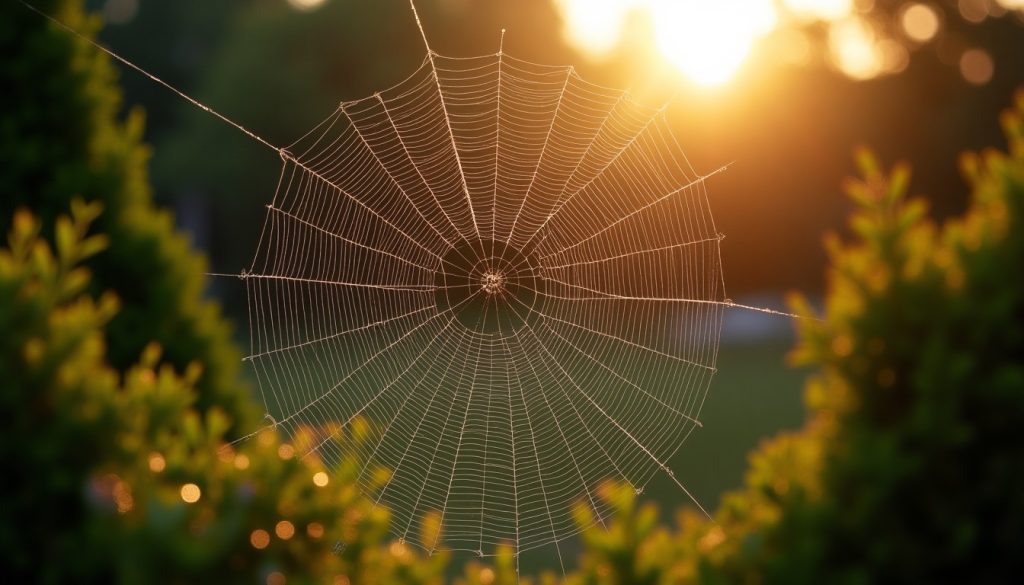
The Joro spider is large, gold and black, and builds a web across walkways at head height in early autumn, which is a combination well suited to alarming people. The research that has accumulated since it arrived is unusually clear, and it points somewhere most pest coverage will not go: this is the species where paying for treatment buys the least.
Where it actually is
Extension sources across the southeast agree on established populations in Georgia, South Carolina, North Carolina, Tennessee and Alabama, with documented records in Maryland and West Virginia. The spider was first confirmed in North America in Georgia in 2014.
Reports from much farther afield need care. Joro Watch, run by the University of Georgia Center for Invasive Species and Ecosystem Health, recorded 3,602 verified reports across 112 counties in five states during its 2025 spotting contest. Single specimens turning up well outside that footprint are hitchhikers on vehicles rather than evidence of range expansion, and several widely shared state lists come from aggregator sites rather than any agency.
They are not flying to your state
The image of spiders parachuting into the northeast is wrong in a specific way that changes what you should expect. Only spiderlings balloon, and researchers put that dispersal at dozens of miles at most, not thousands. Natural expansion runs at roughly 10 miles a year.
What moves them long distances is us. The earliest Georgia sightings clustered along interstates, and one University of Georgia researcher described watching a Joro cling to his truck mirror at highway speed. On the natural rate alone, researchers estimated it would take about 35 years to reach southeastern Pennsylvania and 60 years to reach the northwest of that state.
What the bite research found
A 2025 study in the Journal of Medical Entomology tested the question directly rather than by inference.
| Test | Result |
|---|---|
| 73 adult females subjected to escalating human contact | Venom injected in 2 instances. Spiders primarily moved to avoid contact; bites occurred mainly when spiders were forcibly restrained |
| 23 human volunteers bitten under medical supervision | Median pain 1 on a 0 to 10 scale, range 0 to 3 |
| Redness and swelling | Peaked at 5 minutes, then decreased |
| Symptoms at 24 hours | 4.3% of participants reported anything remaining |
Extension positions match. Penn State states the bites are not medically important and describes the venom as less painful than a bee sting. Clemson describes it as not medically relevant and not known to harm people or pets. North Carolina State notes the fangs are rarely able to pierce human skin.
Behaviour research adds context. In tests across more than 450 spiders from 10 species, Joros stayed motionless for over an hour after a disturbance, compared with around 90 seconds for native garden spiders. It is among the shyest spiders documented, which is the opposite of how it is usually portrayed.
What the treatment research found
A 2025 study in the Journal of Economic Entomology tested 11 commercial products plus two controls, measuring both mortality and whether spiders abandoned the web site.
- Near-total mortality: a pyrethroid spider and scorpion killer, a plant-oil consumer insecticide, foaming dish detergent, and machine lubricant.
- Negligible mortality: water, isopropyl alcohol, window cleaner, bleach, vinegar and hairspray.
- Partial: one carbaryl product caused temporary paralysis, from which 66% of spiders recovered.
- The finding that matters: few products induced web abandonment. Killing the individual spider does not stop the location being used as a web site.
The authors recommend weighing whether management is warranted at all, and one noted that manual removal without chemicals should be considered first to avoid collateral damage. A practical and legal caveat comes with the dish soap result: household products are not labelled as insecticides, and using them as insecticides is not legal, whatever the trial showed about mortality.
University of Georgia guidance warns that area-wide sprays and fogging kill many other insects, including pollinators and beneficial predators, and can lead to increases in scale insects afterwards. Destroying webs alone does not work either, because the spiders rebuild.
The honest recommendation
Remove rather than treat, with two exceptions.
- Clear webs from porches, walkways, decks and doorways, anywhere contact is unavoidable. A stick, a broom or a shoe is the tool extension services actually name.
- Tolerate them at the edges of the yard. They eat mosquitoes, flies, moths, aphids and leafhoppers, and are among the few predators that take brown marmorated stink bugs and spotted lanternflies.
- Exception one: do not allow webs to remain around pollinator gardens or beehives, where the catch is beneficial insects.
- Exception two: targeted treatment near hives or pollinator plantings is accepted by some extension services, though Penn State does not recommend pesticide control at all. That disagreement between states is genuine and unresolved.
If you are dealing with a general spider problem rather than this species, our guide to spider control costs covers what treatment involves and why perimeter sprays often disappoint. For the wider argument about targeted versus broad treatment, see integrated pest management and green pest control. Joro season overlaps with the autumn arrival of other nuisance species covered in fall invaders.
Frequently asked questions
Are Joro spiders dangerous to humans or pets?
The evidence says no. In a 2025 study, 73 spiders subjected to escalating handling injected venom twice, and 23 volunteers bitten under supervision reported a median pain score of 1 out of 10, with 4.3% having any symptom at 24 hours. Clemson Extension describes the venom as not medically relevant and not known to harm people or pets.
Can Joro spiders fly?
No. Spiderlings balloon on silk, which carries them dozens of miles at most, and adults do not. Long-distance appearances are caused by spiders hitchhiking on vehicles and cargo. Natural spread is around 10 miles a year.
How big do Joro spiders get?
Females have a body around 1 to 1.25 inches with a leg span up to 3 or 4 inches. Males are much smaller, around 0.3 inches. Webs can reach up to 20 feet across, which accounts for much of the alarm.
How do I get rid of a Joro spider on my porch?
Physical removal. Extension researchers specifically name a stick, a broom or your foot as effective, and recommend manual removal before chemicals. Clearing webs from doorways, decks and walkways is the recommended approach; spiders at the edge of the yard can be left alone.
Does pest control work on Joro spiders?
Some products kill them efficiently, but that is not the same as solving the problem. A published trial found several products caused near-total mortality while few caused the spiders to abandon the web site, so the location keeps being used. No extension service in the states where the spider is established recommends chemical control for it.
Are Joro spiders good or bad for the environment?
Mixed, with real benefits. They eat mosquitoes, flies, moths, aphids and leafhoppers, and are among the few predators of brown marmorated stink bugs and spotted lanternflies. They also compete with native orb weavers, which is the ecological concern. Broad spraying aimed at them kills pollinators and beneficial predators too.
Do Joro spiders come inside the house?
Rarely. Rutgers states the species prefers outdoor habitats and does not seek to enter residences, and Clemson describes it as highly unlikely to come indoors. It is an outdoor orb weaver that builds large webs in open air.
Sources
- Nelsen DR et al., Keep calm and carry on: bites from Trichonephila clavata are unlikely and cause minimal discomfort. Journal of Medical Entomology 62(6), 2025. doi.org
- Chuang A, Coyle DR et al., Chemical management strategies for the invasive Joro spider. Journal of Economic Entomology 118(6), October 2025. pubmed.ncbi.nlm.nih.gov
- Joseph S and Schmidt J, Managing Joro Spiders in the Landscape, University of Georgia Extension Circular 1289. caes.uga.edu
- Penn State Extension, Joro Spiders, September 2025. extension.psu.edu
- Held DW, Campbell E and Carll T, The Joro Spider, Rutgers NJAES FS1386, February 2026. njaes.rutgers.edu
- Clemson Cooperative Extension, The Joro Spider, HGIC, November 2024. hgic.clemson.edu
- University of Georgia, Joro spiders are shy, May 2023. news.uga.edu
- Joro Watch, University of Georgia Center for Invasive Species and Ecosystem Health. jorowatch.org