Mice in the Walls: How to Tell, and How to Get Them Out
Light scratching, scurrying or gnawing inside a wall at night, especially from October onwards, is most often house mice nesting in the void. They will not leave on their own while the house gives them warmth and food. To get them out, find and seal the gaps they use outside, set snap traps where the wall opens into the room, such as under sinks and behind appliances, and never put poison into a wall: the mouse dies where you cannot reach it.
A wall void is close to ideal mouse habitat: dark, insulated, out of reach of predators and a short run from the kitchen. Mice in walls are a common autumn problem, and the fix is well established. The hard part is diagnosis, because a noise behind plasterboard can come from several animals, and the wrong guess leads to the wrong treatment.
Is it mice? Reading the noise
Start with timing and character. The Internet Center for Wildlife Damage Management, which publishes the University of Nebraska wildlife damage handbook online, lists scratching in a wall as typical of rats, mice or birds, running in an attic as typical of squirrels, and heavy walking as raccoon or opossum. It also warns that noises are not a very accurate way to identify the animal, because hearing, insulation and where you happen to be all vary. Use sound to narrow the field, then confirm with physical signs.
| Likely source | When you hear it | What it sounds like | What confirms it |
|---|---|---|---|
| House mouse | Mostly at night; more from autumn | Light, quick scratching, scurrying, gnawing, high-pitched squeaks | Droppings about 1/4 inch long, musky smell, shredded nest material |
| Roof rat | Night | Heavier movement, gnawing; often upper walls, attic, ceiling | Larger droppings, greasy rub marks, gnawed holes |
| Gray, fox or red squirrel | Daytime | Running and thumping, mostly in the attic | Chewed entry hole at the roofline or eaves |
| Flying squirrel | Night | Activity in the attic, often several animals | Entry gaps at the roofline or eaves |
| Raccoon or opossum | Night | Heavy walking | Damaged vents or soffits; noise in the chimney |
| Insects | Evening and night, warm months | Chirping, clicking or buzzing | No droppings or gnawing |
| Mechanical | Regular or weather-linked | Consistent, repetitive sound | Pattern matches wind, heat or an appliance |
Mice are the most common answer for scratching inside an interior or exterior wall. UC IPM’s house mouse Pest Notes describe them as active mostly at night and able to “run up any rough vertical surface,” which is how they move between floors inside a wall void. The wildlife damage centre lists the sounds that go with them: gnawing, climbing in walls, running across the upper surface of ceilings, and squeaks.
Mice or rats
Roof rats are the other night-time wall animal. UC IPM’s Pest Notes on rats say roof rats typically nest in enclosed, elevated spaces such as attics, wall voids, ceiling voids and cabinets. Rats sound heavier and leave bigger evidence. Droppings settle it: our droppings identification guide shows mouse and rat droppings to scale, including how to tell an adult mouse from a young rat.
Mice or squirrels
Time of day is the quickest test. Penn State Extension notes that flying squirrels are the only squirrels active at night; gray, fox and red squirrels are active by day. Daytime thumping overhead is a squirrel problem, with different legal rules and a different fix, covered in our guide to squirrels in the attic.
Mice or insects
Rhythmic chirping or clicking with no droppings anywhere is usually an insect, not a rodent. Our guide to bugs that make noise at night identifies the common ones by sound.
Other signs of mice in the walls
- Droppings at the base of walls. The wildlife damage centre gives an average of 1/4 inch for house mouse droppings. NC State Extension puts output at 50 to 75 droppings a day per mouse and says to look along walls, in corners and under sinks.
- A musky smell. UC IPM describes a characteristic musky odour that is common in large or long-term infestations.
- Rub marks. Oily, dark smudges where fur brushes along a regular route, such as around a pipe hole. These are fainter for mice than for rats.
- Gnawing and shredded material. Fresh shavings, chewed packaging or shredded insulation and paper near an opening.
- Nests. The wildlife damage centre describes nests of fine shredded fibre, usually 4 to 6 inches across, often next to a heat source such as a water heater.
Mice in the walls but no droppings
This is common and does not rule mice out. NC State Extension notes that nests are frequently hidden in wall cavities and voids, so much of the evidence collects inside the wall. Check where the void meets the room: under the kitchen and bathroom sinks where pipes go through, behind the stove and refrigerator, in the backs of lower cabinets, and along basement sill plates. Two cheap tests help. A thin patch of flour smoothed on the floor near a suspected opening will show footprints overnight. And a snap trap baited and left at the spot will usually answer the question within a few nights.
Why autumn, and why now
Our analysis of iNaturalist research-grade records shows the seasonal pattern clearly. US house mouse records climb from a June low of 235 to a peak of 443 in October, nearly double. Roof rat records follow a similar curve, peaking at 405 in October. These are sightings people photographed and identified, mostly outdoors, not counts of infestations, but they line up with what UC IPM says: where outdoor populations exist, house mice “frequently enter homes in autumn when nighttime temperatures become colder.” That is why scratching in walls tends to start between September and November.
Will mice in walls go away on their own?
Usually not. A wall void next to a food supply gives a mouse everything it needs, and UC IPM notes that when house mice have plentiful and stable resources they can reproduce year round, producing high densities that last for months to years. Mice do not need to stay inside the wall to feed: the wildlife damage centre says a mouse leaves and returns to its nest up to 40 times a day, and travels an area averaging 10 to 30 feet across. The kitchen is within that range in most homes.
How long will mice live in walls?
An individual house mouse usually lives 9 to 12 months, according to UC IPM, though some have lived up to 3 years. The population lives far longer than any one mouse, because it replaces itself quickly.
How many mice are in a house if you see one?
There is no reliable multiplier, and figures you may see quoted have no published basis. What the biology shows is how fast one becomes many. UC IPM gives a pregnancy of 18 to 21 days, litters of about 5 or 6, sexual maturity 5 to 6 weeks after birth, and 5 to 10 litters a year per female. The wildlife damage centre adds a useful point about sightings: seeing a mouse during the day does not necessarily mean a large population is present, though it usually does for rats. The better test is evidence: droppings in two or more separate rooms, or noise in walls, indicate an established population. Our guide to when to call pest control for mice sets out those thresholds.
Are mice in walls dangerous?
They can be, in three ways.
- Wiring. UC IPM notes that house mice gnaw electrical wires, including wires in walls, and that many fires of unknown origin are believed to be caused by rodents gnawing on wires.
- Disease and allergens. UC IPM lists leptospirosis, salmonella and lymphocytic choriomeningitis (LCM), and estimates that 5 per cent of US house mice carry the LCM virus. Mouse urine is a major source of allergens linked to asthma in sensitive children. For symptoms or health concerns, speak to a doctor.
- Insulation and structure. The wildlife damage centre calls mice very destructive to foam and fibreglass insulation in walls and attics.
Hantavirus is a different case: the wildlife damage centre notes it is associated with deer mice, not house mice. Either way, clean droppings by CDC’s wet method, never by sweeping or vacuuming, as set out in our mouse dropping cleanup guide.
How to get mice out of walls
The order matters more than the products. A 1994 chapter on rodent-proof construction by Baker, Bodman and Timm, published in the University of Nebraska wildlife damage handbook, puts it directly: in occupied buildings, always trap the rodents before sealing interior walls, to avoid odours, stains and an influx of insects feeding on the carcasses.
1. Find the way in from outside
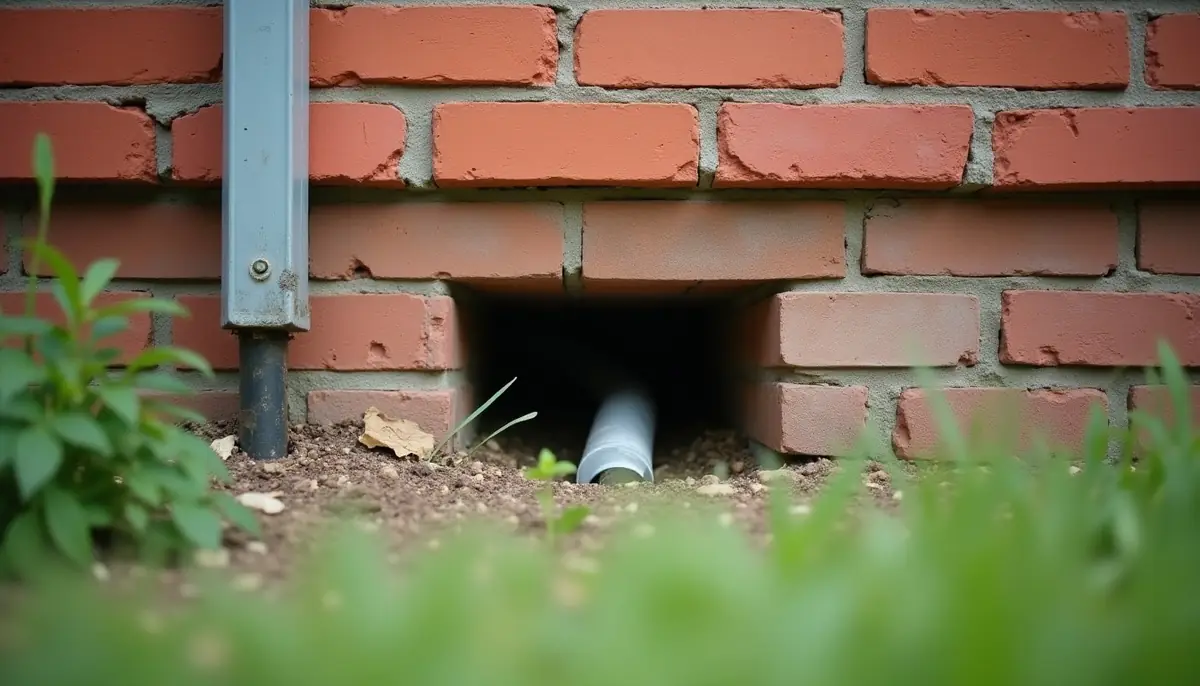
Walk the outside of the house at the foundation line. The wildlife damage centre lists sill plates, foundations, door thresholds and utility lines as the places to inspect. UC IPM says house mice can squeeze under gaps 1/4 inch tall and through openings 3/8 inch wide. Gaps around pipes, cables and vents near the wall where you hear the noise are the prime suspects.
2. Trap where the wall opens into the room
You cannot reach mice inside a closed wall, but you do not need to: they come out to feed. Set snap traps where the void meets living space. CDC advises placing traps behind the stove and refrigerator, in the back of cabinets and drawers, and in attics, basements and crawl spaces, on the floor against the wall with the baited end touching the wall so the trap forms a T. UC IPM advises spacing traps no more than about 10 feet apart where mice are active, because they seldom venture more than 30 feet from their nest. Use several traps at once. Placement, bait and why traps sometimes get ignored are covered in full in our guide to how to catch a mouse.
3. Seal the outside gaps, then the inside ones
Close exterior openings with metal or concrete so no new mice arrive. UC IPM says steel wool makes a good temporary plug but may rust, and that plastic screening, rubber, vinyl, expanding foam and wood are ineffective because mice chew through them. Some popular guides still recommend spray foam; the extension guidance says otherwise. Once catches stop, seal the interior openings too. Our guide to rodent exclusion materials compares what holds.
4. Keep going for at least two weeks
CDC advises checking traps daily and keeping baited traps out for at least 15 days, longer if you still have mice. Silence in the wall, no new droppings and no catches over that period is a good sign the population is gone.
Do not poison mice in the walls
UC IPM notes that because house mice stay within about 30 feet of their nest, rodenticide will often result in mice dying inside the structure. In a wall, that means a carcass you cannot reach, a smell that lingers, and often a wave of blow flies that bred in the carcass, which our guide to flies in the house all of a sudden explains. After the flies, larder beetles often move in to feed on what is left. Trapping lets you see and remove what you have caught.
When it is a job for a professional
Call a licensed pest professional if noise continues after two weeks of well-placed trapping, if you find droppings in more than one room, if you cannot find the entry points, or if the animal turns out to be rats or flying squirrels. Professionals can inspect the roofline and foundation properly, and many put a warranty on exclusion work. Typical prices are in our guide to rodent removal costs.
Frequently asked questions
What to do if you hear mice in your walls?
Note when you hear it and where, then look for droppings under nearby sinks, behind appliances and along baseboards. Set several snap traps where the wall opens into the room, baited end against the wall. Walk the outside of the house and seal gaps of a quarter inch or more with metal or concrete. Do not put poison into the wall, because the mouse will usually die there.
What happens if mice are in your walls?
Left alone, the population usually grows, since UC IPM notes house mice with stable food and shelter can breed year round. They shred insulation, gnaw wiring, which UC IPM links to fires of unknown origin, and leave droppings and urine that carry allergens and germs. They also travel out of the wall to feed, often up to 40 times a day, bringing them into kitchens and cupboards.
How many mice are in a house if you see one?
There is no reliable rule. One sighting can be a single wanderer or part of an established group. The evidence tells you more: droppings in two or more separate rooms, or regular noise in walls or ceilings, indicate several mice nesting in the structure. Because a female can have 5 to 10 litters a year, acting on the first signs is much easier than acting later.
How long will mice live in walls?
Individual house mice usually live 9 to 12 months, though UC IPM records some living up to 3 years. A colony in a wall can persist for months to years, because new litters replace older mice. Mice will not move out while the wall gives them shelter and food is within reach, so the problem rarely ends without trapping and sealing.
Do mice in walls make noise during the day?
Occasionally. UC IPM says house mice are active mostly at night but can be seen in daylight when food is available. Regular daytime running or thumping overhead, though, points more to gray, fox or red squirrels, which Penn State Extension notes are active by day. Night activity in an attic can also be flying squirrels, the only nocturnal squirrels.
Sources
- Quinn N, Frye M. UC IPM Pest Notes: House Mouse, UC ANR Publication 7483, revised July 2025.
- Quinn N. UC IPM Pest Notes: Rats, UC ANR Publication 74106.
- Internet Center for Wildlife Damage Management: House Mice; House Mouse Biology; House Mouse Damage Prevention and Control Methods; Identifying Noises Caused by Wildlife in Structures (after Timm and Howard, Prevention and Control of Wildlife Damage, University of Nebraska, 1994).
- Baker RO, Bodman GR, Timm RM. Rodent-Proof Construction and Exclusion Methods. In Prevention and Control of Wildlife Damage, University of Nebraska Lincoln, 1994.
- NC State Extension, Surveillance and Management of Common Structure-Invading Mice, Hayes and Alder, 2024.
- Penn State Extension, Tree Squirrels.
- Centers for Disease Control and Prevention, How to Trap Up to Remove Rodents; How to Clean Up After Rodents.
- The Pest Control Brief analysis of iNaturalist research-grade records, pulled October 2026.