Termite Pretreatment for New Construction: Cost and What to Check
Pretreatment costs $0.30 to $0.75 per square foot, about $600 to $1,500 on a typical home. Two thirds of states require it, and it is not permanent.
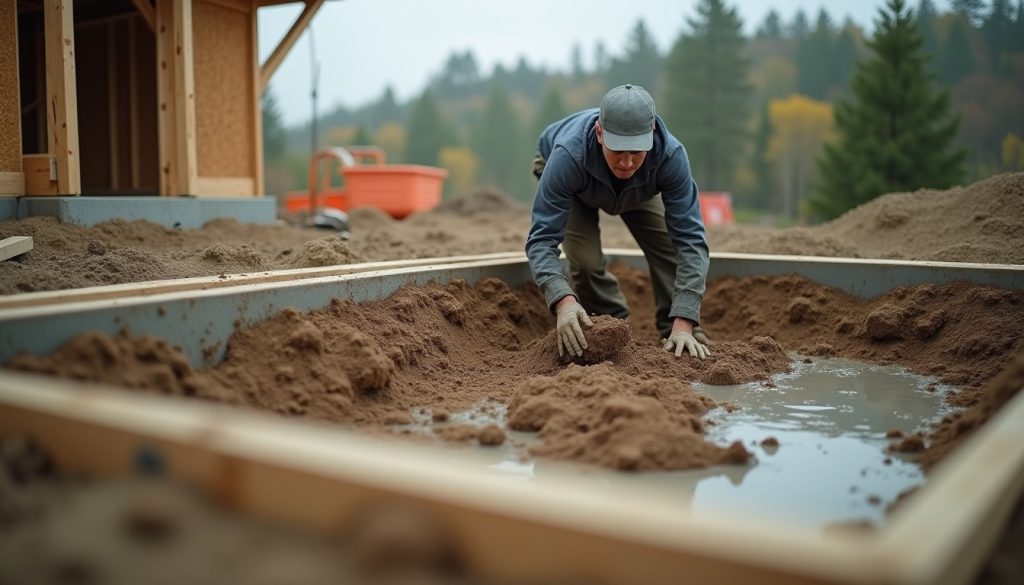
Termite pre-treatment for new construction costs $0.30 to $0.75 per square foot of building footprint, about $600 to $1,500 for a typical 2,000 square foot home. Pre-slab soil treatment can run as low as $200. More than two thirds of states require pretreatment on new construction. It is far cheaper during the build than as a retrofit later.
Pretreatment is the one termite decision made before anyone lives in the house, usually by a builder rather than the buyer. It is also the cheapest termite work that will ever be done on that structure, and buyers routinely do not know whether it happened.
What pretreatment costs
| Method | Cost | When it happens |
|---|---|---|
| Pre-slab soil treatment | From about $200 | Before the concrete slab is poured |
| Standard pretreatment | $0.30 to $0.75 per sq ft | Building footprint |
| Typical 2,000 sq ft home | $600 to $1,500 | Whole footprint |
| Bait system or pre-drywall treatment | Up to $2,500 | Later in the build |
| Borate-treated framing lumber | Adds 8 to 15% to framing budget | At framing |
Contractor-reported ranges compiled in 2026. Compare against retrofit treatment on an existing home at $275 to $1,600, with whole-home jobs averaging around $1,500, covered in our guide to termite treatment costs.
Why it is cheaper before the slab
Pre-slab treatment applies termiticide across the whole footprint while the soil is open and accessible. There is no trenching, no drilling through finished concrete, no working around landscaping, patios or utilities, and no occupied house to schedule around.
Retrofit work has to recreate that continuous treated zone through whatever was built on top of it. That is why the same protective principle costs a few hundred dollars during construction and often four figures afterwards, and why the linear-foot pricing used on existing homes does not apply here.
What to establish as a buyer
Pretreatment is documented work, and the documentation is what you want rather than an assurance.
- Ask for the pretreatment record, including the applicator, the date, the product used and the area treated.
- Confirm the applicator was licensed in the appropriate category. Soil treatment may fall under category (m), covered in our guide to the federal licensing framework.
- Ask whether any warranty came with it and whether it transfers to you.
- Check whether the treated zone has since been disturbed by landscaping, drainage work, a deck or a patio, since disturbance breaks the barrier.
- Confirm what your state requires, since more than two thirds mandate pretreatment on new construction and requirements vary.
- Do not assume it replaces a WDI report at purchase. Our guide to termite inspection and WDI reports covers what lenders require.
Pretreatment is not permanent protection
A soil barrier is effective for a period, commonly cited as roughly five to ten years depending on product, soil conditions and application quality, not for the life of the house. Treating pretreatment as permanent is the most common misunderstanding, and it usually surfaces a decade later when activity appears.
Whether a bond follows the pretreatment matters more than the treatment itself over time. A transferable agreement with defined coverage is an asset; a one-off application with no ongoing relationship provides no recourse when the barrier ages. Our guide to termite bonds and warranties sets out the terms that decide value.
The other thing pretreatment does not do is cover other wood destroying insects. Powderpost beetles and carpenter bees are separate problems, covered in our guide to wood-destroying insects beyond termites.
Frequently asked questions
How much does termite pretreatment cost for new construction?
Between $0.30 and $0.75 per square foot of building footprint, roughly $600 to $1,500 for a typical 2,000 square foot home. Pre-slab soil treatment alone can start around $200. Bait systems or pre-drywall treatment run up to $2,500, and borate-treated framing adds 8 to 15% to the framing budget.
Is termite pretreatment required?
More than two thirds of states require pretreatment on new construction, though specifics vary by state and local code. Ask your builder for the pretreatment record showing applicator, date, product and area treated, and confirm what your state requires rather than assuming it was done.
How long does termite pretreatment last?
A soil barrier is commonly effective for roughly five to ten years depending on product, soil conditions and application quality, not for the life of the house. Treating it as permanent protection is a common and expensive misunderstanding. Disturbing the treated soil with landscaping or a patio also breaks the barrier.
Is pretreatment cheaper than treating later?
Substantially. Pretreatment costs about $600 to $1,500 on a typical home because the soil is open and accessible before the slab is poured. Retrofit treatment on an existing home runs $275 to $1,600 with whole-home jobs averaging around $1,500, and requires trenching and drilling through finished concrete.
Sources
- Contractor-reported pretreatment pricing compiled by termite and construction cost guides, 2026. Sample sizes and methods are not published by those sources.
- 40 CFR 171.101, commercial applicator certification categories. ecfr.gov