How to Keep Deer Out of the Yard: Fences, Repellents and Plants
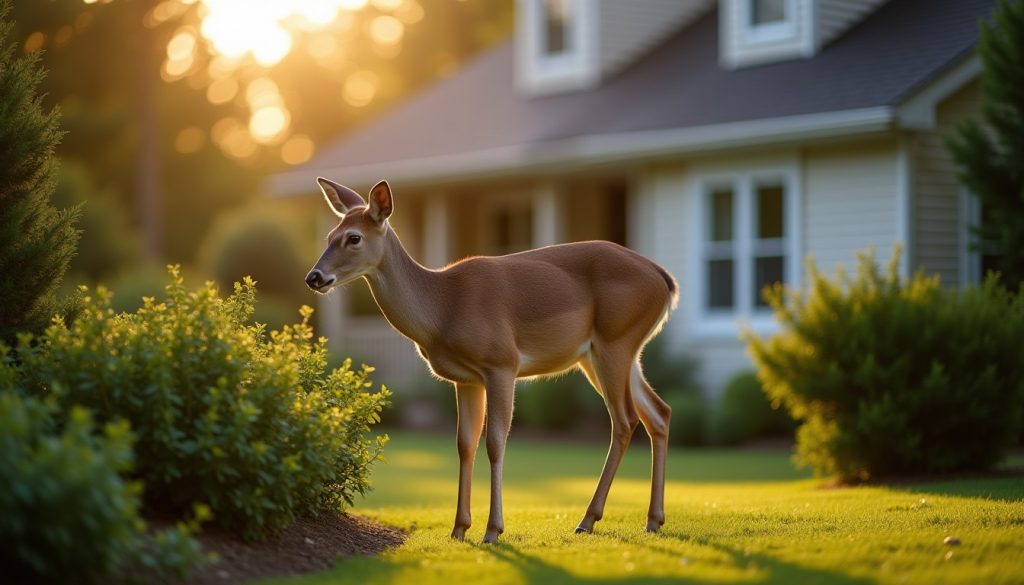
The only sure way to get rid of deer in the yard is a fence at least 8 feet tall; electric fences that train deer to stay away come next, and everything else reduces damage rather than stopping it. Where fencing is not allowed, the best-tested option is a repellent that smells of rotten egg or other decaying protein, which in a USDA trial generally stopped browsing for about four weeks. Combine it with deer-resistant plants, wire cages for young trees and a dog if you have one.
White-tailed deer are now a suburban animal across much of the US, and they are hard to discourage. Indiana’s wildlife agency notes they can jump more than 8 feet. They learn quickly which yards are safe, and a feeding habit, once formed, is hard to break. The approach that works is the one extension and wildlife researchers keep returning to: physical barriers first, then layered deterrents, rotated before deer get used to them.
What works against deer, ranked
| Method | How well it works | Evidence |
|---|---|---|
| Woven wire or solid fence, 8 ft or more | Best, permanent | NC Wildlife: the only sure deer barrier is woven wire or brick 8 to 10 ft tall |
| Electric fence (baited or double) | Very good for gardens | Trains deer to avoid an area; needs to stay powered |
| Wire cages and tree shelters | Very good for single plants | Stops browsing and antler rubbing on young trees |
| Dogs | Good where practical | No damage in dog-protected fields in a two-year USDA case study |
| Egg or protein-based repellents | Good for weeks | Most effective group in a USDA trial of 20 products |
| Deer-resistant plants | Partial | Rarely damaged, never deer-proof |
| Motion-activated scare devices | Short-term | Deer habituate within days to weeks |
| Hot pepper and bitter taste sprays | Weak | Bittering agents ineffective in most trials |
| Timed noise makers | Weak | Deterred deer for 2 days or less in an Ohio study |
Fencing: how high and which design
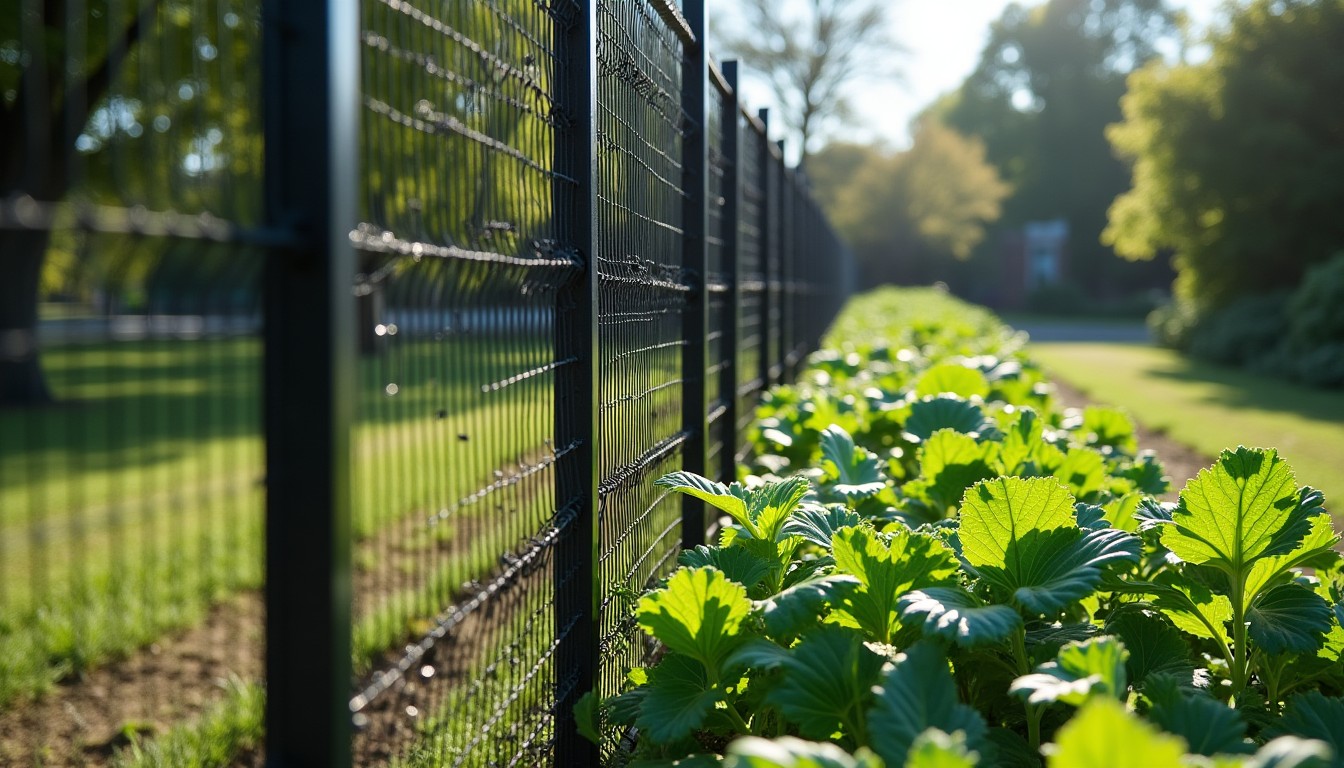
The North Carolina Wildlife Resources Commission states that a deer-proof fence needs to be 8 feet or taller, made of strong material such as welded wire or chain link, and that short 4-foot fences only reduce damage in very small areas or around single trees. Ann Arbor’s deer guidance calls woven wire at 8 feet or taller the best permanent fencing, lasting up to 30 years. It is also expensive and often restricted: Ann Arbor, for example, caps residential fences at 4 feet in front yards, 6 feet in side yards and 8 feet at the rear. Check local rules and any homeowners’ association before building.
Deer have poor depth perception, and several designs exploit it:
- Double electric fence. NC Wildlife describes two single-strand electric fences, each 2 feet tall and 5 feet apart, a design that works on the deer’s poor depth perception.
- Slanted fence. A multi-strand electric fence angled outward at 45 degrees (NC Wildlife), or a 6-foot slanted wooden design built from 8-foot boards angled away from the property, described by the City of Ann Arbor.
- Solid fence. Ann Arbor notes solid wood fences work well because deer cannot see into the yard.
- Peanut butter fence. For gardens of an acre or less under moderate pressure, the North Carolina Wildlife Resources Commission describes one electrified wire 2.5 feet above ground with foil strips every 3 feet, each smeared with a 1:1 mix of peanut butter and vegetable oil. Deer come to sniff, get a shock on the nose, and learn to avoid the area.
Electric fences work on behaviour, not strength, so the rules matter. NC Wildlife’s guidance is to never leave the fence switched off at night, to keep it on continuously for the first month, to use a powerful energiser because deer’s hollow hair resists shocks, and to bait wires at 20 to 40 foot intervals when first installed. Start with a small area and expand it. Fence before damage starts if possible, because established feeding patterns are much harder to break.
How to keep deer out of your yard without a fence
Protect plants individually. Ann Arbor suggests wire cages 4 feet tall and 1.5 feet across around single shrubs, and tree shelters for young trees, which also stop bucks rubbing bark off with their antlers in fall. Plastic bird netting over berries and flowers works where feeding pressure is light. Add repellents, choose resistant plants and never feed deer. Ann Arbor makes feeding deer illegal, noting it concentrates deer and leads to more damage, not less.
Deer repellents: what the trials show
The most useful repellent research for homeowners comes from the USDA National Wildlife Research Center, which tested 20 commercial deer repellents on cedar seedlings browsed by captive black-tailed deer in Washington State (Trent, Nolte and Wagner, 2001). Its findings line up with what extension services now advise:
- Fear-inducing smells work best. Eight of the nine most effective repellents in the first 11 weeks emitted sulfurous odours. Products based on decaying animal protein, such as putrescent egg or slaughterhouse waste, were the most effective.
- Duration is limited. The best product generally eliminated browsing for 4 weeks, gave good protection for 8 to 12 weeks, and declined significantly after 12 to 16 weeks. None eliminated browsing for the full 18-week test.
- Taste repellents disappoint. Bittering agents proved ineffective in most trials, and the researchers concluded hot pepper and other pain-based products probably fail because concentrations are too low.
- Spray the plant. Topical repellents applied to plants did better than area repellents meant to drive deer from a space.
Ann Arbor adds practical limits: deer may eat treated plants anyway when food is scarce or snow covers alternatives, repellents degrade with rain and snow, and switching between products can stop deer getting used to one. Some repellents can be used on edible plants and some cannot, so read the label and follow it. Repellents also do not stop antler rubbing; only a physical guard does.
Which smells repel deer best?
On the trial evidence, sulfurous smells of decay: rotten egg, meat meal and similar animal proteins. The USDA researchers interpret avoidance of these odours as a fear response, as if a predator were near. The researchers group predator urine with these sulfurous fear-inducing odours, though the coyote urine product tested was not among the top performers, and hanging soap bars, while listed by Ann Arbor as a homemade option, have no comparable trial support.
Scaring deer: noise, sprinklers and dogs
Deer can be startled, but they adapt. In a study in northern Ohio, propane exploders firing every 8 to 10 minutes deterred deer from corn for 2 days or less, while motion-activated exploders repelled them for between 0 and 6 weeks, varying by season (Belant, Seamans and Dwyer, 1996). In Missouri soybean plots, an animal-activated scarecrow device reduced the time deer spent in plots, but activations rose over time as deer habituated, and the authors suggested it for short-term protection of small areas (Beringer and colleagues, 2003). The University of Kentucky lists motion-activated sprinklers as a deterrent for small gardens, and advises moving propane cannons every few days so deer do not get used to them.
Dogs have the best long-term record. At a Wisconsin organic farm, two dogs kept in by an invisible electronic fence prevented all deer damage in their field in 2001 and 2002, while fields with an electric polytape fence lost an estimated $3,797 and $638 (VerCauteren and colleagues, 2005). A dog in a fenced yard is the suburban version.
For noise in town, check local ordinances. Ann Arbor, for instance, restricts devices that repel pests with sound audible beyond the property line between 10 p.m. and 7 a.m.
Deer-resistant plants (resistant, not proof)
Rutgers Cooperative Extension rates landscape plants from Rarely Damaged to Frequently Severely Damaged and is explicit that no plant is deer-proof. A few highlights from its ratings:
| Group | Rarely damaged | Frequently severely damaged |
|---|---|---|
| Perennials | Catmint, bleeding heart, false indigo, lamb’s ear, lavender, mint, peony, monkshood | Hosta, hardy geranium, candy lily, sea holly |
| Bulbs | Daffodil, ornamental onion, snowdrop, Siberian squill | Tulip |
| Shrubs | Boxwood, butterfly bush, barberry, Japanese pieris, arrowwood viburnum | Yews, rhododendrons, azaleas, wintercreeper |
| Trees | American holly, river birch, paper birch, pawpaw, Japanese black pine | American arborvitae, cherries, plums, European mountain ash |
| Annuals | Ageratum, annual vinca, sweet alyssum, snapdragon, heliotrope | None listed in this category |
Two practical points. First, daylilies, which rabbits seldom touch, sit in Rutgers’ occasionally severely damaged group for deer, and yews and rhododendrons, rarely bothered by rabbits, are deer favourites, so the right plant depends on the animal. Our guide to getting rid of rabbits in the garden covers the rabbit side. Second, hungry deer in a hard winter eat plants they normally skip. Penn State notes deer damage is most serious in winter, when natural foods are limited.
When deer are most active: our data
We compared how often white-tailed deer and cottontail rabbits are recorded each month as a share of all iNaturalist observations, which removes the effect of more people being outdoors in summer.
Deer records peak at 163 in November and stay high through December (150) and January (140), then fall to 60 in April. Indiana’s wildlife agency places the rut mainly in October and November, when bucks chase does and deer-vehicle collisions rise, and bare branches probably make deer easier to see as well. Cottontails run the other way, peaking at 145 in June. For a yard, the message is to have fences and tree guards in place by early fall, when bucks start rubbing and winter browsing begins.
Deer, ticks and Lyme disease
Keeping deer out is also tick control. CDC notes that deer are a source of blood for ticks and important to tick survival and movement to new areas, and the blacklegged tick, also called the deer tick, spreads Lyme disease in the northeastern, mid-Atlantic and north-central US. CDC’s yard advice includes discouraging deer with fences, removing leaf litter, and placing a 3-foot barrier of wood chips or gravel between lawns and woods. Learn to recognise the species in our tick identification guide, and read our review of yard tick spraying and alpha-gal before treating. For a bite or symptoms, follow CDC guidance and see a doctor.
How farmers keep deer away, and when to get help
On farms the same tools scale up: woven wire or multi-strand electric fences around high-value crops, propane cannons moved every few days (Kentucky advises running them for 4 to 7 weeks once plants emerge), guard dogs, and hunting programmes run with the state wildlife agency, such as Pennsylvania’s Deer Management Assistance Program noted by Penn State Extension. In suburbs, lethal control is a matter for your state agency and local government, not something to attempt on your own.
For deer, the professional you need is usually a fencing contractor rather than a pest control company. For other garden damage that may not be deer at all, see our garden pest control guide.
Frequently asked questions
What will make deer stay away?
Only a physical barrier keeps deer away reliably. The North Carolina Wildlife Resources Commission says a deer-proof fence must be at least 8 feet tall and made of strong material such as welded wire or chain link, while double or baited electric fences train deer to avoid smaller gardens. Without a fence, combine egg-based repellents, wire cages for vulnerable plants, a dog and deer-resistant plants, and rotate repellents.
What will make a deer run away?
Sudden noise, movement or a dog will send deer running, but the effect fades. In an Ohio study, timed propane exploders deterred deer for 2 days or less, and motion-activated ones for up to 6 weeks. Missouri researchers found deer habituated to an animal-activated scarecrow. Dogs did best: two dogs in an invisible fence prevented all deer damage on one Wisconsin field for two seasons.
What smell do deer absolutely hate?
Sulfurous smells of decay, such as rotten egg and animal protein. In a USDA trial of 20 commercial repellents, eight of the nine most effective products emitted sulfurous odours, and those based on putrescent egg or slaughterhouse waste performed best. The top product generally stopped browsing for 4 weeks and protected well for 8 to 12 weeks before fading.
How do I get deer to leave my yard?
Make the yard unrewarding and hard to enter. Stop any deliberate feeding, cage or fence the plants they target, and apply a protein or egg-based repellent at the first sign of browsing, reapplying after rain. Swap preferred plants such as hostas, yews and tulips for Rutgers’ rarely damaged choices. Fencing before deer form a feeding habit works far better than after.
Sources
- Trent, Nolte and Wagner, Comparison of Commercial Deer Repellents, USDA Forest Service Tech Tip 0124-2331-MTDC, 2001, with the USDA APHIS National Wildlife Research Center.
- Belant, Seamans and Dwyer, Evaluation of propane exploders as white-tailed deer deterrents, Crop Protection 15:575 to 578, 1996.
- Beringer and colleagues, Evaluation of an animal-activated scarecrow and a monofilament fence for reducing deer use of soybean fields, Wildlife Society Bulletin 31:492 to 498, 2003.
- VerCauteren, Seward, Hirchert, Jones and Beckerman, Dogs for reducing wildlife damage to organic crops: a case study, Eleventh Wildlife Damage Management Conference, 2005.
- Rutgers Cooperative Extension, NJAES, Landscape Plants Rated by Deer Resistance.
- North Carolina Wildlife Resources Commission, Fencing to Exclude Deer.
- University of Kentucky Martin-Gatton College of Agriculture, Frightening Devices for Deer.
- City of Ann Arbor, Non-lethal Deer Deterrents.
- Indiana Department of Natural Resources, White-tailed Deer Biology.
- Penn State Extension, Home Gardening Animal Control.
- Centers for Disease Control and Prevention, How Lyme Disease Spreads, and Preventing Tick Bites.
- The Pest Control Brief analysis of iNaturalist research-grade records, pulled October 2026.