Leaf-Footed Bugs: Fruit Damage and Identification

A leaf footed bug is a brown, narrow, sap-sucking true bug, about 5/8 to 1 inch long (16 to 25 mm), named for the flat, leaf-like flare on each hind leg. It pierces fruit, nuts and seeds, so the damage shows on tomatoes, pomegranates, citrus and nuts rather than leaves. It does not bite people or spread disease to them, though it smells when handled. Handpicking into soapy water is usually enough in a garden.
Leaf-footed bugs are the family Coreidae, which the Missouri Department of Conservation puts at nearly 90 species in North America north of Mexico, squash bugs included. The ones gardeners meet are mostly in the genus Leptoglossus: the eastern leaf-footed bug in the South and East, the western leaffooted bug (Leptoglossus zonatus) in California and the Gulf states, and the western conifer seed bug, which feeds on pine cones and moves into houses in autumn.
Leaf-footed bug or something else? The look-alikes
| Leaf-footed bug | Squash bug | Assassin bug (wheel bug) | Kissing bug | Stink bug | |
|---|---|---|---|---|---|
| Adult length | 16 to 25 mm (5/8 to 1 in) | 14 to 16 mm (about 5/8 in) | Wheel bug 25 to 38 mm (1 to 1.5 in) | 13 to 25 mm (1/2 to 1 in) | Varies by species |
| Body shape | Long and narrow | Flat-backed, grey-brown | Narrow head on a neck; wheel bug has a cog-like crest | Elongated head, hence the name conenose bugs | Broad shield |
| Hind legs | Flattened, leaf-like flare on the shin | Plain | Plain; front legs thickened for grabbing prey | Plain | Plain |
| Beak | Long, four segments, more than half the body length | Piercing, sucking | Short, three segments, fits a groove under the head | Short, three segments | Piercing, sucking |
| Food | Seeds, fruit, nuts | Squash and pumpkin sap | Other insects | Blood of mammals | Plant sap |
| Bites people? | No | No | Yes, painfully, if handled | Yes, usually at night | No |
| Our guide | This page | Squash bugs | Assassin bugs | Kissing bugs | Stink bugs |
Compiled by The Pest Control Brief from UC IPM Pest Notes 74168 and 74144, UF/IFAS EENY-072, EENY-517 and IN234, Missouri Department of Conservation, University of Kentucky ENTFACT-705, Mississippi State University Extension and Texas A&M Kissing Bug Community Science Program.
The quickest test is the hind leg. If the lower half of the back leg widens into a flat, leaf-shaped plate, it is a coreid. Missouri’s key adds the beak test: long and four-segmented in leaf-footed bugs, short, three-segmented and tucked into a groove in assassin bugs. Mississippi State extension warns that big leaf-footed bugs superficially resemble wheel bugs, whose nymphs also look much like large leaf-footed bug nymphs, and wheel bugs do bite.
Which leaf-footed bug is it?
- Eastern leaf-footed bug (Leptoglossus phyllopus). Chestnut brown, 16 to 19 mm, with a straight, unbroken white or pale yellow bar across the wings. UF/IFAS says this straight bar almost always separates it from the other species. It is very common in the southern US and reported as far north as Long Island and west to Iowa, Kansas and California.
- Western leaffooted bug (Leptoglossus zonatus). Dark brown, 19 to 21 mm, a whitish zigzag band across the wings and two pale yellow spots just behind the head. UC IPM calls it the most destructive species in California, and UF/IFAS tracks it as an emerging Gulf Coast pest since 1996.
- Western conifer seed bug (Leptoglossus occidentalis). About 3/4 inch (19 mm), reddish to dark brown, a faint zigzag line on the back, and yellow or orange and black patches on the abdomen that show in flight. Penn State says it spread east from the Pacific coast from the 1950s, reached Pennsylvania by 1992, and is now most abundant in the Northeast.
- Giant leaf-footed bugs (Acanthocephala). Mississippi State extension describes them as big, uncommon and not important pests, with swollen, muscular thighs on the hind legs; some exceed an inch.
Leaf footed bug nymphs and eggs
Nymphs are wingless and usually orange to reddish-brown with dark heads and legs, and they lack the leaf flare until late in development. UC IPM flags a common mistake: small nymphs look like the nymphs of the beneficial assassin bug Zelus renardii, which have light-coloured legs and antennae and hatch from barrel-shaped eggs in a group with white tops. Leaf-footed bug eggs are distinctive: golden to brown cylinders laid end to end in a stiff chain along a stem or leaf midrib, most often 10 to 15 eggs, sometimes more than 50.

What is a leaf footed bug?
It is a true bug (order Hemiptera) in the family Coreidae, closely related to stink bugs but not one. Like stink bugs, coreids have piercing, sucking mouthparts and go through simple metamorphosis: egg, five nymphal stages, adult, with no caterpillar or pupal stage. UC IPM describes the typical cycle in California: eggs hatch after about a week, nymphs reach adulthood in five to eight weeks, and there are usually two to three generations through spring and summer. Adults spend the winter in groups in woodpiles, outbuildings, palm fronds, juniper or citrus trees and under loose bark, and outbreaks often follow mild winters.
What do leaf footed bugs eat?
Mostly seeds and the fruit around them. UC IPM explains that small nymphs feed shallowly on plant juices while adults probe deep into fruit looking for seeds, and that on a hard seed such as an almond kernel the bug releases enzymes to liquefy a small part of it. In spring, before fruit is available, they feed on thistles and other weeds; UF/IFAS says thistles are normally the principal host of the eastern leaf-footed bug. Crops listed by UF/IFAS include tomato, pepper, eggplant, okra, beans, cowpea, cucurbits, citrus, pecan, peach, plum, pomegranate, blueberry and blackberry. The western conifer seed bug sticks to conifer cones and seeds.
Are leaf footed bugs harmful to plants? The damage, crop by crop
For most garden and ornamental plants, feeding on leaves and shoots causes no visible damage, UC IPM says. The harm is to fruit and seed, and it depends on timing.
| Crop | What leaf-footed bug feeding does | Source |
|---|---|---|
| Tomato | Small fruit may abort and drop; medium fruit develop depressions or discoloured spots as they ripen; feeding on mature fruit causes only slight surface discoloration | UC IPM Pest Notes 74168 |
| Pomegranate | Usually no outside damage, but the arils inside darken and wither, worse if fungi enter the wound | UC IPM Pest Notes 74168 |
| Almond, pistachio | Early-season feeding kills the developing kernel; later feeding leaves a black stain | UC IPM Pest Notes 74168 |
| Citrus | Premature colour break and fruit drop on ripening fruit, mainly September to November in Florida | UF/IFAS EENY-072 |
| Pecan | Black pit (blackened nut that drops early) if fed on before the water stage ends; dark kernel spots after | UF/IFAS EENY-072 |
| Conifers | Seed loss of up to 80 per cent in seed orchards; no effect on tree health | Penn State Extension |
Compiled by The Pest Control Brief from the sources named in each row.
UC IPM adds that the bugs can carry a yeast, Eremothecium coryli, which discolours fruit in wet years but does not stop it being eaten. With leaf footed bug damage on tomatoes, a few blotchy fruits are cosmetic.
Where do leaf footed bugs live?
Wherever their food plants grow, and the eastern species is a southern insect. We looked at iNaturalist research-grade records of the eastern leaf-footed bug (22,306 US records with a state) and adjusted for how much people record in each state.
Louisiana, Texas, Georgia, South Carolina and Mississippi each log 9 to 11 eastern leaf-footed bug records per 10,000 observations, roughly four to ten times the rate in Virginia, Kansas or Delaware. Florida sits lower, at about 4, which fits UF/IFAS’s note that nine Leptoglossus species occur there, so the eastern species shares the field with others.
When they are about
The seasonality index below corrects for how many people are out recording each month; 200 means twice the usual share of what people photograph. These are sightings, not counts of damaged fruit.
The eastern leaf-footed bug climbs through summer and peaks in October (204) and November (189), when it gathers on late fruit and seed heads and looks for winter shelter. The western conifer seed bug spikes much harder in October (440), the month it lands on sunny walls and gets indoors. Squash bugs, by contrast, peak in September (305) and have mostly vanished from records by November (34).
Are leaf footed bugs dangerous?
No. They are plant feeders that do not sting or bite, and Penn State says that beyond being annoying they are not a threat. UF/IFAS notes that the western leaffooted bug can carry a trypanosomatid, a microbe related to the parasite behind Chagas disease, but this one infects plants and is not known to cause any human illness. The two nuisances are the smell and, for the western conifer seed bug, the autumn invasion. Missouri notes that many coreids give off a bad odour when disturbed, and UC IPM advises gloves when handpicking for that reason. Penn State describes western conifer seed bugs as annoying fall home invaders that are not a threat; they come in through gaps in siding, around windows and doors and at soffits and fascia. The exclusion steps are the same as for other overwintering bugs, set out in our guide to stink bugs and fall invaders, and our bugs in the house in winter guide covers what else turns up indoors.
Do leaf footed bugs bite?
Practically never. Mississippi State extension states that leaf-footed bugs and other coreids are all plant feeders, so they do not bite, and UConn’s Home and Garden Education Center says the western conifer seed bug does not bite people. Penn State notes a single bite recorded worldwide from a western conifer seed bug, probably a mistaken attempt to feed, which left an itchy red patch about an inch across that cleared without treatment. If a bug in your house did bite, it was more likely an assassin bug, a wheel bug or, in the South and Southwest, a kissing bug; for a bite you are worried about, see a doctor.
How to get rid of leaf footed bugs?
UC IPM’s view is that in most years garden damage is tolerable and insecticides are rarely needed, partly because the bugs are most common near harvest, when spraying food is undesirable. When numbers build, combine these steps.
- Handpick early and often. Check plants daily to several times a week, crush the bugs or brush them into a jar of soapy water, and wear gloves for the smell. Mornings are best, when they move less. A handheld vacuum kept for the job works if used regularly.
- Destroy egg chains. Look under leaves and along stems for the rod-like rows of golden eggs and scrape them off.
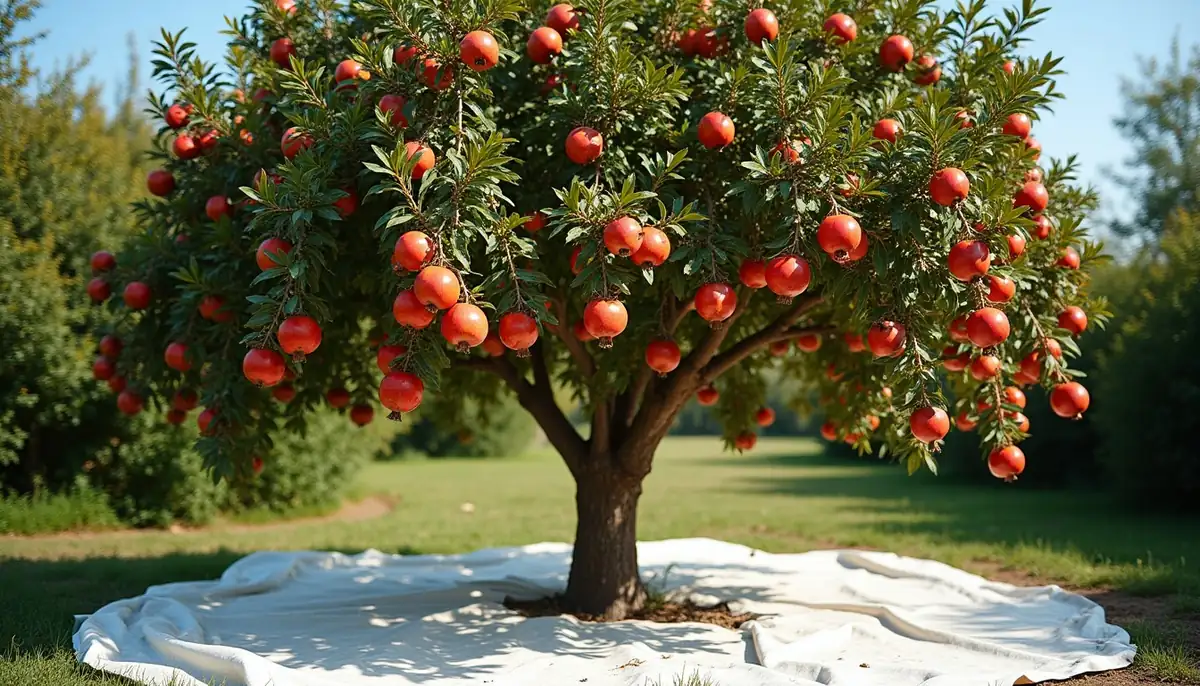
- Knock nymphs out of trees. On pomegranates, UC IPM suggests shaking limbs, tapping with a stick or using a hose with a pressure nozzle, with a white sheet beneath, and repeating every one to two weeks. It works on nymphs, less well on adults that fly.
- Mow or clear weeds and remove winter shelter. Thistles and weedy edges feed them in spring; woodpiles, loose bark and fallen pomegranates shelter overwintering adults.
- Use row covers before bugs arrive. UC IPM notes covers must go on early, or bugs get trapped inside, and they also exclude pollinators.
- Consider a trap crop. In Alabama trials reported in the Journal of NACAA in 2012, a perimeter of NK300 sorghum and Peredovik sunflower drew leaf-footed bugs away from tomatoes; treating only the sorghum at peak activity gave 78 to 100 per cent control without spraying the tomatoes.
- Spray only as a last resort. UC IPM says insecticidal soap, neem oil or pyrethrin may control young nymphs only. The most effective products are broad-spectrum pyrethroids, which are toxic to bees and natural enemies. Follow the label, observe the days-to-harvest interval and wash fruit before eating.
Leave any leaf-footed bug carrying small white eggs on its back. Mississippi State and Missouri explain that these are the eggs of tachinid flies such as Trichopoda pennipes, whose larvae kill the bug from inside. Tiny egg parasitoid wasps, birds, spiders and assassin bugs also take them. For orchards or a large commercial planting, a licensed pest control or crop adviser is the right call. Our garden pest control guide covers thresholds for the rest of the vegetable patch.
Frequently asked questions
What is a leaf footed bug?
A leaf-footed bug is a plant-feeding true bug in the family Coreidae, named for the flattened, leaf-like flare on the shin of each hind leg. Most US species are brown, narrow and 5/8 to 1 inch long, with a long beak used to pierce fruit and seeds. The family includes the eastern leaf-footed bug, the western conifer seed bug and the squash bug.
Are leaf footed bugs dangerous?
No. Leaf-footed bugs feed on plants, not people or pets, and extension services describe them as harmless to humans. They do not sting, transmit disease or damage buildings. The real costs are blemished or dropped fruit in gardens and orchards, a bad smell when handled, and western conifer seed bugs wandering around the house in autumn and on warm winter days.
Do leaf footed bugs bite?
Leaf-footed bugs do not bite people in normal circumstances; their mouthparts are built to pierce seeds and fruit. Penn State records a single known bite from a western conifer seed bug worldwide, which caused a small itchy patch. A painful bite from a long-legged brown bug is more likely an assassin bug or wheel bug, and anyone worried about a bite should see a doctor.
What do leaf footed bugs eat?
They suck juices from seeds, fruit and nuts. Garden hosts include tomatoes, peppers, beans, okra and squash; tree hosts include pomegranate, citrus, pecan, almond and pistachio. Thistles and other weeds feed them in spring before fruit forms. The western conifer seed bug feeds on developing pine and other conifer seeds and cones, without harming the tree itself.
How to get rid of leaf footed bugs?
Handpick or brush them into soapy water every few days, wearing gloves, and scrape off their chain-like egg rows. Mow weedy edges, remove woodpiles and fallen fruit, and use row covers before bugs arrive. Insecticidal soap or neem oil only affects young nymphs. Keep any bugs carrying white tachinid fly eggs, because those parasites kill them.
Sources
- Haviland, D.R., Pest Notes: Leaffooted Bugs, Publication 74168, University of California Statewide IPM Program.
- University of California Statewide IPM Program, Pest Notes: Squash Bug, Publication 74144.
- Mead, F.W., Leaffooted Bug, Leptoglossus phyllopus, UF/IFAS Featured Creatures EENY-072, revised 2016.
- Chi, A.A. and Mizell, R.F., Western Leaffooted Bug, Leptoglossus zonatus, UF/IFAS Featured Creatures EENY-517, reviewed 2020.
- UF/IFAS, Squash Bug, Anasa tristis, EDIS IN234; UF/IFAS Vegetable Pests II, Leaf-footed Bugs, Leptoglossus spp.
- Penn State Extension, Western Conifer Seed Bug, 2026.
- UConn Home and Garden Education Center, Leaf-footed Bug.
- Missouri Department of Conservation Field Guide, Leaf-Footed Bugs (Coreids).
- Layton, B., Acanthocephala terminalis, Bug’s Eye View 9(9), Mississippi State University Extension, 2023.
- University of Kentucky Entomology, Wheel Bug, ENTFACT-705.
- Texas A&M University Kissing Bug Community Science Program.
- Trap Crops for Leaffooted Bug Management in Tomatoes, Journal of NACAA 5(2), December 2012.
- The Pest Control Brief analysis of iNaturalist research-grade records, pulled October 2026.