Squash Bugs: Eggs, Nymphs and How to Protect Your Plants
Squash bugs (Anasa tristis) are flat, grey-brown true bugs about 14 to 16 mm (just over half an inch) long that suck sap from squash and pumpkins, causing yellow spots, wilting and scarred fruit. They are harmless to people and pets. The way to beat them is early: crush the bronze egg clusters under the leaves, trap adults under boards overnight, keep row covers on until flowering and, if you spray, target young nymphs at hatch, because adults are hard to kill.
Squash bugs are one of the most persistent pests in a home vegetable garden, and UF/IFAS notes that small fields and home gardens are commonly damaged while large commercial fields often escape. The reason is overwintering: adults spend the winter in garden debris, woodpiles and around foundations, right next to next year’s crop. This guide covers identification at every stage, the damage and the disease they carry, when they appear, and what extension trials say about each control.
Squash bug, stink bug or leaf-footed bug?
Squash bugs belong to the leaf-footed bug family (Coreidae), not the stink bugs, though they smell when crushed and are often called stink bugs. These three get mixed up more than any others in the garden.
| Squash bug | Brown marmorated stink bug | Eastern leaf-footed bug | |
|---|---|---|---|
| Adult length | 14 to 16 mm (UF); 13 to 19 mm (Wisconsin) | About 17 mm (0.66 in) | 16 to 20 mm (about 5/8 to 3/4 in) |
| Shape | Long, flat back, narrower than a stink bug | Shield shaped, wider and rounder | Long, V-shaped in cross section |
| Key mark | Orange or gold and brown spots along the abdomen edge | Brown above and below | Flattened, leaf-like hind leg; pale band across the back |
| Eggs | Bronze, about 1.5 mm, clusters of about 12 to 20 under leaves | Light yellow to yellow-red, masses of 20 to 30 | Bronze to dark brown, barrel shaped, laid in rows |
| Nymphs | Green at first, then grey with black legs | Red-eyed, five stages | Orange, red or reddish brown |
| What it eats | Cucurbits only | Fruit, beans, corn, tomatoes, ornamentals | Fruit, vegetables, nuts and flowers |
| Comes indoors? | Occasionally found in buildings in winter | Yes, a major autumn invader | Occasionally |
Oregon State adds a field tip: squash bug nymphs are grey, while stink bug nymphs are all or partly black. If the bug in your house in October is shield shaped, read our guide to stink bugs and other fall invaders. If it has leaf-shaped hind legs and is on your tomatoes, it is a leaf-footed bug.
What squash bugs look like at each stage
- Eggs: elliptical, slightly flattened, bronze to brick red and about 1.5 mm long (a sixteenth of an inch), laid in clusters on leaf undersides, often in the angle between veins. They darken as they mature.
- Nymphs: five stages, from about 2.5 mm at hatch to 9 or 10 mm. Newly hatched nymphs are green with a dark or red head and legs; older nymphs are grey, sometimes powdery, with black legs. Young nymphs feed in tight groups.
- Adults: flat, dark grey-brown to black, with wings folded over the back and alternating gold and brown spots along the edge of the abdomen. Sources disagree on length: UF/IFAS gives 1.4 to 1.6 cm, Utah State 1.6 cm, and Kentucky “about an inch”, which is larger than most other sources.
Damage, wilt and cucurbit yellow vine disease
Adults and nymphs pierce leaves, vines and fruit and suck sap. Utah State describes the sequence: yellow spots that turn brown, then whole leaves that blacken and go crisp under heavy feeding. Fruit gets scars and sunken patches that rot in storage. Young plants are the most vulnerable, and heavy feeding can kill seedlings.
Sudden wilt is where the sources part ways. UF/IFAS says the bug secretes highly toxic saliva, a condition called “anasa wilt”. Utah State says no salivary toxin has ever been confirmed and that wilting appears to come from damage to the plant’s water-conducting vessels. Either way, a wilted plant covered in grey nymphs has a squash bug problem.
Cucurbit yellow vine disease
The more serious risk is a bacterial disease. Squash bugs carry Serratia marcescens, which causes cucurbit yellow vine disease (also called yellow vine decline), and harbour it inside their bodies over winter, according to UF/IFAS and the University of Kentucky. Infected plants are usually infected young, but symptoms wait until about two weeks before fruit matures: foliage suddenly turns intense yellow and the plant collapses. Cut the crown and the phloem looks light brown instead of translucent green.
Kentucky lists squash, pumpkin, watermelon and cantaloupe as susceptible and cucumber as not known to be affected. Utah State reports the disease from midwestern to northeastern states but not west of the Rocky Mountains. It is easily confused with bacterial wilt, which is spread by cucumber beetles and leaves a slimy ooze in cut stems; yellow vine disease does not. Because the bacterium rides in on overwintered adults, Kentucky says control of the disease depends entirely on stopping squash bugs from feeding on young plants.
Which plants squash bugs prefer
Squash bugs feed only on cucurbits, but not equally. In trials cited by UF/IFAS, the share of nymphs that survived to adulthood varied enormously by host plant.
Pumpkins and squash are where squash bugs thrive; on cucumber and cantaloupe almost none reach adulthood. Utah State adds that pumpkins, Hubbard and yellow straightneck and crookneck squash are damaged more severely than other varieties. UF/IFAS warns that squash bugs adapt over time, and watermelon, once a poor host, is increasingly damaged in Oklahoma and Florida.
| Rating (Utah State) | Varieties |
|---|---|
| Resistant | Butternut, Royal Acorn |
| Moderately resistant | Sweet Cheese, Green Striped Cushaw |
| Susceptible | Pink Banana, Black Zucchini |
| Highly susceptible | Yellow squash, Hubbard, pumpkins |
Utah State is clear that no cucurbit is immune; resistant varieties simply suffer less. An Oklahoma State study (Bonjour and colleagues, 1990) found squash bugs prefer to lay eggs on yellow straightneck and crookneck over zucchini, acorn, spaghetti and butternut, which is why yellow squash makes a good trap crop.
Where do squash bugs come from, and when do they appear?
Unmated adults overwinter under plant debris, in compost and wood piles and around building foundations. They emerge in spring, typically April in southern Utah, May in northern Utah and late May to early June in Kentucky, then fly to young cucurbits to feed, mate and lay eggs. A female can lay up to 250 eggs. Eggs hatch in about 7 to 14 days depending on the source, and nymphs take four to six weeks to become adults.
There is one generation a year in northern states such as Wisconsin and Oregon, and two to three in warmer regions, according to UF/IFAS. Because females lay over a long period, every stage can be on a plant at once. Wisconsin gives a degree-day model for precise timing: using a base of 58°F, eggs appear at 193 degree days and nymphs emerge at 554.
Our analysis of US iNaturalist records shows squash bug sightings building from June (an index of 119) to a peak of 305 in September, three times their usual share of records, then collapsing to 34 in November as adults go into winter shelter. Leaf-footed bugs and brown marmorated stink bugs peak a month later, in October, when stink bugs move onto houses; squash bug sightings are already falling by then (156).
By state, squash bug records are densest across the Midwest, the Plains and northern New England, led by Delaware, Nebraska and Indiana, and are scarce in Florida (0.09 records per 10,000 observations) and California (0.06). Treat the ranking with caution: the twelve leading states rest on 37 to 166 records each.
How do you get rid of squash bugs?
Utah State’s rule is that cultural and mechanical controls come first and insecticides never alone, because squash bugs readily develop resistance and adults are difficult to kill. Our integrated pest management guide explains the approach. The timing table below combines Utah State, Wisconsin, Oregon State and UF/IFAS advice.
| When | What to do | Why |
|---|---|---|
| Autumn, after harvest | Remove or till in vines, fruit and debris; clear nearby wood piles | Cuts the overwintering adults that start next year’s problem |
| Planting | Choose resistant varieties; trellis vines; plant early or late to dodge peak egg laying | Adults prefer larger plants and hide at the vine base |
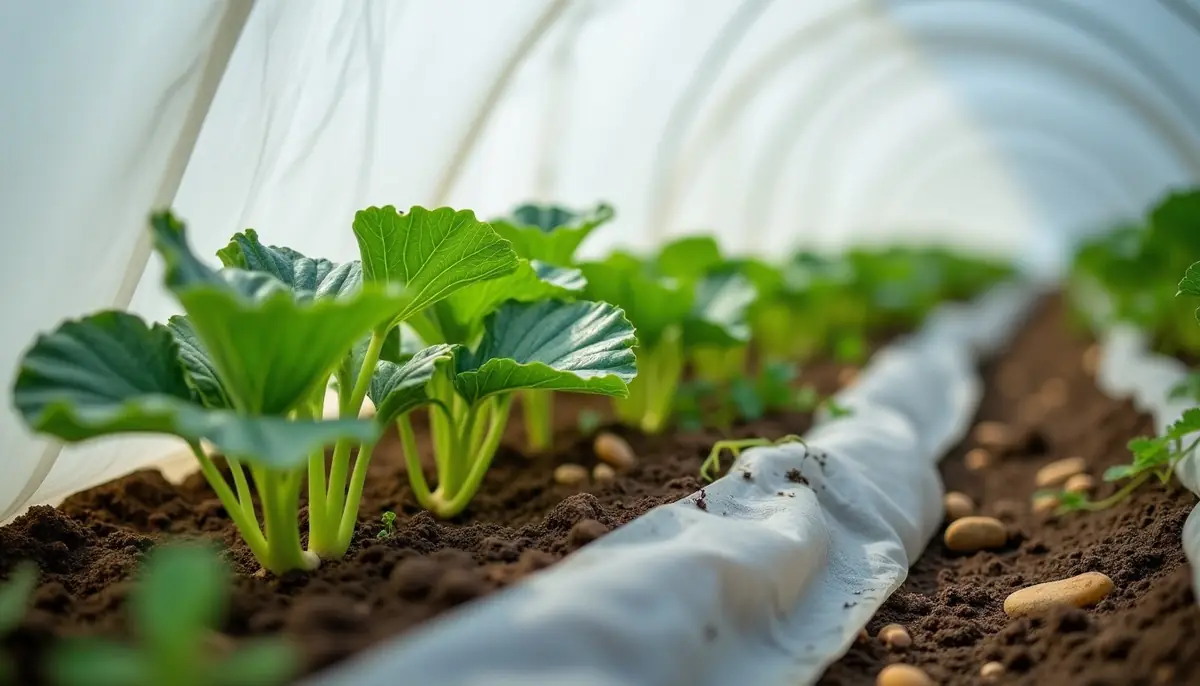
| Planting to bloom | Floating row covers, edges sealed with soil or rocks | Stops adults landing; must come off at flowering for pollination |
| Spring and summer, every 2 to 3 days | Check leaf undersides; crush egg clusters or lift them with duct tape rolled around the fingers | Each adult removed can cut the future population by several hundred |
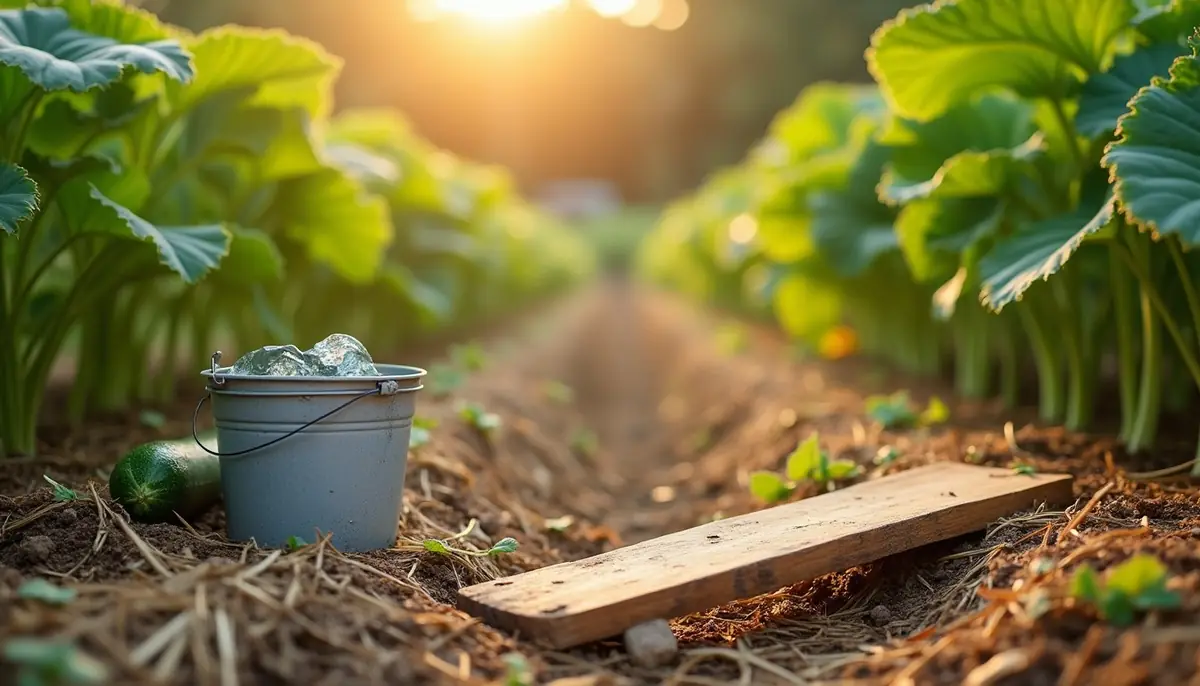
| Nightly, all season | Lay boards, shingles or cardboard by the plants; collect bugs underneath each morning | Squash bugs gather under shelter at night |
| At egg hatch | If spraying, target nymphs, early morning or evening, covering leaf undersides | Nymphs are far easier to kill than adults |
Thresholds and sprays
Wisconsin treats seedlings only if they are visibly wilting and squash bugs are present, and older plants at one egg mass per plant during flowering. Home garden options include insecticidal soaps, horticultural oils such as neem oil, pyrethrins, pyrethroids and carbaryl. Oregon State rates sprays as not effective against adults and only somewhat effective against nymphs, which hide under leaves. Do not spray open blossoms during the day, when bees are working, and rotate between product types to slow resistance. Follow the label; our garden pest control guide covers what “on the label” means for food crops.
Does Dawn dish soap kill squash bugs?
Knocking squash bugs into a bucket of soapy water drowns them, and Wisconsin and Oregon State both recommend it. Spraying dish soap on plants is different. Colorado State says home remedies made from household soaps should not be used as pesticides, because they are not tested, can injure plants and are of questionable legality. Kansas State notes dishwashing liquids can dissolve the waxy leaf cuticle and lack any residual effect. Registered insecticidal soap works only on contact and mainly on soft-bodied insects, so it is a nymph tool at best.
What is a squash bug’s natural predator?
Mostly parasites rather than predators. The bugs’ smell deters most predators, though Oregon State lists a few spiders, ground beetles, robber flies and lady beetles. The best known natural enemy is a tachinid fly, Trichopoda pennipes, with a gold and black thorax and orange abdomen, which develops inside adult bugs; about 20 per cent of squash bugs were parasitised by late summer in Connecticut. Tiny wasps parasitise the eggs: up to 30 per cent egg parasitism has been reported in Florida, and about a dozen wasp species attack squash bugs in Kansas. Flowering plants and fewer broad-spectrum sprays help them.
Frequently asked questions
Is squash bug harmful?
To plants, yes; to people and pets, no. Oregon State rates the risk to adults, children and pets as none. Squash bugs feed only on cucurbit sap with piercing mouthparts. The harm is to squash, pumpkins and melons: wilting, blackened leaves, scarred fruit and, in some regions, cucurbit yellow vine disease, a bacterial infection that can kill plants.
Do squash bugs bite?
Squash bugs are plant feeders with mouthparts built to pierce leaves and vines, and extension sources describe no risk to people. Oregon State rates the harm to adults, children and pets as none. What they do when handled or crushed is release a strong, unpleasant odour, which is also why most predators leave them alone. Wear gloves if the smell bothers you when hand-picking.
Do coffee grounds get rid of squash bugs?
There is no evidence they do. We found no extension trial or published study testing coffee grounds against squash bugs, and a 2021 Washington State University Extension review of coffee grounds in gardens treats pest-repelling claims as speculation. The methods with support are crushing egg clusters, overnight board traps, row covers until flowering, removing debris in autumn and choosing less susceptible varieties.
Where do squash bugs go in winter?
Adults overwinter unmated in sheltered spots: under crop debris, clods and stones in the garden, in compost and wood piles and around building foundations, and occasionally inside buildings. They emerge from April to early June depending on latitude. That is why Oregon State calls sanitation the best method of control: clear vines and fruit straight after harvest and move wood piles away from the garden.
Sources
- UF/IFAS Featured Creatures EENY077, Squash Bug, Anasa tristis (J. L. Capinera).
- Utah State University Extension, Utah Pests Fact Sheet: Squash Bugs (Alston and Barnhill, 2008), and USU Squash Bug Integrated Pest Management infographics.
- University of Wisconsin Extension, Wisconsin Horticulture XHT1135, Squash Bug (Lowenstein, Groves and Liesch, revised 2026).
- Oregon State University Extension, Solve Pest Problems: Squash Bug (updated 2026).
- University of Kentucky, ENTFACT-314, Squash Vine Borer and Squash Bug (R. Bessin), and Plant Pathology Fact Sheet PPFS-VG-12, Yellow Vine Decline of Cucurbits (Gauthier and Bessin).
- Bruton and colleagues, Serratia marcescens, a phloem-colonizing, squash bug-transmitted bacterium: causal agent of cucurbit yellow vine disease, Plant Disease 87: 937 to 944, 2003.
- Bonjour, Fargo and Rensner, Ovipositional preference of squash bugs among cucurbits in Oklahoma, Journal of Economic Entomology 83: 943 to 947, 1990; Bonjour and Fargo, Host effects on the survival and development of Anasa tristis, Environmental Entomology 18, 1989, as cited in UF/IFAS EENY077.
- Penn State Extension, Brown Marmorated Stink Bug.
- University of Georgia Extension, Leaffooted bugs; Virginia Cooperative Extension, Leaf-footed bugs; University of Arizona, Leaffooted bugs.
- Colorado State University Extension, Insect Control: Insecticidal Soaps; Kansas State University, Fundamentals of Using Soaps as Insecticides (R. Cloyd, 2020).
- Washington State University Extension FS207E, Using Coffee Grounds in Gardens and Landscapes (L. Chalker-Scott, 2021).
- The Pest Control Brief analysis of iNaturalist research-grade records, pulled October 2026.