Bed Bugs in a Couch: How to Check, Treat and Decide to Keep It
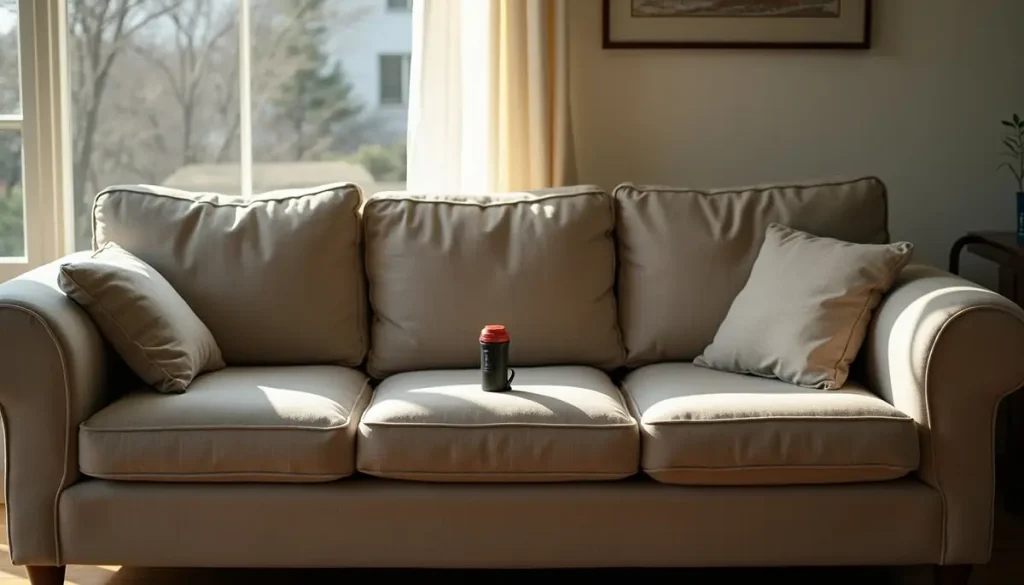
Bed bugs do live in couches: after the bed, the sofa is the next most likely place to find them, and in one Purdue study of eight infested apartments 14 per cent of all bed bugs were in couches. Check the seams, under the cushions and the black dust cover underneath. Most infested couches can be kept and treated with vacuuming, steam and professional follow-up; a couch with bugs deep inside the frame and torn upholstery is the case for discarding it, slashed and labelled so no one takes it home.
Keep it or throw it out?
| What you find | Decision | Why |
|---|---|---|
| One or two bugs or a few spots on a seam, sound upholstery | Keep and treat | Vacuum and steam reach seams and folds; Kentucky says steam used correctly kills bugs and eggs on contact |
| Bugs and eggs under the dust cover or in frame joints, couch otherwise sound | Keep, with professional treatment | Kentucky notes steam has limited ability to penetrate fabric, so voids need dust or heat applied by a technician |
| Bugs in the bed as well as the couch | Keep; treat the whole room | The couch is part of one infestation; discarding it alone leaves the source |
| Heavy infestation, torn fabric, bugs living inside cushions and stuffing | Discard | EPA advises discarding furniture responsibly if you cannot safely eliminate the bed bugs |
| A cheap or secondhand couch you found infested on arrival | Usually discard or return | Treatment can cost more than the couch; Kentucky advises closely examining secondhand items before bringing them in |
| Someone sleeps on the couch every night | Keep; treat it alongside the bed | Kentucky calls sofas used for sleeping major hotspots, so expect bugs in the frame as well as the seams |
Compiled by The Pest Control Brief from University of Kentucky ENTFACT-636 and US EPA Do-it-yourself Bed Bug Control.
Why are there bed bugs in my couch?
Because someone sits or sleeps there for long, still stretches. University of Kentucky entomologist Michael Potter writes that upholstered chairs, recliners and sofas are the next most likely areas after beds, and that sofas and recliners can be major bed bug hotspots, especially when used for sleeping. A couch that hosts a nightly nap or a regular sleeper can carry its own population, as the Purdue counts below show.
The best count comes from a Purdue study in an Indianapolis high-rise in May and June 2007. Changlu Wang, Mahmoud Abou El-Nour and Gary Bennett inspected eight infested one-bedroom apartments with bare floors and found an average of 157 bed bugs per apartment, ranging from 3 to 425.
That 14 per cent is the reason a bed-only treatment so often fails in a home with a couch. The other route is a couch that arrives infested: Kentucky advises avoiding discarded mattresses and sofas and examining any secondhand items for faecal spots and other signs. Our guide to how bed bugs spread through luggage, furniture and shared walls covers the rest.
Is there a way to tell if a couch has bed bugs?
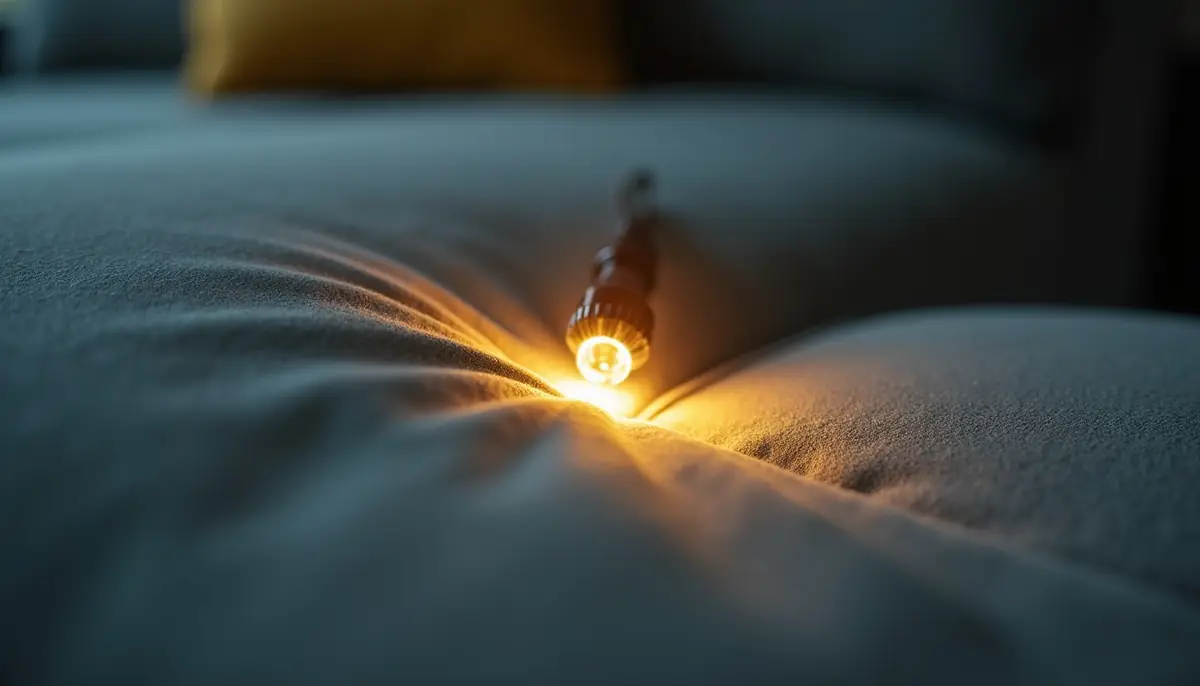
Yes, with a torch and a thin card. The EPA lists the signs as rusty or reddish stains where bugs were crushed, dark spots of excrement that bleed into fabric like a marker, eggs and eggshells about 1 mm long, and pale shed skins. It names the seams of chairs and couches and the gaps between cushions as hiding places. Check in this order:
- Cushion seams and piping. Remove every cushion and run the torch along the piping, zips and tags, flexing the seam open with the card. Kentucky says upholstered furniture should be checked along seams, skirts and folds of fabric.
- The seat deck. Look along the crease where the deck meets the arms and back, and in any staples or fabric folds.
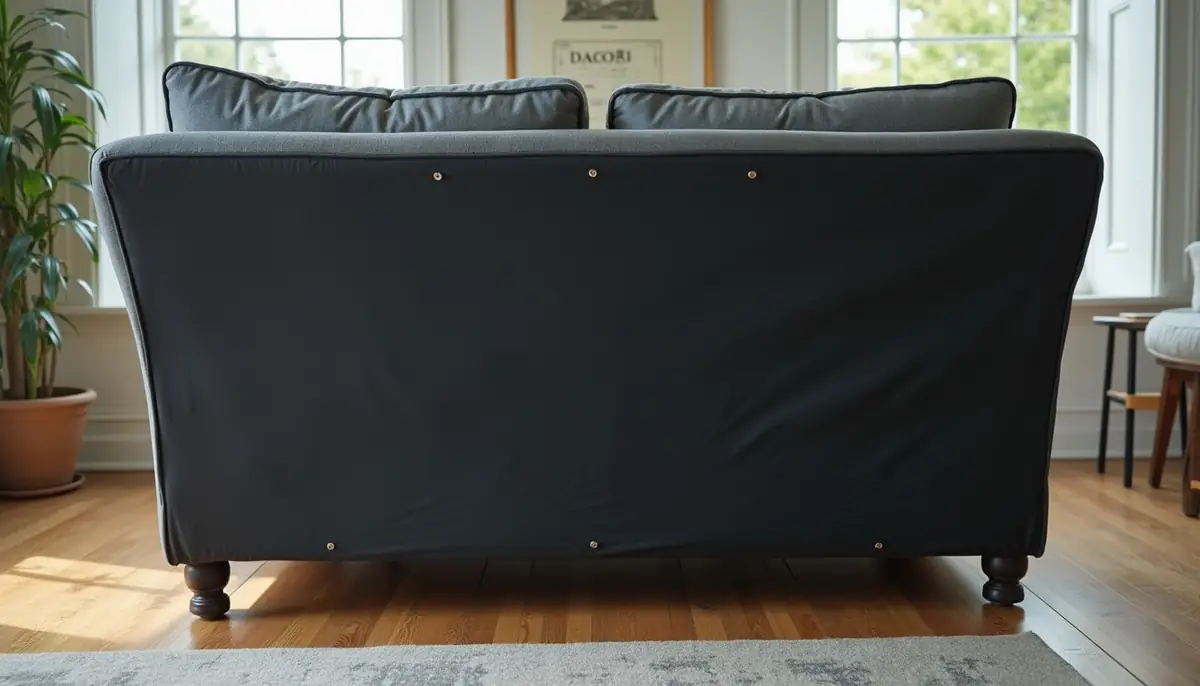
- The underside. Tip the couch onto its back and inspect the black dust cover fabric, its staple line and the wooden frame joints. Kentucky notes that on box springs a dust cover may have to be removed to gain access for inspection and treatment, and the same applies to a couch.
- Legs, feet and the floor beneath. Then the carpet edge behind the couch; our page on where bed bugs hide in carpeted rooms covers that step.
To check that spotting is bed bug and not food or mould, use our key to bed bug stains and their lookalikes.
A live insect is the proof: adults are about 3/16 inch long, reddish brown, oval and flat, according to Kentucky, and newly hatched nymphs are straw-coloured and no bigger than a pinhead. Compare yours against the bed bug identification guide with every life stage at actual size.
Several harmless insects found on furniture get mistaken for them; our guide to bugs that look like bed bugs sorts them by shape and size.
Interceptor cups under each couch leg add a passive check. The EPA’s DIY guidance recommends interceptor traps under each leg of infested furniture, including couches.
Can you get bed bugs out of your couch?
Usually, yes. Kentucky’s encasement advice covers mattresses and box springs, and none of the sources consulted here gives a tested equivalent for a sofa, so a couch is treated directly rather than sealed in.
Vacuum the seams slowly
Kentucky advises slowly scraping the end of the suction wand along infested seams, folds and edges, and warns that bed bugs can survive being sucked up. The EPA says to seal the vacuum bag as tightly as possible after each use and put it straight in an outdoor bin.
Steam what the wand cannot lift
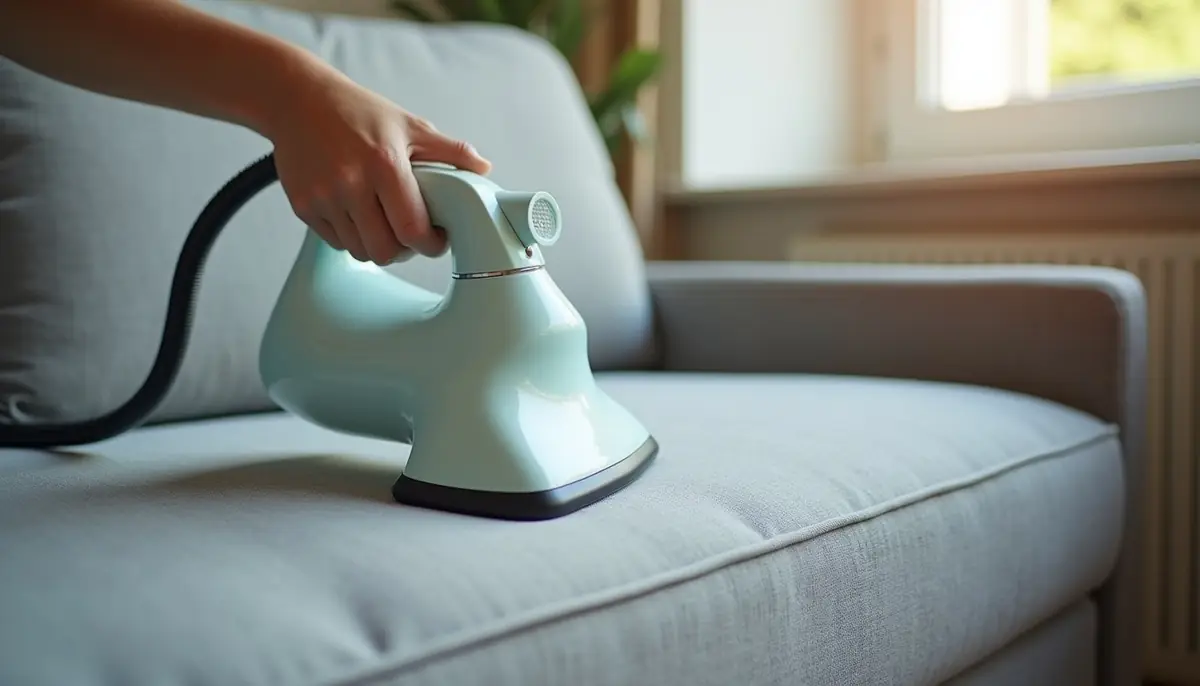
The EPA sets the steam temperature at a minimum of 130°F, without forceful airflow, which can scatter the bugs, and recommends a diffuser. In a Texas A&M laboratory trial (Puckett, McDonald and Gold, Pest Management Science, 2013), steam killed 100 per cent of eggs and 88 to 94 per cent of nymphs and adults, and the authors put the survivors down to the trial’s protocol limits. Move the nozzle slowly along each seam, piping line and the dust cover staples. Kentucky’s caveat applies: steam has limited ability to penetrate fabric, so it treats surfaces, not the stuffing.
Wash and dry the removable covers
Zip-off cushion covers can go in the dryer; the EPA endorses a clothes dryer on high heat for items that can take it. Our page on whether bed bugs survive the dryer gives the time and temperature evidence.
Call a professional for the frame
Bugs inside the frame, arms and cushions need either a residual product or dust applied into the voids by a licensed technician, or room heat treatment.
In the Purdue study, the treating team applied a labelled dust to the inner framework of couches and box springs as well as spraying the sofa surfaces. Our bed bug treatment cost guide, heat versus chemical puts chemical work at $150 to $400 per room and heat for a single room at $400 to $1,500, as published marketplace estimates.
The full sequence for the rest of the home is in our evidence-based plan for getting rid of bed bugs.
If the couch goes
The EPA’s advice is to destroy discarded furniture so no one else is tempted to bring it into their home: rip the covers, remove the stuffing and spray paint “Bed Bugs” on it. Kentucky adds that bagging or wrapping infested items in plastic before moving them prevents bugs dropping off on the way out, and that marking or defacing them discourages pickup. Wrap the couch in plastic sheeting before carrying it through the house, and check your local bulk-waste rules, which vary by city. Do not buy a replacement until the treatment is finished.
Frequently asked questions
How long can bed bugs live in couches?
Months, even with nobody using the couch. Kentucky ENTFACT-636 says nymphs and adults can persist months without feeding, and potentially a year or longer at 55°F or less. The EPA likewise advises leaving untreatable bagged items sealed for up to a year. Moving the couch to a cold garage for a few weeks will not reliably clear it; our page on how long bed bugs live with and without food sets out the survival data by temperature.
What kills bed bugs instantly?
Direct heat. Kentucky says steamers used correctly kill bugs and eggs on contact, and the EPA sets 130°F at the surface as the minimum. Steam only kills what it touches, so bugs inside the frame survive. Sprays sold as instant killers face the same limit; our review of whether rubbing alcohol kills bed bugs sets out what the studies found.
Can I get bed bugs from sitting on someone’s couch?
It is possible but uncommon. Kentucky says bed bugs normally do not reside on or attach to people like lice or ticks, and advises visitors to avoid sitting or placing coats and other items on beds, sofas and floors where the bugs often reside. Bags and coats left on a couch are the likelier ride home.
Do I need to throw out my couch if I have bed bugs?
Usually not. The EPA says not to discard furniture if you can safely eliminate the bed bugs from it. Discarding makes sense for a heavily infested, torn or low-value couch. Throwing it out without treating the rest of the room seldom ends an infestation, since in the Purdue study 85 per cent of bugs were in mattresses and box springs.
Sources
- Wang C, Abou El-Nour MM, Bennett GW. University research: case study, controlling bed bugs in apartments. Pest Control Technology, 2007 (Purdue University).
- Potter MF. Bed Bugs, ENTFACT-636. University of Kentucky Department of Entomology.
- US Environmental Protection Agency, Do-it-yourself Bed Bug Control.
- US Environmental Protection Agency, How to Find Bed Bugs.
- Puckett RT, McDonald DL, Gold RE. Comparison of multiple steam treatment durations for control of bed bugs (Cimex lectularius L.). Pest Management Science, 2013.