Why Do Yellow Jackets Nest in the Ground? Finding Them Safely
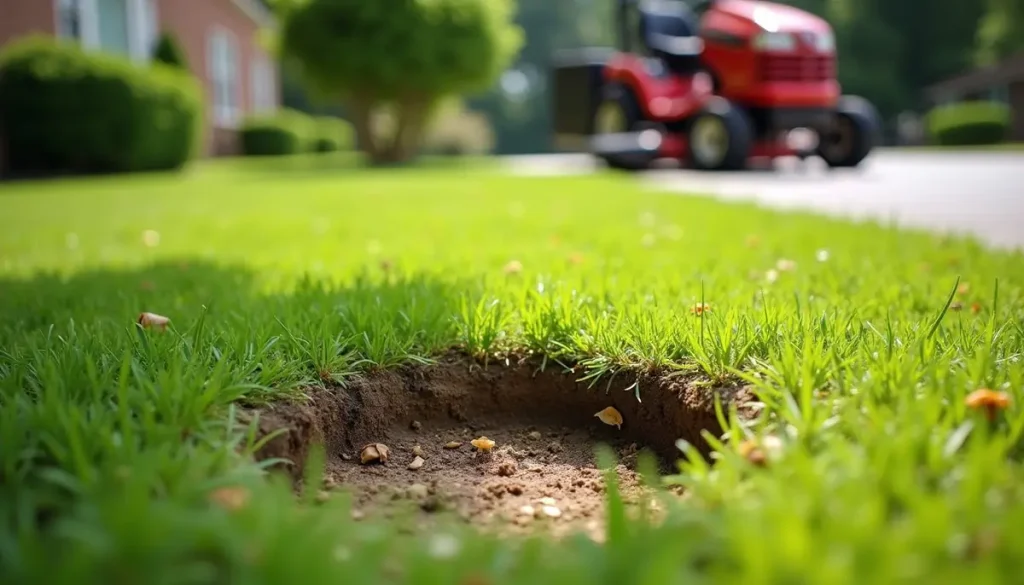
Yellow jackets nest in the ground because the queen that founds each colony in spring looks for a ready-made, sheltered cavity, and an abandoned rodent burrow is the most common one she finds. UC IPM says yellowjackets “commonly build nests in rodent burrows” and enlarge them by moistening and digging out the soil. The burrow shelters the paper nest while the colony grows from one queen to thousands of workers by late summer.
Not every yellowjacket nests underground. The eastern, western and southern yellowjackets mostly do; the German yellowjacket favours walls; and the grey paper “hornet” nests in trees belong to aerial yellowjackets in the genus Dolichovespula, which our wasp and hornet identification guide sorts out.
Which yellow jackets nest in the ground
| Species | Region | Usual nest site | Colony size recorded | Source |
|---|---|---|---|---|
| Eastern yellowjacket (Vespula maculifrons) | Eastern North America | Mostly underground; occasionally stumps, tree cavities, house siding | Largest of 10 nests measured: over 2,800 wasps, 8 comb levels | UF/IFAS EENY-081, citing Haviland 1962 |
| Western yellowjacket (V. pensylvanica) | Western US | Rodent burrows, holes, structural voids | Pacific Northwest: up to 5,000 workers and 15,000 cells, depending on species | Washington State University EB0643; Utah State University Extension |
| Southern yellowjacket (V. squamosa) | Eastern US south into Central America | Ground and aerial nests; one ground nest sat 22.5 cm (about 9 in) below the surface | Annual nests under 1,500 workers; perennial nests about 700 to 36,379 | UF/IFAS EENY-081; Stewart et al., Florida Entomologist 2017 |
| German yellowjacket (V. germanica) | Widespread, introduced | Often inside walls of houses | Peaks later, in October and early November | Washington State University EB0643 |
Compiled by The Pest Control Brief from UF/IFAS, Washington State University, Utah State University and the Florida Entomologist.
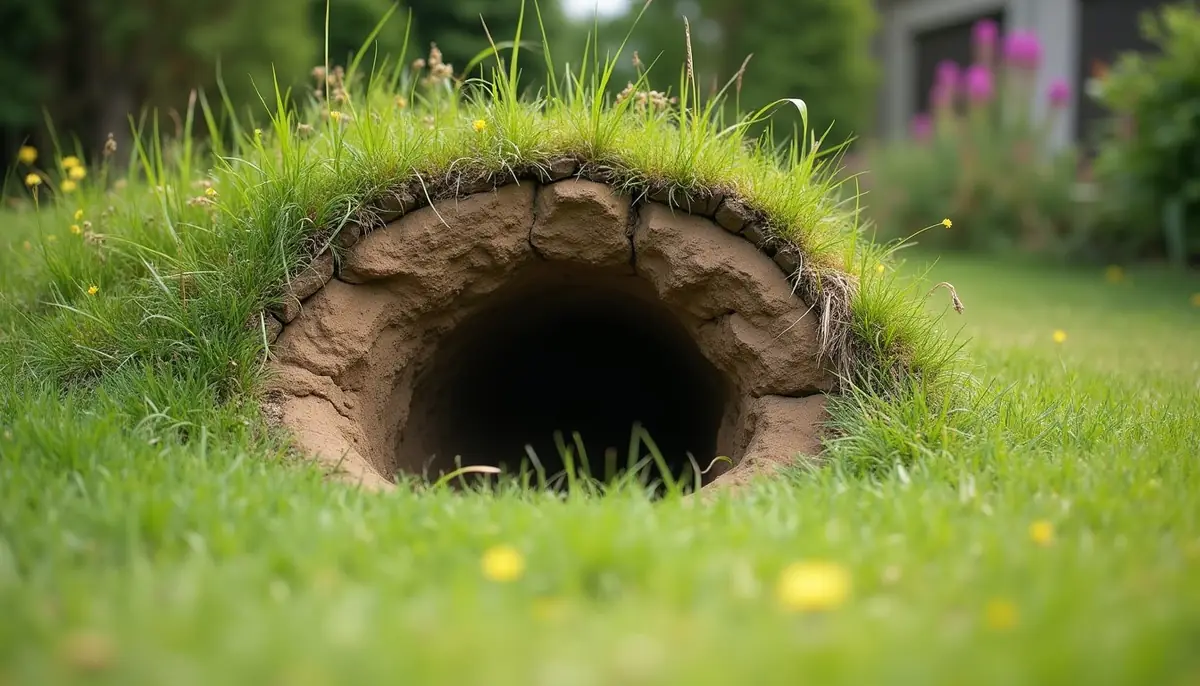
Why the ground suits a yellow jacket colony
A yellowjacket colony is annual in most of the US. Only mated queens survive winter, sheltering under bark, in stumps and logs or in woodpiles, according to Washington State University. Each queen emerges alone in spring and has to build, forage, lay eggs and feed larvae by herself until the first workers appear, as UF/IFAS describes. She cannot afford to excavate. A burrow left by a vole, mouse or chipmunk gives her a dry, enclosed chamber on day one.
Once workers take over, the nest grows inside the cavity. UC IPM notes that if the rodent hole “isn’t spacious enough,” the wasps enlarge it by moistening the soil and digging. UF/IFAS reports that eastern yellowjacket workers remove soil from the burrow as the nest gets larger, depositing it about 1 cm (3/8 in) from the nest. The nest itself is layered paper combs wrapped in a paper envelope; underground, the soil does the job a tree branch does for an aerial nest, which is why the burrows of chipmunks, ground squirrels and other burrowing rodents matter in a yard with yellowjackets.
The ground also hides the colony. Of the 10 eastern yellowjacket nests Haviland described in 1962, each had a single nearly round ground opening about 1.5 cm (about half an inch) across, while the nest beneath ranged from 9.5 to 30 cm (3.75 in to 1 ft) in diameter.
What a yellow jacket nest in the ground looks like
- One hole, heavy traffic. UC IPM describes the envelope as usually having “a single entrance hole”, and Oregon State advises looking for many insects going into and out of a hole in the ground.
- No big soil fan. Cicada killers leave a conspicuous mound of excavated soil at each burrow; Texas A&M notes yellowjacket ground nests are often in sheltered spots such as under shrubs, so the entrance can be hard to see.
- Guards at the entrance. Washington State University shows western yellowjacket guard workers standing on a mud turret around the entrance hole of a ground nest.
- Timing. Traffic builds through summer; colonies reach maximum size in August and September in the Pacific Northwest, and Penn State gives May or early June as when eastern yellowjacket queens start nests.
Do yellow jacket nests in the ground have more than one entrance?
Usually not. UC IPM and the Haviland nests both point to one entrance. Utah State University Extension, though, writes its dusting instruction for “entrance hole(s)”, and the visible hole can be some distance from the nest itself: UC IPM warns that underground nests “can be quite a distance from the visible entrance.”
Ground bees and cicada killers are not the same problem
Many small holes with tidy soil mounds in spring are usually solitary mining or cellophane bees, which rarely sting and leave within weeks; our guide to ground bees in the lawn and whether to leave them covers them.
Large single holes with a soil fan in July and August, and a 1.5 to 2 inch wasp patrolling over them, are the eastern cicada killer, which our page on cicada killer wasps and why they are almost harmless describes. One busy hole in late summer is the yellowjacket pattern.
If you are still unsure what is flying, the quick checks in how to tell a wasp from a bee separate the two in seconds.
How long do yellow jackets nest in the ground?
One season, in most of the country. Washington State University says abandoned nests “rapidly decompose and disintegrate during the winter” and “are not used again”. Texas A&M’s school IPM plan says that in most parts of the country colonies die out shortly after the first frost.
The exception is the warm South and coastal California. UC IPM says that in very mild winters, or in coastal California south of San Francisco, “some yellowjacket colonies survive for several years and become quite large.” In the southern yellowjacket, a 2017 Florida Entomologist study of nests from Georgia and Florida found every multi-queen nest was perennial, with roughly 700 to 36,379 workers, while single-queen annual nests had fewer than 1,500. UF/IFAS records one southern yellowjacket nest about 2.5 m (8.2 ft) high around a tree stump with 74 layers of comb. A ground nest still active in January in Florida or Georgia is the case to leave entirely to a licensed professional.
In our analysis of US iNaturalist research-grade records, yellowjacket records sit well below their yearly average from January to July (index 28 to 75), then climb to 145 in August, 208 in September and a peak of 251 in October, before falling back. They show when people notice yellowjackets, not nest counts, but the timing matches the colony peak described above and the late-season switch to sugar that our guide to what attracts wasps month by month explains.
Why ground nests cause so many stings
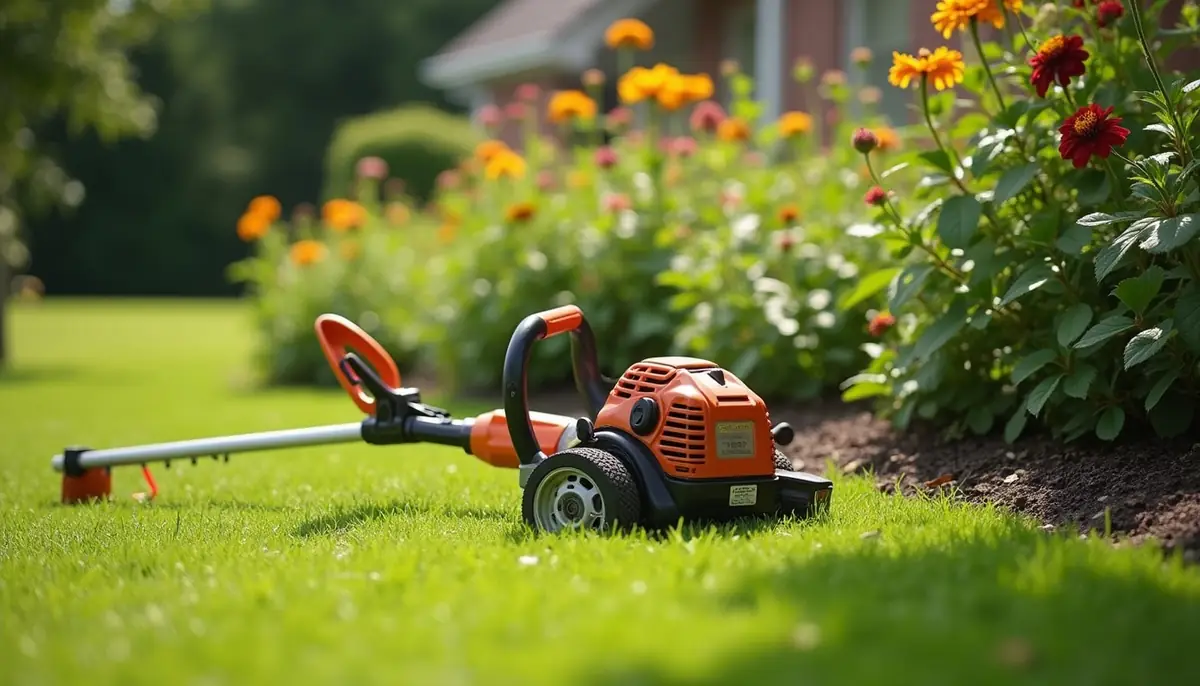
The nest is hidden until you are on top of it. Penn State lists nests in mowed lawn among the ones that should be dealt with rather than ignored, since mowers and string trimmers pass right over the entrance. By late summer UC IPM says colonies grow slowly or stop and need large amounts of sugar, so foragers are also out scavenging. UF/IFAS adds that vespid wasps can sting repeatedly and that an injured yellowjacket often releases an alarm pheromone that triggers defence from the rest of the colony. Before mowing in August and September, watch the lawn for a steady line of wasps into one spot, then mark it and mow around it.

What will kill a yellow jacket nest in the ground?
If a ground nest is away from paths, the simplest option is to leave it: it will die out with the frost. Where it must go, extension services describe two approaches, both done at night when most foragers are inside:
- An insecticidal dust labelled for yellowjackets, puffed into the entrance. Penn State advises “liberally dusting the material directly down into the nest opening” at night, and warns that dusting only the outside angers the colony. Utah State recommends a non-repellent insecticidal dust in and around the entrance hole at night.
- An aerosol labelled for wasp and hornet nests. Washington State University says to direct a registered hornet and wasp spray into the entrance after dark and not to plug the hole, so returning foragers pass through the residue.
Both depend on following the product label. UC IPM is blunt about the risk: stinging incidents are likely even after dark, sprays may not reach a nest set back from the entrance, and it is “easiest and safest to call for professional help.” Anyone allergic to stings should not attempt it, and our guide to yellow jacket removal and when to act covers timing.
A ground nest is the hardest of the three nest types to treat because the comb is out of sight; the guide to getting rid of wasps by nest type sets it beside aerial and wall nests.
Our wasp nest removal cost figures put yellow jacket jobs at $500 to $1,300, the highest of any wasp, because the nests are underground and defended.
What not to put on a yellow jacket nest in the ground
- Gasoline or lighter fluid. Texas A&M says gasoline “should never be poured into underground nest holes” because it creates a fire hazard, contaminates the soil and stops vegetation growing for some time. Oregon State calls pouring gasoline or lighter fluid into a nest “NOT ALLOWED” and lighting a fire to destroy one illegal and dangerous.
- A plug over the hole while the colony is active. Utah State’s instruction is “Never plug entrance holes to nests!” and Washington State says not to plug after treatment. Penn State gives the same warning for nests in walls, and UC IPM notes that yellowjackets digging inside a house can leave a wet patch that becomes a hole in a wall or ceiling, a situation covered in why there are wasps in your house.
Frequently asked questions
Why do yellow jackets nest in the ground?
A spring queen founds each colony alone and needs a ready-made sheltered cavity, so she usually takes over an abandoned rodent burrow. UC IPM says yellowjackets commonly nest in rodent burrows and dig to enlarge them. The soil protects the paper nest while the colony grows from one queen to thousands of workers by late summer.
How long do yellow jackets stay in a ground nest?
One season in most of the US. Queens start nests in spring, colonies peak in August and September, and they die out shortly after the first frost, according to Washington State University and Texas A&M. Nests are not reused. In mild areas such as Florida, Georgia and coastal California, some colonies survive for several years.
Do yellow jackets come out of a ground nest at night?
Very little. UC IPM says wasps are most likely to be in the nest at night, which is why extension services schedule treatment after dark. Washington State University notes some foragers do not return every night, and UF/IFAS warns any disturbance at night still brings instant activity. Use a light sparingly; wasps may fly towards it.
Will yellow jackets return to the same hole next year?
Not to the same nest. Washington State University says abandoned nests disintegrate over winter and “are not used again.” A new queen can choose another burrow nearby, though, so collapsing old rodent burrows, which Utah State recommends, removes ready-made sites.
Sources
- University of California Statewide IPM Program, Pest Notes: Yellowjackets and Other Social Wasps, Publication 7450 (Mussen and Rust), updated 2012.
- UF/IFAS Extension, Yellowjackets and Hornets, Vespula and Dolichovespula spp., EENY-081 (Grissell and Fasulo), revised December 2023.
- Washington State University Extension, Yellowjackets and Paper Wasps, EB0643 (Landolt and Antonelli), 2003.
- Utah State University Extension, Western Yellowjacket, structural pest identification guide.
- Penn State Extension, Eastern Yellowjacket (Steve Jacobs), 2010, reviewed 2015.
- Stewart S, Fritz GN, Fritz A, Deets A. Reproductive partitioning in Vespula squamosa. Florida Entomologist 100(2), 2017.
- Texas A&M AgriLife Extension, School IPM, IPM Action Plan for Yellowjackets.
- Oregon State University, Solve Pest Problems: Yellowjackets and wasps.
- The Pest Control Brief analysis of iNaturalist research-grade records, pulled October 2026 (b19 to b30 files).