Are Spiders in the House Good? What They Eat and When to Worry
Mostly yes: the spiders living in a typical US house are harmless predators that eat flies, gnats and other spiders, and extension entomologists generally advise tolerating a few. A 2016 survey of 50 North Carolina homes found spiders in every house and in 78.5 per cent of rooms. The exceptions are widows and, inside its range, the brown recluse. A sudden crowd of spiders is also worth reading, because it usually means there are plenty of insects for them to eat.
Keep it or remove it: the common house spiders
Most people asking this question are looking at one spider in a corner. This table covers the spiders a US household is most likely to have, with what they eat and the honest risk.
| Spider | Found in the NC homes survey | What it eats | Risk to people | Keep or remove? |
|---|---|---|---|---|
| Common house spider (Parasteatoda tepidariorum), a cobweb spider | Cobweb spiders in 100% of homes, 65.3% of rooms | Many insects, including several household pests (Missouri Department of Conservation) | Bite not medically significant; fangs too short to bite well (UC IPM) | Keep, or vacuum the web if it bothers you |
| Longbodied cellar spider (Pholcus phalangioides) | Cellar spiders in 84% of homes, 28.0% of rooms | Insects and other spiders, including prey larger than itself such as wolf spiders | Not known to bite people (Penn State) | Keep in basements; it eats other spiders |
| Jumping spiders (Salticidae) | 50% of homes, 8.3% of rooms | Small insects, caught by stalking rather than a web | Very low | Keep, or carry it outside |
| Wolf spiders (Lycosidae) | 40% of homes, 5.8% of rooms | Ground insects; usually a wanderer from outdoors | Can bite if handled; not medically significant | Carry it outside |
| Widow spiders (Latrodectus) | Not reported in the survey’s family list | Insects caught in an irregular web in dark, sheltered spots | Medically significant; UC IPM calls the adult female the spider most capable of seriously injuring people in California | Remove; clear clutter, wear gloves |
| Brown recluse (Loxosceles reclusa) | Not reported in the survey’s family list | Small insects | Medically significant, though bites are rare even in heavily infested homes | Remove; inside its range a professional inspection is sensible |
Table compiled by The Pest Control Brief from Bertone et al. (PeerJ, 2016), UC IPM Pest Notes: Spiders (Publication 7442), Penn State Extension and the Missouri Department of Conservation.
What the North Carolina house survey found
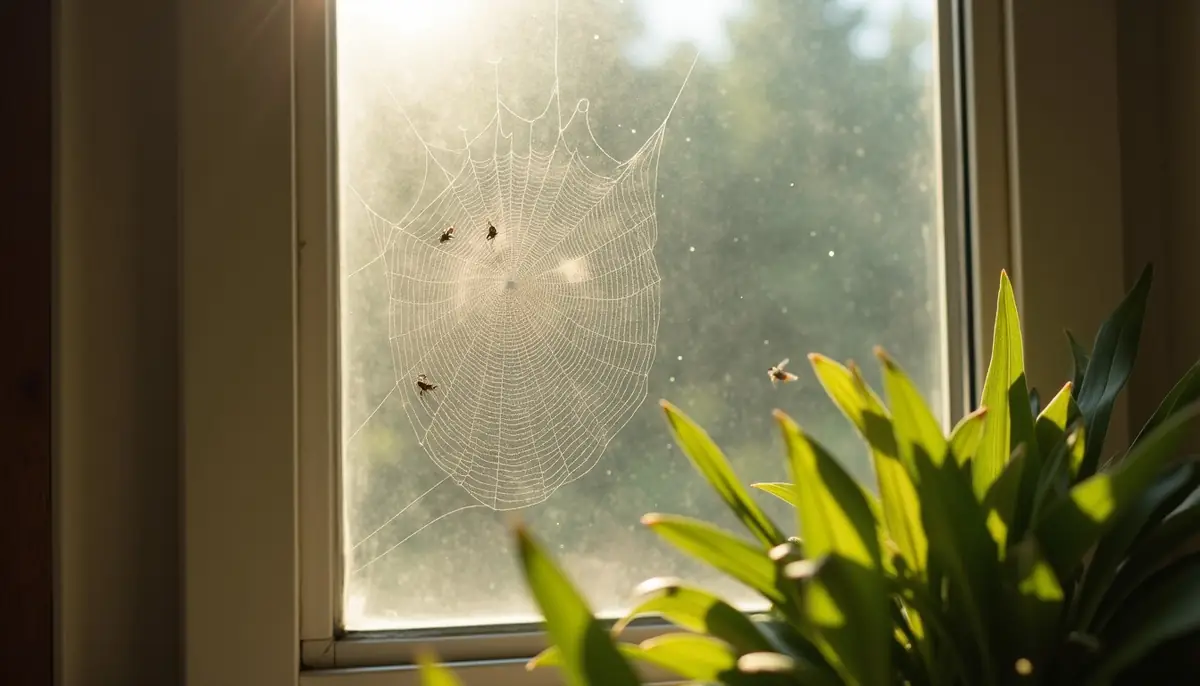
The best evidence on what actually lives indoors comes from a 2016 study in PeerJ by Matthew Bertone and colleagues at NC State University. They searched 554 rooms in 50 free-standing houses in and around Raleigh, collecting every arthropod, living or dead, including prey caught in webs. Spiders turned up in every house. Cobweb spiders, the family that includes the common house spider, were one of only four families found in 100 per cent of homes.
Spiders made up 16 per cent of the diversity in an average room, behind flies (23 per cent) and beetles (19 per cent). The authors list spiders and centipedes as the main predators they sampled; the other big indoor hunter is covered in our guide to house centipedes, the predator in the bathroom. Their wider conclusion is reassuring: common pest species were found less often than harmless ones, and most of what lived indoors had simply wandered in from the surrounding landscape.
Why spiders in the house are good
The benefit is predation. UC IPM’s Pest Notes state that spiders are mostly beneficial because they feed on pest insects, and the Missouri Department of Conservation says common house spiders eat many pest insects. In the Raleigh houses, the commonest prey on offer were flies, gnats and midges: gall midges were in 100 per cent of homes and dark-winged fungus gnats in 96 per cent.
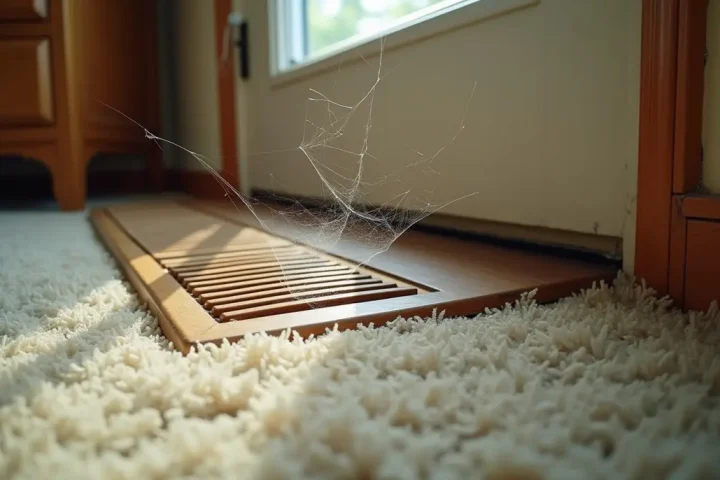
- A cobweb in a window corner catches the flies and small flying bugs drawn to light indoors without any spray.
- Cellar spiders go further. The Missouri Department of Conservation notes some cellar spider species enter other spiders’ webs and eat the owner, and that people tolerate them because they eat so many other spiders and insects. Cellar spiders are one of the three animals people call daddy long legs; the guide to why daddy long legs are not deadly poisonous separates them.
- Hunting spiders take insects off walls and floors. Jumping spiders, the friendly spider indoors, were in half the surveyed homes.
Our guide to what house spiders and garden spiders eat has the global prey estimates; we do not repeat them here.

Are spiders in the house good or bad? The downsides
The costs are real but small, and mostly about webs and nerves rather than health:
- Webs and egg sacs. Penn State says a female common house spider may lay twelve or more egg sacs in her life, each holding 140 to 380 eggs. UC IPM notes cellar spiders mainly cause problems by producing messy cobwebs.
- Bites, rarely. UC IPM states that spiders do not seek people in order to bite them, and that the fangs of most spiders are too small to pierce adult skin.
- A signal of insects. UC IPM puts it simply: the more insects inside a building, the more likely it is to have spiders. Lots of webs in one spot usually mean a fly, gnat or moisture problem nearby.
- The two groups that matter. Widows and recluses are the US spiders with medically significant bites. Washington’s Department of Health also lists the yellow sac spider for that state; our page on yellow sac spider bites and indoor sightings covers that case.
When to worry
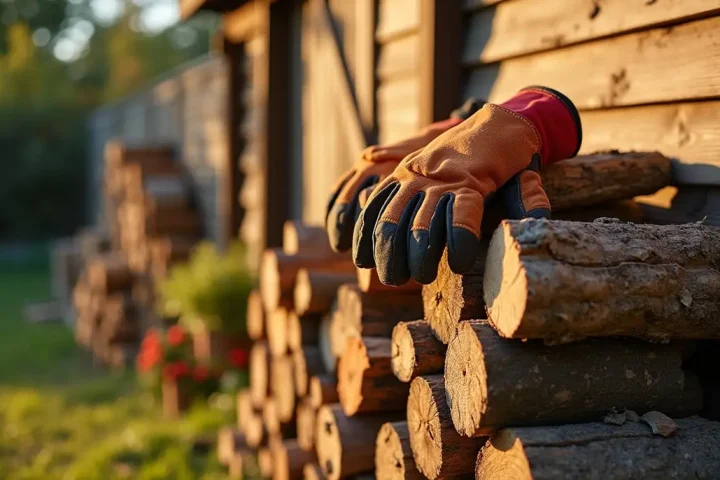
A widow in the garage or woodpile
UC IPM says black widows spend most of their time hidden outside homes in woodpiles or in clutter in the garage, in dark, dry, undisturbed places. That is where to look, and where to wear gloves when clearing up. A shiny black spider with a red hourglass is not always a widow; the false widow Steatoda grossa is often mistaken for one, and our comparison of black widow vs false widow markings shows how to tell them apart.
A brown recluse, but only inside its range
University of Kentucky entomologists describe the brown recluse as found throughout the south-central and Midwestern United States, hiding in closets, clothing, shoes and stored items. Outside that range, a “brown recluse” is almost always another spider; the step-by-step spider identification checks for a suspected recluse start with where you live. Inside the range, Kentucky advises shaking out clothes and shoes left on the floor and moving beds away from walls.
Spiders in large numbers
Numbers often rise in late summer and autumn, a seasonal pattern covered in where spiders go in winter and why autumn brings more indoors. A steady crowd in one room through the year is different: it points to prey insects, damp or both.
Is it okay to sleep in a room with spiders?
Yes, for almost every house spider. In the NC survey, spiders were found in 75.6 per cent of the 160 bedrooms searched, so most people already do. Even the brown recluse rarely bites sleepers: Vetter and Barger collected 2,055 brown recluses over six months from an occupied home in Lenexa, Kansas, in 2002, with at least 400 large enough to bite, and no one living there was bitten. The full picture of night-time bites is in whether spiders bite you in your sleep.
Is it a good idea to kill spiders in your house?
Usually not necessary. Killing one spider does little either way, and sprays do less than people expect: UC IPM says control by spraying is only temporary unless accompanied by housekeeping. Where you want fewer spiders, UC IPM’s own advice is to vacuum the spider and its web, seal cracks and gaps around doors and windows, and clear clutter in garages, sheds and basements. The step-by-step version, with the repellent evidence, is in how to get rid of spiders in the house. The exceptions are confirmed widows and recluses, which are worth removing.
And luck? The English rhyme “If you want to live and thrive, let the spider run alive” is folklore, and Japanese tradition has a similar rule about house spiders. No study links spiders to luck; the practical case for leaving a cobweb spider alone is the flies it eats.
Frequently asked questions
Is it a good idea to let spiders live in your house?
For common house spiders, cellar spiders and jumping spiders, generally yes. UC IPM calls spiders mostly beneficial because they eat pest insects, and the house spider’s bite is not medically significant. Remove widows and brown recluses, and vacuum webs where they bother you rather than spraying.
Is it a good idea to kill spiders in your house?
Only when the spider is a widow or a brown recluse. Killing ordinary house spiders removes a predator of flies and gnats without fixing why they are there. UC IPM notes spraying gives only temporary control unless you also clean, seal gaps and remove clutter.
Is it good to not kill house spiders?
In most homes, yes. A 2016 survey of 50 North Carolina houses found spiders in every one and in 78.5 per cent of rooms, with pest species found less often than harmless ones. Leaving a few cobweb or cellar spiders costs some dusting and gives free fly and gnat control.
Is it okay to sleep in a room with spiders?
Yes. The same survey found spiders in 75.6 per cent of bedrooms. UC IPM says spiders do not seek people out to bite, and most cannot pierce adult skin. In a Kansas home with 2,055 brown recluses collected over six months, no resident was bitten.
Are spiders in the house a sign of something?
Usually of insects. UC IPM says the more insects a building has, the more likely it is to have spiders. If webs cluster in one room, look for flies, gnats, damp or gaps around windows and doors that let both in.
Sources
- Bertone, M.A., Leong, M., Bayless, K.M., Malow, T.L.F., Dunn, R.R. and Trautwein, M.D. (2016). Arthropods of the great indoors: characterizing diversity inside urban and suburban homes. PeerJ 4: e1582.
- University of California Statewide IPM Program, Pest Notes: Spiders, Publication 7442 (updated October 2020).
- Penn State Extension, Common House Spider and Longbodied Cellar Spider fact sheets.
- Missouri Department of Conservation, Field Guide: Common House Spider and Cellar Spiders.
- University of Kentucky Entomology, Brown Recluse Spider, ENTFACT-631.
- Washington State Department of Health, Spiders.
- Vetter, R.S. and Barger, D.K. (2002). An infestation of 2,055 brown recluse spiders and no envenomations in a Kansas home. Journal of Medical Entomology 39(6): 948 to 951.