Can Fruit Flies Live in the Fridge? What Cold Does to Them
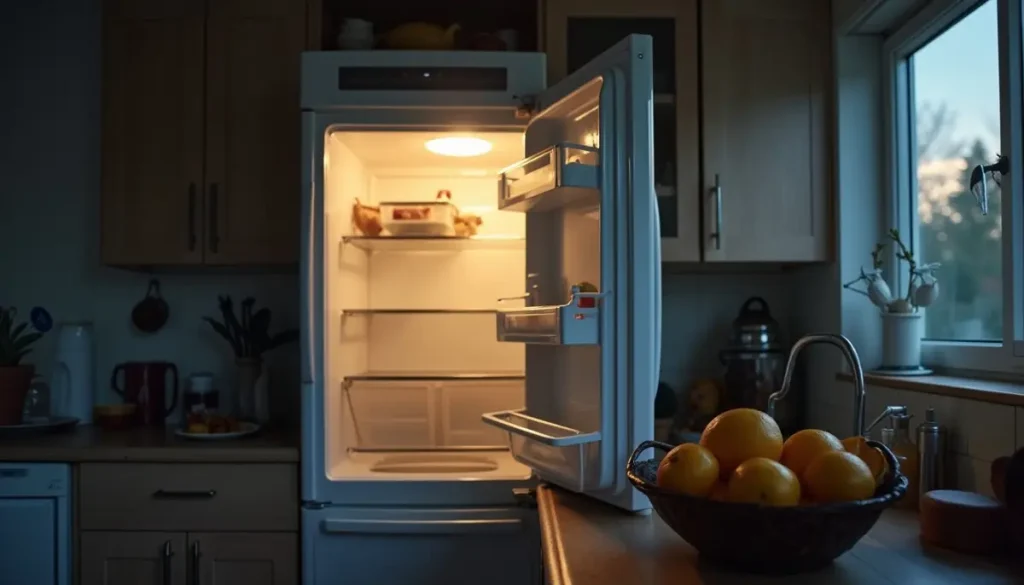
Fruit flies cannot live or breed in a working fridge: at 40°F (4°C) they fall into a cold stupor, stop developing, and in one laboratory study half the adults were dead after about 6 days. They can survive a few hours to a few days, and eggs or larvae inside chilled fruit can carry on developing once the fruit warms up. The flies you see in a fridge almost always breed somewhere else in the kitchen.
What each temperature does to a fruit fly
| Temperature | Where you meet it | What happens | Source |
|---|---|---|---|
| 85°F (29°C) | Warm kitchen in late summer | Egg to adult in as little as 8 days | Penn State Extension HP-20 |
| About 50°F (10°C) | Cool garage, cellar | Roughly the lowest mean temperature at which egg to adult development can be completed | Schou, Loeschcke and Kristensen, PLOS ONE 2015 |
| 48°F to 24°F (8.8°C to minus 4.2°C) | Fridge door to deep cold | Range of chill coma onset temperatures, depending on how the flies were reared and acclimated | Ransberry, MacMillan and Sinclair 2011 |
| 40°F (4°C) or below | A fridge set to the FDA target | Adults immobile; 50 per cent dead after 6.3 days | Chen and Walker 1994; FDA |
| 32°F (0°C) | The coldest corner of an overcold fridge | Adults: 50 per cent dead after about 38 hours | Chen and Walker 1994 |
| 23°F (minus 5°C) | Below freezing, briefly | Adults do not survive 2 hours unless first chilled; 30 minutes at 41°F (5°C) let about half survive | Czajka and Lee 1990 |
| 0°F (minus 18°C) | A freezer set to the FDA target | Far colder than any temperature adults survived in these studies | FDA; Chen and Walker 1994 |
Table compiled by The Pest Control Brief from Penn State Extension, the US Food and Drug Administration and the published studies named. Laboratory strains vary, so treat survival times as typical, not fixed.
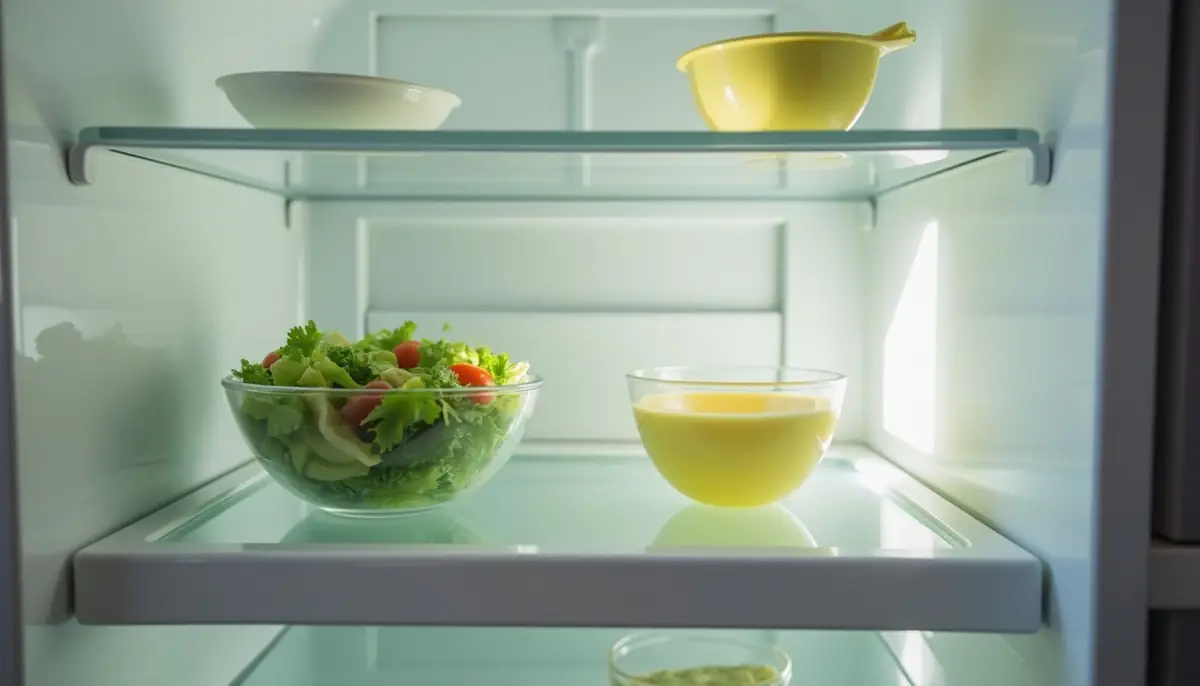
Myth: fruit flies can live in the fridge
They cannot live there in any useful sense. A fly needs to move, feed and lay eggs, and cold stops all three. Insects lose coordination and then become fully paralysed as they cool, a state physiologists call chill coma. In Ransberry and colleagues’ 2011 study at the University of Western Ontario, the temperature at which adult D. melanogaster entered chill coma ranged from 8.8°C (48°F) down to minus 4.2°C (24°F) depending on rearing and acclimation. Carleton University researchers describe the sequence: movement becomes uncoordinated first, then complete paralysis follows. A fly that has spent days in a cold fridge is usually at or near that point.
Breeding is ruled out by a second limit. A 2015 study by Schou, Loeschcke and Kristensen notes that D. melanogaster can complete development from egg to adult at mean temperatures down to approximately 10°C (50°F). A fridge is about 10°F colder than that, so no generation can be completed on the shelf.
How long can a fruit fly survive in a refrigerator?
Usually a few days. Chen and Walker, in a 1994 study in the Journal of Insect Physiology, measured the time it took to kill half of a group of adult fruit flies: 6.3 days at 4°C (39°F) and 37.91 hours at 0°C (32°F). At minus 7°C (19°F), half were dead in about 1.5 hours.
Strains vary: in 2021, Davis, Cheslock and MacMillan at Carleton University held French and Egyptian lines at 4°C for up to four days, and the French lines recovered better. Humidity matters too: Kobey and Montooth (2013) found that drier air during cold exposure lowered survival near 6°C, because flies dehydrate. A fly trapped in a dry fridge compartment is likely to die sooner than one sitting on damp fruit.
A fly that looks dead may not be. Davis and colleagues scored survival 24 hours after the flies were returned to 25°C, because chilled flies often recover once warm. In Ransberry’s study, flies took 12.1 to 55.1 minutes to recover from chill coma, so a stunned fly carried out on a bowl of fruit can walk off again, and our guide to how long flies live at different temperatures covers what they do next.
Can fruit fly eggs survive in the fridge?
Often, yes, at least for short spells. Czajka and Lee (1990) at Miami University chilled larvae at 5°C (41°F) before giving them 2 hours at minus 5°C: none of the unchilled larvae survived the shock, but 63 per cent of the chilled ones went on to form pupae. Koštál and colleagues (2011) found that larvae acclimated to cool temperatures took 86.7 hours at 0°C to reach 50 per cent mortality, against 0.137 hours for larvae kept at 25°C.
The practical point: eggs laid on a peach before it went into the fridge are not reliably killed by a few days of chilling. Development pauses and can resume when the fruit is left out to ripen. Penn State’s Stephen Jacobs gives the larvae about a week of feeding before they pupate, and adults emerge several days later, so flies appearing round a bowl of fruit a week after it came out of the fridge are a familiar result.
Why do I keep getting flies in my fridge?
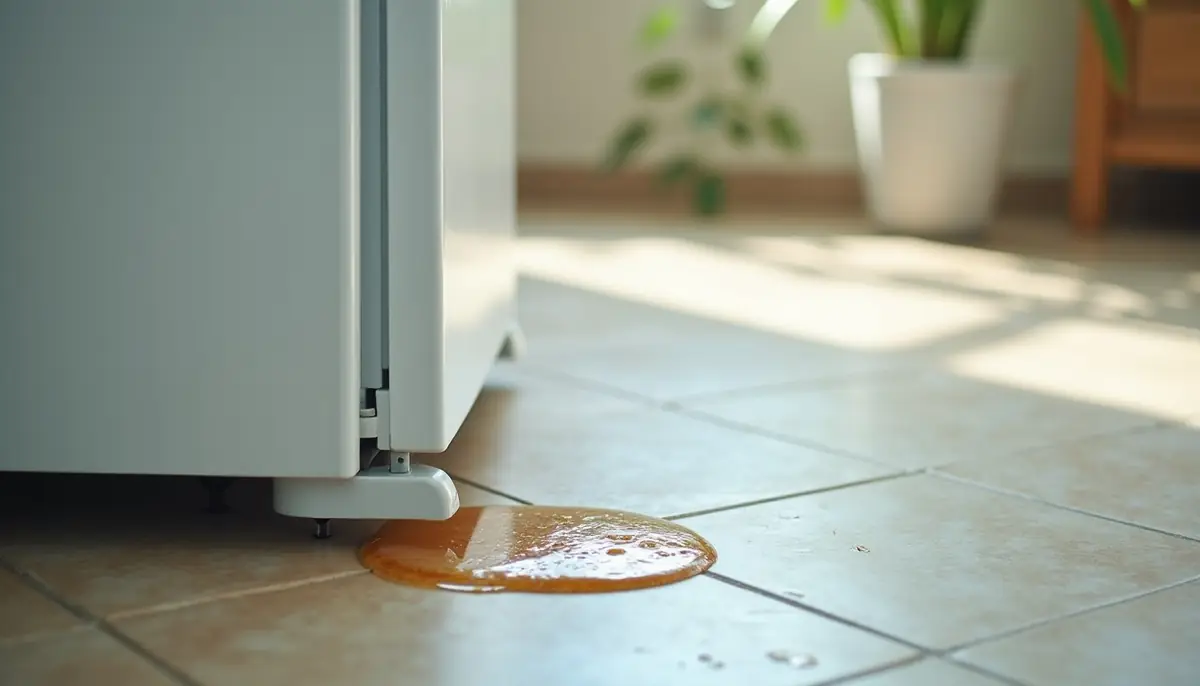
Because the breeding site is next to it, not in it. Adults slip in each time the door opens, drawn by the smell of fermenting food, then stall in the cold. The University of Kentucky’s ENTFACT-621 notes that fruit juice spillage under a refrigerator can breed thousands of fruit flies, and a Pacific Northwest extension guide for school kitchens tells staff to clean condensate lines and trays associated with refrigerators and icemakers.
Check these sources, in rough order of how often extension sheets name them:
- Ripe or damaged produce left on the counter, in a bowl or in a forgotten bag. Penn State names over-ripe tomatoes, bananas, potatoes and onions, and our guide to what attracts gnats and fruit flies indoors explains the pull of fermenting fruit.
- Recycling: Penn State notes that liquid left in beer cans held for recycling can support larvae.
- The drip pan and floor under the fridge, where spilled juice collects.
- Drains with a gelatinous scum, garbage disposals, wet mops and cleaning rags (Kentucky and Penn State). Our page on bugs in the kitchen sink and cabinets at night covers the drain checks.
Fruit flies are 3 to 4 mm long and most have reddish eyes, by Penn State’s description. If yours are darker, hump-backed or run instead of fly, they may not be fruit flies at all; the side-by-side in our comparison of fruit flies, drain flies and fungus gnats separates them by shape and source.
Fruit flies in the fridge with no fruit
A fridge with no fruit can still hold the yeast and sugar that Penn State says larvae feed on: an open jar of jam, a forgotten bottle of juice, a sticky spill in the salad drawer, a bag of potatoes going soft. Check every container, then look under and behind the fridge. When nothing turns up anywhere in the kitchen, our page on small flying bugs in the house and how to tell them apart walks through the other small flies, including phorid flies, which breed in drains and decaying matter.
Dead fruit flies in the fridge and freezer
Dead flies on a shelf wandered in, went into chill coma and stayed too long. The freezer is quicker. Czajka and Lee recorded a supercooling point of minus 20°C for adult D. melanogaster, yet the flies did not survive 2 hours at minus 5°C; cold injury kills them long before their bodies freeze. A freezer at 0°F (minus 18°C) is far below either figure, so a fruit fly in the freezer will not come back.
What to do if you have fruit flies in your fridge?
- Empty and wipe the fridge, especially door seals, the salad drawer and the bottom shelf.
- Throw out any soft, leaking or fermenting produce and any open sugary drink. If small moths or beetles turn up in dry goods instead, our guide to pantry pests that chew into sealed packets covers them.
- Pull the fridge out and clean the floor and drip tray, as the Pacific Northwest extension guide advises.
- Rinse bottles and cans before they go in the recycling, as Penn State advises.
- Store ripe fruit in the fridge until you eat it. Kentucky’s advice is that produce which has ripened should be eaten, discarded or refrigerated.
Spraying will not solve it: Penn State notes that larvae keep developing and new adults emerge unless the food source is removed. If flies return after a week of clean-up, look for an outside cause too; our explainer on why flies appear in the house all of a sudden covers the three usual triggers.
When fruit flies peak: our data
The fridge question is a late summer and autumn problem. In The Pest Control Brief’s analysis of US iNaturalist research-grade records, the common fruit fly’s share of all records runs at 12 to 21 per cent of its yearly average from March to June, then climbs to 192 in September, 268 in October and 251 in November.
That matches Penn State’s note that vinegar flies are most abundant in late summer, when tomatoes, apples and other fruit ripen and ferment. Drain flies rise less sharply, from 60 in April to 156 in October. Fruit flies that seem to vanish in winter have not moved into the fridge; our page on where flies go in winter explains where they and other flies spend the cold months.
Frequently asked questions
Can I put bananas in the fridge to avoid fruit flies?
Yes. Refrigerating ripe produce is standard extension advice: Penn State says to store fruits and vegetables in a refrigerator, and the University of Kentucky says ripened produce should be eaten, discarded or refrigerated. Cold stops adults from feeding and laying eggs on it. Eggs already on the banana can pause and develop later, so eat chilled fruit soon after it comes out.
Can fruit flies get in the fridge?
Yes, whenever the door is open. Fruit flies are about 3 to 4 mm long, by Penn State’s measurement, and slip in easily. Once inside, the cold slows and then stops them, which is why they are usually found motionless or dead. They do not breed in a fridge at 40°F (4°C) or below, the setting FDA recommends.
Do fruit flies die in the fridge?
Eventually. In Chen and Walker’s 1994 study, half of the adult fruit flies held at 4°C (39°F) were dead after 6.3 days, and at 0°C (32°F) half were dead after about 38 hours. Shorter spells only stun them; chilled flies often recover once they warm up.
Can house flies live in the fridge?
A house fly can be stunned by fridge cold in the same way, but a fridge offers no breeding site. The Pacific Northwest extension guide lists keeping food refrigerated or in airtight containers among the ways to deny kitchen flies somewhere to breed, so a large fly in the fridge usually came in when the door was open.
Should I report fruit flies in a restaurant fridge?
Yes. Our analysis of how often flies turn up in restaurant inspections shows they outnumber rats in violation records. The Pacific Northwest extension guide PNW 769 tells school kitchen staff to report flies to the facilities manager immediately, because some species reproduce quickly.
Sources
- Chen CP, Walker VK. Cold-shock and chilling tolerance in Drosophila. Journal of Insect Physiology 40(8): 661 to 669, 1994.
- Czajka MC, Lee RE Jr. A rapid cold-hardening response protecting against cold shock injury in Drosophila melanogaster. Journal of Experimental Biology 148: 245 to 254, 1990.
- Ransberry VE, MacMillan HA, Sinclair BJ. The relationship between chill-coma onset and recovery at the extremes of the thermal window of Drosophila melanogaster. Physiological and Biochemical Zoology 84(6): 553 to 559, 2011.
- Davis HE, Cheslock A, MacMillan HA. Chill coma onset and recovery fail to reveal true variation in thermal performance among populations of Drosophila melanogaster. Scientific Reports 11: 10876, 2021.
- Kobey RL, Montooth KL. Mortality from desiccation contributes to a genotype-temperature interaction for cold survival in Drosophila melanogaster. Journal of Experimental Biology, 2013.
- Koštál V and colleagues. Long-term cold acclimation extends survival time at 0°C and modifies the metabolomic profiles of the larvae of the fruit fly Drosophila melanogaster. PLOS ONE, 2011.
- Schou MF, Loeschcke V, Kristensen TN. Strong costs and benefits of winter acclimatization in Drosophila melanogaster. PLOS ONE, 2015.
- Jacobs SB. Vinegar Flies. Penn State Extension Entomological Notes HP-20, revised January 2010.
- Potter MF. Fruit Flies. University of Kentucky Entomology ENTFACT-621.
- Stock T, Gouge DH. Flies in School Kitchens. Pacific Northwest Extension Publication PNW 769, 2022.
- US Food and Drug Administration. Refrigerator Thermometers: Cold Facts about Food Safety.
- The Pest Control Brief analysis of iNaturalist research-grade records, pulled October 2026 (b19 to b30 files).