Found One Termite in Your House: What a Single Swarmer Means
One winged termite indoors usually means a colony is in or under the building, although a lone swarmer can drift in from outside, so book an inspection rather than a treatment. It is not an emergency: swarmers cannot damage wood and live about a day. Bag the insect, check for wings and mud tubes, and do not spray. A pale, wingless worker tells a different story, set out in the table below.
| What you found | What it usually means | Your next step |
|---|---|---|
| One winged insect by a door or window that had been open, on a day termites were flying outside | Possibly a stray: Clemson says a few may come indoors incidentally when termites fly outdoors | Bag it, check the sills and foundation, book an inspection if it is a termite |
| One or more swarmers with windows and doors shut | Probably emerged inside: Kentucky says winged termites indoors almost always indicate infestation | Book an inspection; get two or three if there is no contract |
| A small pile of wings on a sill or in a cobweb, all the same length | A flight has already happened; swarmers shed their wings shortly after swarming | Tape or bag the wings, note the window, book an inspection |
| Several insects circling a lamp after dark, late May or early June | Possibly Formosan termites, which fly at night towards lights | Count them: Mississippi State sets its line at more than a dozen or so |
| One pale, wingless, soft insect on a floor or on wood you just moved | A worker from a tube or wood that was opened: Penn State says workers are seldom seen otherwise | Look at what was just disturbed; keep the insect and the wood |
| Termites in firewood you carried in | Purdue says they will not infest structural wood | Do not spray the wood; if the pile sits close to the house, Purdue says an inspection may be warranted |
| Swarmers over a stump or in the yard | Not an indication the house is infested, says NC State | Lift wood off the soil; NC State suggests an inspection if the house has gone 8 to 10 years without one |
| Swarmers next to the foundation or an abutting patio | Kentucky: a good chance the home is infested as well | Book an inspection |
Is it a termite at all? The one-look check
Look at the wings first. All four termite wings are the same length and shape, while the front pair of an ant’s wings are larger than the rear pair (NC State). On an intact body, check the waist: broad on a termite, pinched on an ant. Our full comparison is in termites vs flying ants, and what termites look like covers workers and soldiers, which have no wings to check.

What seven extension services say about a swarmer indoors
Most results for this query state one answer with confidence. The extension literature is less uniform, so we set the wording side by side.
| Source | Swarmers indoors | Small numbers or outdoors |
|---|---|---|
| University of Kentucky, ENTFACT-604 | “almost always indicates an infestation warranting treatment” | Yard swarms from stumps and woodpiles “do not automatically mean the house is infested” |
| Penn State Extension | Swarming termites or their wings alone are “a sure sign” | Not addressed |
| Mississippi State Extension | “a clear indication the building is infested” | Exception in high Formosan areas: low numbers can enter treated buildings; more than a dozen or so probably means infested |
| Texas A&M AgriLife, native termites | “usually indicate an active infestation” | Outdoor swarmers “indicate that termites are present” |
| NC State Extension | “usually means that you have an infestation”; separately, swarmers “may not always mean an active infestation” | Near stumps and timbers: “not an indication that your house is infested” |
| Clemson HGIC | Large numbers or wings indoors “often do indicate a structural infestation” | “even a few termites found in a house does not mean there is a structural infestation” |
| UC IPM, Pest Notes 7415 | Lists swarms among the signs of infestation | Swarming in your yard “doesn’t necessarily mean your house has termites” |
Compiled by The Pest Control Brief from the named extension documents, read November 2026.
No document we read addresses exactly one insect. The nearest are Clemson’s “a few” and Mississippi State’s dozen or so, the second of which applies to Formosan areas. A fair summary: one swarmer does not prove an infestation, and none of the seven lets you rule one out from the insect alone. NC State’s instruction is to let a professional make that call.
What to do if you find one termite in your house
- Keep the evidence. Press clear tape over the insect or wings, or use a sealed bag. NC State advises collecting insects or wings for identification. A county extension office may also identify it.
- Write down the room, the window and the date. The date helps with species: see the next table and our termite swarm season calendar.
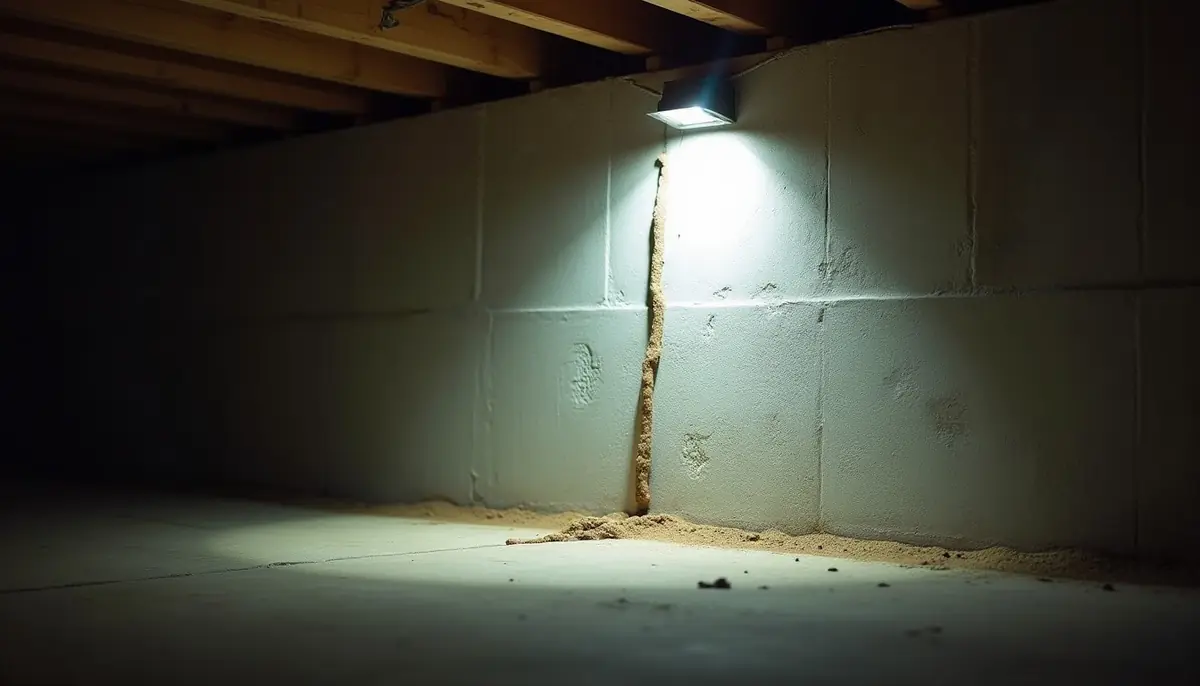
- Check around that spot. Penn State lists cellar walls, wooden posts, wall studs, mudsills, and door and window trim as places to look for earth-coloured tubes. UC IPM calls these tubes the most commonly seen evidence of subterranean termites.
- Look for pellets on horizontal surfaces below wood. Drywood termites push pellets out of kickout holes under 2 mm across, and they gather on the surface beneath (UC IPM). Sweep them up and look again a few days later, the activity check UC IPM describes.
- Vacuum or sweep any others, and skip the spray. Kentucky says a broom or vacuum is enough. NC State says spraying swarmers may kill what you see but does not stop the infestation.
- Call the firm first if you hold a termite contract. NC State notes retreatment under a renewal contract is often free or heavily reduced; our guide to the termite bond covers the terms.
Which termite was it? Size, hour and month
| Type | Swarmer length | When it flies | Other clue | Peak month in our records |
|---|---|---|---|---|
| Native subterranean (Reticulitermes) | 1/4 to 3/8 in, about 6 to 10 mm (Texas A&M); NC State gives 8 to 10 mm for the eastern species, wings included | Daytime, warm days after rain | Mud tubes; dark brown to black body | April: 661 of 2,335 records, index 195 |
| Formosan | 12 to 15 mm, 0.5 to 0.6 in (Texas A&M) | Night, late May and early June, towards lights | Yellowish-brown; aerial nests behind wall coverings | May: 519 of 760 records, index 745 |
| Drywood (Incisitermes) | 7/16 in for I. snyderi, 9/16 in for I. minor (Texas A&M), about 11 and 14 mm | I. minor by day in summer and autumn; I. snyderi at night | Pellets about 1/32 in long; six-sided in UC IPM’s description | September: 530 of 1,379 records, index 390 |
Compiled by The Pest Control Brief from Texas A&M AgriLife, NC State and UC IPM. Peak month: The Pest Control Brief analysis of iNaturalist research-grade records, pulled October 2026. These show when people photographed and identified these termites, not infestation rates. Index: share of all records that month, yearly mean 100.
Mississippi State says subterranean swarmers trapped indoors die of desiccation, and names drywood termites as the exception. In drywood country, Texas A&M calls a swarmer found within a structure “almost a sure sign” the termites are in the timbers.
Why one swarmer is not an emergency
Winged termites do no damage: Penn State says so directly, and NC State says structural damage is done by the workers. Kentucky gives swarmers indoors about a day to live. And colonies are slow: NC State puts maturity and first swarmers at 3 to 5 years in its monitoring guide, and up to a decade in its biology guide, while Mississippi State says five years or more.
If the swarmer did come from your structure, Mississippi State says the building has been infested for several years, so a few days of comparing firms changes little. Kentucky says the damage from taking “an additional day, week, or month” to decide “generally is inconsequential”. NC State advises contacting firms as soon as possible and treating quickly once an infestation is confirmed. Both fit: call now, sign later.

Getting rid of a termite, a swarm or a colony
A single termite or a swarm goes in the vacuum. A colony is a separate job, and UC IPM says do-it-yourself termite pesticides are generally not effective. Kentucky explains why: a typical treatment can involve hundreds of gallons of liquid termiticide placed along foundations and beneath slabs, using drills and injection rods.
Professional options for subterranean termites are a soil-applied liquid or a bait system (Kentucky, NC State), priced in our termite treatment cost guide. Drywood colonies, usually under 1,000 insects (UC IPM), may be spot treated or, when widespread, fumigated. There is usually no nest or mound to dig up: UC IPM says native subterranean termites live and breed in soil, sometimes many feet down. Our page on what a termite nest looks like explains the Formosan exception.
UC IPM says homeowners can replace damaged wood and correct the conditions that invite termites themselves, and Penn State advises keeping wood 18 inches above soil where possible.
Questions to ask the inspector
- What species is it, and what did you see that says so? UC IPM says correct management depends on termite type.
- Can you show me the active spot? Kentucky suggests inspections from more than one firm partly to verify the infestation exists.
- Is this a free look or a formal report? Texas A&M says inspections are often free unless you need a formal report for a sale. See termite inspection cost.
- Why this product, and how long have you used it? Both come from Texas A&M’s ENT-2002.
- Who holds the licence, and what does the warranty cover? Kentucky says firms should be licensed by the state regulator; Texas A&M says to compare warranties carefully.
Kentucky’s rule: avoid firms that press you to sign immediately with specials or scare tactics.
Frequently asked questions
What to do if you find one termite in your house?
Keep it on tape or in a sealed bag, note the room and date, then check nearby sills for wings and foundations or trim for mud tubes. Do not spray: NC State says that does not stop an infestation. Call your contract holder if you have one; otherwise request inspections from two or three licensed firms.
Is finding one termite bad?
It is a warning, not a verdict. Clemson says even a few termites in a house do not mean a structural infestation, while Kentucky says winged termites indoors almost always do. One insect does no harm by itself, since swarmers cannot damage wood. It justifies an inspection, usually not same-day treatment.
Does seeing one termite mean infestation?
Not by itself. Extension sources tie infestation to swarmers emerging indoors, wings on sills, mud tubes and damaged wood, and NC State says swarmers may not always mean an active infestation. A second sign makes infestation more likely. A professional inspection is what settles it, and Texas A&M notes these are often free.
What does one termite swarmer in the house mean?
Most likely a colony in or under the building has reached flying age, which takes at least 3 to 5 years according to NC State. Less often it strayed in: Clemson notes a few can come indoors incidentally when termites fly outside. In high Formosan areas, Mississippi State says low numbers can get into treated buildings.
Sources
- University of Kentucky Entomology, ENTFACT-604, Termite Control: Answers for Homeowners.
- Penn State Extension, Eastern Subterranean Termites.
- Mississippi State University Extension, Bug’s Eye View, Eastern Subterranean Termite Swarmers, Vol. 5 No. 3, 2019; and Termite Facts.
- NC State Extension, Termite Swarmers: What Do They Mean for You? (Crawley and Hayes, 2023); Monitoring and Management of Eastern Subterranean Termites; Biology and Behavior of Eastern Subterranean Termites; and NC State Entomology, April Showers Bring May Flowers… and Termites, 2018.
- Texas A&M AgriLife, Urban and Structural Entomology Program, Native Subterranean Termites, Formosan Subterranean Termites and Drywood Termites; Insects in the City, ENT-2002, Frequently Asked Questions About Subterranean Termite Control.
- Clemson Cooperative Extension, Home and Garden Information Center, Termites.
- University of California Statewide IPM Program, Pest Notes: Termites (Publication 7415) and Drywood Termites (Publication 7440).
- Purdue Extension, E-67, Insects in Firewood.
- The Pest Control Brief analysis of iNaturalist research-grade records, pulled October 2026.