Thrips: How to Identify Them and Stop the Damage
Thrips are slender, fringe-winged insects about 1 to 2 mm long (roughly a sixteenth of an inch) that puncture leaves and petals and suck out the cell contents, leaving silvery stippling and tiny black specks of frass. You can see them with the naked eye as moving slivers, especially if you tap a flower or leaf over white paper. They reach homes on new plants, on wind and on clothing. Most garden infestations are cosmetic, but western flower thrips spread tomato spotted wilt virus, and their hidden eggs and soil-dwelling pupae are why one spray rarely ends the problem.
Thrips is both singular and plural, and the order holds about 5,500 species worldwide, including some useful predators. Below: how to confirm them, how to tell their damage from spider mites and aphids, why they return after spraying, and what extension entomologists recommend.
How do I know if I have thrips?
Look for two signs together: pale, silvery flecks or streaks on leaves or petals, and small dark, varnish-like spots of frass glued to the surface near the damage. UC IPM calls the frass “black varnishlike flecks.” Check young leaves, leaf margins, the main vein, flower buds and the crevices where leaf stalks join the stem.
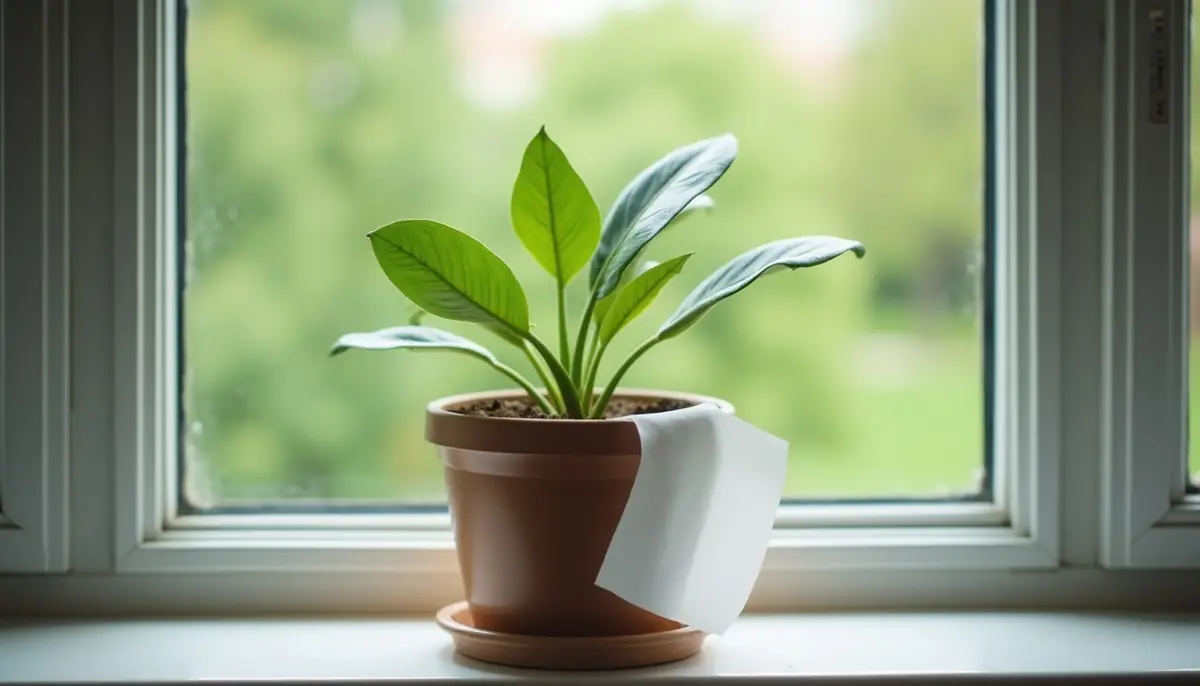
To confirm, hold white paper or a light-coloured card under a flower or shoot tip and tap it sharply. Thrips land as tiny, cigar-shaped slivers that run or jump. Adults are yellow, brown or glossy black depending on species; the young are wingless and near-white or yellow.
| Clue | Thrips | Spider mites | Aphids |
|---|---|---|---|
| Size | 1 to 2 mm, rice-grain shape | 0.4 to 0.5 mm, round, 8 legs | 2 to 4 mm, pear-shaped |
| Leaf marks | Silvery streaks and stippling, often papery patches | Fine pale dots, later bronzing | Curled, puckered or yellowing leaves |
| Residue | Black varnish-like frass specks | Fine silk webbing | Sticky honeydew, black sooty mould, often ants |
| Where they sit | Young leaves, buds, flowers, leaf folds | Mostly leaf undersides | Many species on leaf undersides, in colonies |
| On the white-paper tap test | Slivers that run or jump | Specks that move rapidly | Larger, soft-bodied, slower |
| Favoured by | Dry plants, excess nitrogen | Hot, dusty, water-stressed plants | High nitrogen fertiliser |
Table compiled by The Pest Control Brief from UC IPM Pest Notes 7429 (thrips), 7405 (spider mites) and 7404 (aphids), University of Maryland Extension and University of Georgia Extension.
Can you see thrips?
Yes, but only just. Extension sources put most adults at 1 to 2 mm, and UC IPM says most are under a twentieth of an inch. The narrow, fringed wings lie flat over the back, so a thrips can look wingless without a hand lens. Western flower thrips eggs, about 0.55 by 0.25 mm according to UF/IFAS, sit inside plant tissue and are effectively invisible.
The Cuban laurel thrips on ficus is one of the large ones, at 2.6 to 3.6 mm in the UF/IFAS profile. One widely read garden page gives thrips as a fifth of an inch, about 5 mm, which is larger than any common pest species in the extension sources we checked; an insect that big is probably something else.
Baby thrips and black thrips
The young (larvae or nymphs) look like small, pale, wingless adults, cream to yellow, and feed in the same places as the adults. Black thrips are not one species: Cuban laurel thrips adults are dark yellowish-brown to black, and western flower thrips has dark, light and intermediate colour forms. UC IPM notes colour alone does not identify a species.
What can be mistaken for thrips?
University of Maryland Extension lists the usual look-alikes. Springtails taper less, have thicker antennae and stay in damp soil rather than on flowers (see springtails). Booklice cannot jump or fly. Young armoured scales are rice-shaped but stop moving once settled. Whitefly adults have obvious white wings. Minute pirate bugs are wider and larger, and they eat thrips.
Spider mite stippling looks very like thrips stippling, which is why the table above leans on residue: webbing means mites, black frass means thrips. Our guide to houseplant pests covers spider mites, fungus gnats and mealybugs in more detail.
What is the difference between aphids and thrips?
Aphids are soft, pear-shaped insects 2 to 4 mm long with a pair of tube-like cornicles at the rear, and they live in visible clusters that produce sticky honeydew, often with ants in attendance. Thrips are half the size or less, slender and quick, hide in buds and folds, and leave dry black frass instead of honeydew. A strong spray of water knocks aphids off sturdy plants, UC IPM notes; for that pest, see how to get rid of aphids.
How do you get thrips?
Most indoor infestations arrive on a plant. Missouri Botanical Garden advises isolating newly bought plants for 2 to 3 weeks and warns that bringing garden plants indoors in autumn is another common route in. Outdoors and in greenhouses, adults are weak fliers but are carried long distances on wind currents, and Cornell notes they also ride in on clothing and through doors and vents. Female thrips can also reproduce without mating, which University of Maryland Extension gives as one reason numbers rise so quickly.
Commonly attacked indoor plants, per UMD, include African violets, Tradescantia, aroids such as Philodendron and Anthurium (Monstera is in the same family), orchids, poinsettia, ficus, palms and herbs.
Why one spray rarely works: the life cycle
The reason thrips are hard to control is the life cycle. The female cuts slits in leaves, petals or stems and inserts her eggs inside the tissue, where a contact spray cannot reach them. The two larval stages feed tucked into buds and folded leaves. Then, in most species, the mature larva drops into the soil or leaf litter for two non-feeding stages, the prepupa and pupa, so the next generation spends several days out of reach of anything sprayed on the leaves.
Cornell puts the western flower thrips cycle at 7.5 to 13 days at fluctuating temperatures; University of Maryland Extension gives about a month at around 60°F and two weeks or less at around 85°F.
UF/IFAS measured 10.2 days from egg to adult at 27°C (81°F), and about 6 of those days were spent as an egg inside the leaf or as a prepupa and pupa, the stages that in most species sit in the soil. That is why UC IPM, UMD and Missouri Botanical Garden all call for repeat applications, timed to catch larvae that hatch or adults that emerge after the first. Adults live 30 to 45 days and lay 150 to 300 eggs in Cornell’s account.
| Stage | Where it is | Feeds? | Reached by a leaf spray? | What reaches it |
|---|---|---|---|---|
| Egg | Inside leaf, petal or stem tissue | No | No | Removing infested shoots and flowers |
| Larva I and II | Buds, flowers, leaf folds | Yes | Only with thorough coverage of buds and tips | Soap, oil, neem, spinosad; predators |
| Prepupa and pupa | Soil or leaf litter in most species | No | No | Soil-dwelling predatory mites and nematodes in greenhouses |
| Adult | Flowers, shoot tips; flies between plants | Yes | Partly; adults fly off and back | Sticky cards, sprays, isolation |
Compiled by The Pest Control Brief from Cornell Cooperative Extension fact sheet 735.90, UF/IFAS EDIS ENY-883 and UC IPM Pest Notes 7429.
Thrips damage, and when it matters
UC IPM lists stippling and silvering, scabby brown scarring on fruit, leaves and petals, curled or galled shoot tips, papery distorted leaves, early leaf drop and petal colour breaks. UMD adds bud blast and pitted peppers.
The important distinction is between woody plants and soft ones. “Healthy woody plants usually tolerate thrips,” UC IPM says, and thrips rarely threaten the survival of trees and shrubs. Young vegetables and herbaceous ornamentals are far more vulnerable.
The virus problem
Western flower thrips transmits tomato spotted wilt virus (TSWV), impatiens necrotic spot virus (INSV) and other tospoviruses, according to UF/IFAS and UC IPM. Cornell’s fact sheet explains the unusual mechanism: the virus can be picked up only by larvae feeding on an infected plant, but it is spread almost entirely by the adults those larvae become, after a latent period of 3 to 10 days, and infective adults can keep transmitting for the rest of their lives. Insecticides often act too slowly to stop transmission, UC IPM warns, so with tomatoes, peppers and impatiens the defence is keeping thrips numbers low from the start and removing infected plants.
When thrips show up: what the iNaturalist records show
We analysed US iNaturalist research-grade records of thrips (order Thysanoptera). The sample is small, 1,583 records, but the pattern differs sharply from aphids.
As a share of everything people record, thrips are least visible in July (index 45) and most visible from October to January, peaking in December at 163. Aphids do the opposite, peaking in August at 207 and bottoming out in winter. The likeliest explanation is not that thrips breed more in winter: outdoor insects vanish from winter records, while thrips on houseplants and in greenhouses keep being found and photographed. In plain counts, records are highest in April (221) and September (208), the spring and autumn flushes outdoors.
The practical takeaway: check houseplants closely through winter, and garden flowers in spring and early autumn.
How do you get rid of thrips?
Extension entomologists advise an integrated pest management approach rather than a single product.
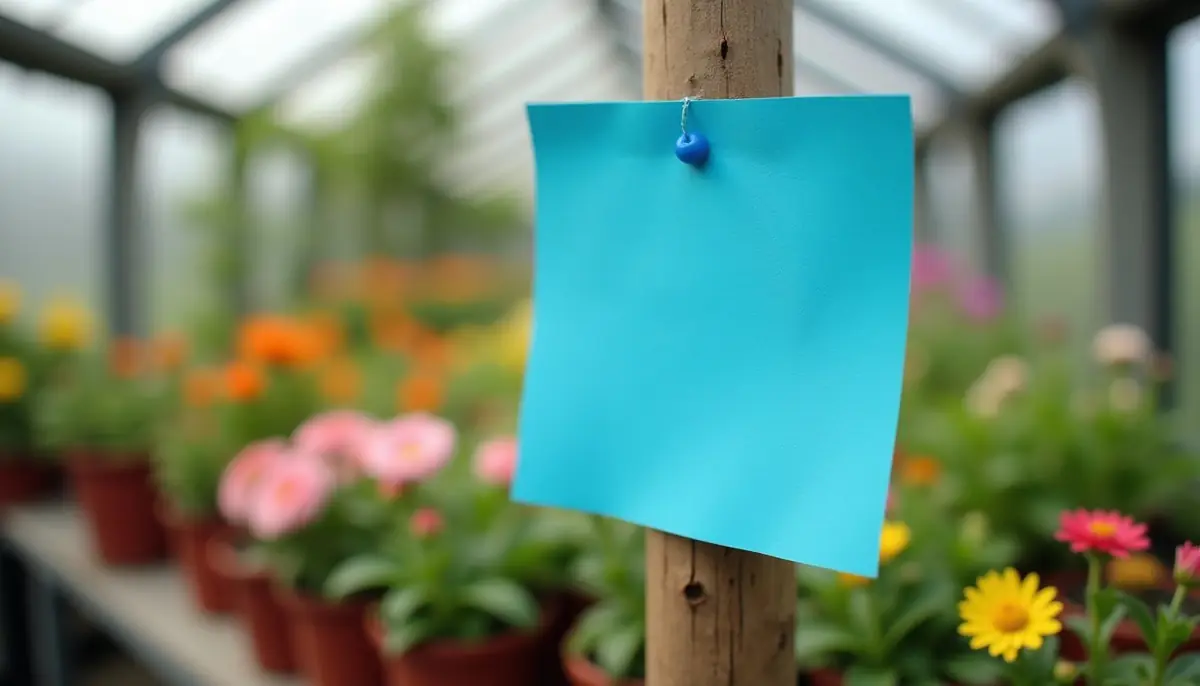
- Confirm and monitor. Use the white-paper tap test, and hang sticky cards just above the plants. UF/IFAS found blue cards caught more western flower thrips than yellow, though yellow also catches aphids, whiteflies and leafminers. UF/IFAS notes catches rarely reflect population size, so treat them as a presence check.
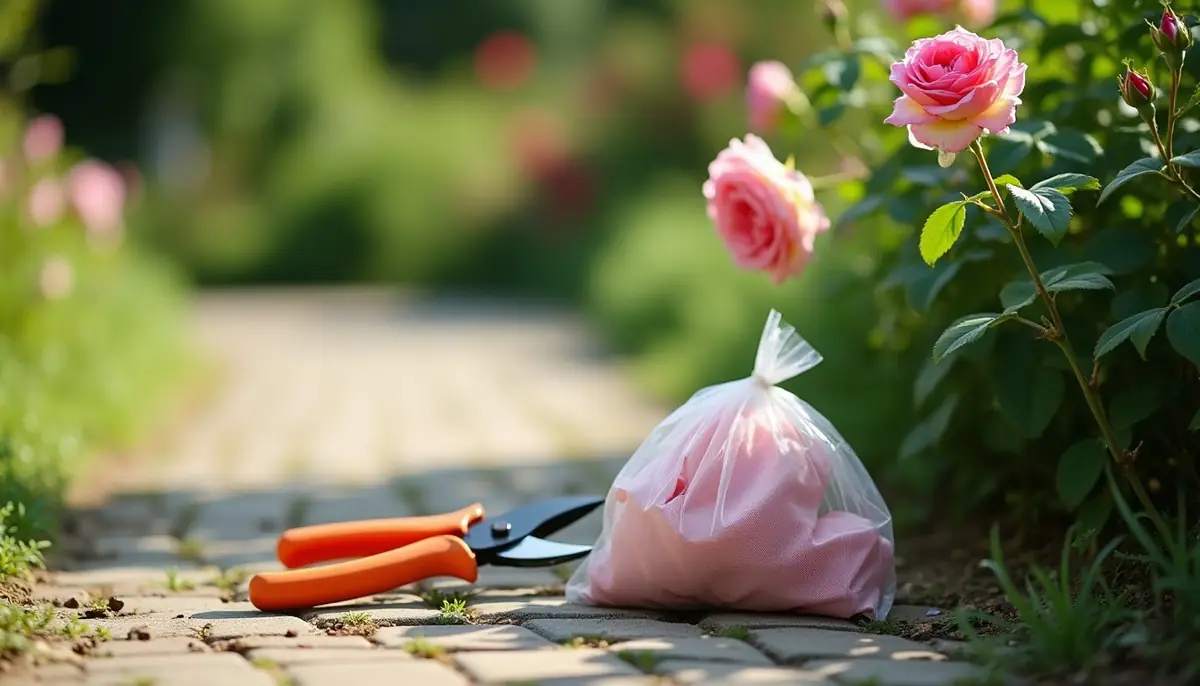
- Isolate and prune. Move an infested houseplant away from others. Cut off and bag heavily damaged shoots, buds and spent flowers, which removes eggs inside the tissue. UC IPM advises against shearing shrubs, which pushes out the soft growth thrips prefer.
- Fix the growing conditions. Missouri Botanical Garden notes that plants kept too dry are more likely to be damaged, and UC IPM advises keeping plants well irrigated without overwatering. Go easy on nitrogen fertiliser, which UC IPM, UMD and UF/IFAS all link to more thrips.
- Use a soft contact spray, more than once. Insecticidal soap, horticultural oil, neem oil and azadirachtin, and pyrethrins are the options UC IPM classes as compatible with integrated management. They work only on contact, so cover buds and shoot tips thoroughly and repeat as the label allows. Use a product labelled for the plant, not household detergent, which UMD warns against. Our guide to neem oil explains what the different neem products contain.
- Step up only if needed. UC IPM rates spinosad as generally more effective than the contact products, lasting a week or more and moving into leaf tissue, but it is toxic to bees for about a day after spraying, so keep it off plants in flower. It notes that imidacloprid “commonly fails to provide satisfactory thrips control,” and it advises avoiding broad-spectrum organophosphates, carbaryl and pyrethroids, which kill natural enemies, can trigger spider mite outbreaks and are not particularly effective on most thrips.
- Let predators work outdoors. Minute pirate bugs, lacewing larvae, predatory mites and predatory thrips all eat plant-feeding thrips. In Florida pepper fields, UF/IFAS reports suppression at about one minute pirate bug to 180 thrips and control at about one to 50. UC IPM cautions that buying and releasing predators rarely gives satisfactory control in home gardens; UMD lists predatory mites, pirate bugs and beneficial nematodes for indoor use.
Sprays cannot repair damaged leaves, so judge success by clean new growth. For a valuable collection or a greenhouse with recurring virus problems, a local extension office or licensed horticultural applicator is the sensible next call. Thrips are not a structural pest job; our guide to garden pest control explains why most exterminators will not treat food plants and what to do instead.
Are thrips harmful to humans?
Only as a nuisance. A 2005 Florida Entomologist review by Childers and colleagues records that adult and larval thrips can bite people, piercing the skin with their stylets, with reactions from slight irritation to an intensely itchy rash lasting several days, and states that such biting “does not result in any known disease transmission.” The Florida flower thrips was the species documented biting people in Florida from 1986 to 1997, mostly between February and April, and because it is strongly attracted to white and blue, people wearing those colours were more at risk. If a rash or itching is persistent or severe, see a doctor; our bite identification guide covers the more common causes of unexplained bites.
Frequently asked questions
How do you get rid of thrips?
Isolate the plant, prune off damaged buds and shoots to remove eggs, then spray insecticidal soap, horticultural oil, neem or pyrethrins with thorough coverage of buds and tips, repeating as the label allows, because eggs hidden in leaves and pupae in the soil survive the first spray. UC IPM rates spinosad as more effective but toxic to bees for about a day. Keep plants watered and avoid excess nitrogen.
Are thrips harmful to humans?
They can bite, but they are not dangerous. A 2005 Florida Entomologist review found thrips pierce skin with their mouthparts during swarms, causing anything from mild irritation to an itchy rash that can last several days, with no known disease transmission. Biting is most often reported in hot, sultry weather when large numbers land on bare skin. See a doctor about any rash that worsens or does not settle.
What can be mistaken for thrips?
University of Maryland Extension names springtails, booklice, young armoured scale insects, whiteflies and minute pirate bugs. Spider mite damage is the most common mix-up, because both produce pale stippling. Look for the residue: fine silk webbing points to spider mites, while black, varnish-like specks of frass point to thrips. A tap over white paper and a hand lens usually settle it.
What is the difference between aphids and thrips?
Aphids are 2 to 4 mm, soft and pear-shaped, with two tube-like cornicles at the rear, and sit in visible clusters that leave sticky honeydew and attract ants. Thrips are about 1 to 2 mm, slender and fast, hide in buds and folded leaves, and leave dry black frass. Aphids curl leaves; thrips leave silvery streaks and scarring.
Sources
- University of California Statewide IPM Program, Pest Notes: Thrips, UC ANR Publication 7429.
- University of California Statewide IPM Program, Pest Notes: Spider Mites (Publication 7405), Aphids (Publication 7404) and Fungus Gnats.
- University of Maryland Extension, Thrips in Home Gardens, 2025; Aphids in Home Gardens.
- Cluever, Smith, Funderburk and Frantz, Western Flower Thrips (Frankliniella occidentalis), UF/IFAS EDIS ENY-883 (IN1089), 2015, reviewed 2024.
- UF/IFAS EDIS IN599, Leaf-Gall Thrips of Ficus, Gynaikothrips ficorum and G. uzeli.
- Zitter, Daughtrey and Sanderson, Tomato Spotted Wilt Virus, Cornell Cooperative Extension fact sheet 735.90, 1989.
- Childers, Beshear, Frantz and Nelms, A Review of Thrips Species Biting Man Including Records in Florida and Georgia Between 1986 and 1997, Florida Entomologist 88(4): 447 to 451, 2005.
- University of Georgia Extension, Spider Mites fact sheet.
- Missouri Botanical Garden, Thrips: Indoors.
- The Pest Control Brief analysis of iNaturalist research-grade records, pulled October 2026.