What Professionals Use vs What You Can Buy
You can buy many professional products. The gap that decides outcomes is diagnosis, formulation and placement, not access to chemicals.
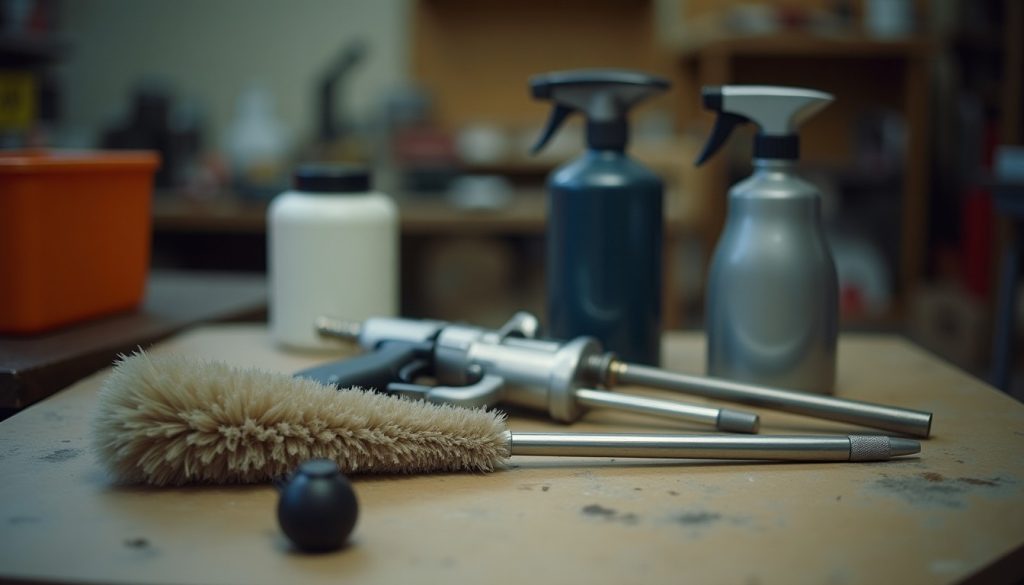
You can buy many professional-grade pest control products, and the ones you cannot are restricted use products requiring applicator certification. The gap that actually decides outcomes is not access to chemicals: it is diagnosis, formulation choice and placement. A homeowner with the same active ingredient and no idea where the harbourage is will get a different result.
Search demand for professional-grade products is high and the honest answer is uncomfortable for both sides. Retail is not as weak as professionals imply, and buying the product does not buy the outcome.
What you can and cannot buy
| Category | Available to you | Notes |
|---|---|---|
| General use liquids and aerosols | Yes | Widely sold, usually repellent formulations |
| Professional gel baits | Often yes | Sold through pest supply retailers |
| Insecticidal dusts | Often yes | Application equipment matters as much as product |
| Non-repellent liquid concentrates | Sometimes | Mixing accuracy becomes your responsibility |
| Restricted use products | No | Certified applicator or direct supervision only |
| Fumigants | No | Separate certification category entirely |
Restricted use classification is a legal access control, covered in our guide to restricted use pesticides. Everything else comes down to how it is used.
The three gaps that are not about chemistry
- Diagnosis. Identifying the species and locating harbourage happens before anything is applied and accounts for most of the outcome on hidden pests. Treating carpenter ants as termites means the right product applied to the wrong problem, covered in our guide to telling them apart.
- Formulation choice. Retail shelves lean heavily on repellent sprays. Repellency scatters cockroach and ant populations and interferes with baiting, which is why the most available product is often the wrong one. Our guide to what exterminators actually use covers the formulation types.
- Placement. Product in a wall void, hinge or gallery reaches the population. Product on a skirting board mostly reaches the floor. Dusters and bait guns exist because placement is the job.
Where buying the product genuinely works
There is a real set of situations where retail purchase resolves the problem, and it is worth naming rather than pretending everything needs a professional.
- Source-driven small flies. Removing the breeding site does the work; no product is strictly required. See fruit flies, drain flies and gnats.
- A few foraging ants from outside, where retail bait plus sealing and sanitation is often enough.
- Exclusion materials. Door sweeps, mesh, sealant and hardware cloth are the highest-value purchase in the whole category and need no licence. See pest-proofing your home.
- Snap traps for a small mouse problem, paired with sealing.
- Monitoring devices, including sticky cards, which tell you what you have before you spend anything.
Where it predictably does not
Consumer-grade sprays are reported to clear full bed bug infestations in under 20% of cases, and repeated under-dosed application selects for the most resistant individuals in a population before a professional ever sees it. Our guide to insecticide resistance covers the mechanisms.
Termites, established German cockroaches, rodents inside a structure and any wildlife fall in the same category for different reasons: continuous treated zones, harbourage in voids, legal protections. Our comparison of DIY against professional treatment sets out the two-attempt rule and what failure costs.
If you do buy professional products
- Read the label first, which is a legal document and specifies mixing rates, sites and re-entry intervals.
- Measure and mix accurately. Under-dosing drives resistance, over-dosing is a label violation.
- Buy the application equipment, because a duster and bait gun determine whether product reaches voids.
- Choose non-repellent over repellent for ants and cockroaches, or you will scatter the population.
- Wear the protective equipment the label specifies.
- Stop after two or three failed attempts, since further attempts make later professional treatment harder rather than cheaper.
Frequently asked questions
Can I buy the same products exterminators use?
Many of them, yes, through pest supply retailers, including professional gel baits and dusts. Restricted use products are the exception and require applicator certification or direct supervision. Fumigants require a separate certification category entirely and are not available to consumers.
Are professional pest control products stronger than retail?
Not primarily in active ingredient terms. The meaningful differences are formulation and placement: gels carried back to a colony, dusts persisting in dry voids, and non-repellent liquids insects do not detect and avoid. Retail shelves lean toward repellent sprays, which scatter populations rather than eliminating them.
What should I buy instead of insecticide?
Exclusion materials give the best return in the category and need no licence: door sweeps, metal mesh, sealant and hardware cloth. Mice need about a quarter inch and insects an eighth. Monitoring devices such as sticky cards are also worth buying first, since they tell you what you actually have.
Why does the same product work for a professional and not for me?
Three reasons, none of them a secret ingredient: correct species identification and locating harbourage before anything is applied, choosing a formulation suited to the pest rather than what is on the shelf, and placing product into voids and cracks rather than across open surfaces.
Sources
- 40 CFR Part 171, applicator certification categories and supervision. ecfr.gov
- Formulation, placement and DIY efficacy figures compiled from pest control industry sources, 2026.