Pest Control Equipment: What You Actually Need to Start
A lean start is $6,500 to $11,000. Termite tools take it to $25,000, a fitted rig to $65,000. Which tier you need, and what to buy last.
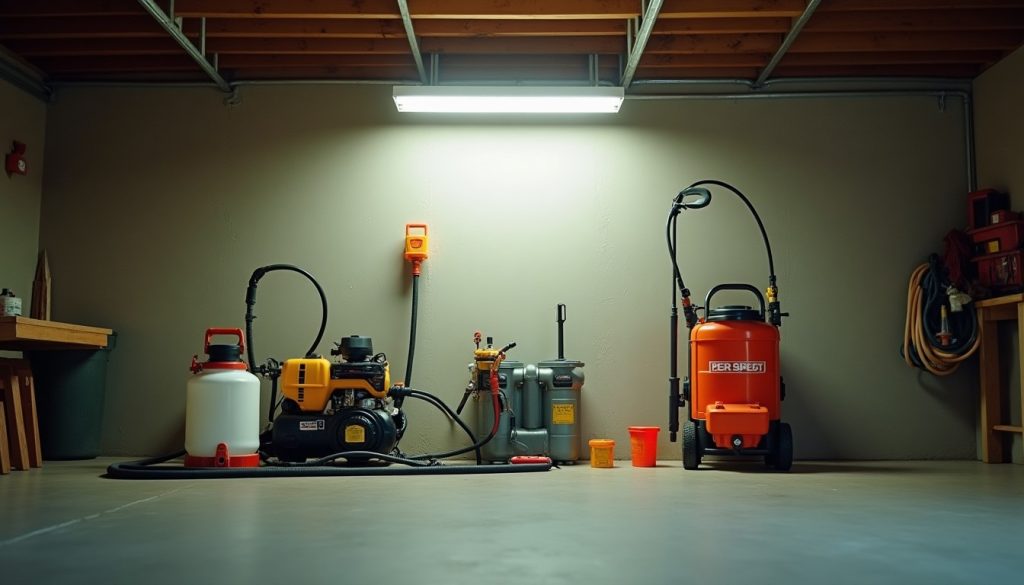
A lean pest control startup with basic equipment costs $6,500 to $11,000. Adding termite tools and a power sprayer takes it to $14,000 to $25,000, and a fully equipped new vehicle setup runs $35,000 to $65,000. The tier you need is decided by which applicator categories you hold and which services you intend to sell, not by ambition.
Equipment is the line item most often over-bought at startup. The three tiers below are genuinely different businesses, and buying into the wrong one ties up capital that should be funding route density.
The three equipment tiers
| Tier | Cost | What it lets you sell |
|---|---|---|
| Lean solo start | $6,500 to $11,000 | General pest, using a vehicle you already own |
| Plus termite tools and power sprayer | $14,000 to $25,000 | Termite work and larger commercial jobs |
| Fully equipped, new vehicle | $35,000 to $65,000 | Full service, purpose-fitted rig |
Contractor-reported ranges compiled in 2026. Our guide to starting a pest control business covers the wider startup picture including licensing and insurance.
What the lean tier actually contains
General pest work needs less than most new operators expect. The core is a compressed air sprayer, a duster, a bait gun and inspection equipment, plus safety gear and a starting chemical inventory.
- Compressed air sprayer. The workhorse for perimeter and interior application.
- Backpack sprayer, where you are covering larger exteriors or vegetation.
- Duster and foamer, for wall voids and cavities, which is where targeted placement happens.
- Bait applicator gun, essential for cockroach and ant work.
- Inspection kit: good torch, mirror, moisture meter, ladder.
- Safety equipment: respirator, gloves, eye protection, coveralls.
- Chemical inventory, typically $500 to $1,500 to start. Restricted use products require your certification number to purchase.
Placement equipment earns its keep disproportionately. A duster and foamer let you treat voids rather than surfaces, which is both more effective and lower exposure for the customer, and it is a defining feature of a genuine IPM approach rather than a calendar spray. Covered in our guide to what IPM actually changes.
When the termite tier is justified
The jump from roughly $11,000 to $25,000 is mostly termite equipment: a power sprayer capable of the volumes soil treatment requires, plus drilling and injection tooling.
Justify it on work you can actually sell. Termite treatment on an existing home runs $275 to $1,600 with whole-home jobs averaging around $1,500, and the recurring bond renewal at $200 to $400 a year is what makes the account valuable long term. Termite warranty accounts are also reported at $2,000 to $3,500 per account in route sales against $1,500 to $2,500 for residential general pest.
Two constraints before you commit the capital. Soil fumigation falls under applicator category (m) and non-soil fumigation under category (n), which are separate certifications from the structural category (g), covered in our guide to the federal licensing framework. And the liability profile differs, since termite bonds carry ongoing obligations, covered in termite bonds and warranties.
Why the top tier usually waits
A fully fitted new vehicle at $35,000 to $65,000 is a real business decision rather than an equipment one, and the timing question is route density rather than pride.
Each technician needs to generate roughly $139,825 of revenue a year, about $560 per working day, and payroll already consumes 36% of industry revenue. Capital tied up in a rig is capital not funding the customer acquisition that creates the density which makes the rig productive. Our guide to scaling from solo to a team covers why revenue per employee dips exactly at this transition.
The practical sequence most operators land on is: start lean with an existing vehicle, add termite capability when you have termite demand rather than in anticipation of it, and buy the fitted rig when route volume makes the day inefficient without it.
What to buy last
- Specialist equipment for services you cannot yet legally sell. Certification first, equipment second.
- Heat treatment equipment. Bed bug heat is capital intensive and often better subcontracted until volume justifies it.
- Vehicle wrapping and branding, which is marketing spend competing with lead acquisition at $25 to $150 per lead depending on channel. See how to get pest control customers.
- Duplicate equipment before a second technician exists to use it.
Frequently asked questions
How much does pest control equipment cost to start?
A lean solo setup runs $6,500 to $11,000 using a vehicle you already own. Adding termite tools and a power sprayer brings it to $14,000 to $25,000, and a fully equipped new vehicle setup costs $35,000 to $65,000. Chemical inventory alone is typically $500 to $1,500.
What equipment do I need to start a pest control business?
For general pest work: a compressed air sprayer, a backpack sprayer for larger exteriors, a duster and foamer for wall voids, a bait applicator gun, inspection equipment including torch, mirror, moisture meter and ladder, safety gear, and a starting chemical inventory. Restricted use products require your certification number to purchase.
Do I need termite equipment to start?
Not initially. Termite tooling accounts for most of the jump from about $11,000 to $25,000 and requires separate applicator certification, category (m) for soil fumigation and (n) for non-soil fumigation. Add it when you have termite demand rather than in anticipation, since the capital competes with customer acquisition.
When should I buy a dedicated pest control vehicle?
When route volume makes the day inefficient without it, not at startup. Each technician must generate roughly $139,825 a year, about $560 per working day, and capital in a $35,000 to $65,000 rig is capital not funding the route density that makes the rig productive in the first place.
Sources
- Startup equipment tier costs compiled from pest control business advisory sources, 2026. Sample sizes and methods are not published by those sources.
- U.S. Census Bureau, Statistics of U.S. Businesses 2022, NAICS 561710, revenue per employee and payroll share.
- 40 CFR 171.101, commercial applicator certification categories. ecfr.gov