How to Start a Pest Control Business in 2026
Startup costs run $6,000 to $20,000 and licensing takes 4 to 12 weeks. The licensing rules stated correctly, plus Census data on where to start.
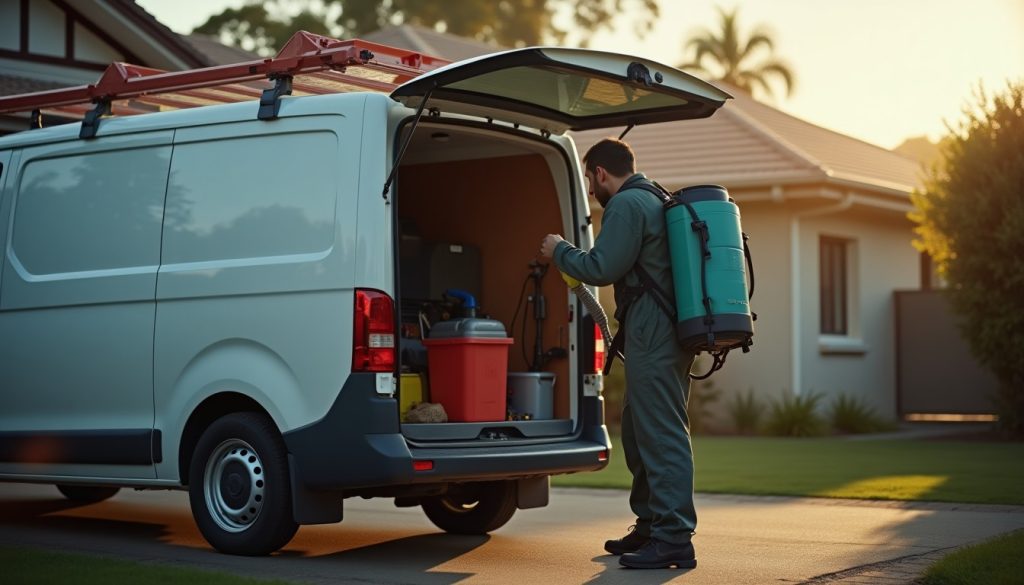
Starting a pest control business costs $6,000 to $20,000 in most states, and the licensing process takes 4 to 12 weeks. You need three things before you can legally treat a property: a state applicator certification in the structural category, a business licence, and liability insurance. The industry median technician wage is $45,250 and each employee generates about $139,825 of revenue a year, which sets the arithmetic your first hire has to clear.
Most guides to starting a pest control business are written by software vendors or lead sellers, and a striking number of them describe federal licensing rules that were replaced in 2017. This one is built on the current regulation and on Census data covering all 16,535 US pest control establishments, so you can see what the market you are entering actually looks like.
What it costs to start a pest control business
Startup costs cluster between $6,000 and $20,000 for a solo operator using an existing vehicle, rising with equipment quality and market entry spend. The largest recurring commitment is insurance, not equipment. Figures below are contractor-reported ranges compiled from small business advisory sources in 2026, and they vary substantially by state.
| Item | Typical cost | Notes |
|---|---|---|
| State applicator licence and exams | $200 to $500 | Core exam plus at least one category exam |
| Business licence and registration | $50 to $150 | Varies by state and municipality |
| General liability and commercial auto insurance | $3,000 to $4,000 per year | Usually the largest fixed cost in year one |
| Equipment, sprayers, safety gear | $2,000 to $6,000 | Excludes vehicle |
| Initial chemical inventory | $500 to $1,500 | Restricted use products require certification to purchase |
| Vehicle | Varies | A lean start uses a vehicle you already own |
| Total, lean solo start | $6,500 to $11,000 | Excludes vehicle purchase |
Reported break-even typically falls between 6 and 14 months. Treat that as a planning assumption rather than a forecast, since it depends heavily on how fast recurring accounts accumulate.
The licensing rules, stated correctly
Federal pesticide applicator certification is governed by 40 CFR Part 171. A large share of business startup guides state that the EPA defines 10 categories and that structural work is “Category 7”. That describes the pre-2017 rule. The current regulation defines 15 commercial applicator categories, lettered (a) through (o), and structural work is category (g).
| Requirement | Federal rule | What varies by state |
|---|---|---|
| Minimum age | 18 for a certified commercial applicator | Little variation |
| Category needed | (g) industrial, institutional and structural | State category names and numbering differ |
| Certification term | Expires 5 years after issuance | States may set a shorter term and many do |
| Recertification | By exam or approved continuing education | Required hours and eligible subjects |
| Supervised staff | Noncertified applicators may work under direct supervision, minimum age 18, or 16 under specific conditions | Supervision ratios and registration rules |
Add category (n) for whole-structure fumigation and (m) for soil fumigation. If you intend to sell lawn and ornamental work alongside pest control, category (c) usually applies. Our federal licensing framework guide covers each category and what it permits.
One distinction to get right early: the business licence and the applicator certification are separate. The company holds one, a person holds the other. In most states a company must employ or contract a certified applicator to operate, which is why the certification is the first thing to secure.
How to get licensed, in order
- Identify your state’s certifying agency. Usually the department of agriculture. It publishes the exam schedule, fee table and study materials.
- Book and pass the core exam. Also called general standards, covering label comprehension, safety, application equipment and environmental protection.
- Pass the structural category exam covering category (g) work, plus any additional categories you plan to sell.
- Register the business entity and obtain the state and municipal business licences.
- Bind insurance. Many states require proof of liability coverage, and sometimes a bond, before issuing the business pest control licence.
- Apply for the company pest control licence, naming your certified applicator.
- Set up restricted use pesticide purchasing, which requires your certification number and triggers recordkeeping duties.
Allow 4 to 12 weeks end to end. Exam scheduling is usually the bottleneck, since some states run sittings monthly rather than on demand.
Where to start a pest control business: what the market data says
Choosing a market is the decision with the longest consequences, and it is the one startup guides handle worst. Two variables matter: how many competitors already serve the population, and what labour costs there. They move in opposite directions.
| State | Establishments per 100,000 residents | Payroll per employee | Read |
|---|---|---|---|
| Florida | 9.85 | $48,640 | Deep demand, heaviest competition in the country |
| Arizona | 7.45 | $47,047 | Strong demand, crowded |
| Georgia | 6.47 | $53,729 | Strong demand, higher labour cost |
| Michigan | 2.55 | $60,142 | Thin competition, expensive labour |
| Minnesota | 1.80 | $64,117 | Thinnest market, highest labour cost |
Across the 50 states the correlation between market density and payroll per employee is -0.59. The densest markets are warm, humid and competitive, and they pay near the bottom. The thinnest markets are cold, seasonal and short of licensed applicators, and they pay the most. There is no market that is simultaneously easy to sell in and cheap to staff.
The practical consequence for a new entrant: in a dense southern market you are competing on service and route efficiency against established operators, and price competition is real. In a thin northern market you may face little competition but will pay up for every technician you hire, and demand is seasonal. Full figures for all 50 states are in our Market Density Index.
The economics you have to clear
Industry-wide, a pest control employee generates about $139,825 of revenue a year, and payroll consumes 36% of receipts. Those two numbers define whether your pricing works. If your first technician cannot approach that revenue figure, the business does not support the wage.
| Company size | Revenue per employee | Payroll share of revenue |
|---|---|---|
| Under 5 employees | $135,371 | 31.4% |
| 5 to 9 employees | $110,988 | 38.4% |
| 10 to 14 employees | $113,704 | 40.0% |
| 5,000 or more employees | $178,927 | 33.1% |
The pattern here is the most useful thing in this article for anyone planning growth. Revenue per employee falls when a solo operator becomes a small team, from $135,371 to $110,988, and payroll share jumps from 31.4% to 38.4%. The solo figure flatters because an owner-operator’s income is profit rather than payroll. Crossing from one person to five is where margin gets squeezed hardest, and it is where many new firms stall.
Route density is the mechanism that fixes it. The largest firms reach $178,927 per employee because their technicians spend more of the day treating and less of it driving. Building a tight geographic cluster of recurring accounts matters more to your margin than the headline price you charge. Our breakdown of where pest control revenue goes sets out the full size-class data.
Recurring revenue is the business model
One-off calls carry the entire drive time in a single visit. Recurring quarterly accounts spread that cost across a route. This is why quarterly plans price lower per visit and why they are worth more to a buyer if you ever sell.
The industry is overwhelmingly small: 8,882 of 13,603 US pest control firms, roughly 65%, employ fewer than five people. Competing against that field on price is difficult. Competing on route density, response time and technician retention is where a disciplined small operator can win.
Frequently asked questions
How much does it cost to start a pest control business?
Between $6,000 and $20,000 in most states, with a lean solo start using an existing vehicle landing around $6,500 to $11,000. Insurance is typically the largest fixed cost at $3,000 to $4,000 a year, ahead of equipment at $2,000 to $6,000 and licensing at $250 to $650. Costs vary considerably by state.
What licence do I need to start a pest control business?
Two separate things: a personal applicator certification in category (g), industrial, institutional and structural pest control, and a business pest control licence held by the company. Most states also require a general business registration and proof of liability insurance. Certification is obtained by passing a core exam plus the category exam.
Is a pest control business profitable?
It can be, and the mechanism is recurring revenue and route density rather than headline pricing. Industry payroll runs at 36% of receipts and revenue per employee averages $139,825. Reported break-even for new operators typically falls between 6 and 14 months, though this depends heavily on how quickly recurring accounts accumulate and varies by market.
How long does it take to get a pest control licence?
Generally 4 to 12 weeks from starting study to holding the licence. Exam scheduling is usually the constraint, since some state agencies hold sittings monthly rather than on demand. Federal rules cap certification at five years before recertification, and your state may set a shorter term.
Do I need experience before starting a pest control company?
States require passing competency examinations rather than documented prior experience, though some require a period of supervised work before independent certification. Working as a noncertified applicator under a certified applicator is a common entry route and is permitted federally from age 18, or 16 where specific conditions are met.
Which state is best to start a pest control business in?
There is no single answer, because demand and labour cost move inversely. Florida has the deepest demand at 9.85 establishments per 100,000 residents but the heaviest competition and low pay at $48,640 per employee. Minnesota has the thinnest competition at 1.80 but the highest labour cost at $64,117 and pronounced seasonality.
Sources
- 40 CFR 171.101, 171.103, 171.107 and 171.201, applicator certification categories, standards, recertification and supervision. ecfr.gov
- U.S. Census Bureau, County Business Patterns 2023, NAICS 561710, establishment counts and payroll by state.
- U.S. Census Bureau, Statistics of U.S. Businesses 2022, NAICS 561710, receipts and employment by enterprise size.
- U.S. Bureau of Labor Statistics, Occupational Employment and Wage Statistics, May 2025, SOC 37-2021.
- Startup cost ranges compiled from small business advisory sources, 2026. These are not government statistics and no sample method is published.