How to Check a Hotel Room for Bed Bugs in Five Minutes
To check a hotel room for bed bugs, park your luggage in the bathroom or on an inspected hard surface, then use a flashlight to look along the mattress seams and piping at the head of the bed, the gap behind the headboard, the box spring corners, the luggage rack and the nightstand. You are looking for live reddish-brown bugs about the size of an apple seed, dark spots of dried droppings, pale shed skins and tiny white eggs. It takes about five minutes. If you find anything, photograph it, tell the front desk and ask for a room in a different part of the hotel, not next door.
Bed bugs turn up in budget motels and, as the CDC puts it, in five-star hotels and resorts alike. Price is not protection; a quick, methodical look before you unpack is. This guide is the inspection itself, step by step, plus what to do if you find something and how to get home without bringing them with you. For how bed bugs move between rooms, buildings and suitcases in general, see our guide to how bed bugs spread.
The five-minute hotel room check
| Step | Where to look | What counts as a sign | Rough time |
|---|---|---|---|
| 1. Park the luggage | Bathroom floor or tiled area, or a luggage rack you have inspected; never the bed | Not applicable | Seconds |
| 2. Head of the bed | Pull back sheets and mattress pad at the pillow end; follow seams, piping and tufts | Live bugs, black spots, shed skins, eggs, rusty smears | About 2 minutes |
| 3. Headboard | Shine the light into the crack between headboard and wall | Black spotting on the wall or board edge, bugs in the gap | About 1 minute |
| 4. Box spring and frame | Lift a corner of the mattress; check the box spring corners and frame joints | Spots and skins packed into corners and staples | About 1 minute |
| 5. Rack, nightstand, chair | Luggage rack straps and joints, nightstand drawer edges, upholstered chair seams | Same signs as above | About 1 minute |
| 6. Decide | Clean: unpack. Anything suspicious: photograph and call the front desk | Not applicable | Seconds |
The University of Minnesota’s hotel guidance, written for the EPA-funded “Let’s Beat the Bug” campaign, starts with the mattress because it is the most common place for bed bugs, then the headboard, then the luggage rack, which it calls an often overlooked spot where bed bugs arrive on other travellers’ luggage. The University of Kentucky adds that in hotels the area behind the headboard is often the first place bed bugs become established. Penn State’s checklist for travellers is the same in short form: behind headboards, under sheets, and in mattress seams and tufts.
What you are looking for
Bed bugs are small, flat and quick, and the youngest stages are close to invisible. The EPA gives sizes for every stage: eggs about 1 mm, the first nymph stage about 1.5 mm, rising to 4.5 mm at the fifth stage, and adults 5 to 7 mm, which is three sixteenths to a quarter of an inch. Unfed nymphs, the EPA notes, can be nearly invisible to the naked eye, which is why the flashlight matters.
| Sign | What it looks like | Where it collects |
|---|---|---|
| Live adults | Flat, oval, reddish-brown, wingless, apple-seed sized | Seams, piping, behind the headboard |
| Nymphs | Smaller, translucent to whitish-yellow | Same places, often clustered with adults |
| Faecal spots | Dark spots of dried droppings | Mattress seams, headboard edges, wall behind the bed |
| Shed skins | Pale, tan, empty bug-shaped shells | Corners and folds |
| Eggs | Pearl-white, about 1 mm, the size of a pinhead | Crevices, wood joints, seams |
| Rusty smears | Reddish streaks on sheets or the mattress from crushed, fed bugs | Sheets and pillow end |
| Odour | Sweet, musty smell | Penn State says this marks a moderate to high level of infestation |
A few other small insects get mistaken for bed bugs, including carpet beetles and bat bugs. If what you find does not quite match, our guide to bugs that look like bed bugs and our full bed bug identification guide will help you sort it out from a photo.
Where to put your luggage: the sources disagree
This is the one step where reputable guidance genuinely splits.
| Source | Advice |
|---|---|
| US EPA | Inspect luggage racks, then use them rather than the bed or floor; keep luggage away from the bed |
| University of Minnesota | Keep the suitcase on the floor away from the bed, or in the bathroom; inspect the rack carefully because bed bugs are often found there |
| University of Kentucky | Keep luggage on a stand or hard surface, not the floor or another bed |
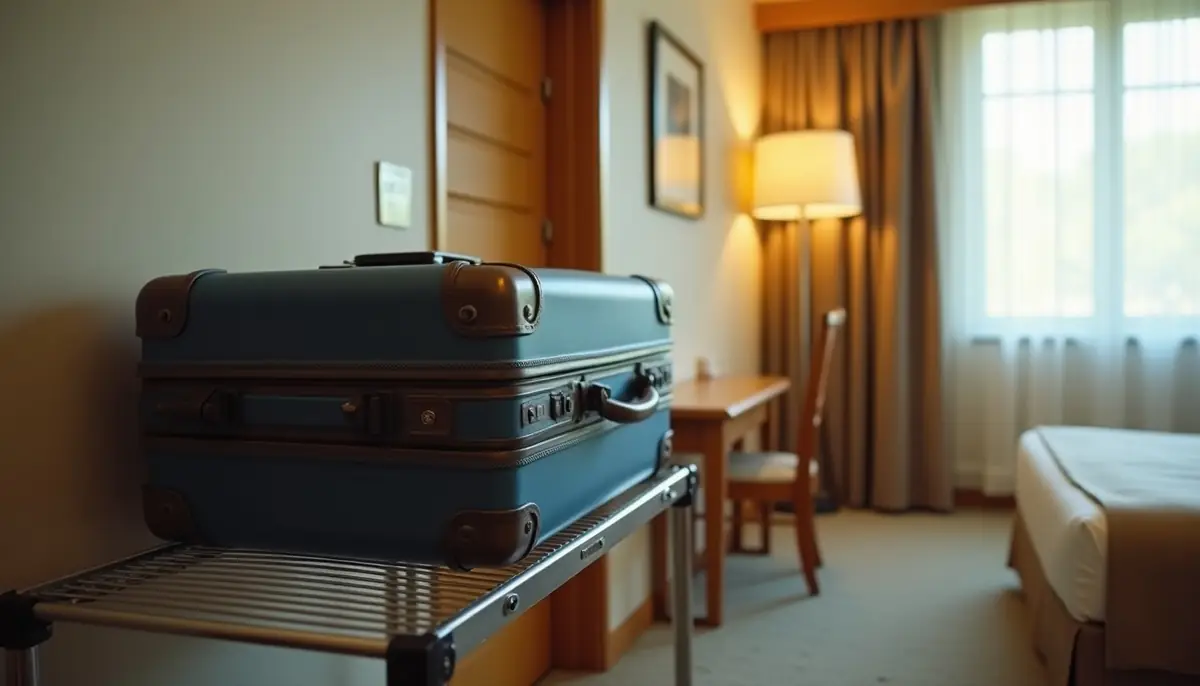
Every source agrees on two things: never put luggage on the bed, and do not trust a luggage rack you have not looked at. A practical way to reconcile them is to leave the bag in the bathroom, on hard tile away from the bed, while you do the check, then move it to the rack only once the rack and the bed are clean. Keep the bag zipped, and keep worn clothes sealed in a plastic bag, as Minnesota advises.
Do bed bugs come out in the light?
Mostly no, which is why you need to go looking for them. The University of Kentucky describes bed bugs as active mainly at night, while noting that hungry bed bugs may also feed during the day. Penn State says they hide during the day and avoid places with movement and light. So lift fabric and shine the light into folds rather than scanning surfaces.
How to check for bed bugs in a hotel without a flashlight
The EPA says you can generally inspect without any extra tools, though a flashlight is useful. A phone torch works. In a dim room, the light is not optional: eggs and young nymphs are 1 to 2 mm across.
What about the iron or hair dryer trick?
Some pest company blogs suggest warming the headboard with a hair dryer or passing a hot iron over the mattress to flush bugs out. None of the extension or government guidance we read recommends either. A careful visual check of seams and crevices is what every university and the EPA describe.
What are the odds of getting bed bugs in a hotel?
Nobody publishes a per-night risk. No national data set counts infested hotel rooms, and the figures that circulate online as “chances” have no traceable source. What does exist is the industry’s own survey of pest control companies, run by the National Pest Management Association with the University of Kentucky, which asks where companies treated bed bugs in the past year.
In the 2018 survey, 68 per cent of pest professionals said they had treated bed bugs in hotels and motels, behind single-family homes (91 per cent) and apartments and condominiums (89 per cent). The hotel figure was 67 per cent in 2010, 80 per cent in 2011, 75 per cent in 2013 and 74 per cent in 2015. That tells you bed bug work in hotels is routine for most pest control companies, not how likely any given room is to be infested. Homes, not hotels, are where most infestations are found.
Our own analysis of residential data points the same way. New York City requires building owners to report bed bug infestations every year. In the 2025 filings, the rate ran from 2.04 infested units per 1,000 on Staten Island to 3.33 per 1,000 in Brooklyn. Those are apartments, not hotel rooms, but they show that in a dense city with a well-known bed bug history, the large majority of units report none in a given year. The full method and caveats are in our New York bed bug data analysis.

How to find out if a hotel has had bed bugs
- Ask directly. You can ask how the hotel inspects rooms between guests and whether it uses mattress encasements.
- The Bed Bug Registry. bedbugregistry.com is a free public database of user-submitted reports. It states that posts are solely the responsibility of their authors, and it does not describe any verification, so treat a single report as a reason to check carefully rather than proof.
- Recent reviews. Guest reviews and photos can flag a problem, with the same caveat: unverified, and a room that was treated may now be clean.
- Your own inspection is the only check that reflects the room you are actually in, tonight.
What to do if you find bed bugs in a hotel
- Do not unpack. Keep luggage zipped and off soft furniture.
- Photograph the evidence, ideally with a coin or card beside it for scale, so staff and any pest professional can see what you saw.
- Tell the front desk immediately and ask for a different room. Minnesota says not next door; Kentucky says a different area of the hotel, because infestations sometimes extend to nearby rooms.
- Inspect the new room the same way before you settle in.
Short-term rentals work the same way, with the owner rather than a front desk. Hosts can find the owner’s side of this in our guide to pest control for short-term rentals.
How to avoid bringing bed bugs home
| Step | What the sources say |
|---|---|
| Unpack straight into the washer | EPA: unpack directly into a washing machine; washing alone generally will not kill bed bugs, the dryer does |
| Dryer time | Kentucky: medium to high heat for 10 to 20 minutes. Penn State: high heat for 15 to 30 minutes. Minneapolis Health Department: high heat for 30 minutes |
| Lethal temperature | Kentucky: about 120 to 130 F; Penn State: 131 F or above kills all stages |
| Suitcase | Minnesota: vacuum inside and out, bag the vacuum contents, store the case in a large plastic bag. Kentucky: inspecting or vacuuming is of limited use; heat treat (a hot car in summer often works) or discard |
| Storage | EPA: away from the bedroom, such as a basement or garage; never under the bed |
| Shoes | Minnesota: wipe down with a cloth and hot water |
Thirty minutes on high is the longest of the published dryer times, so it covers every source. Unpack in a garage, hallway or utility room rather than the bedroom, since the bedroom is where any hitchhiker would settle; what draws them there is covered in what attracts bed bugs.
What to do if you slept in a hotel with bed bugs
Treat everything you brought as possibly carrying a bug or two. Dry all clothing on high as soon as you get home, without first unpacking in the bedroom, and deal with the suitcase as in the table above. For bites, the CDC notes bed bugs are not known to spread disease; if a reaction worries you, see a doctor. Bites alone are poor evidence either way, as our identification guide explains.
Watch for signs at home over the following weeks. If spots, skins or live bugs appear, CDC advice is to contact a professional pest control company experienced with bed bugs. A home infestation is a job for a licensed professional, not a fogger: costs are covered in our guide to bed bug treatment cost.
When bed bugs are noticed
Bed bugs live indoors all year. Our analysis of US iNaturalist research-grade records shows their share of all records rising in late autumn and winter, peaking at 174 in December against a yearly average of 100, and falling to 52 in June.
That winter rise almost certainly reflects people noticing and recording bed bugs when little else is about outdoors, not more bed bugs. It is a reminder that there is no off season for checking a hotel bed. The 2018 NPMA survey found more than half of pest professionals receive most bed bug complaints in summer, which fits travel patterns rather than breeding.
Frequently asked questions
How to find out if a hotel has had bed bugs?
There is no official national database. You can ask the hotel how it inspects rooms, read recent reviews, and search the Bed Bug Registry, a free public site of user-submitted reports that says posts are the responsibility of their authors and are not verified. None of these tells you about tonight’s room, so a five-minute flashlight check of the mattress seams, headboard and luggage rack on arrival is still the most reliable step.
How do you know if your hotel bed has bedbugs?
Pull back the sheets and mattress pad at the pillow end and use a flashlight along the seams, piping and tufts, then look into the gap behind the headboard and at the box spring corners. Signs are live reddish-brown bugs 5 to 7 mm long, dark spots of dried droppings, pale shed skins, pearl-white eggs about 1 mm long and rusty smears on the sheets. A sweet, musty smell suggests a heavier infestation.
What are the odds of getting bed bugs in a hotel?
No reliable per-night figure exists. The best available data is a survey of pest control companies: in 2018, 68 per cent said they had treated bed bugs in hotels and motels in the previous year, compared with 91 per cent in single-family homes. That shows hotel cases are common work for the industry, not how likely any one room is to be infested. A quick inspection lowers your own risk.
What is the fastest way to check for bed bugs?
Go straight to the head of the bed. Put luggage in the bathroom, pull back the sheets at the pillow end and run a flashlight along the mattress seams and piping, then shine it into the crack between the headboard and the wall. Those two spots are where University of Minnesota and University of Kentucky guidance say hotel bed bugs most often are. Check the luggage rack before using it.
Can bed bugs survive in a suitcase for long?
Yes, which is why the suitcase matters. Penn State says adults can live over a year without feeding and nymphs for several months. The EPA advises storing suitcases away from the bedroom, never under the bed. Minnesota suggests vacuuming the case and storing it in a sealed bag; Kentucky says heat treating, for example in a hot car in summer, is more reliable than inspection or vacuuming.
Sources
- US Environmental Protection Agency, Bed Bugs: Tips for Travel; Bed Bugs: Appearance and Life Cycle.
- Shindelar, A. and Kells, S. Inspecting Your Hotel Room for Bed Bugs, Let’s Beat the Bug campaign, University of Minnesota, 2011.
- Potter, M. F. Bed Bugs, ENTFACT-636, University of Kentucky Entomology.
- Penn State Extension, Biology, Habitat and Management of Bed Bugs, updated 2025.
- Centers for Disease Control and Prevention, About Bed Bugs, 2024.
- Minneapolis Health Department, Bed bugs, guidance for lodging and residences.
- National Pest Management Association and University of Kentucky, Bugs Without Borders surveys, 2013, 2015 and 2018 executive summaries.
- Bed Bug Registry, bedbugregistry.com, user-submitted reports.
- The Pest Control Brief, analysis of NYC HPD bed bug disclosure filings, 2026.
- The Pest Control Brief analysis of iNaturalist research-grade records, pulled October 2026.