How to Get Rid of Mosquitoes in the House
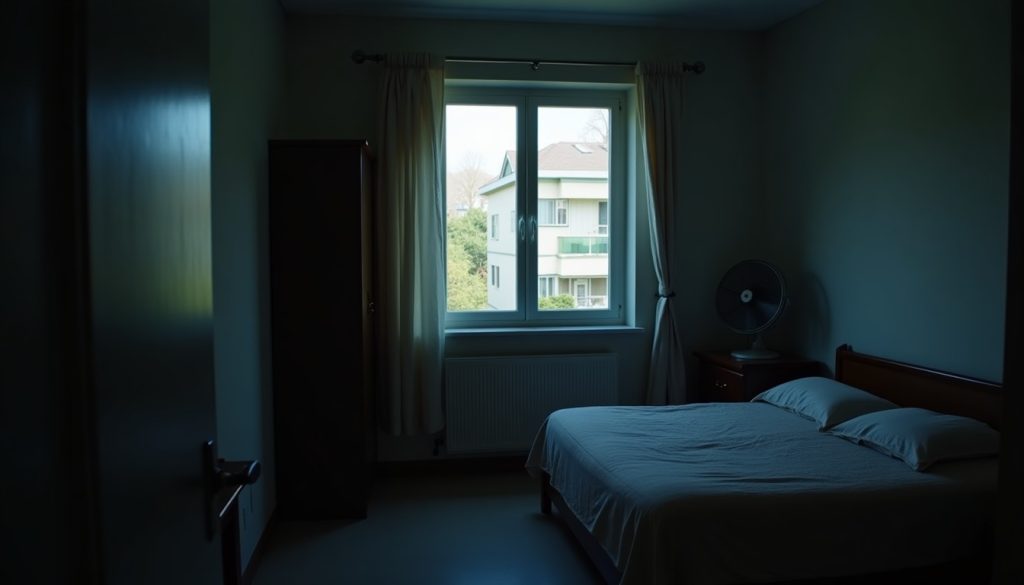
To get rid of mosquitoes in the house, kill the ones already inside where they rest, then stop more getting in and stop any breeding indoors. Check the dark, humid spots the CDC names (under sinks, in showers, in closets, under furniture and in the laundry room) and swat or vacuum what you find. Repair screens, keep doors closed, run air conditioning or a fan, and once a week empty vases and plant saucers. Ultrasonic devices and bug zappers do not help.
Most indoor mosquitoes flew in through a door or a torn screen. A few were raised in the house, and in the northern states some have been living in the basement since autumn. The fix is the same three steps in every case: find and kill, block the way in, remove the water.
Which mosquito is in your house
House mosquitoes (Culex) bite at night and readily come indoors. The yellow fever mosquito (Aedes aegypti) is the daytime indoor biter, mainly in the South. The striped Asian tiger mosquito is mostly an outdoor biter that wanders in through open doors.
| Mosquito | When it bites | Where in the US | Indoor behaviour | Where it breeds |
|---|---|---|---|---|
| Northern house mosquito (Culex pipiens) | Dusk to dawn | Northern states, above about 39 degrees north | Enters homes to bite; mated females overwinter in basements | Ponds, buckets, rain barrels, ditches, water rich in organic matter |
| Southern house mosquito (Culex quinquefasciatus) | Night | Virginia across to southern California, south to Texas and Florida | Enters homes to bite at night | Waste water, bird baths, old tyres, any container |
| Yellow fever mosquito (Aedes aegypti) | Readily by day | Southeast and Gulf coast cities, scattered further north and west | Lives indoors and outdoors | Small containers, including vases and saucers |
| Asian tiger mosquito (Aedes albopictus) | By day, peaking early morning and late afternoon | 26 states in 2001 CDC data cited by UF/IFAS | Lives outdoors, resting in shrubs near the ground | Tyres, pet dishes, bird baths, flowerpots, tree holes |
The CDC states that adult Culex mosquitoes are most active from dusk to dawn, and the American Mosquito Control Association (AMCA) says they “readily enter dwellings for blood meals”. A mosquito that bites only after lights out is very likely a Culex.
By contrast, UF/IFAS notes that while many mosquitoes bite at night, dawn or dusk, Aedes aegypti readily bites during the day, indoors as well as outdoors. The CDC is explicit: Ae. aegypti lives indoors and outdoors, while Ae. albopictus lives outdoors. Daytime bites indoors in a Gulf coast city point to it, breeding in a container close by: the CDC says these two Aedes species fly only a few blocks in their lifetime.
Not every small flying insect indoors is a mosquito. Drain flies, fungus gnats and midges are often mistaken for them; our guide to small flying bugs in the house sorts them by where they hover.
How do I get rid of mosquitoes in my house fast?
The fastest route is physical: find the mosquito and kill it. A swatter or a hand vacuum works on a mosquito resting on a wall, and there is no product that does the job quicker in one room.
- Close the room. Shut the door so the mosquito cannot drift to another room while you search.
- Check the resting spots. The CDC lists them: under sinks, in showers, in closets, under furniture and in the laundry room. These are dark and humid. In a bedroom, also check the wall and ceiling near the bed, behind curtains and under the bed frame.
- Use a torch (flashlight) at a low angle. A light held flat against a wall throws a long shadow from a resting mosquito and makes it far easier to spot than overhead light does.
- Swat or vacuum. A vacuum nozzle catches mosquitoes in corners and on ceilings where a swatter would leave a mark.
- Turn on a fan before you go back to sleep. See the fan section below.
How to find a mosquito in a room at night
Mosquitoes home in on the carbon dioxide in breath, then skin odour and warmth (see what attracts mosquitoes), so a mosquito in a bedroom comes to the sleeper.
- Do not hunt in the dark. Turn the light on and wait a minute; a mosquito that was circling your head usually lands on a nearby wall or ceiling.
- Search low and dark first. Under the bed, inside the wardrobe and under a bedside table.
If bites keep happening night after night, look for a gap letting new ones in each evening. The CDC gives adults about 2 to 4 weeks of life; our guide to how long mosquitoes live covers how long they survive indoors.

Why are there suddenly mosquitoes in my house?
A sudden run of indoor mosquitoes usually has one of four causes.
- A new way in. A torn screen, a door left propped open, or a garage door left up. The CDC advises closing doors, including garage doors, and not leaving doors propped open.
- Rain on waiting eggs. Aedes eggs stick to container walls just above the waterline and, per the CDC, larvae hatch when rain or a sprinkler covers them. The CDC says eggs can survive drying out for up to 8 months and an egg becomes an adult in 7 to 10 days, so a burst of mosquitoes about a week after heavy rain is normal.
- Late summer peak. Mosquito numbers compound through the warm months. Our analysis of iNaturalist research-grade records shows mosquito records peaking in September at an index of 182, against 38 in March.
- Autumn shelter seekers. In the North, mated Culex pipiens females look for sheltered places to spend the winter. UF/IFAS names caves and basements. A mosquito in the basement in November or February is likely one of these.
Our data: house mosquitoes do not disappear in winter
We compared iNaturalist research-grade records of the two house mosquitoes with all mosquito records. The index removes the effect of how many people are out recording in a given month; 100 is the yearly average share.
All mosquito records rise from 429 in January to 5,623 in August, about thirteen times more. The house mosquitoes barely move: northern house mosquito records were 27 in January against 42 in August, southern 26 against 31. On the index, both sit above their yearly average from October to February.
That is consistent with the biology: Culex pipiens spends winter as an adult female in sheltered places, including basements, and the southern species lives where winters are mild. These are records of when people photographed and identified mosquitoes, not infestation counts, and the Culex samples are small (17 to 165 records a month), so read the shape, not single months such as the June spike.
So a mosquito biting in a northern house in winter is most likely an overwintering house mosquito from the basement or crawlspace.
Stop them getting in
The CDC’s indoor advice is short: install or repair and use window and door screens, close doors, including garage doors, do not leave doors propped open, and use air conditioning when possible.
- Screens. Check every opening window, including rarely used ones; a gap where the frame meets the sill lets mosquitoes in as surely as a tear.
- Doors. A door left open on a summer evening lets in the night biters. Self-closing screen doors help.
- Garage. Keep the garage door down at dusk; garages are classic resting places.
For infants, the CDC recommends covering strollers and baby carriers with mosquito netting.
Remove water inside and around the house
The CDC’s indoor instruction is to empty and scrub, turn over, cover or throw out items that hold water, such as vases or flowerpot saucers, once a week. Weekly beats the 7 to 10 days from egg to adult. Sources to check:
- Vases with stems left in the same water for more than a week.
- Saucers under potted plants and pots without drainage.
- Pet water bowls left topped up rather than emptied and refilled.
- Buckets, mop pails and storage tubs in a garage, basement or laundry room.
- A sump pit or flooded crawlspace; Culex pipiens larvae tolerate water with a lot of organic matter.
Outside, the same weekly rule applies to buckets, toys, bird baths, tyres, gutters and rain barrels; the Metropolitan Mosquito Control District in Minnesota warns that water standing more than three days can produce mosquitoes. The CDC reserves larvicides for water that cannot be emptied and will not be drunk.
Fans: the cheapest bedroom fix
An electric fan is one of the few indoor measures with field evidence behind it. In a Michigan wetland study, Hoffmann and Miller (2003) found that fan-generated wind strongly reduced mosquito catches at carbon dioxide-baited traps across the speeds tested (0 to 3.7 metres per second, 0 to 8.3 mph). The wind worked mainly by diluting the carbon dioxide plume, and the authors recommended fans as a practical way to protect people.
A fan pointed across the bed breaks up the plume of breath a mosquito follows. It kills nothing, so pair it with finding the mosquito already in the room.
What smell do mosquitoes hate?
The honest answer is the smells registered as repellents. The CDC recommends EPA-registered products containing DEET, picaridin, IR3535, oil of lemon eucalyptus (OLE), para-menthane-diol (PMD) or 2-undecanone, and says products with OLE or PMD should not be used on children under 3. For everything else the CDC states that the effectiveness of non-EPA registered repellents, including some natural repellents, is not known.
For scents released into a room rather than applied to skin, the best independent test we found is Müller and colleagues (Journal of Vector Ecology, 2009), which compared candles and diffusers indoors.
Two lessons stand out. First, citronella candles, the most familiar product, cut indoor mosquito catches by only 14 per cent. Second, continuous-release diffusers beat candles for every scent, with geraniol diffusers at 97 per cent and linalool at 93 per cent. Note the test conditions: candles held 5 per cent active ingredient, while diffusers held 20 g of pure active ingredient, far stronger than a household essential oil diffuser. Room scents reduce bites; they do not remove mosquitoes.
How to get rid of mosquitoes in the house with vinegar
We found no extension service or peer-reviewed study showing that vinegar repels or traps mosquitoes, and it is not among the CDC’s recommended repellent ingredients. Vinegar traps are for fruit flies, which follow fermentation; mosquitoes follow breath and skin. Treat vinegar remedies as unproven.
What does not work, according to the evidence
- Ultrasonic and electronic repellers. A Cochrane review by Enayati, Hemingway and Garner (2007) found 10 field studies, and all 10 found no difference in the number of mosquitoes landing on people with or without the device. The authors concluded these devices have no effect on preventing mosquito bites.
- Bug zappers. In a University of Delaware study by Frick and Tallamy, only 31 of 13,789 insects killed by zappers over a summer (0.22 per cent) were biting flies. Iowa State’s summary adds that the number of mosquitoes stays the same. We look at the evidence in do bug zappers work.
- Indoor sprays on their own. The CDC notes that using only an indoor insecticide will not keep a home free of mosquitoes. If you use one, follow the label exactly; a total-release fogger is not a fix for a few mosquitoes.
How to get rid of mosquitoes in a room without repellent
Close the door, turn on the light, search the resting spots, swat or vacuum, run a fan across the bed, keep the window closed or screened, and empty any vase or saucer in the room. Where screens are poor, a bed net is a simple physical barrier.
When to call in help
A few mosquitoes indoors is a DIY job. It becomes worth calling someone when you are finding mosquitoes indoors every day despite good screens, when a basement or crawlspace holds water you cannot drain, or when a neighbourhood source is beyond your property. Many areas have a public mosquito control district that takes service requests. Private barrier treatments for the yard are priced in our mosquito control cost guide.
How to get rid of mosquito bites
Most mosquito bites are a nuisance that fades in a few days. The CDC publishes guidance on caring for bites; see a doctor if a bite looks infected or you feel unwell after being bitten, because mosquitoes in parts of the US can carry West Nile and other viruses.
Frequently asked questions
What is the best way to get rid of mosquitoes inside my house?
Combine three steps. Kill the mosquitoes already inside by checking dark, humid resting spots such as under sinks, in closets and under furniture, and swatting or vacuuming them. Stop new ones with repaired screens, closed doors and air conditioning, as the CDC advises. Then empty vases, plant saucers and other indoor water once a week, because mosquitoes develop from egg to adult in 7 to 10 days.
Why do mosquitoes bite me in the bedroom at night?
Night biting indoors is typical of house mosquitoes (Culex), which the CDC says are most active from dusk to dawn and which the AMCA says readily enter dwellings for blood meals. They follow the carbon dioxide you breathe out. A fan across the bed dilutes that plume, and a 2003 field study found fan wind strongly reduced mosquito catches at carbon dioxide-baited traps.
Why are there mosquitoes in my house in winter?
In northern states, mated female northern house mosquitoes spend winter as adults in sheltered places, and UF/IFAS names basements among them. On warm days they may become active and bite. Our analysis of iNaturalist records shows house mosquito records stay almost as frequent in January as in August, while records of all mosquitoes fall to about a thirteenth.
Do plug-in ultrasonic mosquito repellers work?
No. A Cochrane review of electronic mosquito repellents found 10 field studies, and all 10 showed no difference in the number of mosquitoes landing on people with or without the device. The reviewers concluded the devices have no effect on preventing mosquito bites. Screens, fans, emptying water and EPA-registered repellents are the evidence-based options.
Sources
- Centers for Disease Control and Prevention, Mosquito Control at Home; Preventing Mosquito Bites; Life Cycle of Culex Mosquitoes; Life Cycle of Aedes Mosquitoes.
- UF/IFAS Extension, Featured Creatures EENY-765 (IN1324), Northern House Mosquito, Alomar, Burkett-Cadena and Mathias.
- UF/IFAS Extension, Featured Creatures EENY-457 (IN837), Southern House Mosquito, Hill and Connelly, 2009.
- UF/IFAS Extension, Featured Creatures EENY-434 (IN792), Yellow Fever Mosquito, Zettel and Kaufman, 2009.
- American Mosquito Control Association, Mosquito Information.
- Metropolitan Mosquito Control District (Minnesota), Resident’s Guide.
- Hoffmann, E.J. and Miller, J.R., Reassessment of the role and utility of wind in suppression of mosquito host finding, Journal of Medical Entomology 40(5): 607 to 614, 2003.
- Müller, G.C. and colleagues, Efficacy of the botanical repellents geraniol, linalool, and citronella against mosquitoes, Journal of Vector Ecology 34(1): 2 to 8, 2009.
- Enayati, A., Hemingway, J. and Garner, P., Electronic mosquito repellents for preventing mosquito bites and malaria infection, Cochrane Database of Systematic Reviews, 2007.
- Frick, T.B. and Tallamy, D.W., Density and diversity of nontarget insects killed by suburban electric insect traps, Entomological News 107(2): 77 to 82, 1996; Iowa State University Extension, Bug Zappers are Harmful, Not Helpful, 1996.
- The Pest Control Brief analysis of iNaturalist research-grade records, pulled October 2026.