June Bugs: Why They Hit the Window and How to Get Rid of Them
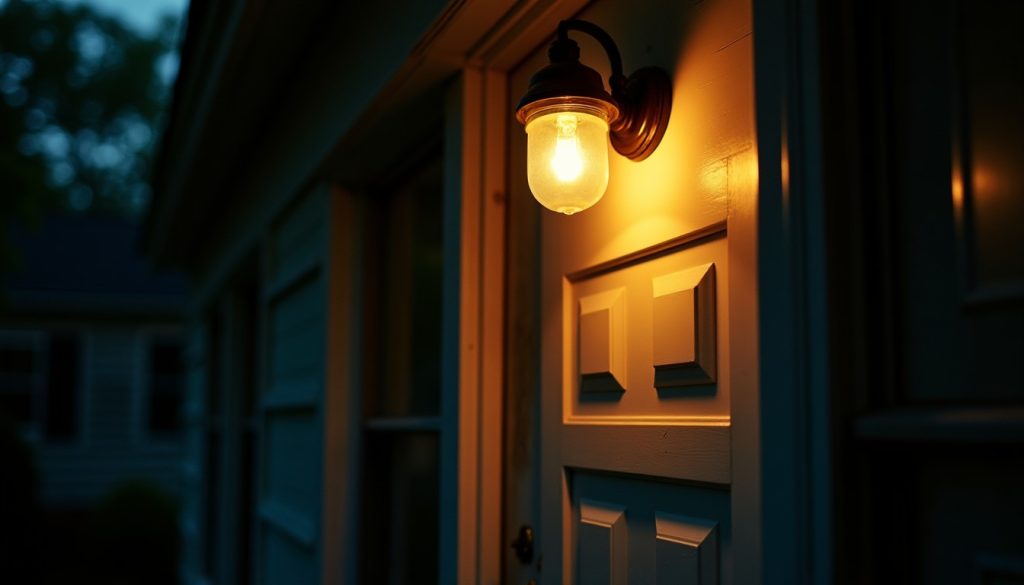
To get rid of June bugs, make your house less attractive at night: switch outdoor lights off or onto a motion sensor, swap white bulbs for yellow ones, close the blinds, and fix gaps in screens and door sweeps. The adults are harmless to people (Texas A&M calls them medically harmless) and their flight lasts only a few weeks in late spring and early summer, so they go away on their own. The only stage worth treating is the grub in your lawn, and only when a count finds roughly three to five or more per square foot.
“June bug” is a nickname, not a species. In most of the country it means the brown May and June beetles of the genus Phyllophaga, but in the Southeast people often mean the green June beetle and in the West the striped ten-lined June beetle. They behave differently and cause different problems, so it is worth knowing which one is thumping on your window before deciding what, if anything, to do.
Which June bug do you have?
| May and June beetles | Green June beetle | Ten-lined June beetle | |
|---|---|---|---|
| Scientific name | Phyllophaga, a genus with well over 100 North American species | Cotinis nitida | Polyphylla decemlineata |
| Where | Most of the US | Connecticut to Florida, west to Texas, Oklahoma and Kansas | Sandy soils west of the Rocky Mountains |
| Adult size | 1/2 to 1 inch (13 to 25 mm) | 3/4 to 1 inch (19 to 25 mm) | 3/4 to 1 1/2 inches (20 to 35 mm) |
| Look | Tan, reddish brown or nearly black | Velvety green top, shiny metallic green or gold underneath | Brown with bold white stripes |
| When and how active | Spring and early summer, after dusk, at lights | Summer, by day, low over lawns, buzzing like a bumble bee | June or July into autumn, from dusk |
| Main problem | Grubs eating turf roots | Grubs tunnelling and throwing up soil mounds; adults on ripe fruit | Grubs on roots of fruit trees and other plants in sandy soil |
| Life cycle | Usually 2 to 3 years; 1 year in parts of Texas | 1 year | 2 to 4 years |
If your beetle is small (under half an inch), metallic green with copper wing covers and chewing rose leaves in daylight in July, it is not a June bug at all but a Japanese beetle, which needs a different plan: see how to get rid of Japanese beetles.

Why June bugs hit the window
May and June beetles are nocturnal and, as University of Maine extension puts it, readily attracted to lights, so they are often heard buzzing around and thumping into porch lights and window screens on warm nights. Wisconsin’s extension entomologist describes them as clumsy fliers that often collide with windows and cling to screens. A lit window is simply a light source with glass in the way.
One detail matters for control. Texas A&M notes that females are less attracted to lights than males, and that the females are the ones that tunnel 2 to 5 inches into the soil to lay eggs. So a crowd at the porch light is mostly males, and killing them at the light does little to the next generation of grubs in the lawn. Turning the light off is the more useful step.
How do you keep the June bugs away?
Lighting is the lever. Mississippi State and New Hampshire extension both recommend the same short list for night-flying insects, May beetles included:
- Turn outdoor lights off when you do not need them, or put them on timers or motion sensors.
- Use yellow bulbs in fixtures that stay on. Mississippi State lists yellow incandescent “bug lights”, yellow LEDs and high-pressure sodium lights as producing wavelengths less attractive to insects.
- Prefer LED to incandescent. In a 60-night light-trap study in suburban Virginia, published in Entomological News, fewer insects overall came to LED bulbs than to incandescent ones.
- Dim and shield. Fewer lumens, and fittings that point light down rather than out into the night.
- Move the light away from the door. Mississippi State suggests lights on poles away from the building, aimed at the entrance, so insects gather away from the door.
- Close blinds and curtains at night so indoor light does not draw beetles to the windows.
None of this stops every beetle; New Hampshire’s extension notes yellow light is not a complete solution because different insects see different wavelengths. It typically turns a nightly swarm into a few stragglers.
When are June bugs most active?
In most places, late spring into early summer. Wisconsin reports adults active after dusk in late May and early June; Texas A&M puts peak flights in mid to late June in central Texas and notes some early species emerge as early as March.
Our analysis of 3,273 US research-grade iNaturalist records of Phyllophaga shows the same pattern nationally. On our seasonality index, which measures May and June beetles’ share of everything people recorded each month (100 is their yearly average), records rise to 213 in April, peak at 267 in May, and stay high in June (206) before falling to 61 by August. About 71 per cent of all records fall between March and June. Japanese beetles, by contrast, peak in July, which is a handy way to tell the two apart. These are records of beetles people photographed, mostly at lights and outdoors, so they show when the beetles fly rather than how many lawns have grubs.
June bugs in the house, at night and in the garage
June bugs do not live or breed indoors. Adults come in through open doors, gaps under doors and torn screens, drawn by indoor lights, and die or are easily carried out. A large brown beetle on the kitchen floor at night is often mistaken for a cockroach; our guide to bugs that look like cockroaches shows how to tell them apart. If you have a steady stream of them:
- Fit or replace door sweeps and repair screens.
- Keep the garage door down after dark with the garage light off, since an open, lit garage is an invitation.
- Pick up the ones that get in and drop them outside or into soapy water. No indoor spray is needed.
Grubs found in a garage after rain may be green June beetle grubs. Penn State notes that after rain these grubs can end up on sidewalks, in garages and in ground-level swimming pools. They crawl on their backs with their legs in the air, which is a tell-tale sign.
Are June bugs harmful?
Not to people. Texas A&M describes the adults as a nuisance around lights at night and medically harmless. The adults do eat leaves, but Maine’s extension notes that on oaks and maples the feeding is usually insignificant, small irregular holes that are often noticed only after the beetles have moved on, so control of adults is rarely necessary or warranted. The exception is young trees: Texas A&M has documented early-season beetles stripping new foliage from young pecan trees, and in most cases the trees re-leaf and recover.
The real damage is underground. The grubs, C-shaped and cream-coloured with a brown head, feed on grass roots. Heavy feeding turns patches of lawn yellow and then brown, and the damaged turf can be rolled up like a carpet.
June bug grubs in the lawn: count before you treat
Clemson’s thresholds put May and June beetle grubs among the most damaging per grub: three to five per square foot can justify action, against eight to ten for Japanese beetle or masked chafer grubs. To check, cut three sides of a one-foot square of turf, fold it back and count the grubs in the top few inches of soil, in several spots. Our lawn pest control guide sets out the full sampling method, the thresholds for other grubs, and who is licensed to treat turf.
The multi-year life cycle changes the decision. Wisconsin reports that most of its May and June beetles take three years, passing two years as grubs that grow more destructive with each stage, and that in some places one of the overlapping generations is much larger than the others, producing a big adult flight every three years. Wisconsin’s advice is that control is rarely warranted unless there is a history of damage, and may not be needed every year even then. Where treatment is justified, Clemson advises preventive applications soon after peak adult flight, following the product label.
Healthy turf tolerates more grubs. Wisconsin notes that good irrigation, fertilisation and other care help plants withstand root feeding.
Skunks, raccoons and birds digging the lawn
Often the first sign of a grub problem is not the grubs but the digging. Wisconsin lists skunks, raccoons, turkeys and sandhill cranes as animals that forage for grubs and cause more damage to turf, and Clemson notes that the digging can do more damage than the grubs themselves. If you find holes dug in the turf or patches flipped over overnight, count grubs before blaming the animal. If the grubs are below threshold and the digging continues, see our guides to getting rid of skunks and getting rid of raccoons.
Green June beetles: the Southeast’s June bug
Green June beetles are big, about an inch long, and fly by day in July with a buzz Penn State likens to a bumble bee. They have one generation a year. Females lay clusters of 10 to 30 eggs in moist, organic soil, and the grubs feed mainly on decaying organic matter rather than roots. Penn State notes they seldom eat enough roots to cause significant damage; the harm comes from burrowing, which throws up soil mounds 2 to 3 inches across and leaves open vertical burrows about the width of a thumb. Adults feed on ripe, thin-skinned fruit such as figs and peaches, so picking up fallen and overripe fruit helps.
Ten-lined June beetles: the West’s June bug
West of the Rockies, the June bug people notice is often the ten-lined June beetle, a large brown beetle with white stripes. Washington State University notes it makes a peculiar wheezy, hissing noise when disturbed, which surprises people who pick one up. Adults are active from dusk on warm nights from June or July into autumn, with little activity below 60°F, and cause little damage. The grubs, up to 2 inches long, can weaken trees and shrubs on sandy soils, mostly where sagebrush ground has been newly planted, and take 2 to 4 years to develop.
What makes June bugs go away?
Time, mostly. Each species has a short adult flight, and our records show numbers falling sharply after June. Until then, turning off and changing outdoor lights is the most effective step a homeowner can take, because it removes the reason the beetles are at your house. Spraying adults is rarely warranted. Lawn grub treatment is worth it only where a count shows enough grubs, and is a reasonable job to hand to a licensed lawn care company if the area is large.
Frequently asked questions
How do you keep the June bugs away?
Reduce outdoor light at night. Turn porch and garage lights off when not needed or put them on motion sensors, use yellow bulbs or yellow LEDs in fixtures that stay on, shield lights so they point down, and close blinds after dark. Extension services in Mississippi and New Hampshire recommend this combination for May beetles and other night fliers. Repair screens and fit door sweeps to stop the ones that still arrive from getting inside.
What makes June bugs go away?
The end of their flight season, mostly. Adults fly for a few weeks in late spring and early summer, and our analysis of iNaturalist records shows May and June beetle sightings peaking in May and dropping sharply by August. Removing the lights that draw them speeds things up at your house. The grubs stay in the soil, and in many species take two or three years to develop.
How long do June bugs stay around?
The adult season is short. Wisconsin reports activity in late May and early June, and Texas A&M puts peak flights in mid to late June in central Texas, with some early species out from March. Nationally, our iNaturalist data shows about 71 per cent of records between March and June. The species itself stays around much longer underground: most May and June beetles spend two to three years as grubs.
What month are June bugs most active?
Usually May and June, which is how they got both their names. In our analysis of US iNaturalist records, May and June beetles peak in May, with April and June close behind. In the South flights can start in March; green June beetles fly mainly in July; and ten-lined June beetles in the West are active from June or July into autumn.
Do June bugs bite or sting?
No. May and June beetles have chewing mouthparts for leaves and have no stinger, and Texas A&M classes them as medically harmless. They do not bite people. Ten-lined June beetles may hiss when handled, which Washington State University describes as a wheezy hissing noise; it is alarming but harmless. A beetle that lands on you can simply be brushed off.
Sources
- University of Maine Cooperative Extension, Home and Garden IPM: May/June Beetles.
- University of Wisconsin Extension, Wisconsin Horticulture: May/June Beetles (P.J. Liesch, 2015).
- Texas A&M AgriLife Extension, Field Guide to Common Texas Insects: June beetle and Green June beetle; Insects in the City: May beetles on pecans (2015).
- Penn State Extension, Green June Beetle (updated 2026).
- Washington State University Tree Fruit, Tenlined June Beetle (Beers, Burts and Van Steenwyk, 1993).
- Clemson University, Turfgrass and Ornamental IPM: White Grubs.
- Mississippi State University Extension, Bug’s Eye View: Light Management (2017).
- University of New Hampshire Extension, Bug Friendlier Outdoor Lighting (2023).
- Justice, M.J. and Justice, T.C., Attraction of insects to incandescent, compact fluorescent, halogen, and LED lamps in a light trap, Entomological News 125(5) (2016).
- The Pest Control Brief analysis of iNaturalist research-grade records, pulled October 2026.