Chigger Bites: Where Chiggers Live and How to Avoid Them

Chigger bites are intensely itchy red bumps, often in clusters at the sock line, waistband, behind the knees or in the groin, left by larval mites that pick you up from shaded grass and brush. The itch usually starts a few hours after exposure, peaks at one to two days and can last up to two weeks. Chiggers do not burrow into skin or drink blood, and the mite is normally gone long before the itch peaks, so nail polish does nothing. Showering soon after being outdoors is the best way to cut bites.
Chiggers cause far more misery than their size suggests, and most of the folklore about them comes from one misunderstanding: people think the red dot in the middle of the bump is the mite, still in there. It is not. Once you understand how they feed, almost every question about treatment, timing and prevention answers itself.
Chigger bites at a glance
| Question | What extension entomologists say |
|---|---|
| What bites? | Only the six-legged larva of mites in the family Trombiculidae; nymphs and adults eat insects and insect eggs in soil |
| Size of the biting stage | 0.15 to 0.3 mm (Texas A&M); 1/120 to 1/150 inch (Maryland). Barely visible |
| Colour | Yellowish to light red as larvae; adults bright red and velvety, about 1 mm |
| Do they burrow or suck blood? | No to both |
| Where bites appear | Ankles and sock line, waistband, groin, behind the knees, armpits, bra line |
| When itching starts | 3 to 6 hours (Maryland, Texas A&M); 4 to 8 hours (UF/IFAS); up to 12 to 24 hours for visible effects (Kentucky) |
| Peak itch | 24 to 48 hours (Texas A&M) |
| How long bites last | Up to about 2 weeks (Maryland, UF/IFAS, Kentucky) |
| Disease risk in the US | Not known to transmit disease to people (Maryland; UF/IFAS for Florida) |
What chiggers are, and why they do not burrow
Chiggers, also called red bugs, are the larvae of trombiculid mites. They are arachnids, closer to ticks and spiders than to insects, and the biting larva has six legs while the later stages have eight. UF/IFAS describes the life cycle as egg, prelarva, larva, nymph and adult, and only the larva is parasitic. The nymphs and adults are free-living predators of insect eggs and small insects in the soil. In Texas, the species behind most summer bites are in the genus Eutrombicula, according to Texas A&M AgriLife.
How they feed explains everything else. Kentucky’s entomologists describe the larva inserting a tube-like mouthpart into the skin and pumping in saliva that dissolves nearby skin cells, then drinking the resulting slurry. Mississippi State’s entomologists say they usually attach at the base of a hair follicle. Texas A&M explains the illusion: as the skin reddens and swells it may completely envelop the feeding chigger, making it look as though it has burrowed in. Texas A&M, Maryland and UF/IFAS all state plainly that chiggers do not burrow and do not suck blood. UF/IFAS adds that people mistakenly believe the welts contain chiggers.
Why nail polish does nothing
The nail polish remedy is meant to suffocate a mite under the skin. There is no mite under the skin. By the time the itch is bad, the chigger has usually been scratched or washed off, or has finished and dropped away. Mississippi State Extension’s advice is blunt: do not put nail polish or other harsh chemicals such as bleach on the bumps, because the itch comes from the body’s reaction to the digestive saliva, and that damage is already done.
What chigger bites look like
Bites are usually small, intensely itchy red bumps. Kentucky describes the area as inflamed and hardened, with a red dot in the centre that may be sunken, or slightly raised, and sometimes a pustule that can pop like a blister. People react differently, so one person in a group may be covered and another barely marked.
The location is the most useful clue. Chiggers climb from shoes and trousers and wander for a while before settling where clothing is tight or skin is thin. Texas A&M lists sock lines on the ankles, the waist and groin, behind the knee and under the armpit; Kentucky adds bra lines. Bites in a band around the ankles or in a ring at the waistband after a day in long grass are the classic picture.
No bite pattern is proof on its own, and our guide to bite identification explains why. Fleas also bite low on the legs, and bites that keep appearing at home with no outdoor exposure point away from chiggers and towards bed bugs, fleas or bird mites. Ticks, by contrast, stay attached and are visible; see tick identification.
How long chiggers stay on you
Not long, and less long than most people fear. Sources differ, and the range is worth knowing:
- Hours to explore. Texas A&M notes chiggers typically explore a host for several hours before choosing a place to feed. That delay is what makes a prompt shower so effective.
- Usually brief on people. UF/IFAS says chiggers that attach to humans are usually dislodged or die within hours. Texas A&M says they often do not survive on people more than one or two days, because of skin reactions and scratching.
- Days if undisturbed. On a suitable host the larva usually finishes feeding in about three days (UF/IFAS, Texas A&M); Kentucky gives two to four days. Mississippi State notes that if left alone they can stay attached and keep feeding for several days.
Humans are accidental hosts. The chigger’s natural hosts are small mammals, birds, reptiles and amphibians, according to UF/IFAS.
Where chiggers live
Chiggers live outdoors in vegetation-shaded soil. Maryland Extension says they are most often found in vegetation transition zones: the junction of forest and grass, the margins of swamps, brush thickets, and even home lawns or golf courses. UF/IFAS finds them most abundant where shrubs and small trees shelter plenty of rodents, and notes that they occur in pockets because a female lays all her eggs in one spot. That patchiness is why one corner of a yard can be bad and the rest clean.
After hatching, the larvae climb to the tips of grass blades and low plants and wait for a host to brush past, according to Kentucky.
When chiggers are active
Kentucky says adults overwinter in soil and emerge to mate in spring when soil temperatures reach around 60°F, with bites possible across the growing season and peaks in spring and late summer. Texas A&M puts the season at late spring to fall for most of Texas, with year-round activity in southern areas where there can be up to four generations a year. UF/IFAS notes they may be active all year in South Florida, and gives one to five generations a year depending on temperature, moisture and location.
A simple test for your own yard
UF/IFAS describes a survey method worth knowing before you spend money on treatment. Stand a piece of black cardboard edgewise on the ground in a suspect area. If chiggers are present, they climb to the top edge and appear as tiny yellow or pink dots moving across it. Wear repellent and protective clothing while you check.
How to avoid chigger bites
- Stay on mown paths and out of overgrown edges where you can. Avoid sitting or lying directly on the ground.
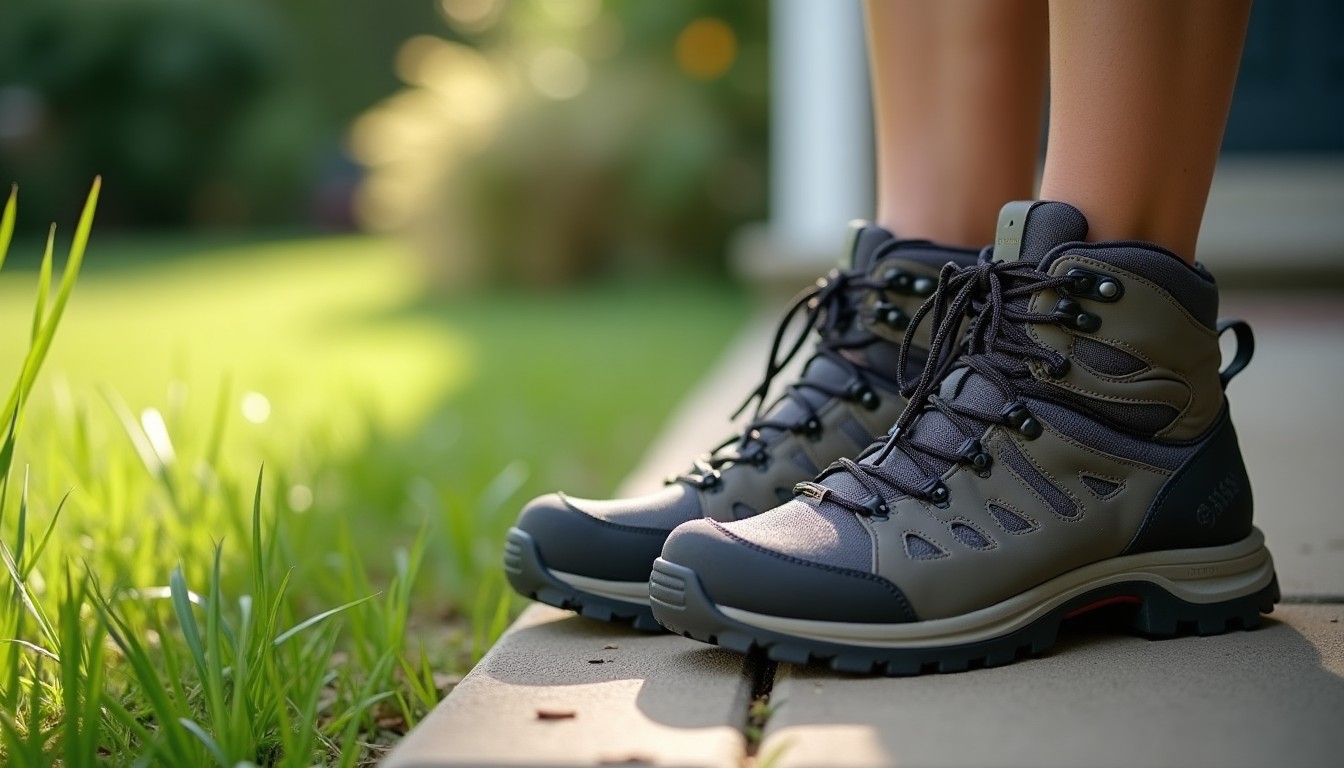
- Cover up and seal the gaps. Long trousers tucked into socks or boots and long sleeves. Texas A&M notes loose-fitting, tightly woven fabrics give the best protection.
- Use a skin repellent. Kentucky lists DEET, picaridin, IR3535 and oil of lemon eucalyptus as skin repellents that also work on ticks and mosquitoes. Apply around cuffs, sock tops and waistbands, and reapply as the label directs.
- Treat clothing, not skin, with permethrin if you work or camp in chigger habitat. It is an insecticide, applied to clothing and allowed to dry, never to skin. Follow the label.
- Shower soon after. UF/IFAS says a hot bath or shower, lathering several times, removes chiggers and kills attached ones. Texas A&M says to scrub within a few hours, and that the sooner you shower the more likely it is to help. Kentucky notes even wiping your legs with a dry towel can dislodge them.
- Wash the clothes you wore before wearing them again, in case any chiggers hitched a ride.
Getting rid of chiggers in the yard
The lasting fix is habitat. Texas A&M notes that keeping grass short and vegetation trimmed raises soil temperatures and lowers humidity enough to make lawns less hospitable; Kentucky adds that opening up areas to light helps. Maryland recommends mowing and trimming shrubbery to improve air circulation and dry the area out. UF/IFAS adds a step most guides skip: discourage the wildlife hosts, such as rodents, by securing trash can lids, because the hosts sustain the chiggers.
Insecticides are where extension sources openly disagree. Kentucky says hot spot treatments with labelled products can provide one to two weeks of control but no long-term control. Texas A&M says residual sprays can help suppress numbers. Maryland says pesticide use for chiggers is not recommended or effective. UF/IFAS calls area control difficult. The fair summary: spraying buys a short window at best, and mowing and clearing are what change the yard. Our guide to lawn pest control covers when a lawn treatment is worth paying for, and any product must be labelled for the site and used as the label directs.
Disease: the short version, and one new finding
Maryland Extension says chiggers are not known to transmit infectious diseases in the United States, and UF/IFAS says the same for Florida. Elsewhere, chiggers spread scrub typhus, a bacterial disease long confined to a region stretching from Pakistan to far-eastern Russia and northern Australia, and recently reported from the Middle East, southern Chile and Africa.
A 2023 study in the CDC’s journal Emerging Infectious Diseases is worth knowing about. North Carolina State University researchers tested 95 free-living Eutrombicula chiggers from 10 park sites in North Carolina and found DNA classified as Orientia tsutsugamushi, the scrub typhus agent, in 20 of them, at 5 of the 10 sites. Detecting bacterial DNA is not the same as showing that people are being infected, and the authors called for further study while asking clinicians in the region to be alert. If you develop a fever or feel unwell after chigger bites, or after travel to an area where scrub typhus occurs, see a doctor.
When the bites need a doctor
For relief of the itch, medical sites and extension fact sheets mention over-the-counter anti-itch products; a pharmacist or doctor can advise what suits you. UF/IFAS notes some people have an allergic reaction to chigger saliva with severe swelling, itching and fever, and scratching can open bites to infection. See a doctor if bites swell, leak pus, spread, or come with fever.
If you are in a coastal area and the bites came at dusk with no grass involved, the culprit may be a biting midge instead; see no-see-ums.
Frequently asked questions
How do you tell if you have chigger bites?
Look at where and when. Chigger bites are very itchy red bumps, sometimes with a red centre or a small blister, clustered where clothing is tight: sock lines, the waistband, the groin, behind the knees or the armpits. They usually start itching a few hours after time in long grass, brush or woodland edges. You will rarely see the mite itself, which is about 0.15 to 0.3 mm.
Do chiggers stay in your bed?
Usually not. Chiggers live outdoors in shaded soil and vegetation, feed on people only as accidental hosts, and usually die or are dislodged within hours to a couple of days. UF/IFAS notes chiggers occasionally invade structures, but washing the clothes you wore outdoors deals with hitchhikers. Bites that keep appearing in bed without outdoor exposure point to bed bugs, fleas or bird mites.
What is the fastest way to cure chigger bites?
There is no quick cure for the itch, because it is your skin’s reaction to saliva already injected, and the mite is normally gone. What helps most is prevention: a hot, soapy shower within a few hours of exposure removes chiggers before many can feed. Medical sites mention over-the-counter anti-itch products; ask a pharmacist or doctor, and seek care for swelling, pus or fever.
How long do chiggers stay on you?
Often only hours. They may explore for several hours before settling, and UF/IFAS says chiggers on people are usually dislodged or die within hours. Texas A&M says they seldom survive more than one or two days on a person. Undisturbed, a larva finishes feeding in about three days, while the itch it leaves can last up to two weeks.
How long do chigger bites last?
Itching typically begins 3 to 8 hours after exposure, according to Maryland, Texas A&M and UF/IFAS, and Texas A&M says it peaks at 24 to 48 hours. Redness and itching then fade over about a week, and Maryland and UF/IFAS say welts may persist for up to two weeks. Bites that worsen, swell or leak pus need a doctor.
Sources
- University of Kentucky Entomology, ENTFACT-630: Dealing with Chiggers in the Landscape.
- Texas A&M AgriLife Extension, E-365: Chiggers (Moore and Merchant).
- UF/IFAS Extension, ENY-212: Chiggers (Koehler, Oi and Chaskopoulou), revised 2022, reviewed 2025.
- University of Maryland Extension, Chiggers.
- Mississippi State University Extension, Chiggers: Step Away from the Nail Polish.
- Chen K et al., Detection of Orientia spp. Bacteria in Field-Collected Free-Living Eutrombicula Chigger Mites, United States, Emerging Infectious Diseases 29(8), 2023.
- CDC DPDx, Scabies (mite size); Washington State University Pest Sense, Bird Mites; University of Kentucky ENTFACT-646, House Dust Mites.