Asian Lady Beetles: The Ladybugs That Bite and Stain
Asian lady beetles bite, stain and are a documented seasonal indoor allergen, which is three things ladybugs are not supposed to do. Identification runs on the white plate behind the head, which carries a black M or W marking; colour and spot count are useless, since they range from pale yellow to deep red with anywhere from zero to about 19 spots. They do not breed indoors, so the beetles appearing on a warm February window are the same ones that came in last October.
This is the insect people are most reluctant to treat as a pest, because it looks like the one insect everybody was taught to like. The published record is less sentimental.
How to tell it from a native ladybug
| Character | Asian lady beetle | What to do with it |
|---|---|---|
| Pronotum, the plate behind the head | White or cream with a black M or W mark, sometimes reduced to curved lines or a trapezoid | The primary diagnostic |
| Size | About 6 mm long and 5 mm wide, larger than most natives | Supporting |
| Colour | Pale yellow-orange through bright red-orange | Useless on its own |
| Spots | Zero to about 19, often faded | Do not count spots |
| Legs and underside | Tend to brownish rather than black | Supporting |
| Behaviour in autumn | Masses on sunlit walls in large numbers | Strongly indicative |
One honest caveat on the M mark, which most coverage states too confidently. Illinois extension notes the pattern is not always present or clear, so it is the best single character rather than an infallible one. A spotless orange Asian lady beetle and a spotless native are separated by the pronotum or not at all.
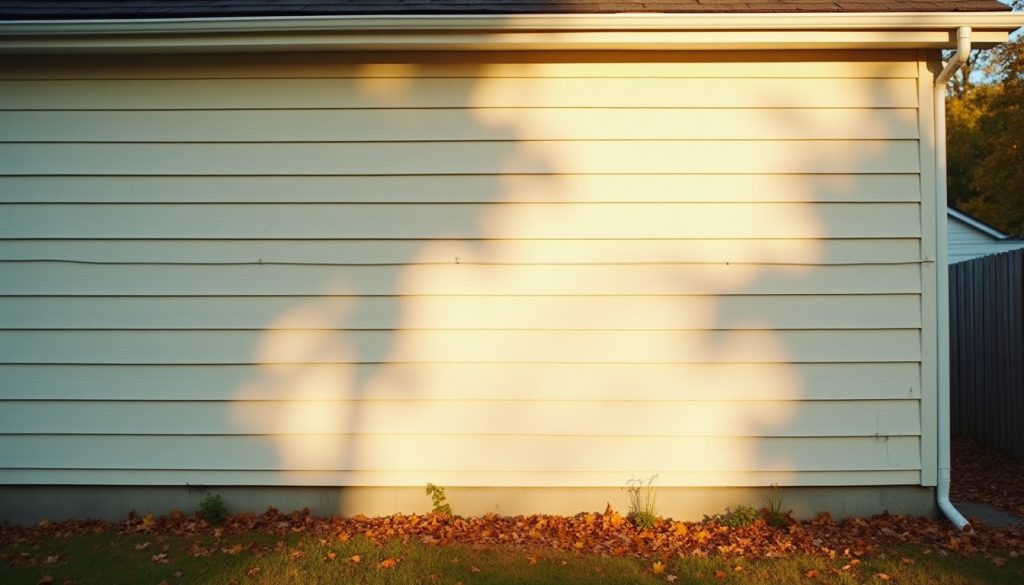
Native lady beetles do not aggregate on buildings in autumn. If hundreds of beetles are on a sunny wall in October, the behaviour has already identified them.
Yes, they bite
This is the most searched question about them and the answer is yes. Ohio State describes the species as more aggressive than native lady beetles, with consistent reports of biting. Kentucky extension says they occasionally bite or pinch if in contact with skin and that the sensation is like a pinprick and seldom serious.
Sources disagree on whether the bite breaks skin: Ohio State and Illinois both state the beetles cannot pierce skin, while the reported sensation suggests otherwise to the people experiencing it. Either way there is no venom, and no documented disease transmission.
The behaviour makes sense once you know they are predators. They are probing for food, and they bite when pressed against skin, trapped under a sleeve, a collar or a waistband, rather than seeking people out.
The stain and the smell
When handled, squeezed, roughly vacuumed or alarmed, the beetle exudes hemolymph from its leg joints. This is reflex bleeding. The fluid is yellow-orange, acrid, and Ohio State states plainly that it causes permanent stains.
The practical consequence is a single rule: vacuum, do not sweep or crush. A crushed beetle on a curtain, a painted wall or upholstery guarantees both the mark and the odour. Use a stocking or a sock inside the vacuum tube if you want to release them outside rather than kill them.
The allergy problem is real and under-recognised
Asian lady beetles are an established seasonal indoor allergen in the United States, documented in the allergy literature rather than inferred. A 2007 study in the Journal of Allergy and Clinical Immunology identified two IgE-binding proteins, named Har a 1 and Har a 2, and found measurable IgE antibody in 15 of 20 sera tested, 7 of them at high titres.
Documented reactions include rhinoconjunctivitis, asthma, urticaria and angioedema, and extension sources note these have occurred in people with no prior allergy history. There is an important caveat the trade press usually drops: in a separate group of 68 adult asthma patients, those positive to the beetle were also positive to German cockroach and reported no beetle exposure, which points to cross-reactivity rather than beetle-specific sensitisation in at least some cases.
For the trade, the practical signal is a household reporting indoor rhinitis, cough or asthma from September through March, worsening indoors, with a visible overwintering beetle population. That is a legitimate reason to treat the aggregation rather than live with it, and it parallels the better-known picture in our guide to cockroach allergens and asthma.
Why they are on your wall, and in it
In their native range these beetles overwinter on cliff faces and rock outcrops. Ohio State describes them mistaking building walls for rock cliffs, which is why they mass on the sunnier south and west faces in the afternoon and favour light-coloured surfaces with contrast.
From the wall they crawl into cracks around window and door frames, under siding, and into soffits and attics. They are not trying to get into the living room. They are looking for a protected void, and the living room is where they end up by accident.
They do not breed indoors. There is no aphid food and no reproduction inside, so the beetles crawling across a window in February are overwintering adults leaving, not a new generation. A spring surge is an exit, not a hatch.
What actually works
- Exclusion before late September. Seal around window and door frames, utility penetrations, soffit and fascia gaps, and repair screens. This is the only measure that changes next year.
- A correctly timed exterior perimeter application, which Kentucky puts at late September to early October, before the beetles mass. Applied after they have gathered, it is largely wasted.
- Vacuum indoors. Effective, immediate, and avoids the stain.
- Do not spray indoors or dust the voids. Interior treatment does not reach beetles in wall voids and soffits, and killing them in place leaves carcasses that feed carpet beetles, which then move on to woollens. This is the same trap covered in our guides to boxelder bugs and carpet beetles.
- Expect a spring appearance even after a good autumn, from the population already inside. It dwindles rather than renewing.
They sit alongside the other overwintering species in our guide to fall invaders and why timing is the treatment.
Dogs, and the one documented case
A 2008 case report in Toxicon described a six-year-old dog presenting with severe trauma to the mouth suggestive of a chemical burn. Sixteen Asian lady beetles were removed from the mucosa covering the hard palate, where they had become embedded and required manual removal.
That single report is the basis for every claim you will read about beetles sticking to dogs’ mouths. It is real, it is peer reviewed, and it is one case, so it should not be described as common. The plausible risk is a dog that mouths or eats beetles where they are massing on a floor or windowsill.
Where they came from
The species was introduced deliberately as a biological control agent for aphids, scales and psyllids, with an early attempt in California in 1916 and repeated USDA releases across the eastern states in the late 1970s and early 1980s. The first established field population was found in Louisiana in 1988, and by 1994 the beetle was recorded in Alabama, Georgia, South Carolina and Florida.
The tidy version of this story, that the USDA released it and created a pest, is not quite supported. Extension and USDA sources leave the origin of the established 1988 population genuinely unresolved, including the possibility of an accidental port introduction. It is a useful corrective for anyone arguing about biological control in either direction.
Frequently asked questions
Do Asian lady beetles bite?
Yes. Ohio State reports consistent accounts of biting, and Kentucky extension describes an occasional bite or pinch that feels like a pinprick and is seldom serious. Sources disagree on whether the mouthparts break skin. There is no venom and no documented disease transmission, and they bite mainly when pressed against skin under clothing.
How do I tell an Asian lady beetle from a ladybug?
Look at the white plate behind the head, which in the Asian species carries a black M or W shaped mark. Colour and spot count do not work: they range from pale yellow to deep red with zero to about 19 spots. Mass aggregation on a sunny wall in autumn is itself diagnostic, because native lady beetles do not do it.
Are Asian lady beetles dangerous?
Not acutely, but they are not harmless either. They are a documented seasonal indoor allergen with two identified IgE-binding proteins and reported rhinoconjunctivitis, asthma, urticaria and angioedema. They bite, and their defensive fluid stains permanently. One peer-reviewed case describes beetles causing oral chemical burns in a dog.
Why do I have ladybugs in my house in winter?
They entered in autumn, massing on sunlit walls and crawling into cracks, soffits and wall voids to overwinter. They do not breed indoors and are not feeding, so beetles appearing on warm days in late winter are the same adults leaving. Exclusion before late September, plus a perimeter application in the late September to early October window, is what changes the following year.
Sources
- University of Kentucky Entomology ENTFACT-416, Asian lady beetle infestation of structures.
- Ohio State University CFAES, multicolored Asian lady beetle.
- Cornell University Biological Control, Harmonia axyridis.
- University of Illinois Extension and Michigan State University Extension.
- Nakazawa and colleagues, “Asian ladybugs (Harmonia axyridis): a new seasonal indoor allergen,” Journal of Allergy and Clinical Immunology, 2007.
- Stocks and Lindsey, “Acute corrosion of the oral mucosa in a dog due to ingestion of multicolored Asian lady beetles,” Toxicon, 2008.