Boxelder Bugs: Why They Cover the Wall Every Autumn
Boxelder bugs mass on the south and west walls of buildings in autumn, triggered by a cold snap followed by warming, then spend winter dormant in wall voids and reappear indoors on warm days in late winter. They do not bite, do not breed indoors, do not damage the structure and do not feed while they are inside. They breed almost exclusively on female boxelder trees. Exclusion before the first cold snap is the only treatment that changes next year.
This is a pest defined entirely by nuisance. Nothing it does harms the building or the people in it, which means the case for spending money on it rests on how many are appearing and how much that matters to the household. It also means several of the common responses do more harm than the insect.
Identification and where they come from
Adults are about half an inch long, black with three red or orange stripes across the thorax and red margins along the wings. Nymphs are bright red and wingless. They are hard to confuse with anything else once seen clearly.
The host plant is the specific fact that solves most cases. Boxelder bugs develop on Acer negundo, the boxelder or ash-leaved maple, and specifically on the female, seed-bearing trees. They will feed on ash, other maples, plum, cherry, peach and pear, but University of Wisconsin Extension notes they normally cannot complete their development on those other plants.
So a persistent, large annual invasion almost always traces to a seed-bearing boxelder within a short distance. Identifying that tree is worth more than any product, and where a female boxelder sits immediately beside a house, removal or replacement is the one intervention that permanently resolves the problem.
Why they arrive when they do
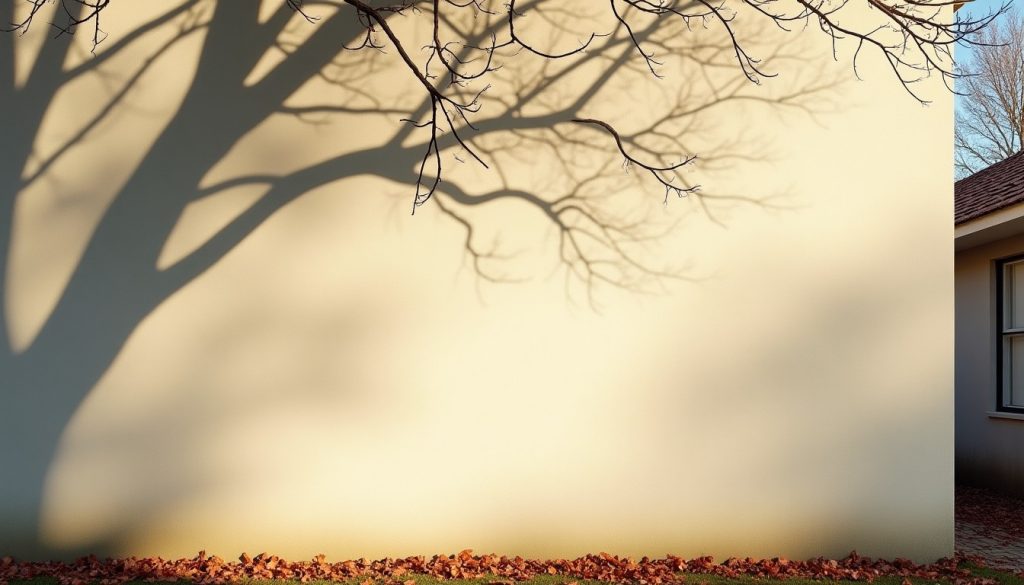
The autumn movement is not a slow drift. Ohio State’s entomologists describe the trigger as a cold snap followed by a warm spell: the cold prompts the search for shelter and the warmth gets them flying. They concentrate on the south and west faces of buildings, the walls holding the most afternoon heat, and Wisconsin notes this happens regardless of the colour of the building.
From there they work into gaps, and the ones that find their way into wall voids and attics spend the winter dormant. They are not feeding, breeding or doing anything at all.
The nuisance comes in late winter and early spring. Purdue describes them reappearing on warm sunny days, when dormant bugs in the voids are warmed enough to become active and move toward light, which takes some of them into the living space rather than back outside. A February living room full of boxelder bugs is the result of an October failure of exclusion.
This is the same mechanism covered for the whole group in our guide to fall invaders and why timing is the treatment.
What they do not do
| Concern | Reality |
|---|---|
| Do they bite? | No |
| Do they breed indoors? | No. They do not feed or reproduce inside |
| Do they damage the structure? | No |
| Do they damage fabrics or stored food? | No |
| Do they harm the tree? | Not meaningfully |
| What is the actual harm? | Fecal spotting on curtains and walls, and a red-purple stain if crushed |
The staining is worth taking seriously even though the insect is not. Crushing them on light-coloured fabric or painted surfaces leaves a mark, so vacuuming rather than swatting is the right reflex indoors.
The treatment that backfires
There is a specific and well-documented reason not to dust wall voids for boxelder bugs. Penn State Extension warns that a void treatment may kill thousands of bugs, and that carpet beetles will then feed on the dead insects and subsequently attack woollens in the house. You trade a harmless nuisance for a fabric pest that does real damage, which is covered in our carpet beetle guidance.
Penn State is equally direct on crack-and-crevice spraying: it will not prevent the bugs emerging and is not a viable or recommended treatment.
Exterior treatment has a narrow window where it helps. A pyrethroid applied to the walls just before congregation can reduce numbers, with the honest caveat from the same sources that ultraviolet breakdown may limit the residual to several days or a week. It is a supplement to exclusion with a short shelf life, not a solution.
What actually works
- Find the female boxelder tree. If one stands beside the house, everything else is management rather than a fix.
- Seal before the first autumn cold snap. No extension source gives a calendar date, and the defensible framing is to have the work finished before the first cold snap rather than on a fixed week.
- Concentrate on the south and west walls, where they land: gaps around window and door frames, utility penetrations, soffit and fascia junctions, torn screens, and the gap behind siding.
- Vacuum indoors rather than spraying or crushing. Empty the vacuum promptly so the dead insects do not become carpet beetle food.
- Do not dust the wall voids, for the reason above.
- Expect late winter appearances even after a good exclusion year, from the population already in the voids. That cohort dwindles rather than renewing.
For how much of this is worth paying for, our comparison of do-it-yourself and professional treatment is the relevant test: exclusion labour on a two-storey wall is the part most households cannot do safely.
Frequently asked questions
Are boxelder bugs harmful?
No. They do not bite, do not breed indoors, do not damage the building, and do not feed on fabrics or stored food. The only real harm is fecal spotting on curtains and walls, and the red-purple stain left if one is crushed on a light surface.
Why do boxelder bugs cover my wall?
They aggregate on the warmest walls, typically the south and west faces, when a cold snap is followed by a warm spell in autumn. That combination prompts the search for overwintering shelter and provides the warmth they need to fly. Building colour makes no difference.
How do I get rid of boxelder bugs?
Exclusion before the first autumn cold snap is the only durable answer: seal gaps around windows, doors, utility penetrations and soffits on the sunny walls. Indoors, vacuum rather than crush or spray. Where a female seed-bearing boxelder tree stands next to the house, removing or replacing it is the permanent fix.
Should I spray inside the walls for boxelder bugs?
No. Penn State Extension warns that killing thousands of bugs inside a wall void gives carpet beetles a food source, and those beetles then attack woollens in the house. The same guidance states that crack and crevice sprays will not stop the bugs emerging and are not recommended.
Sources
- Penn State Extension, boxelder bugs, on void treatment and carpet beetle risk.
- Ohio State University Extension, Buckeye Yard and Garden Line, on the autumn aggregation trigger.
- University of Wisconsin Extension, on host plants and development.
- Purdue University Extension, on late winter indoor appearances.