How to Get Rid of Black Widows Around the House and Yard
To get rid of black widows, find them at night with a torch, vacuum up each spider, its web and its egg sacs, then remove the clutter, woodpiles and debris they shelter in. Extension entomologists rate vacuuming as the safest removal method and say general sprays do little, because widows avoid treated surfaces. Wear gloves throughout. Expect to repeat the job: UC IPM says widows keep re-infesting, so the goal is fewer spiders where people reach, not zero.
Each location around a house has its own hiding spot and fix, so work through the property spot by spot rather than spraying everything.
Where black widows hide, and how to clear each spot
| Location | Where the web is | How to clear it | Keep them from coming back |
|---|---|---|---|
| Garage | By the doors, near vents, behind stored boxes; UC IPM says widows are common in garages | Vacuum spider, web and sacs; wear gloves to move items | Bag gloves and garden clothes; tape boxes shut, store them off the floor and away from walls |
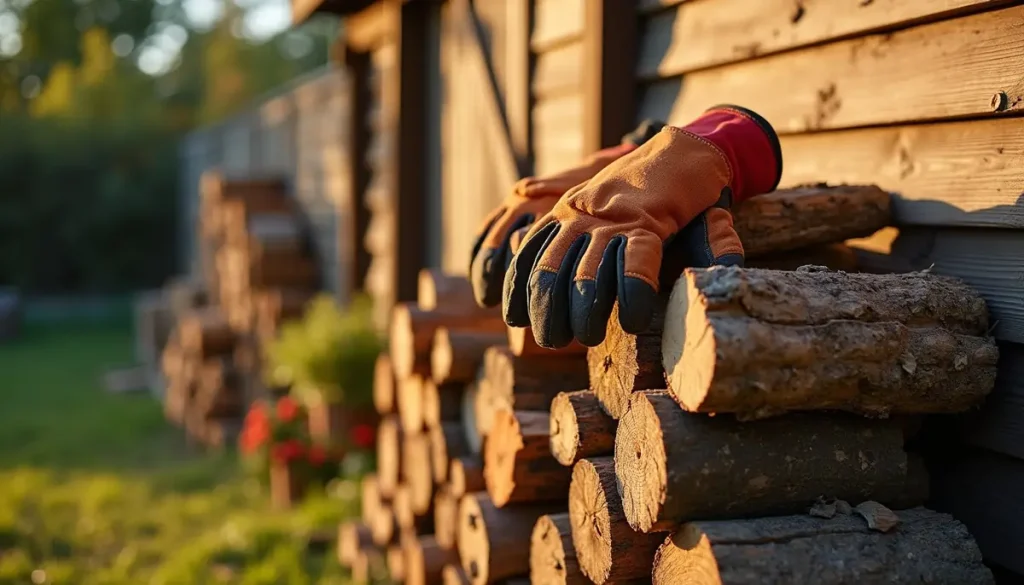
| Woodpile | Gaps between logs, low on the stack | Never lift wood bare-handed; vacuum webs on exposed faces | Stack wood away from the house; check pieces before carrying them in |
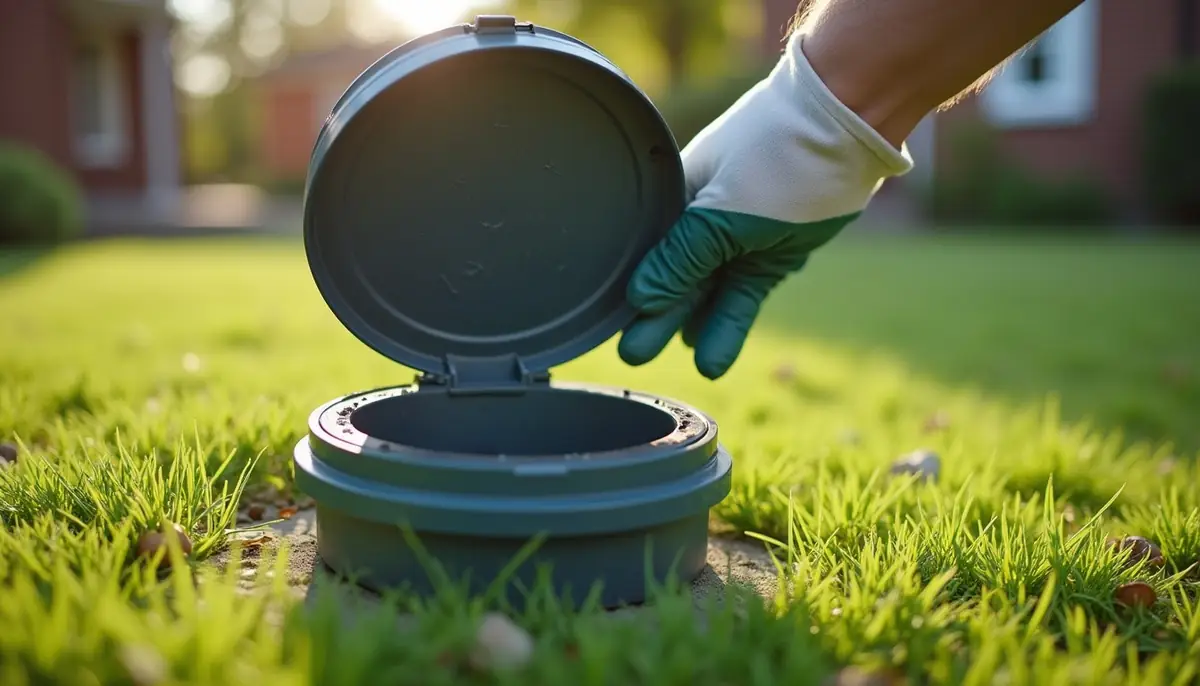
| Water meter and irrigation boxes | Under the lid and in the corners | Lift the lid with gloves and a tool, check with a torch, vacuum | Clear soil and debris from inside the box |
| Outdoor furniture and play equipment | Undersides, lips and hollow legs | Turn items over in daylight with gloves; vacuum | Check before use; UC IPM lists picnic tables, lawn chairs, trash can grips and molded plastic playhouses |
| Shed and outbuildings | Dark corners at floor level, under shelves | Vacuum; clear the floor along walls | Reduce clutter; fit a door sweep |
| Foundation, brick and pipe gaps | Holes between bricks, gaps around pipe penetrations | Vacuum webs at dusk when the spider sits out | Seal gaps; keep the base of walls free of leaf litter and trash |
Before you start: gear and timing
Bites usually happen when a hand meets a hidden spider. The University of Kentucky’s ENTFACT-623 says people are usually bitten when lifting objects or reaching into areas where a spider is hidden, and Virginia Tech’s Widow Spiders publication (444-422) advises gloves when handling firewood or stored items and when vacuuming close spaces. CDC NIOSH recommends long sleeves, long pants, gloves and boots around stacked or undisturbed piles.
Go out after dark. UC IPM says widows come out at dusk and sit in the middle of the web, underside facing up, waiting for prey, which is when the red hourglass is easiest to see and the spider is out of its retreat. Confirm it is a widow before acting; the shiny black body and red mark separate it from the harmless look-alikes covered in how to tell a black widow from a false widow, and young widows, which are striped and tan, catch many people out.
The removal protocol
- Search with a torch at night. Check the spots in the table, starting low: UC IPM says webs are usually within three feet of the ground.
- Vacuum the spider, web and egg sacs together. Virginia Tech calls a vacuum with a hose attachment the safest way to remove a widow, taking spider, web and egg sacs in one step. UC IPM adds that spiders’ soft bodies usually do not survive vacuuming.
- Empty the vacuum outdoors straight away. Virginia Tech advises removing the bag immediately and throwing it away outside.
- Hunt the egg sacs. Black widow sacs are yellowish, smooth and tough, about 1/2 inch across, per UC IPM and Penn State. Kentucky calls destroying egg sacs crucial because each can hold hundreds of young.
- Take away the shelter. UC IPM calls minimising clutter, woodpiles and heavy ground cover essential, and advises keeping the area next to foundations free of trash and leaf litter.
- Re-check through the year. UC IPM says spiderlings balloon in on silk threads, so removal needs repeating throughout the year; that is part of the job, not a sign of failure.
Why the egg sacs matter most
One female can restock a garage. Penn State Extension says a southern black widow female may produce up to nine egg sacs, each with 200 to 800 eggs; Virginia Tech gives 200 to 400 eggs per sac and four to nine sacs a summer. UC IPM says a western black widow typically lays about 300 eggs per sac and can produce more than 10 sacs from one mating. Penn State adds that a female may live a year or more, longer than many of the spiders compared in how long spiders live, by species, and gives the timing that shows how long a sac stays put:
Spiderlings leave by ballooning about two and a half weeks after the eggs are laid, so a sac found in June can empty before July. Vacuum sacs the night you see them.
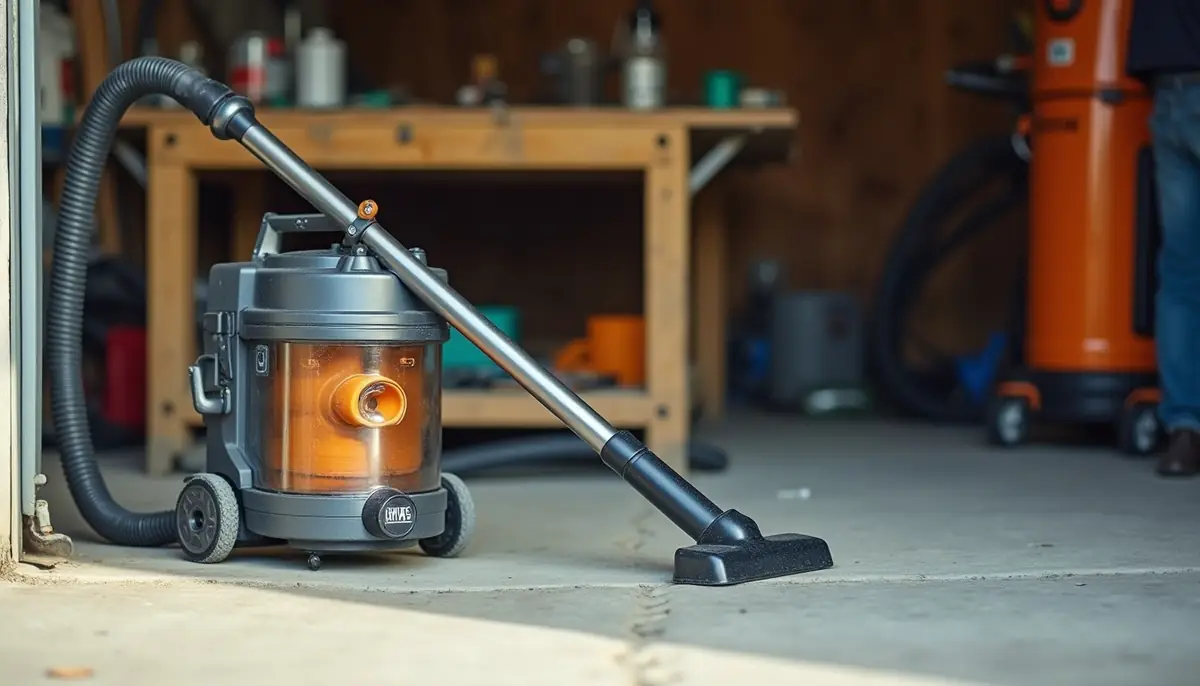
How to get rid of black widows in the garage
Garages are the main place people meet widows indoors. UC IPM says black widows in garages usually make webs by doors, near vents and wherever insects pass. Its prevention list is specific: keep gardening clothes and gloves in zip-lock or twist-tied bags, tape seasonal boxes shut and store them off the floor and away from walls, and wear gloves when cleaning clutter. A door sweep and tight seals cut the insect traffic that feeds the spiders; Kentucky notes that gaps under doors are a common entry point.
Black widows in the house
True black widows are rarely house spiders. UC IPM says they are almost never found in homes, because most living spaces lack enough insects to feed them, and Kentucky reports that in that state they are seldom found indoors, turning up mainly in vestibules, garages and outbuildings. A black, round spider living happily in a bathroom or under kitchen cabinets is more often a false widow, which UC IPM says thrives indoors; check yours with our evidence-based spider identification guide.
For spiders that really are indoors, the general plan is in how to get rid of spiders in the house.

How to get rid of black widows in the yard
Outside, the aim is fewer widows near the places you reach, because eliminating them is unrealistic. UC IPM says it is not practical to eliminate these spiders completely and that both widow species re-infest treated areas. Focus on the strip next to the house, the woodpile, the meter box and the play area.
Lighting matters. UC IPM says outdoor lights attract insects, which attract spiders, and suggests pointing fixtures away from structures, windows and doorways. Kentucky suggests yellow or sodium vapour bulbs at entrances because night-flying insects find them less attractive.
Season tells you when to look, and where spiders and their egg sacs spend the cold months is covered in where spiders go in winter. Our iNaturalist records show southern and western black widows most often recorded in September and October, while the northern black widow peaks earlier, in June:
Do sprays work on black widows?
Poorly, and the evidence is consistent. Virginia Tech says widows are typically not affected by baseboard sprays because they avoid treated areas, and that a spider sprayed directly with a labelled product may not die immediately. UC IPM says insecticides do not provide long-term control. A 2016 study by Vetter and colleagues in the Journal of Economic Entomology, summarised by UC IPM, found water-based insecticides sprayed on brown widow egg sacs had no significant effect on the eggs, while petroleum-based products penetrated the silk.
If a product is used, it must be labelled for spiders and the site and applied as the label directs; Kentucky says foggers are seldom effective. Virginia Tech mentions silica dusts or microencapsulated formulations for attics, crawl spaces and window frames. Scents are not a substitute: the studies behind the popular oils are reviewed in what smells spiders hate, by the evidence.
Should you get rid of black widows at all?
Near doors, play equipment, woodpiles and anywhere hands go, yes. Elsewhere in a yard, leaving them is reasonable. UC IPM says bites are quite rare even where the spiders are very common, and Penn State, citing the American Association of Poison Control Centers, puts US black widow bites at about 2,200 a year with no deaths recorded since 1983. Most bites come from adult females, often guarding a sac; bites in bed are rarer still, as what studies show about spider bites during sleep explains.
The brown widow complicates this in the South and Southern California. UC IPM reports that brown widows outnumbered black widows in urban Southern California in a 2012 study and are extremely common under plastic patio furniture; their egg sacs are spiky rather than smooth. UC IPM considers the brown widow’s bite much milder.
If someone is bitten
Get medical care. CDC NIOSH says black widow venom is a neurotoxin that causes pain at the bite which can spread to the chest, abdomen or whole body, and its advice is to identify the spider if it is safe to do so and get professional medical care. UC IPM says to seek medical attention immediately. Bite marks alone are a poor way to tell what bit you, as our page on why bite patterns are weak evidence explains.
When to call a professional
Virginia Tech recommends a professional in the rare cases where widows are numerous indoors, and Kentucky says infestations often require specialised skills and equipment. Our spider control cost guide lists contractor-reported ranges of $100 to $300 for a one-time treatment and $40 to $70 per visit when spiders are bundled into a monthly pest plan.
Frequently asked questions
Are black widows easy to get rid of?
Individual spiders are: a vacuum removes the spider, web and egg sacs in one step, according to Virginia Tech. Keeping them away is harder. UC IPM says widows re-infest treated areas and spiderlings balloon in on silk, so clutter removal and regular torch checks through the year are what keep numbers down.
What is the Black Widow’s weakness?
Its soft body and fixed habits. UC IPM says spiders usually do not survive vacuuming, and widows sit in the same web every night from dusk, underside up, so a torch search finds them reliably. They also retreat rather than attack when the web is disturbed, which makes removal low risk with gloves on.
What will keep black widows away?
Removing shelter and the insects they eat. UC IPM advises clearing clutter, woodpiles and debris next to foundations, storing garage items in sealed boxes off the floor, and aiming outdoor lights away from the house. Kentucky adds door sweeps, tight screens and yellow bulbs at entrances. No smell has been shown to keep widows away.
What kills a black widow instantly?
Direct physical contact. UC IPM describes finding widows at night with a torch and killing them with a shoe or rolled newspaper, and a vacuum kills most spiders. Virginia Tech warns that a spider sprayed directly with insecticide may not die immediately and can run loose, so sprays are the slower option.
Sources
- University of California Statewide IPM Program, Widow Spiders and Their Relatives (Pest Notes, Vetter R.S.).
- Penn State Extension, Southern Black Widow Spider.
- Virginia Cooperative Extension, Hannum C. and Miller D.M., Widow Spiders, Publication 444-422.
- University of Kentucky Entomology, Eliminating Spiders around Homes and Buildings, ENTFACT-623.
- CDC National Institute for Occupational Safety and Health, Venomous Spiders (outdoor workers).
- Vetter R.S., Tarango J. and colleagues, Efficacy of several pesticide products on brown widow spider egg sacs and their penetration of pesticides through the egg sac silk, Journal of Economic Entomology 109: 267 to 272, 2016 (as summarised by UC IPM).
- The Pest Control Brief analysis of iNaturalist research-grade records, pulled October 2026.