Chipmunk, Groundhog or Ground Squirrel? Read the Burrow
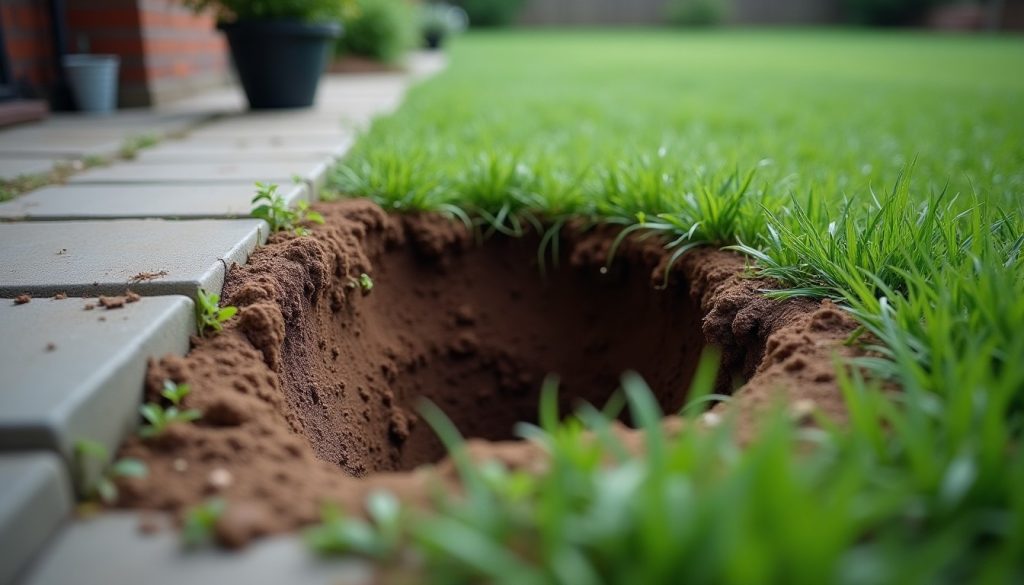
A groundhog burrow entrance is 10 to 12 inches across with a conspicuous mound of soil beside it. A chipmunk burrow is about 2 inches across with no mound at all, because chipmunks carry the soil away in their cheek pouches and scatter it. That is the fastest diagnosis available. The harder question is legal: in most states you may kill a nuisance burrowing animal on your own property, but you may not move it somewhere else, which leaves tolerate, exclude or dispatch as the realistic options.
The hole appears beside the patio, the deck starts to settle, and the search begins. Most advice online covers one species in isolation, which is useless when the thing you have is a hole. Here they are side by side.
Read the hole
| Animal | Entrance | Mound | Burrow |
|---|---|---|---|
| Eastern chipmunk | About 2 inches | None. Soil is carried off and scattered | About 3 feet deep, main tunnel 20 to 30 feet, multiple entrances |
| Thirteen-lined ground squirrel | About 2 inches | None, and often hidden in vegetation | Plunges 6 inches then angles off, 15 to 20 feet |
| California ground squirrel | About 4 inches, older entrances larger | Yes | 2 to 3 feet deep, occasionally more, 5 to 30 feet |
| Groundhog | 10 to 12 inches | Yes at the main entrance, a conspicuous apron of soil | 3 feet or more deep, 25 to 50 feet, two or more entrances |
One exception matters. The mound identifies the main entrance only. Groundhog escape holes are dug from below, so they have no rim of excavated soil. A mound-free 8-inch hole is still a groundhog. Almost every guide presents the mound test as absolute, and it is not.
A 2-inch hole with no mound is ambiguous between chipmunk and thirteen-lined ground squirrel. Separate them by region, since the ground squirrel is a Great Plains and Midwest grassland animal, and by siting: chipmunk entrances turn up under stone walls, stumps, logs and structures.
What they actually damage
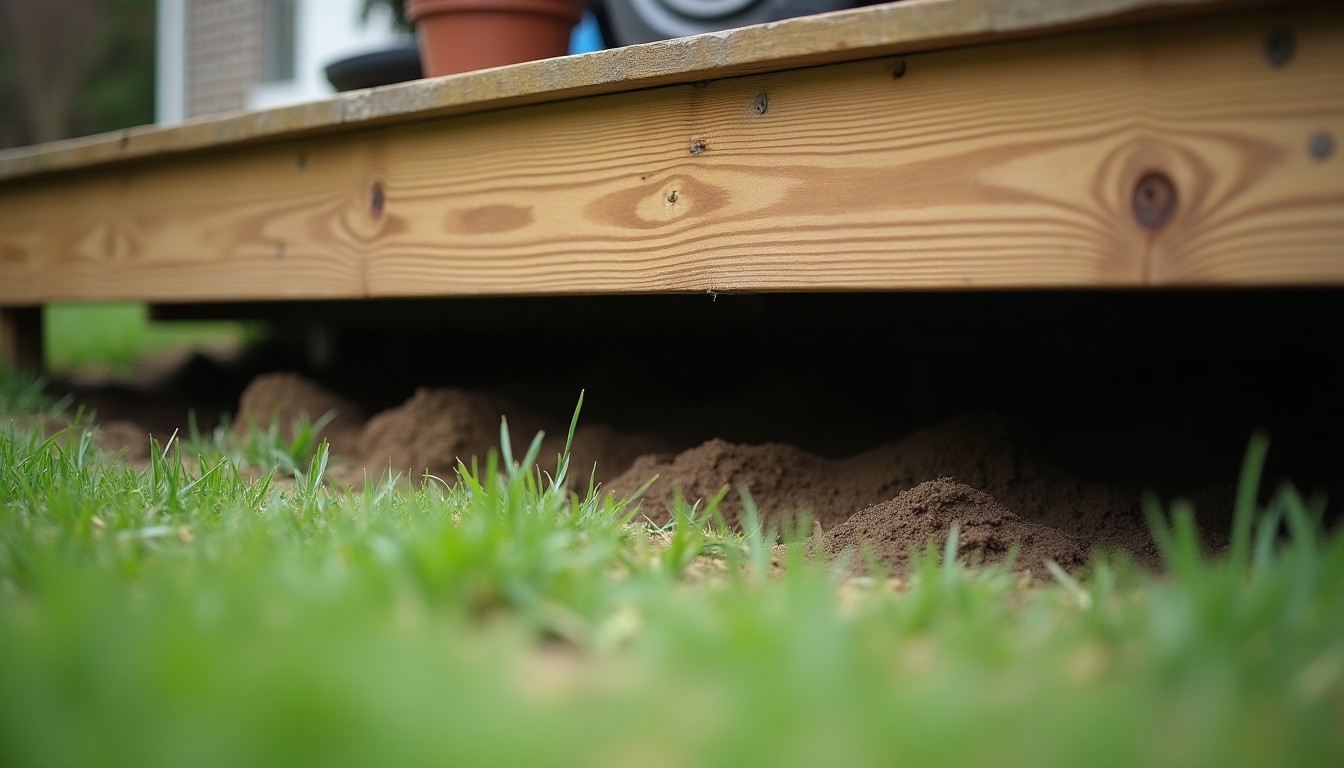
All three undermine rather than chew. Extension descriptions are consistent: chipmunks burrow under patios, porch stairs, retaining walls and foundations; sidewalks, patios, retaining walls and even buildings can settle and potentially lose integrity when undermined by groundhogs; ground squirrel burrowing beneath structures sometimes produces damage requiring costly repair, and can dry out and topple trees.
A detail worth knowing before you dig: the entrance may be some distance from the structure while the tunnel and the resting chamber sit near the foundation. Where the hole is does not tell you where the void is.
Which of them actually hibernate
| Animal | Winter | Dormant from | Active again |
|---|---|---|---|
| Eastern chipmunk | Not true hibernation. Long sleeps, waking to eat cached food and surfacing on warm days | Late October | Early March in milder areas, later further north |
| Groundhog | True hibernation, body temperature dropping to around 39 to 40°F | Late October or early November | Late February into March |
| California ground squirrel | Winter hibernation for most adults, plus summer estivation | Varies | Active mid-January through October |
| Thirteen-lined ground squirrel | True hibernation, body temperature just above freezing | October | Late March or early April |
This matters for timing exclusion work: sealing a burrow while the occupant is inside is both cruel and ineffective.
The legal question is not the one people ask
Most people ask whether they are allowed to kill the animal. In most states, on your own property, causing damage, the answer is yes. The question that actually determines your options is whether you may move it, and the answer is usually no.
| State | Status | Relocation |
|---|---|---|
| New York | Chipmunk and woodchuck both unprotected | Illegal to move or relocate an animal off your property |
| Virginia | Groundhog is a nuisance species with a continuous open season; no kill permit required | Illegal to trap and relocate to another area |
| California | Ground squirrels are nongame mammals; an owner or tenant may control them when they damage crops or property | Illegal to relocate wildlife without a permit |
| Pennsylvania | Woodchucks are game animals and chipmunks are protected, but protection is removed where they damage property | Check with the state game agency |
So the realistic menu for a homeowner is tolerate, exclude, or lethal control under state rules. Live-trapping and driving the animal to a park, which is what most online advice suggests, is illegal in much of the country. Rules differ and change, so confirm with your state wildlife agency before trapping anything. Where a contractor is involved, the trade and its pricing are covered in wildlife removal costs.
Exclusion, with the specifications that matter
Exclusion is the durable answer and the one with real numbers behind it.
- Groundhogs: fencing with openings under 2 inches, 3 to 4 feet high, buried at least 12 inches with a further 8 to 10 inches bent outward as an L-footer, and the top 15 inches bent outward at 45 degrees so they cannot climb over. One source gives a shallower burial; the 12-inch figure is the safer working spec.
- Chipmunks: quarter-inch hardware cloth, extended at least a foot beyond each planting margin, plus gutter guards and covered downspouts.
- Ground squirrels: half-inch wire mesh or sheet metal at least 18 inches high with 6 inches buried.
- All three: remove the harbourage that draws them in against the wall, including woodpiles, dense continuous cover between woodland and foundation, and loose stone walls.
What does not work is worth stating too. UC IPM reports that repellents are not effective against ground squirrels and that ultrasonic devices have not been shown to control, disturb or displace them in unbiased trials. Chipmunk repellents are described as expensive and unlikely to give complete reduction. General sealing technique for the building itself is in pest-proofing your home, and if you are trying to identify the animal from its droppings instead, see droppings identification.
One aside: abandoned burrows get reused, sometimes by snakes, which is a reason to fill and monitor rather than leave an empty hole. See snake removal.
About the 700 pounds of dirt
You will find it everywhere: a claim that researchers measured a single woodchuck excavating 700 pounds of soil. It is a misreading of a joke. The original passage says a wildlife biologist measured the inside volume of a typical woodchuck burrow and estimated that, if wood filled the hole instead of dirt, the animal would have chucked about 700 pounds’ worth. It is an answer to the tongue-twister, not a soil measurement.
Frequently asked questions
How can I tell a chipmunk hole from a groundhog hole?
Size and soil. A chipmunk entrance is about 2 inches across with no mound, because the soil is carried away in cheek pouches and scattered. A groundhog entrance is 10 to 12 inches across with a conspicuous mound at the main entrance. Note that groundhog escape holes, dug from below, have no mound.
Why is there no dirt pile around a chipmunk hole?
Because the chipmunk removes it deliberately. Extension and state wildlife sources describe chipmunks carrying excavated soil away in their cheek pouches and scattering it, which keeps the entrance inconspicuous to predators.
Will a groundhog damage my foundation?
It can. Extension guidance states that sidewalks, patios, retaining walls and even buildings can settle and potentially lose integrity or collapse when undermined. The burrow entrance may be well away from the structure while the tunnel runs beneath it.
Is it illegal to relocate a groundhog?
In many states, yes. New York prohibits moving an animal off your property, Virginia states plainly that it is illegal to trap and relocate, and California requires a permit to relocate wildlife. Rules vary, so check with your state wildlife agency before trapping.
Do chipmunks hibernate?
Not in the strict sense. They sleep for long periods from late October but wake to eat cached food and come out on warm winter days. Groundwork squirrels and groundhogs do hibernate properly, with the groundhog’s body temperature dropping to around 39 to 40°F.
What keeps groundhogs out?
Fencing with openings under 2 inches, 3 to 4 feet high, buried at least 12 inches with an L-footer bent outward, and the top 15 inches angled outward at 45 degrees. Both climbing and digging have to be addressed, because they do both.
Do repellents or ultrasonic devices work on burrowing animals?
The published position is no. UC IPM states that repellents are not effective for ground squirrels and that ultrasonic devices have not proven to control, disturb or displace them in unbiased research trials. Chipmunk repellents are described as expensive and unlikely to achieve complete reduction.
Should I fill in the hole?
Only once you know it is empty, and expect to repeat it. Abandoned burrows are reoccupied by the same or other species, so filling and then monitoring for fresh digging is more informative than filling alone.
Sources
- Penn State Extension, Woodchucks, and Chipmunks. extension.psu.edu
- Virginia Cooperative Extension, Managing Wildlife Damage: Woodchucks, CNRE-159, 2022. pubs.ext.vt.edu
- UC Statewide IPM Program, Pest Notes 7438, Ground Squirrels, revised 2025. ipm.ucanr.edu
- Internet Center for Wildlife Damage Management, chipmunk and woodchuck biology. icwdm.org
- Connecticut Department of Energy and Environmental Protection, Eastern Chipmunk fact sheet, 2020. portal.ct.gov
- Nebraska Extension, Thirteen-lined Ground Squirrels, G1964. extensionpubs.unl.edu
- New York State Department of Environmental Conservation, removing nuisance wildlife legally. dec.ny.gov
- Virginia Department of Wildlife Resources, Groundhogs. dwr.virginia.gov
- Cornell Cooperative Extension Suffolk County, groundhog and woodchuck fact sheet. ccesuffolk.org