Can Bed Bugs Survive the Dryer? Heat, Time and Loading
No: bed bugs and their eggs do not survive a hot dryer cycle of at least 30 minutes, but a short or crowded cycle can leave survivors. In a University of Sheffield laundry study, tumble drying on a hot setting above 40°C (104°F) for 30 minutes killed every life stage. Ten minutes did not. Eggs are the hardest stage to heat to death. The dryer cleans what goes in it; it does not end an infestation.
Extension services give different dryer times, from 10 minutes to 30, and the published tests explain why. The table puts the advice side by side.
Dryer and washer settings that kill bed bugs, by source
| Method | Setting | Time | Kills eggs? | Source |
|---|---|---|---|---|
| Tumble dryer, hot cycle | Hot, above 40°C (104°F) | At least 30 minutes | Yes, all stages | Naylor and Boase, Journal of Economic Entomology, 2010 |
| Tumble dryer, short hot cycle | Hot | 10 minutes | Not reliably; about 75 per cent of nymphs and 85 per cent of adults died | Naylor and Boase 2010, as summarised by Texas A&M AgriLife |
| Dryer, items put in dry | Medium to high | 10 to 20 minutes | Yes, says Kentucky | University of Kentucky ENTFACT 636 |
| Home dryer | Hottest setting | At least 10 to 15 minutes | Not stated | UC IPM Pest Notes 7454 |
| Washing machine, hot | 60°C (140°F) | Normal cycle | Yes, all stages | Naylor and Boase 2010 |
| Washing machine, warm | 40°C (104°F) | Normal cycle | No; all adults and nymphs died but only 25 per cent of eggs | Naylor and Boase 2010, as summarised by Texas A&M AgriLife |
| Soaking in plain water | No detergent | 24 hours | No; active stages only | Naylor and Boase 2010 |
| Dry cleaning | Perchloroethylene | Standard process | Yes, all stages | Naylor and Boase 2010 |
Compiled by The Pest Control Brief from Naylor and Boase (University of Sheffield, 2010), Texas A&M AgriLife’s Insects in the City summary of that study, University of Kentucky ENTFACT 636 and UC IPM Pest Notes 7454.
Why 30 minutes, when some sources say 10
A dryer does not kill bed bugs the moment it starts. Clothes have to warm up first, and the bugs inside a folded seam or pocket heat last. The Sheffield team, Richard Naylor and Clive Boase, sealed adults, nymphs and eggs in small cotton pouches, tucked them into garments, and logged temperatures inside the load with data loggers. A hot cycle needed at least 30 minutes to kill everything. According to Texas A&M AgriLife entomologist Mike Merchant’s summary of the paper, a 10 minute hot cycle killed only about 75 per cent of nymphs and 85 per cent of adults, and the 30 minute result was for a load of about 7.7 lb (3.5 kg).
The shorter extension times are not wrong so much as conditional. The University of Kentucky’s 10 to 20 minutes at medium to high heat comes with a caveat: lethal temperatures are reached more quickly if items are dry when they go in. UC IPM says at least 10 to 15 minutes on the hottest setting. Thirty minutes on high covers both, plus the wet sheet or thick hoodie that warms slowly, so it is the safer rule for any single load.
The temperatures that actually kill each stage
The clearest laboratory numbers come from Stephen Kells and Michael Goblirsch at the University of Minnesota, published in the journal Insects in 2011. They raised the temperature slowly, as a heat treatment does, and recorded the point at which 99 per cent died.
- Adults: 99 per cent died at 48.3°C (119°F). At a lower 45°C (113°F), killing 99 per cent took 94.8 minutes.
- Eggs: 99 per cent died at 54.8°C (131°F). At 45°C, eggs survived 7 hours; at 48°C (118°F), 99 per cent died after 71.5 minutes.
Eggs are the reason dryer time matters. A cycle that only reaches the mid 40s °C kills adults in about an hour and a half but can leave eggs alive for several hours, which is why the cooler settings and short timers fail first on eggs. Kells and Goblirsch concluded that heat treatments need temperatures and exposure times substantially higher than values previously cited. Eggs glued inside a seam look like a pale grain; our guide to every bed bug life stage at actual size shows what to look for.
Can bed bugs survive the washer and dryer?
Not if both are hot, but the washer alone is unreliable. The Sheffield tests found a 60°C (140°F) wash killed all life stages. At 40°C, Merchant’s summary reports, every adult and nymph died but only a quarter of eggs did. Soaking items in water without detergent for 24 hours killed active bugs and had no effect on eggs, so bed bugs do not reliably drown in a washing machine either. A cold or warm wash followed by a hot 30 minute dry does the job; the dryer is the step that matters.
That also answers whether you can skip washing. Kentucky says dryer heat can be used in lieu of washing and will kill all life stages, and starting dry speeds it up. Kentucky lists bedding, clothing, toys, shoes and backpacks as items that can go straight into the dryer, if the care label allows heat.
For dry clean only items, Kentucky cites textile experts at the Drycleaning and Laundry Institute: most cotton, wool, silk, linen, rayon and nylon garments labelled dry clean only will not be harmed if dry and tumbled at a moderate temperature. The Sheffield study found perchloroethylene dry cleaning killed all stages, so a dry cleaner is an option; bag the items and tell the cleaner.
How to run the load so nothing escapes
- Bag first. Kentucky advises disposable plastic trash bags so bugs do not fall off on the way to the washer or dryer, which matters most in a shared laundry room. Bed bugs spread on luggage, furniture and between neighbouring units, and a basket carried through the hall is one more route.
- Empty the bag straight into the drum and put the bag in an outdoor bin.
- Run high heat for at least 30 minutes, or the hottest setting the fabric allows. Split large loads; the Sheffield result came from about 7.7 lb of laundry.
- Put treated items into a clean bag or a sealed tub, not back on an untreated bed or floor.
- After travel, UC IPM says to wash and dry all clothes at the hottest settings the fabric permits as soon as you get home; our hotel room checklist for bed bugs covers the stay itself.
Items that cannot be heated have one other home option. Freezing at minus 17°C (about 0°F) for at least 2 hours killed all stages in the Sheffield tests, but a 5.5 lb (2.5 kg) bag of loose dry laundry took about 8 hours to get that cold, and the EPA advises 0°F for three days in a sealed bag. The cold limits are set out in our page on whether bed bugs survive winter cold.
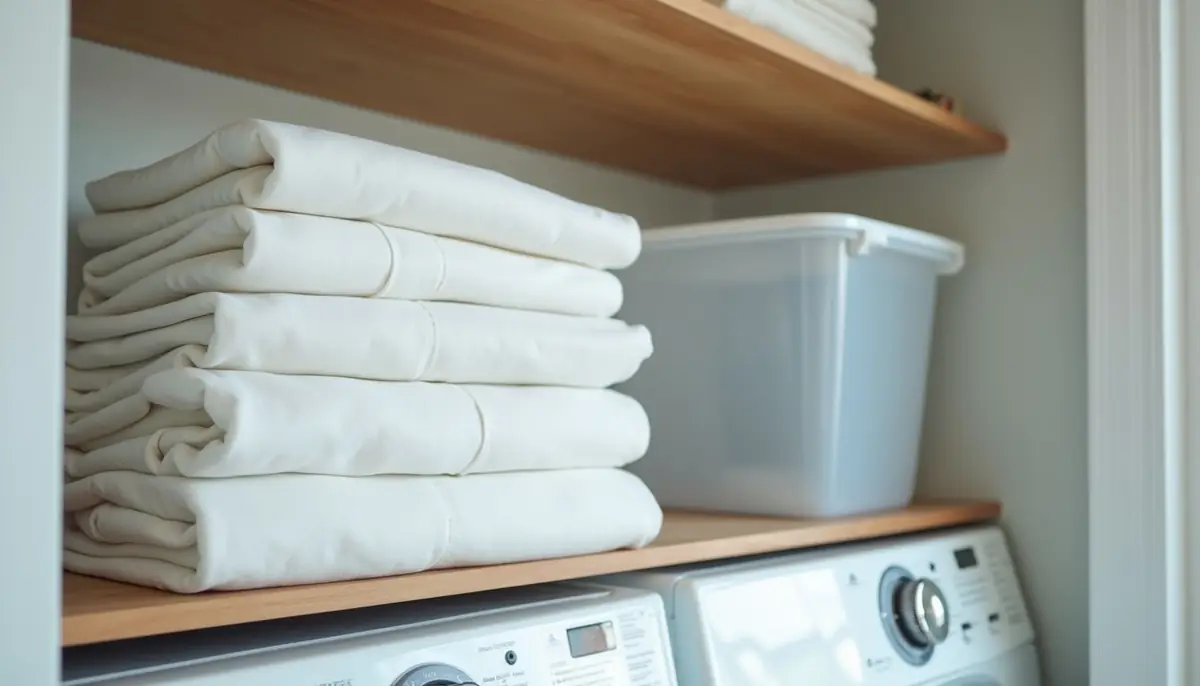
What the dryer cannot do
The EPA lists a clothes dryer on high heat as a useful non-chemical method, then adds that do it yourself heat treatments might not work and might not get rid of an infestation entirely. Bed bugs spend most of their time in mattress seams, bed frames and cracks, which no dryer reaches. Laundry is preparation and containment, not a cure.
How long untreated clothes stay risky depends on room temperature and the bug’s last meal; how long bed bugs survive without feeding gives the figures.
If you have found live bugs in more than one spot, the full plan in how to get rid of bed bugs is the next step.
For a whole room, UC IPM recommends commercial heating at 140°F for two hours or 130°F for three, which heats the hiding places the way a dryer heats a shirt; our page on what professional bed bug treatment involves explains the visit.
Frequently asked questions
How long does it take a dryer to kill bed bugs?
Thirty minutes on a hot setting killed every life stage, eggs included, in the University of Sheffield laundry study. Kentucky and UC IPM give shorter times of 10 to 20 minutes, and Kentucky notes dry items heat faster. A 10 minute hot cycle in the Sheffield work killed only about 75 to 85 per cent of nymphs and adults, so 30 minutes is the safer rule.
Will spraying Lysol on my mattress kill bed bugs?
Do not count on it. A household disinfectant is registered to kill germs, and the EPA says to look for EPA-registered pesticides with bed bugs listed on the label. Even sprays that kill on contact often miss eggs; our review of whether rubbing alcohol kills bed bugs shows how many sprayed eggs still hatch.
What kills bed bugs instantly on clothes?
Nothing in a home kills them instantly, but heat comes closest. In Minnesota laboratory tests, 99 per cent of adults died once they reached 48.3°C (119°F) and eggs at 54.8°C (131°F). A hot dryer gets clothes into that range, which is why 30 minutes on high is the standard advice. A 60°C (140°F) wash also killed all stages in the Sheffield tests.
What do bed bugs absolutely hate?
Heat. In Minnesota tests, 71.5 minutes at 48°C (118°F) killed 99 per cent of eggs, the toughest stage, and adults died faster. No extension source we read names a smell that drives bed bugs away from a sleeping person. Our page on home remedies for bed bugs scores the popular ones.
Can bed bugs survive the dryer without washing?
No, provided the cycle is long and hot enough. The University of Kentucky says a dryer at medium to high heat can be used in lieu of washing and kills all life stages, and that dry items reach lethal temperatures faster. If one bug turned up on its own, read what finding a single bed bug means before washing the whole house.
Sources
- Naylor RA, Boase CJ. Practical solutions for treating laundry infested with Cimex lectularius (Hemiptera: Cimicidae). Journal of Economic Entomology 103(1): 136 to 139, 2010.
- Kells SA, Goblirsch MJ. Temperature and time requirements for controlling bed bugs (Cimex lectularius) under commercial heat treatment conditions. Insects 2(3): 412 to 422, 2011. University of Minnesota.
- Texas A&M AgriLife Extension, Insects in the City. Guidelines for killing bed bugs in laundry, Mike Merchant, March 2010.
- University of Kentucky Entomology. Bed Bugs, ENTFACT 636, Michael F. Potter.
- University of California IPM. Pest Notes: Bed Bugs, Publication 7454.
- US Environmental Protection Agency. Do-it-yourself Bed Bug Control.