Still Seeing Bed Bugs After Treatment? A Week-by-Week Guide
Seeing some bed bugs for one to three weeks after an insecticide treatment is normal: residues kill slowly and eggs laid before the visit keep hatching for up to about 15 days. That is why firms return about two weeks later. After a heat treatment, live bugs in the following days usually mean a missed hiding spot or bugs brought back in. The job is finished only when traps stay empty across several fortnightly checks.
Week by week: what you see and what it means
| When | What you may see | Normal? | What to do |
|---|---|---|---|
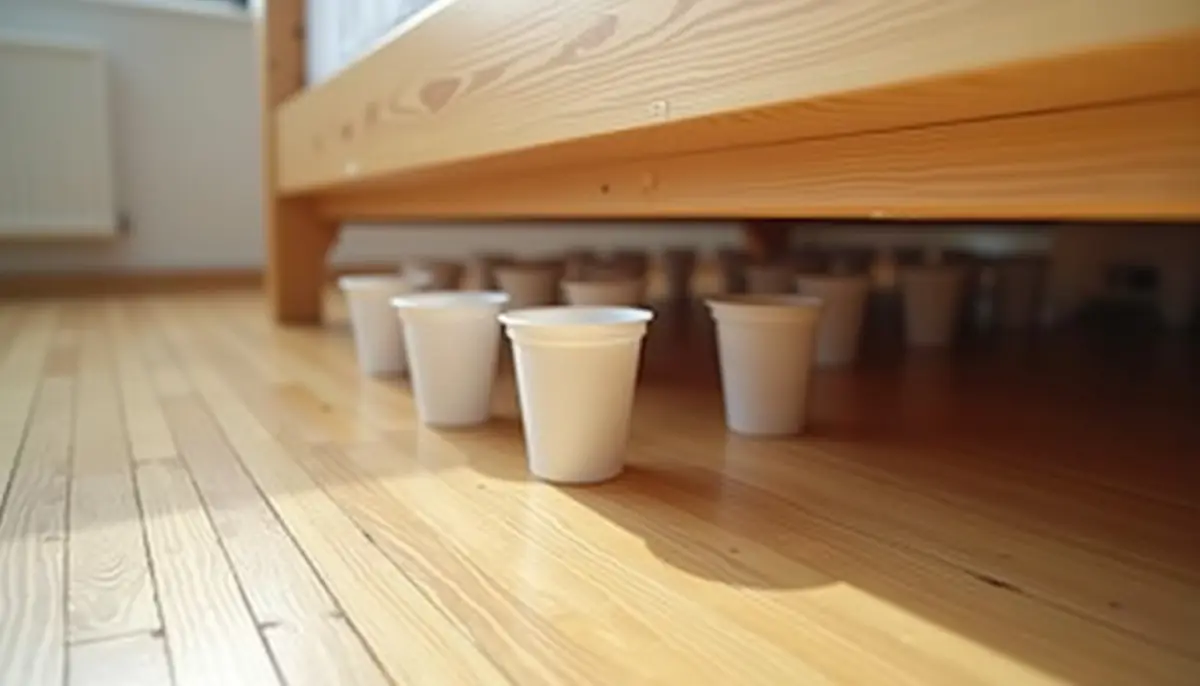
| Days 1 to 3 | Bugs wandering in daylight, dead or slow bugs on floors and sheets | Often, after chemical work: UC IPM says some residues take many days to kill | Leave treated areas alone; keep interceptor cups under the bed legs |
| Week 1 | Tiny pale nymphs, a few new bites | Yes after chemical work: eggs hatch in about a week at room temperature (Kentucky) | Note counts and dates for the technician |
| Week 2 | More hatchlings, fewer adults | Yes: UC IPM gives 10 to 15 days to hatch, so the last eggs emerge now | Follow-up visit, usually about day 14 |
| Weeks 3 to 4 | Occasional bug in a trap | Expected while a second or third round works | Further visit if the trap catch has not fallen |
| Weeks 5 to 10 | Nothing in traps, no new bites | The goal | Keep checking cups every two weeks; three clear checks in a row is a common sign-off |
| Any time after heat | A live adult days later | No: heat kills every stage on the day | Call the firm; ask about missed spots and reintroduction |
| Month 3 or later | Bites or bugs again after a clear period | No | Treat as a new introduction or a neighbouring unit; book an inspection |
Compiled by The Pest Control Brief from University of Kentucky ENTFACT-636, UC IPM Pest Note 7454 and the Rutgers field programmes (Cooper, Wang and Singh 2016; Singh and others 2017).
Is it normal to still have bed bugs after treatment?
For the first two weeks after insecticide work, yes. Kentucky’s entomologists say eggs hatch in about a week at room temperature; UC IPM Pest Note 7454 gives 10 to 15 days. UC IPM says the eggs are covered in a gluelike material and laid on rough surfaces near where people sleep, so eggs laid before the visit can still produce nymphs afterwards. Kentucky notes that follow-ups are usually needed.
The fortnightly rhythm in that chart is how the field programmes ran. In the Rutgers community programme (Cooper, Wang and Singh, 2016), infested apartments were treated every two weeks until no bed bugs were found at three fortnightly monitoring visits in a row. That design cut bed bug counts by 98 per cent and the building’s infestation rate from 15 to 2.2 per cent in 12 months.
How long after bed bug treatment do they die?
From hours to many days, depending on the product and the bugs. UC IPM warns that chlorfenapyr and hydroprene “may take many days to kill bed bugs.” Resistance slows things further: a 2025 Rutgers lab study exposed insecticide-resistant field strains for 4 hours to 30-day-old residues of five commercial insecticides and recorded only 0 to 73 per cent mortality. A bug crossing a treated seam today may live for days, which is the same slow-kill logic covered in how long roaches take to die after pest control.
Why are bed bugs so hard to get rid of?
- Resistance. A University of Kentucky survey of 110 US populations found pyrethroid resistance mutations in 88 per cent (Zhu and others, 2010). EPA says some products and application methods may not work against resistant bugs.
- Hiding. EPA says a crack that will hold a credit card can hide a bed bug, and UC IPM puts 15 per cent of bugs outside the bed, in sofas, cabinets, baseboards and carpet edges.
- Waiting. Kentucky gives 1 to 4 months without feeding in heated homes, longer when cool. Our page on how long bed bugs live without food breaks that down by temperature.
- Neighbours. In the Rutgers programme, property managers had not known about 71 per cent of the infested apartments found at the first building-wide inspection.
- Growth. A population left between visits keeps breeding, which is why our bed bug growth timeline matters when a follow-up slips.
Live bugs after a heat treatment
Heat should not leave survivors. UC IPM sets the commercial standard at 140°F for two hours or 130°F for three hours. University of Minnesota trials found adults die after about 95 minutes at 113°F (45°C), while eggs survived 7 hours at that temperature and needed 71.5 minutes at 118°F (48°C), so a cool pocket inside a sofa or wall void can shelter eggs. Kentucky adds that heat alone has no residual effect, so bugs carried back in on belongings are not killed. That is why some firms apply an insecticide alongside the heat.
A live bug three days after heat is a reason to call, not to wait two weeks. Ask where the temperature sensors were and whether nearby rooms or units were checked.
What to do after bed bug treatment
- Keep interceptor cups under every bed and sofa leg. Kentucky says they are useful for determining whether an infestation has been eliminated.
- Keep sleeping where you slept, unless told otherwise. Kentucky warns that sofas become bed bug hotspots when used for sleeping, so moving to the couch can spread the problem.
- Leave encasements zipped. Bugs sealed inside die, and new bugs on the cover are easy to see (Kentucky).
- Launder at 120°F or dry on medium to high for 10 to 20 minutes for bedding and clothes, which Kentucky says kills all stages.
- Check the label before cleaning. Ask the technician which surfaces were treated and the re-entry time on the label; our guide to whether pest control is safe for pets and children covers the re-entry interval.
Should I vacuum after bed bug treatment?
Yes, with care. UC IPM tells residents to keep monitoring daily and vacuum previously infested areas regularly after professional treatment. Kentucky says bugs survive being vacuumed, so seal and bin the contents straight away. Ask the firm before vacuuming treated baseboards or dusted voids, since removing a residual can shorten how long it works.
How to tell if bed bugs are gone
Use a count, not a feeling. In the Rutgers studies, treatment stopped only after three consecutive clear inspections, and in the 2017 trial also at least one clear interceptor check. Six weeks of empty cups at fortnightly checks is a sound minimum; our guide to finding one bed bug uses an eight-week rule for extra margin. Bites alone are a poor test: UC IPM says skin symptoms should never be used for diagnosis.
The chart shows what persistence buys. With visits every two weeks, Singh and colleagues eliminated bed bugs in 86 to 100 per cent of apartments within 28 weeks. With monthly visits over six months, Abbar, Wang and Cooper eliminated them in only 36 to 40 per cent, even though counts fell by 89 to 99 per cent. A large drop in numbers is not the same as zero.
Can bed bugs return after treatment?
Yes, either from survivors or a fresh introduction. Kentucky notes that bed bugs often wander between apartments and advises inspecting units on either side, above, below and across the hall. Our guide to how bed bugs spread through luggage, furniture and shared walls explains the routes.
In a block of flats, treatment that stops at your door often fails; building-wide work is covered in why one apartment is never enough, and Kentucky calls for routine building-wide inspections, quarterly or semi-annually.
Before a callback, reread your contract. Our bed bug treatment cost guide reports repeat chemical visits at $415 to $625 each and warranty periods of 30 to 90 days as common, and notes that skipped preparation is the most common reason a warranty claim is refused.
Frequently asked questions
What kills bed bugs instantly?
Direct heat. Kentucky says commercial steamers kill bugs and eggs on contact, and EPA sets the steam floor at 130°F with low airflow so bugs are not scattered. Steam penetrates fabric poorly and leaves no residue, so it suits seams and cracks you can reach, not a whole infestation; our review of home remedies that passed lab tests covers steaming speed. Sprays sold to householders have limited effect once dry, according to Kentucky.
What to do if you slept in a bed with bed bugs?
Put the clothes and bedding you used straight into a hot dryer, as Kentucky advises travellers who wake with welts, and keep your luggage off the floor. About 30 per cent of people do not react to bites at all (Kentucky), so no marks proves little. For itchy or infected bites, see a doctor or CDC’s guidance.
How many treatments does it take to get rid of bed bugs?
Usually two or three for chemical work, one for a well-run heat job. In the 2017 Rutgers trial, chemical-only apartments needed a median of 3 fortnightly visits with light infestations and 7 with heavier ones. Our page on what professional bed bug treatment involves sets out each visit.
Is bed bug treatment safe for pets?
When the product is applied as the label directs and people and pets stay out for the re-entry time on that label, yes in most homes. Kentucky says firms treat seams and crevices but usually will not spray the sleep surface or bedding. Ask for the active ingredient so you can read the label yourself.
Sources
- University of Kentucky Entomology, ENTFACT-636 Bed Bugs (Potter).
- UC IPM, Pest Notes: Bed Bugs, Publication 7454. University of California Agriculture and Natural Resources.
- US Environmental Protection Agency, How to Find Bed Bugs; Do-it-yourself Bed Bug Control; Bed Bug Myths.
- Cooper RA, Wang C, Singh N. Evaluation of a model community-wide bed bug management program in affordable housing. Pest Management Science, 2016.
- Singh N, Wang C, Zha C, Cooper R, Robson M. Testing a threshold-based bed bug management approach in apartment buildings. Insects, 2017.
- Abbar S, Wang C, Cooper R. Evaluation of a non-chemical compared to a non-chemical plus silica gel approach to bed bug management. Insects, 2020.
- Pan X, Sarker S, Wang C. Laboratory evaluation of a novel insecticide, isocycloseram, against the common bed bug. Insects, 2025.
- Zhu F and others. Widespread distribution of knockdown resistance mutations in the bed bug populations in the United States. Archives of Insect Biochemistry and Physiology, 2010.
- Romero A, Potter MF, Potter DA, Haynes KF. Insecticide resistance in the bed bug: a factor in the pest’s sudden resurgence? Journal of Medical Entomology, 2007.
- Kells SA, Goblirsch MJ. Temperature and time requirements for controlling bed bugs under commercial heat treatment conditions. Insects, 2011.