Home Perimeter Pest Control: Does a Barrier Spray Work?
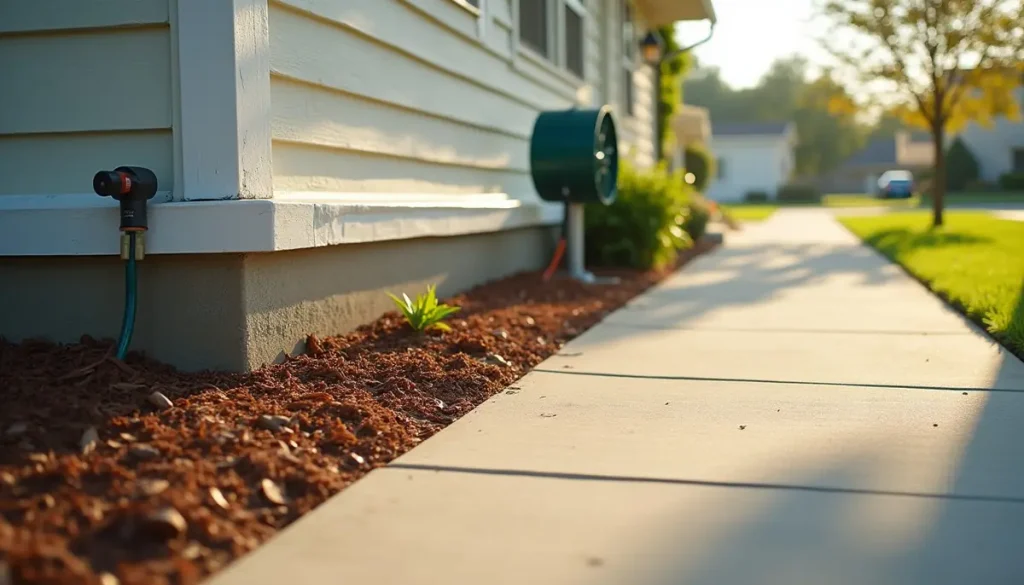
Home perimeter pest control is an insecticide band sprayed around a foundation, and the evidence says it cuts crawling pests near the house for weeks, not permanently. In Riverside, California home trials, ant reductions at eight weeks ranged from 86 per cent to none. It does little for German cockroaches, which live indoors, and UC IPM advises against it for spiders. Sealing gaps lasts longer, and perimeter sprays can reach storm drains.
Does perimeter pest control work?
It depends on the pest, because a band only touches animals crossing it.
| Pest | What the sources say | Verdict |
|---|---|---|
| Ants trailing in from outdoors | Kills foragers, not the colony or queens; ants build back up, and barrier sprays sometimes trap ants indoors (UC IPM) | Temporary; bait is the better tool |
| Spiders | Insecticides will not provide long-term control and should not generally be used against spiders outdoors (UC IPM) | Weak; vacuum and seal gaps |
| German and brownbanded cockroaches | Live and breed entirely indoors (UC IPM) | Wrong tool; a band outside misses them |
| American, oriental and Turkestan cockroaches | Live outdoors and invade temporarily; UC IPM favours baits in water meter boxes and drains, and says sprays do not provide long-term control | Partial, with sealing and baits |
| Lady beetles and other overwintering insects | Works only if applied before they enter, typically late September to early October in Kentucky; ineffective in late winter or spring (University of Kentucky) | Useful, if the timing is right |
| Termites, bed bugs, rats and mice | Usually excluded from general plans or handled by other methods; rodents need gaps sealed | Not what you are buying |
Verdicts are The Pest Control Brief’s reading of the named extension sources. We found no published field trial that measured indoor spider or cockroach counts after an exterior spray, so the evidence for those two is expert judgement rather than measurement.
Ants have home-level numbers. University of California, Riverside researchers treated homes in 2008 and 2009, then counted ant visits to sugar-water vials around each house.
| Treatment, one application | Homes | Week 1 | Week 2 | Week 4 | Week 8 |
|---|---|---|---|---|---|
| 0.06% fipronil, 1 gal, pin stream at foundation, 2008 | 5 | 87% | 85% | 91% | 80% |
| 0.06% bifenthrin, 3 gal, fan spray plus spot treatment, 2008 | 5 | 87% | 70% | 66% | 54% |
| 0.06% bifenthrin, pin stream with no-spray zones, 2008 | 5 | 76% | 43% | 37% | 26% |
| 0.06% fipronil, 1 gal, pin stream, July 2009 | 5 | 60% | 31% | 90% | 0% |
| 0.06% fipronil, 1 gal, fan spray, July 2009 | 5 | 69% | 20% | 37% | 0% |
| 0.06% fipronil, 0.5 gal, fan spray, small yards, August 2009 | 4 | 97% | 85% | 75% | 80% |
| Same spray plus granular bait in the yard | 4 | 92% | 81% | 82% | 86% |
| Granular bait alone | 4 | 93% | 76% | 75% | 69% |
Percentage reduction in Argentine ant visits near the house. Compiled by The Pest Control Brief from Klotz and Greenberg’s 2010 final report to the California Structural Pest Control Board.
Three things follow. Results swung widely between identical methods: the one-gallon fipronil pin stream scored 80 per cent at eight weeks in 2008 and zero in 2009, when ant counts at untreated July homes rose from 8,005 to 42,266 visits per vial. Control fell off fast away from the wall, with fipronil reaching 25 per cent in the yard and bifenthrin none. And no trial counted ants indoors. A lower count at the foundation is a fair proxy, but it is not a measurement of what reaches your kitchen. All of this concerns Argentine ants in irrigated Californian yards.
What is perimeter pest control?
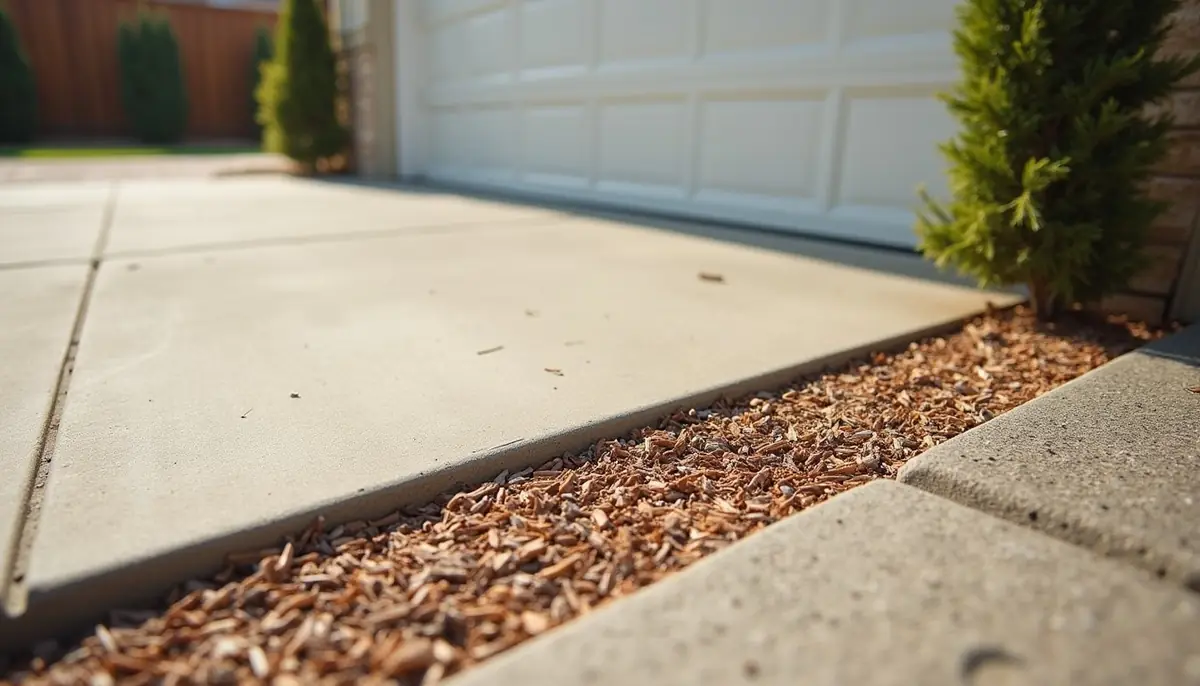
It is a residual insecticide applied in a band on the ground and up the wall, often with extra treatment around doors, vents and utility openings. UC IPM names the pyrethroids bifenthrin, cypermethrin and lambda-cyhalothrin as common actives; fipronil, used in most of the trials above, is not a pyrethroid. How wide the band may be depends on who you ask.
| Source | On the ground | Up the wall | Hard surfaces |
|---|---|---|---|
| University of Kentucky ENTFACT-641 | 2 to 6 feet | 2 to 3 feet | Not addressed |
| Retail label, EPA Reg. No. 239-2698 (2011 version) | 4 foot band on soil and wall | 3 feet maximum | Spot and crack-and-crevice only, apart from foundations |
| EPA pyrethroid label language, revised 2013 | Soil and vegetation around structures | 3 feet above grade | Spot or crack-and-crevice only; bands around entry points to one inch |
| California 3 CCR 6970, pyrethroids applied for hire | 3 feet from the base of the building | 2 feet above grade | Spot, crack and crevice, or one-inch pin stream |
| Fipronil trials under California label limits | 1 foot out | 1 foot up | Trials varied in treating the driveway edge |
Compiled by The Pest Control Brief from the named documents. The current label controls.
How long does a perimeter spray last?
Weeks, and often less than a quarterly plan implies. The Riverside researchers listed what undermines outdoor barriers: irrigation, dense groundcover, mulch, high temperature, alkaline surfaces and direct sunlight. In the trials above, bifenthrin near the house slid from 87 per cent at week 1 to 54 per cent at week 8. None of those trials ran past eight weeks, so a 13-week quarterly gap is longer than the period they measured.
The closest weathering record comes from a manufacturer, so read it with that in mind. Bayer staff sprayed ceramic tile, left it in sun and rain at Clayton, North Carolina, then confined German cockroaches on it.
| Residue at label rate, outdoors on tile | 2 to 3 weeks | 4 to 5 weeks | 6 to 7 weeks | 12 to 13 weeks |
|---|---|---|---|---|
| Bifenthrin 0.06% | 100% | 100% | 40% | 0% |
| Lambda-cyhalothrin 0.03% | 84.5% | 20.5% | 28.6% | 17.3% |
| Alpha-cypermethrin 0.05% | 24.1% | 25.5% | 33.3% | 33.3% |
| Polymer-bound deltamethrin 0.03% (the authors’ employer’s product) | 100% | 98% | 100% | 98.9% |
Cockroach mortality within 24 hours of exposure. Source: Hamilton, Reid and Koufas, 2022, Proceedings of the Tenth International Conference on Urban Pests. A confined insect on a tile takes a forced dose that one crossing mulch does not, so treat these as upper limits. Formulation clearly matters, which is a reason to ask what is being sprayed.
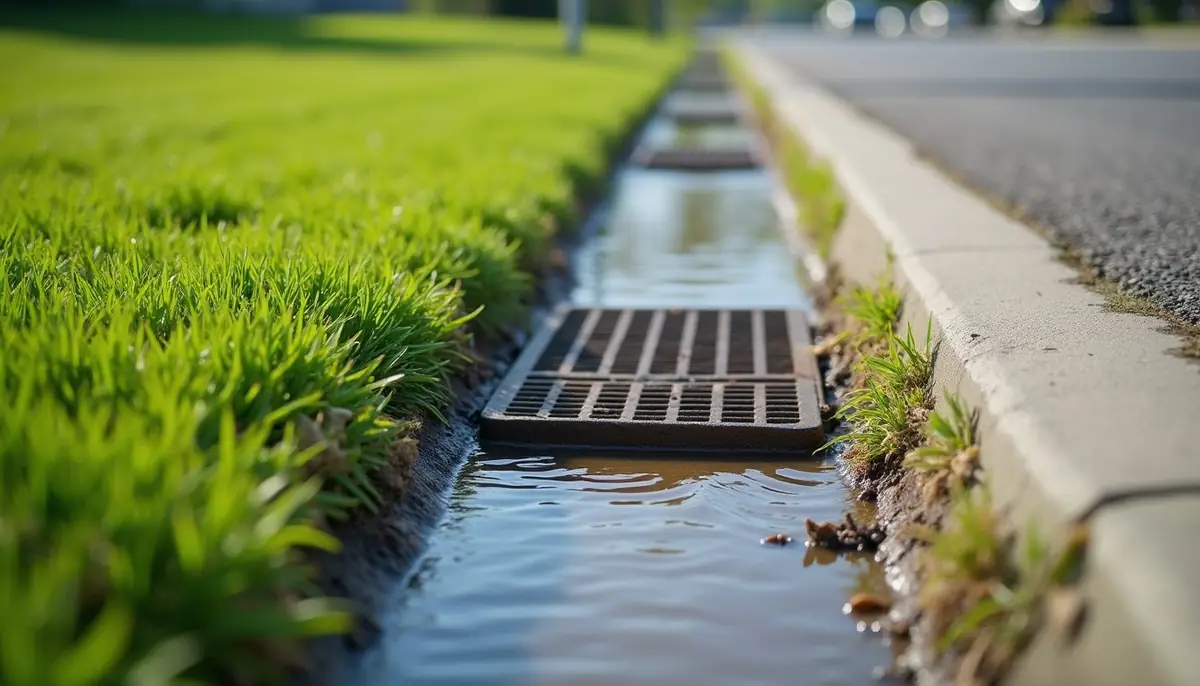
Does rain wash away a perimeter spray?
Partly, and the part it moves goes towards drains. EPA’s 2012 letter to registrants says pyrethroid residual activity is limited and that the chemicals are expected to wash off structural surfaces and enter nearby sewers and water bodies during the first rain event. In the same manufacturer’s vinyl siding test, bifenthrin at 0.03% fell from 100 per cent mosquito mortality on day 1 to 30.8 per cent at four weeks, with 2.13 inches of rain by then.
The residue also lingers, because killing pests and polluting water are separate questions. UC Riverside researchers found bifenthrin and permethrin still detectable in runoff from treated concrete 89 days after treatment in dry summer conditions, and 221 days later in winter rain, concluding that concrete can act as a reservoir. Detectable runoff tells you a residue is still shedding, not that it still stops ants.
EPA’s consumer label language says not to apply during rain and advises spraying when none is predicted for 24 hours. California bars hired pyrethroid applications during rain, except under eaves.
Keeping the spray out of storm drains
This is where perimeter treatment has a measured cost. Our analysis of 119,264 US stream samples found fipronil in 17.0 per cent and at 31.9 per cent of sites, and bifenthrin in 2.6 per cent, though bifenthrin binds tightly to soil, so water samples may understate it. UC IPM’s ant note advises against spraying pyrethroids around foundations because they pollute waterways. Structural pest control accounted for 99.7 per cent of reported California fipronil use in 2022 and 2023, as we set out in our California fipronil report.
The home trials measured runoff at the curb too. Fan-sprayed bifenthrin perimeters greatly exceeded the 0.078 parts per billion LD50 for the water flea Ceriodaphnia on every sampling date. A fipronil pin stream restricted to the foundation averaged 0.08 parts per billion, against an LD50 of 10. Leaving the driveway and garage door untreated significantly cut fipronil in a 56-day driveway flush, with ant reductions broadly similar at 60 to 80 per cent.
- Do not treat driveways, patios or the garage threshold beyond a spot or crack treatment.
- Keep the spray off drainage grates and French drains; California bars pyrethroids on those for hired applicators.
- Do not water the treated area to the point of runoff. Daily lawn irrigation carried residues to the curb in Riverside.
- Sweep granules off hard surfaces, as California requires of applicators.
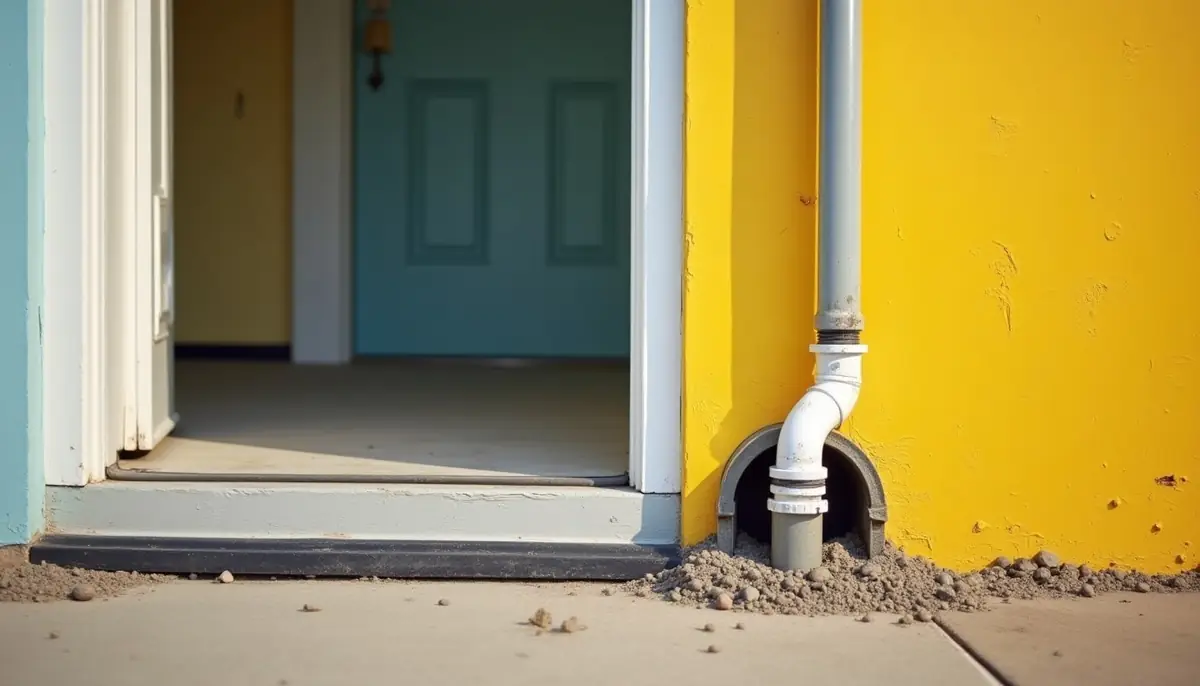
Sealing compared with spraying
Kentucky’s Michael Potter calls sealing the more permanent way to exclude pests and describes spraying as a supplement where full pest-proofing is impractical. Gaps of a sixteenth of an inch let in insects and spiders, and EPA’s letter records that sealing is labour-intensive and can fall short against very large overwintering populations. Our exclusion guide gives the order to work in. Door sweeps come first, at a published $60 to $125 installed (Fixr). A quarterly plan is a published $100 to $300 per visit in our plan guide, with annual totals of about $400 to $950.
Five questions for a perimeter service
- Which pests is this for? A band outside does not reach German cockroaches.
- Which active ingredient and EPA registration number? Repellent and non-repellent products behave differently, and the label is the document you can check.
- How many feet out and up? Anything over 3 feet up the wall with a pyrethroid warrants a look at the label, apart from the narrow overwintering allowances.
- How often, and why? UC IPM notes some firms sell every-other-month perimeter programmes and says they are less effective than a bait-based programme for ants. A fall visit for overwintering pests is a different product.
- What stays untreated? Ask them to skip the driveway and garage threshold, and ask about baits and spot treatments first, as UC IPM advises.
Frequently asked questions
Is home pest control worth it?
For a recurring outdoor ant or occasional-invader problem, a scheduled exterior service can be reasonable, particularly with baits. For a single resolved problem, or pests that live indoors, it often is not. Published quarterly prices run $40 to $300 per visit. Sealing gaps usually lasts longer, so price that first.
How often should you do pest control in your home?
Match it to the pest rather than a calendar. Home trials saw ant control fade within eight weeks in several treatments, while Kentucky advises one barrier spray in late September to early October for lady beetles. One retail label limits repeat applications to once in seven days, and only with renewed activity.
What is the best pest control spray for outside the home?
No single product suits every pest, and we do not rank brands. Kentucky’s extension service favours longer-lasting liquid pyrethroids for homeowners treating foundations, and UC IPM notes that professional products outlast retail ones. For ants, UC IPM prefers outdoor baits in stations. Follow the label and treat only the pests it lists.
Is it safe to let pets out after a perimeter spray?
Labels set this, so read yours. One retail perimeter label, EPA Reg. No. 239-2698, says people and pets may enter the treated area after application has dried. Ask a company for its product label and keep animals off the band until then. Call a vet or poison control if an animal is exposed.
Sources
- Klotz J and Greenberg L, Developing Low Risk Management Strategies for Argentine Ants, Final Report to the California Structural Pest Control Board, January 2010.
- Klotz JH, Rust MK, Greenberg L and Robertson MA, Developing Low Risk Management Strategies for Argentine Ants, Sociobiology 55(3), 2010.
- Greenberg L, Mitigating Insecticide Runoff from Houses Receiving Treatments for Ant Infestations, Final Report, National Pest Management Association, August 2011.
- Greenberg L and colleagues, Reducing Pesticide Runoff in Urban Waterways, Proceedings of the Eighth International Conference on Urban Pests, 2014.
- Jiang W, Haver D, Rust M and Gan J, Runoff of pyrethroid insecticides from concrete surfaces following simulated and natural rainfalls, Water Research 46, 2012.
- Hamilton J, Reid B and Koufas D, Formulation Technology to Improve Weather Resistance of Residual Insecticides, Proceedings of the Tenth International Conference on Urban Pests, 2022. Authors are employed by the manufacturer of one tested product.
- US EPA, letter to registrants on pyrethroid non-agricultural outdoor labelling, 2012, with Environmental Hazard and General Labeling table revised January 2013.
- US EPA Reg. No. 239-2698 accepted label, 2011.
- California Code of Regulations, Title 3, sections 6970 and 6972, Surface Water Protection in Outdoor Nonagricultural Settings.
- University of California IPM, Pest Notes: Ants (updated 2012), Spiders (updated 2020) and Cockroaches.
- University of Kentucky Entomology, ENTFACT-641 How to Pest-Proof Your Home and ENTFACT-416 on lady beetles, Michael F. Potter.
- National Pesticide Information Center, Bifenthrin General Fact Sheet.
- Fixr, published door sweep installation estimate, read November 2026.
- The Pest Control Brief analyses of Water Quality Portal stream samples and California Department of Pesticide Regulation use reports.