Whiteflies: Why They Explode on Tomatoes and Houseplants

Whiteflies are tiny sap-sucking insects, about 1.6 mm (1/16 inch) long, that rise from the undersides of leaves in a white cloud when a plant is disturbed. They are related to aphids, not flies, and are harmless to people. The damage comes from the scale-like nymphs: yellowing leaves, sticky honeydew, black sooty mould and, on tomatoes, viruses such as tomato yellow leaf curl. Control means hitting leaf undersides repeatedly with soap or oil, trapping adults, and protecting the natural enemies that keep whiteflies in check.
Whiteflies are one of the few garden pests that seem to come from nowhere and then be everywhere. The reason is biology: in warm conditions a generation can turn over in under three weeks, and every stage except the adult sits motionless under the leaf where most sprays never reach. This guide covers how to confirm you have whiteflies, which species matters, what the research says about each control, and our analysis of iNaturalist records showing when whiteflies are seen.
Is it a whitefly? What flew off your plant
| What you see | Size | Where | Most likely |
|---|---|---|---|
| White, moth-like specks fly up when you brush the leaves, then settle again | About 1.6 mm (1/16 in) | Leaf undersides, often new growth | Whiteflies |
| Small black flies with long legs running over the soil or at the window | About 3 mm (1/10 in) | Potting soil surface | Fungus gnats |
| Soft-bodied insects clustered on stems and buds, some with wings | 2 to 4 mm (1/16 to 1/8 in) | Shoot tips, flower buds | Aphids |
| White cottony tufts that barely move | Up to 3 mm (1/10 in) | Leaf joints, stem crevices | Mealybugs |
| Slender specks, silvery scarring on leaves | Under 1.5 mm (1/16 in) | Flowers and leaves | Thrips |
| Fine webbing, pale stippling, specks you need a hand lens for | About 0.5 mm (0.02 in) | Leaf undersides | Spider mites |
Compiled by The Pest Control Brief from Colorado State University’s houseplant pests guide and University of Minnesota Extension.
The flight test settles it in seconds. Shake the plant: whiteflies flutter up in a small cloud and land again within moments. Then turn a leaf over. You should see scattered adults with powdery white wings and, nearby, flat, oval, translucent nymphs that look like tiny scales. UC IPM notes the nymphs are the stage that does most of the damage. If what you have is crawling rather than flying, our guide to tiny white bugs in the house covers mealybugs, mites and the rest.
What is a whitefly insect?
Whiteflies are the family Aleyrodidae, in the order Hemiptera with aphids, scales and mealybugs. Despite the name they are not true flies. UC IPM says they get their name from the mealy white wax covering the adult’s wings and body; adults have yellowish bodies and four whitish wings. The University of Kentucky counts more than 1,500 species worldwide, most of which never become pests.
Several species do the damage in North American homes, gardens and greenhouses, and telling them apart matters because they respond differently to biological control and insecticides.
| Species | How to recognise the adult | Nymph | Why it matters |
|---|---|---|---|
| Greenhouse whitefly (Trialeurodes vaporariorum) | Solid white; wings held flat, triangular from above | Pillbox shape with straight sides and long waxy filaments | The usual indoor and greenhouse whitefly in the North; cannot overwinter outdoors in cold states; best controlled by Encarsia formosa |
| Sweetpotato or silverleaf whitefly (Bemisia tabaci) | Solid white; wings held tent-like at a sharp angle, like a grain of rice | Flatter, with few delicate filaments | Over 500 host plants; transmits tomato yellow leaf curl virus; strains resistant to many insecticides; overwinters outdoors as far north as South Carolina |
| Bandedwinged whitefly (Trialeurodes abutiloneus) | Dark zig-zag bands across the wings | Like greenhouse whitefly but with curly filaments | Flies into greenhouses in autumn as outdoor plants die back; seldom a lasting problem |
| Giant whitefly (Aleurodicus dugesii) | Up to 0.19 inch (about 5 mm); leaves spirals of wax | Wax filaments up to 2 inches long, giving leaves a bearded look | Southern California ornamentals such as hibiscus and bird of paradise |
Compiled by The Pest Control Brief from the University of Kentucky (EF456), UF/IFAS EENY-129, UC IPM Pest Notes 7401 and University of New Hampshire Extension.
Why whiteflies explode on tomatoes and houseplants
Three features combine. The first is speed. UW Madison reports that at 82°F a whitefly develops from egg to adult in 18 days, and UF/IFAS gives sweetpotato whitefly egg hatch at six to seven days at 25°C (77°F). A female sweetpotato whitefly lives 10 to 24 days and lays between 66 and 300 eggs, depending on host plant and temperature.
The second is that most of the population cannot be seen or sprayed easily. After a few hours as a mobile crawler, a nymph settles, loses the use of its legs and stays put on the underside of the leaf until it emerges as an adult. UF/IFAS says this is one of two reasons whiteflies are hard to control: the insects sit on the lower leaf surface, where sprays struggle to reach.
The third is the host list. Sweetpotato whitefly feeds on more than 500 plant species in 74 families, according to UF/IFAS; Kentucky puts it above 700. Tomatoes, peppers, squash, cucumbers, beans and eggplant are all major hosts, and indoors poinsettia, hibiscus, fuchsia, lantana and gerbera daisy are favourites. Inside a warm house there is no winter to interrupt breeding: Missouri Botanical Garden notes that because homes and greenhouses are always warm, whiteflies reproduce throughout the year.
What causes whitefly infestation?
Usually one of two things. Kentucky’s entomologists say most outbreaks can be traced back to infested plants brought in, which is why new plants deserve a look under the leaves before they join the others. The second cause is the loss of natural enemies. UC IPM says outbreaks often occur when the natural enemies are disrupted by insecticide applications, dusty conditions or ants, which tend whiteflies for their honeydew and drive off predators.

Are whiteflies harmful?
To people, no. University of Minnesota Extension says whiteflies are harmless to people and property. They do not bite: their piercing, needle-like mouthparts are built to draw sap from a plant’s phloem, as UC IPM describes. A swarm landing on your arms in the garden is unpleasant but not a health issue.
To plants, it depends on numbers and species. UC IPM says low numbers are not usually damaging and that adults alone do little unless they carry a plant virus. Heavy infestations cause:
- Yellowing, drying and dropping leaves as nymphs drain sap.
- Honeydew and sooty mould. Whiteflies excrete sugary honeydew, and a black sooty mould grows on it. The mould itself does not attack the leaf, Missouri Botanical Garden says, but UNH notes it interferes with photosynthesis.
- Silvering and ripening disorders. UF/IFAS links sweetpotato whitefly feeding to squash silverleaf and tomato irregular ripening, both first noted in Florida in 1987.
- Viruses. Kentucky says whiteflies transmit over a hundred plant viruses. In Florida the main concerns include tomato yellow leaf curl virus. UF/IFAS advises home gardeners to pull and dispose of symptomatic tomato plants so they cannot infect healthy ones.
When whiteflies are seen: our iNaturalist analysis
We analysed 3,217 US research-grade iNaturalist records of whiteflies. That is a small sample, because whiteflies are too small for most people to photograph and identify, so treat the pattern as a guide rather than a census.
Raw records bottom out in June (129) and then climb steeply to a peak in September (485) and October (436). That fits what extension services describe: populations build through warm weather and, as UF/IFAS puts it, migrations from plants that are dying back can be massive. It is why people suddenly see whiteflies everywhere in early autumn. When we instead scale whitefly records against everything recorded each month, the index peaks in January at 195. That does not mean more whiteflies in winter; it means whiteflies, breeding indoors, in greenhouses and in warm southern states, are among the few insects still being photographed when almost nothing else is about.
How to get rid of whiteflies
UC IPM is candid: management of heavy whitefly infestations is difficult, and even the most toxic insecticides are only partially effective. The approach that works is several low-risk steps at once, started early.
| Method | What it does | Evidence and limits |
|---|---|---|
| Inspect and isolate new plants | Stops the most common route in | Kentucky traces most outbreaks to infested stock; isolate 1 to 2 weeks so nymphs grow big enough to see |
| Yellow sticky cards | Catch and monitor adults | UC IPM: best for monitoring, not control; one trap per medium vegetable plant, level with the infestation |
| Hosing or vacuuming | Removes adults | UC IPM and Colorado State support it for early, light infestations |
| Removing infested leaves or plants | Removes the immobile nymphs | Can bring numbers down to a level natural enemies can contain |
| Insecticidal soap, horticultural oil, neem oil | Kill whiteflies the spray touches | Only directly sprayed insects die; cover leaf undersides and repeat. Under 90°F, on unstressed plants |
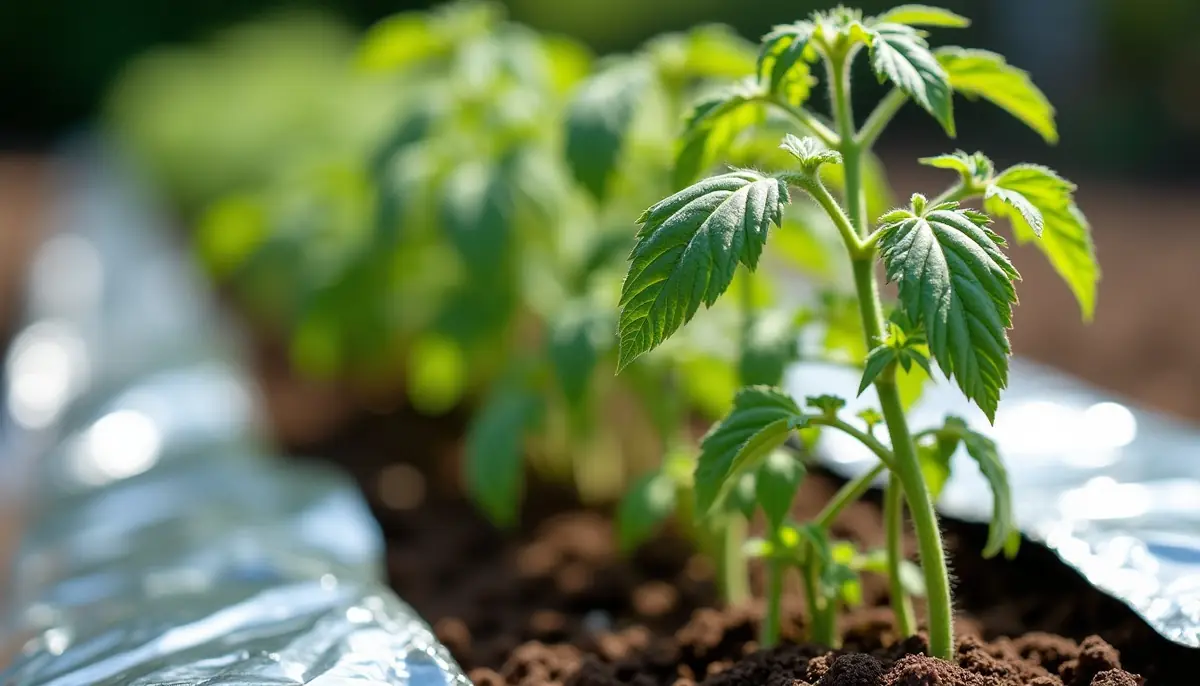
| Reflective silver mulch | Repels adults from young plants | Cut whitefly numbers by 30 to 87 per cent in Georgia and Alabama field trials; remove when plants are large and weather is hot |
| Encarsia formosa and other natural enemies | Parasitise or eat nymphs | Strong record on greenhouse whitefly in greenhouses; UC IPM does not recommend Encarsia releases outdoors |
| Systemic insecticides | Kill feeding nymphs | UC IPM warns of harm to bees and natural enemies and of spider mite outbreaks; reserve for special cases |
Compiled by The Pest Control Brief from UC IPM Pest Notes 7401, University of Kentucky EF456, Colorado State University and Rutz and colleagues (2023).
What is the best spray for whiteflies?
For home gardens and houseplants, insecticidal soap or a horticultural oil such as neem oil, applied properly. UC IPM and UF/IFAS both favour soaps and oils because they spare natural enemies, but both stress the catch: they only kill insects they touch. Coverage of the undersides of leaves is essential, and those are usually the lowest, hardest leaves to reach. Spray in early evening rather than full sun, keep to temperatures under 90°F, follow the label, and expect to repeat. Missouri Botanical Garden notes that the egg and pupal stages are less susceptible than adults and nymphs, which is why one application never finishes the job.
Avoid broad-spectrum sprays. UC IPM advises against pyrethroids, organophosphates and neonicotinoids for whiteflies: they kill the predators that hold whiteflies down, and whiteflies quickly build up resistance to them. UF/IFAS describes a Q biotype of sweetpotato whitefly, first detected in the US in 2005, as virtually immune to the growth regulator pyriproxyfen and less susceptible to imidacloprid and acetamiprid. If a product fails when correctly applied, UF/IFAS advises switching to one with a different mode of action rather than spraying harder.
Reflective mulch for tomato and squash beds
Silver reflective mulch has the strongest field evidence of any home-scale tactic. In a 2023 study of zucchini in Georgia and Alabama, reflective silver plastic reduced whitefly populations compared with white plastic by 87 per cent in Georgia in 2020, 33 per cent in Georgia in 2021 and 30 per cent in Alabama in 2021, and an insect row cover kept whiteflies at zero until it was removed at flowering. UC IPM’s method: lay the mulch on weeded beds, bury the edges, cut 3 to 4 inch holes for transplants, use drip irrigation under plastic, and remove it when plants get large and summer heat arrives.
Natural enemies, and why not to kill them
Lacewings, minute pirate bugs, bigeyed bugs and several small lady beetles all eat whiteflies, and tiny parasitic wasps lay eggs inside the nymphs. UF/IFAS says sweetpotato whitefly rarely reaches outbreak levels where no insecticides are applied. You can check for parasitism yourself: UC IPM explains that empty cases with a T-shaped slit released a healthy whitefly, while a round hole means a parasitoid emerged. In greenhouses and sunrooms, Encarsia formosa has an outstanding record against greenhouse whitefly on tomatoes, according to a 1998 review in the Annual Review of Entomology, though Kentucky notes most strains do not control sweetpotato whitefly well. For more on how these predators work, see our guide to getting rid of aphids, which share most of them.
Indoors
For houseplants, isolate the infested plant, rinse or vacuum off adults, hang a yellow card beside it, and treat leaf undersides with soap every five to seven days until no new adults appear. Badly infested, low-value plants are often better discarded. Our wider houseplant pests guide covers the routine that prevents most problems. Whiteflies on plants are a gardening job, not a call for a structural pest control company.
Frequently asked questions
How do you get rid of white flies?
Combine steps rather than relying on one spray. Hose or vacuum adults, remove heavily infested leaves, hang yellow sticky cards to monitor, and spray insecticidal soap or horticultural oil on the undersides of leaves, repeating every five to seven days. Use reflective mulch under young vegetable plants. Avoid broad-spectrum insecticides, which kill the parasitic wasps and predators that normally keep whiteflies under control.
What causes whitefly infestation?
Most infestations start with infested plants brought into a home, garden or greenhouse, according to the University of Kentucky. Outbreaks then take off when natural enemies are removed by insecticide sprays, dust or ants. Warm conditions speed everything up: at 82°F a whitefly can go from egg to adult in 18 days, and indoors there is no winter to stop breeding.
Are white flies harmful?
Not to people: University of Minnesota Extension says whiteflies are harmless to people and property, and their mouthparts are built to feed on plant sap, not to bite. To plants they can be. Heavy infestations yellow leaves, coat them in honeydew and black sooty mould, and sweetpotato whitefly can transmit viruses such as tomato yellow leaf curl virus to tomatoes.
What is the best spray for whiteflies?
For gardens and houseplants, insecticidal soap or a horticultural oil such as neem oil, because these spare natural enemies. They only kill whiteflies they touch, so spray the undersides of leaves thoroughly, below 90°F and out of direct sun, and repeat. Broad-spectrum products such as pyrethroids tend to make whitefly problems worse, and many whitefly populations resist them.
Sources
- University of California Statewide IPM Program, Pest Notes: Whiteflies, UC ANR Publication 7401 (M.L. Flint).
- McAuslane, H.J. and Smith, H.A., Sweetpotato Whitefly B Biotype, Bemisia tabaci, UF/IFAS Featured Creatures EENY-129 (revised 2015, reviewed 2025).
- UF/IFAS Solutions for Your Life, Whiteflies (Q biotype and greenhouse management).
- University of Kentucky Entomology, EF456, Whiteflies in the greenhouse.
- University of Wisconsin Madison Division of Extension, Whiteflies (K. Delahaut).
- University of New Hampshire Cooperative Extension, Greenhouse Whitefly fact sheet.
- Colorado State University, Agricultural Biology, Houseplant pests.
- University of Minnesota Extension, What insect is this? Whiteflies (J. Hahn).
- Missouri Botanical Garden, Whitefly (indoors).
- Rutz, T. and colleagues, Use of insect exclusion row cover and reflective silver plastic mulching to manage whitefly in zucchini production, Insects 14(11):863, 2023.
- Hoddle, M.S., Van Driesche, R.G. and Sanderson, J.P., Biology and use of the whitefly parasitoid Encarsia formosa, Annual Review of Entomology 43, 1998.
- The Pest Control Brief analysis of iNaturalist research-grade records, pulled October 2026.